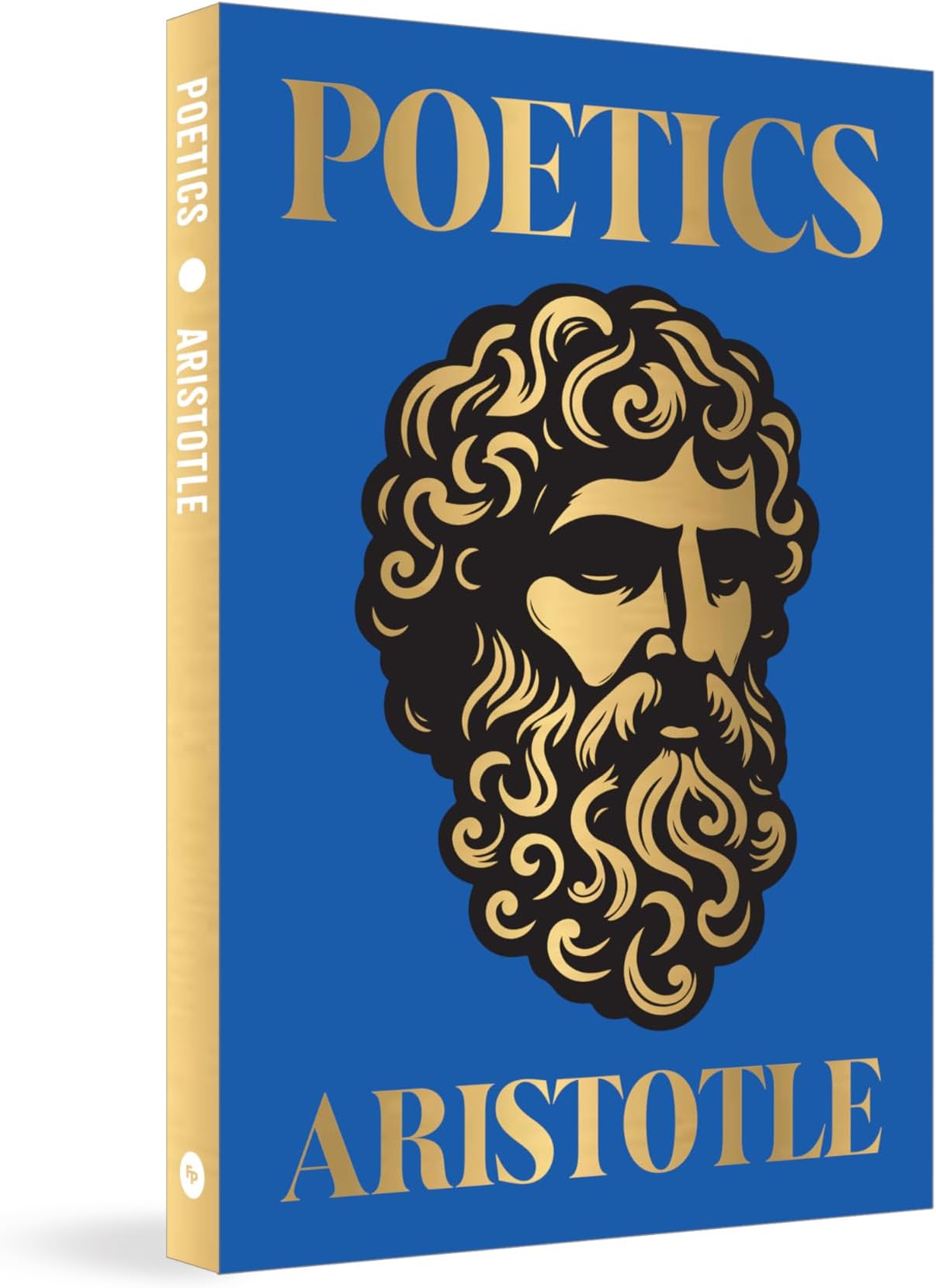
Poetics
Product ID: 576372261
Buy anything from 5,000+ international stores. One checkout price. No surprise fees. Join 2M+ shoppers on Desertcart.
Desertcart purchases this item on your behalf and handles shipping, customs, and support to SINGAPORE.
Fingerprint! Pocket Classics are perfect pocket-sized editions with complete original content. “Comedy aims at representing men as worse, tragedy as better than in actual life.” meticulously enquiring into the emotional bent of man and his psychological reactions, Aristotle’s poetics discusses the origins of epic poetry and examines all poetry as being a form of imitation. It explores the various components of tragedy—plot, character, diction, thought, spectacle, and song—and its effects. A masterpiece of literary criticism, poetics has majorly influenced literary theories. Even after centuries it continues to remain an evaluation benchmark for literature. Review: A Classic Text - This is fantastic. It's a classic of philosophy and communication. I've been meaning to purchase this foe my home library for years and now I have it. Review: How to really write a story - A good guide on how to write a story. Forget all this rising action/climax/falling action nonsense. Instead have a unity of action, a noble character or protagonist with a human failing. Have him make a tragic error (hamartia) which will lead to a peripeteia or reversal of fortune... good luck to bad luck. Let the plot become complicated with unforeseen consequences which will lead to disaster in which the main character suffers the most as a consequence of his foolish actions. Let the story finish with him understanding that he is the author of his own downfall (anagnorisis). Let the reader go away with a sense of pathos for the protagonist. Read Sophocles's Antigone and you will see this perfectly.


| Best Sellers Rank | #169,974 in Books ( See Top 100 in Books ) #25 in Philosophy Aesthetics #94 in Classic Greek Literature #102 in Ancient & Classical Literature |
| Customer Reviews | 4.5 out of 5 stars 1,811 Reviews |
B**R
A Classic Text
This is fantastic. It's a classic of philosophy and communication. I've been meaning to purchase this foe my home library for years and now I have it.
P**S
How to really write a story
A good guide on how to write a story. Forget all this rising action/climax/falling action nonsense. Instead have a unity of action, a noble character or protagonist with a human failing. Have him make a tragic error (hamartia) which will lead to a peripeteia or reversal of fortune... good luck to bad luck. Let the plot become complicated with unforeseen consequences which will lead to disaster in which the main character suffers the most as a consequence of his foolish actions. Let the story finish with him understanding that he is the author of his own downfall (anagnorisis). Let the reader go away with a sense of pathos for the protagonist. Read Sophocles's Antigone and you will see this perfectly.
M**A
Readable
I was surprised at how readable this was. Artistotle's world was very different that ours is today. He talks of poetry and drama, which we think of as separate, as being the same thing. And of the addition of a second player in that drama as being an innovation. But his talk of the use of spectacle in poetry/drama made me think of the sometimes tiresome CGI spectacles in our modern movie dramas. His observations applied equally to his time and to our most current entertainment. He was the first to write down many of the principles of plot and character that sometimes seem so obvious as to not need mentioning. And then he'll use that obvious observation to provide an insight that might not otherwise be quite so clear. Some parts are just as relevant now as they ever were. Some parts are fascinating from an historical perspective, and made me wish I were more familiar with his chosen exemplars, like Aeschylus, Homer, and Euripides. Some parts are just cool, like his dissertation on metaphors, and how to construct them. And Some parts are more wholely of his time than ours. Readable, for the most part, and anyone who professes a love of writing should read this.
S**B
Telling better tales for gaming groups is my goal.
It helped with preparing stories for friends in my tabletop role playing group. I will likely use this from time to time as reference material when I have questions on topics. It sparked some ideas on how to make some things more interesting for my friends.
Q**Y
Read the book,you may, like it!
First time reading this book I found it bewildering to understand but fascinating read, I still make time to glance now and then. ✨
T**S
Great Scholarly Resource, Not Fun to Read
I actually read an online version of this text provided by my teacher as part of my Introduction to Drama course, so this is not the same translation I'm writing about, but is the same work. I found the language to be difficult to follow at times, but there is certainly a lot of "meat" here. I could also recognize the importance of what was being said when it comes to analyzing drama and following its early evolution of form. I probably won't be reading it just for fun anytime soon, but I do feel it's an essential part of one's library if they wish to seriously study drama at all.
A**N
Work
Great
B**N
2000 year old man understands screenwriting
He is not Carl Reiner, but is over 2000 years old and he understands storytelling (and hence screenwriting). His name is Aristotle and he is from Athens. Or Sparta, or some such place. The writing is a bit dated as you might expect for a time 2000+ years ol, which makes his pop culture references hard to grasp. But the concepts are current and, "dead on balls accurate" as Mona Lisa Vito Gambini might say. I hate Kindle books, but this one was the right price (probably due to copyright having expired >1950 years ago).
A**D
A great book by Aristotle
Another great work by Aristotle. I love his rigour, his eloquence and ability to communicate complex concepts in a way anyone can understand. This book has inspired me
S**L
So complicated
You should read other books before reading poetics.
J**Z
Historical Texts Must Be Read
Who doesn't love thee feeling of finding out you have so much in common with fellow human beings living two thousand years ago? I know I will keep coming back several times for the next years.
D**A
Good information but very dry
The book is in good condition.. it is a very dry read. It seems is more like a dry lecture opposed to a written work. It is interesting but you need a lot of understanding especially about famous writers of centuries ago to really understand this book.
A**R
Good read
Good for all types of readers
Trustpilot
3 weeks ago
5 days ago