Desert Online General Trading LLC
Dubai, United Arab Emirates
Desert Online General Trading LLC
Dubai, United Arab Emirates


Full description not available
J**R
For me, it essentially was a coloring book…
since I highlighted so many insightful points and perspectives throughout this excellent book!If you’re considering a career change - going from years in start-ups or within the outskirts (i.e. field-based areas) of a business to The Matrix - this books will help you close the gaps in your perceptions.You’ll learn how to close those gaps. You’ll gain actionable insights as to how The Matrix operates and how you can “take the red pill”.I wished I’d known about this earlier. I would’ve taken Susan Zelamski Finerty’s “red pill” and avoided much of the “deja vu” I’ll navigate much better moving forward!
B**E
Great content and speaker
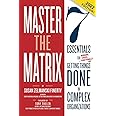
I recently had the opportunity to see the author, Susan Finerty, present her materials from this book live at a seminar. Not only is she a content expert, but she has examples and anecdotes to make the book really come alive – simply magical. Master the Matrix is a brilliant, practical and useful business book. Susan breaks down the “essentials” of successfully navigating a matrix organization in a format that is simple and fun to read. With a series of building blocks and frameworks, the author provides both a way to think about the issues and reinforcement tools to assist with retention. During the seminar, I had the chance to see an advance copy of her materials for her new companion book “The Cross-Functional Influence Playbook”. Like the title sounds, the “playbook” has pragmatic, actionable exercises to help you get the right things done. This pair of books will be a great desktop reference for everyone.
L**R
I would have liked more connection to theory and other matrix authors
This is a very practical approach to matrix. I would have liked more connection to theory and other matrix authors.
W**O
Good, solid resource.
Fantastic book for helping you see how to better organize and manage complex organizations. It takes work, this book will help you navigate the path. Good luck!
S**P
Story Format
This was a great listen. The story format made it enjoyable and gave life to the process. I gained a number of insights that I have applied multiple times since listening.
A**S
Knowledgeable but pedantic
The author makes a brave attempt at decomposing a complex management challenge of today's times - namely matrix management. Unfortunately, the topic is multilayered and nuanced - and trying to give it a Covey-like "7 Things" treatment - in bite sized, linear chunks - seems to trivialize its complexity. The book is, perhaps, a better compliment to a discussion - on its own it comes across pedantic and masterful interpretation of the obvious.
P**Y
Great read
I asked my director for a book suggestion and this was the first one she offered. I was not disappointed. There is a lot of actionable Information on this book.
T**E
Are Matrix Organizations Too Complex to Succeed?
Susan Finerty’s latest edition of Master the Matrix: 7 Essentials for Getting Things Done in Complex Organizations offers a comprehensive and practical guide to navigating the often-daunting complexities of matrix organizations. While my career has primarily been in decentralized companies - especially during the critical development stages of various organizations - I found this book both insightful and relevant, even for those who operate outside matrix structures.Matrix organizations, where employees typically report to multiple managers and work across various functions, present unique challenges. These structures are designed to optimize resource utilization and encourage collaboration across departments. However, they often come with a set of complexities, such as unclear roles, slow decision-making, and communication bottlenecks. Finerty does an excellent job of addressing these issues head-on, providing actionable frameworks and tools to help professionals thrive in such environments.One of the standout sections of the book is Finerty’s deep dive into meetings. Regardless of the type of organization you are in, meetings are a ubiquitous element of corporate life. Finerty’s six-step process for running effective meetings—from questioning the necessity of the meeting to ensuring clear follow-up and accountability—is universally applicable. Her advice on crafting specific agendas, inviting the right participants, and setting clear outcomes is a must-read for anyone looking to improve team productivity.Another valuable section focuses on decision-making within matrix roles. Unlike in decentralized organizations, where decisions tend to be more streamlined due to clear lines of authority, matrix organizations often suffer from decision splintering. Finerty’s five rules for effective decision-making—balancing decision-making styles, minimizing biases, and investing in consensus—are crucial for anyone operating in a complex organizational structure. These strategies can help prevent delays and ensure that decisions, once made, stick.Communication is another area where Finerty excels in providing guidance. In matrix organizations, communication channels are more fluid and less hierarchical, leading to potential misunderstandings and assumptions. Her emphasis on “assumption-free listening” and proactive communication is both insightful and practical. By casting a wide net and tailoring communication to various stakeholders, professionals can avoid many of the pitfalls that plague matrix environments.The contrast between matrix and decentralized structures is worth highlighting. Decentralized organizations, which I am more familiar with, offer several distinct advantages, including faster decision-making, greater employee empowerment, and a culture that fosters innovation. Managers in decentralized setups have more autonomy, which allows for quicker responses to market changes. This contrasts sharply with the often slower, consensus-driven approach in matrix organizations. However, matrix structures excel in environments requiring cross-functional collaboration and resource sharing, making them suitable for larger, more established companies.There is growing skepticism around matrix organizations today, particularly regarding their tendency to stifle innovation and delay critical decisions. Finerty, however, offers practical solutions to address these challenges. For example, her advice on role clarity and partnership-driven conflict resolution is particularly relevant in today’s fast-paced business world, where agility is key. For example, her advice on role clarity and partnership-driven conflict resolution is particularly relevant in today’s fast-paced business world, where agility is key.Master the Matrix is an excellent resource for anyone working within or considering a matrix organization. Finerty’s practical insights on meetings, decision-making, and communication make this book a valuable tool for professionals across various industries. While matrix organizations undoubtedly come with challenges, Finerty provides a roadmap for navigating them successfully. Her book is not only a guide to mastering the matrix but also a testament to the value of thoughtful leadership and effective cross-functional collaboration. Whether you work in a matrix structure or a decentralized one, there is much to learn from Finerty’s thoughtful analysis and practical advice.
Trustpilot
3 weeks ago
1 month ago