

🚀 Elevate Your Vision — Shoot Like a Pro, Share Like a Star
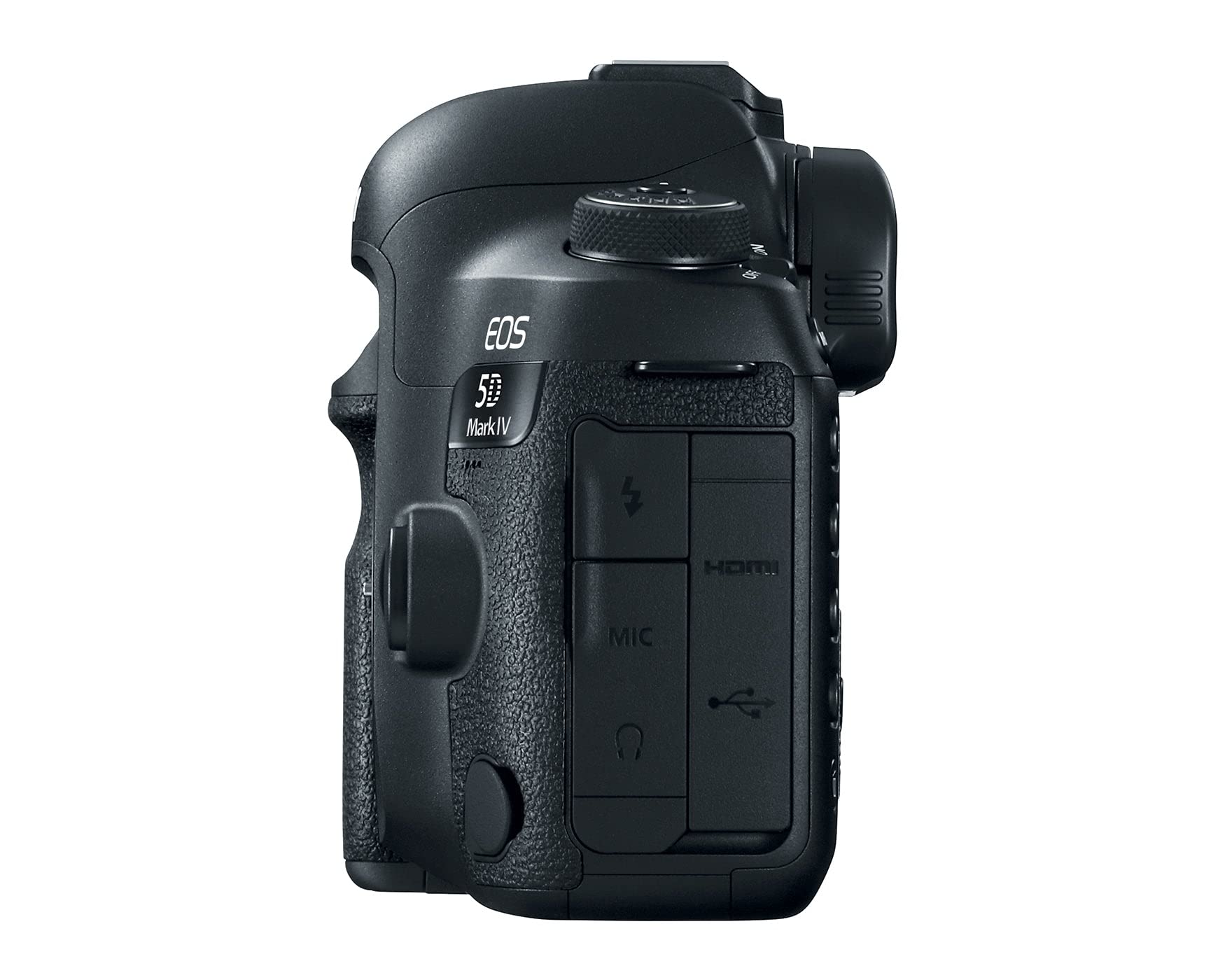
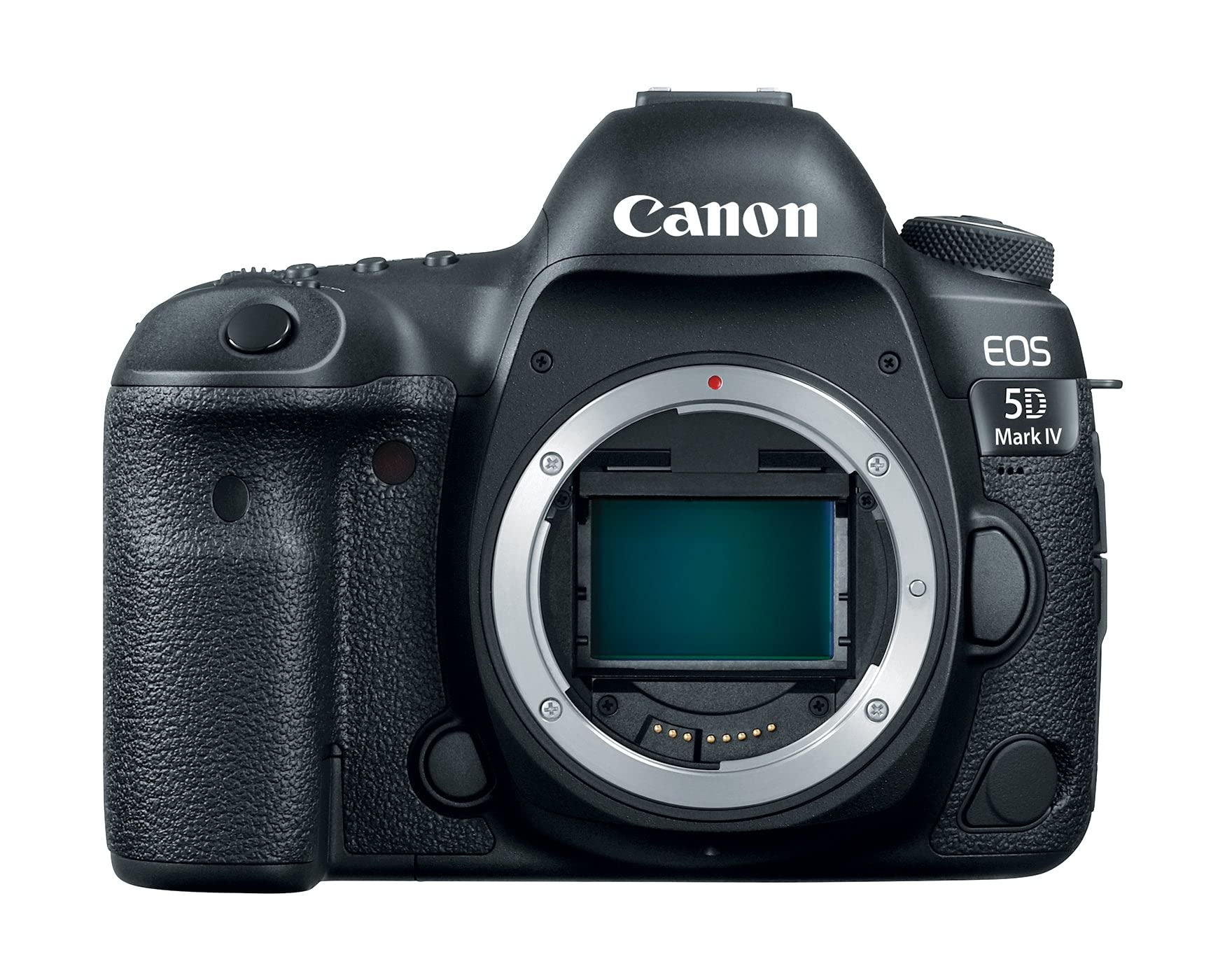
The Canon EOS 5D Mark IV is a professional-grade full-frame DSLR featuring a 30.4MP CMOS sensor, advanced DIGIC 6+ processor, and 4K video recording capabilities. With a 61-point autofocus system including Dual Pixel CMOS AF, 7 fps continuous shooting, and built-in Wi-Fi/NFC connectivity, it delivers exceptional image quality and versatile performance for photographers and videographers seeking cutting-edge technology and seamless workflow integration.


| ASIN | B01KURGS9E |
| Age Range Description | Adult |
| Are Batteries Included | Yes |
| Aspect Ratio | 1.50:1 |
| Auto Focus Technology | Automatic, Manual |
| Autofocus | Yes |
| Autofocus Points | 61 |
| Best Sellers Rank | #39,132 in Electronics ( See Top 100 in Electronics ) #23 in DSLR Cameras |
| Bit Depth | 14 Bit |
| Brand | Canon |
| Built-In Media | EOS 5D Mark IV Body,Eyecup Eg,Camera Cover R-F-3,Wide Strap EW-EOS5DMKIV,Battery Charger LC-E6,Battery Pack LP-E6N,Interface Cable IFC-150U II (With Protector),EOS Digital Solution Disk 31.4(9ML),Software Instructions CD,Camera Instruction Book,Kit Warranty Card for Camera,USA Leaflet of Original Learning Center Website/Registration |
| Camera Flash | Hotshoe |
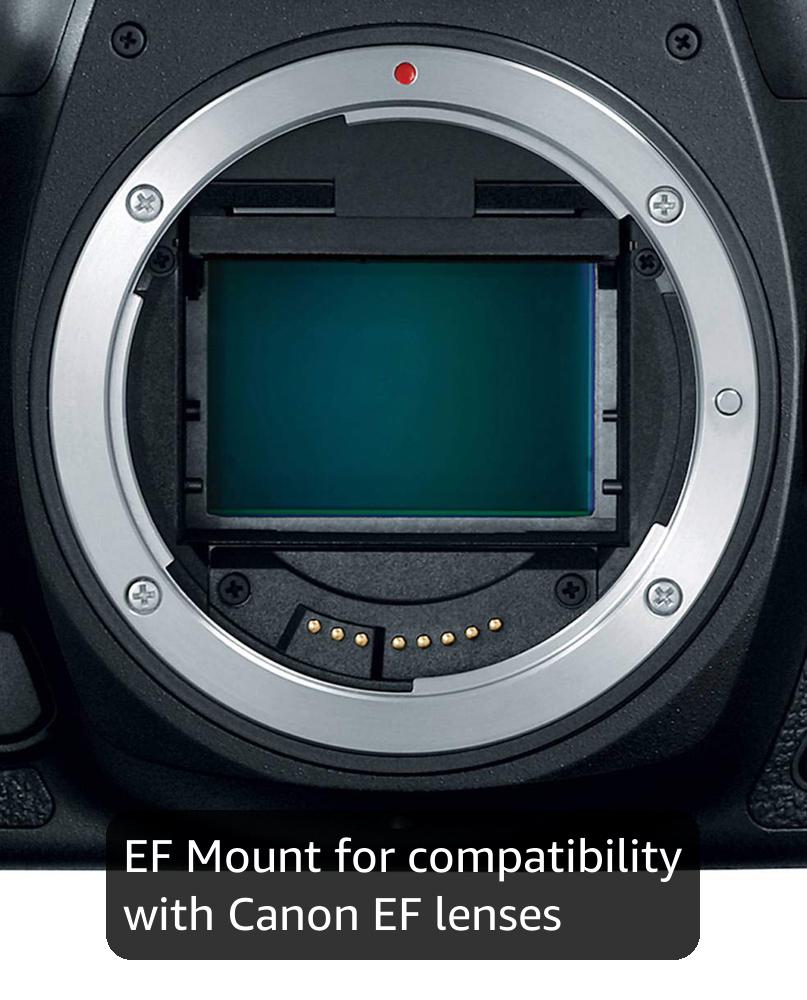
| Camera Lens | Canon EF/EF-S compatible wide-angle lens |
| Color | Black |
| Compatible Devices | Canon EF & EF-S mount lenses, Wi-Fi enabled devices |
| Compatible Mountings | Canon EF, Canon EF-S |
| Connectivity Technology | Wi-Fi |
| Continuous Shooting | 7 FPS |
| Crop Mode | 1.00x (No Crop) |
| Customer Reviews | 4.6 out of 5 stars 974 Reviews |
| Digital Scene Transition | False |
| Digital-Still | No |
| Display Fixture Type | Fixed |
| Display Resolution Maximum | 1040000 |
| Display Type | LCD |
| Dots Per Screen | 745600 dots |
| Effective Still Resolution | 30.4 MP |
| Expanded ISO Minimum | 100 |
| Exposure Control | aperture-priority, manual-and-automatic, program, shutter-speed-priority |
| File Format | RAW |
| Flash Memory Bus Interface Type | UHS-I or slower |
| Flash Memory Speed Class | 10 |
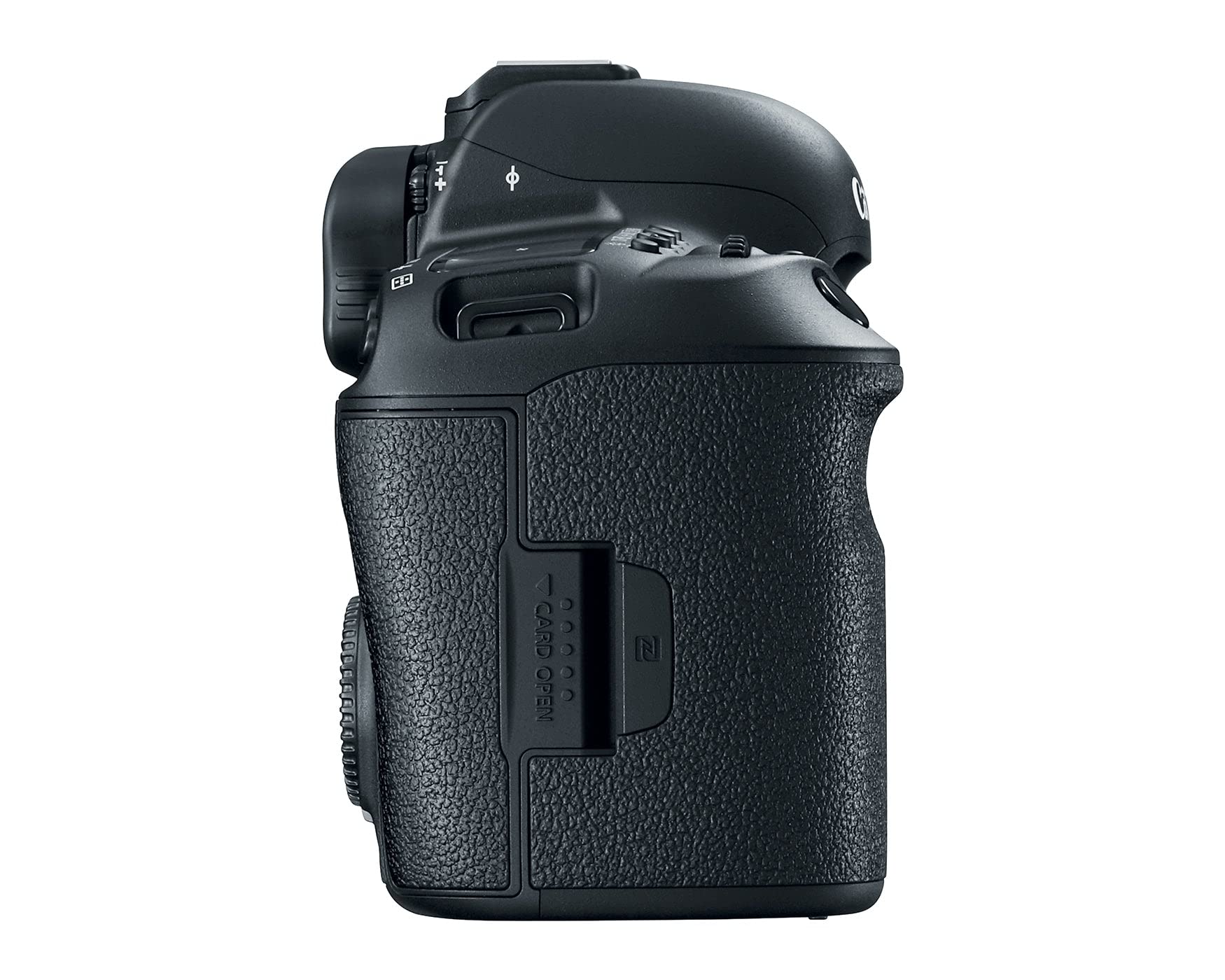
| Flash Memory Type | SDXC |
| Flash Memory UHS Speed Class | U3 |
| Flash Modes | eTTL |
| Focal Length Description | 55 millimeters |
| Focus Features | Hybrid autofocus (Dual Pixel CMOS AF and Movie Servo AF) |
| Focus Mode | Automatic AF (AF-A), Continuous-Servo AF (AF-C), Single-Servo AF (AF-S) |
| Focus Type | manual-and-auto |
| Form Factor | DSLR |
| Global Trade Identification Number | 00013803281347, 04549292075779 |
| HDMI Type | Type C Mini HDMI |
| Hardware Interface | AV Port |
| Has Color Screen | Yes |
| Has Self-Timer | Yes |
| ISO Range | 32000 ISO |
| Image Capture Type | Stills & Video |
| Image Stabilization | true |
| Image stabilization | true |
| Item Weight | 1.24 Kilograms |
| JPEG Quality Level | Basic, Fine, Normal |
| Lens Construction | Simple |
| Lens Type | Wide Angle |
| Light Sensitivity | ISO 100-32000 (expandable to 50-102400) |
| Manufacturer | Canon Cameras US |
| Maximum Aperture | 0.1 f |
| Maximum Focal Length | 55 Millimeters |
| Maximum Image Size | 4096 Pixels |
| Maximum Shutter Speed | 30 Seconds |
| Metering Methods | average,center-weighted,multi-zone,partial,spot |
| Minimum Focal Length | 0.1 Millimeters |
| Minimum Shutter Speed | 1/80000 to 30s |
| Model Name | Canon EOS 5D Mark IV |
| Model Number | 5DIVB |
| Model Series | EOS 5D |
| Movie Mode | Yes |
| Night vision | No |
| Number of Diaphragm Blades | 7 |
| Optical Zoom | 1 x |
| Phase Detection Sensor Points | 41 |
| Photo Sensor Resolution | 12.8 MP |
| Photo Sensor Size | Full Frame (35mm) |
| Photo Sensor Technology | CMOS |
| Recording Capacity | 30 Minutes |
| Remote Included | No |
| Screen Size | 3.2 Inches |
| Self Timer | 10 Seconds |
| Sensor Type | CMOS |
| Series Number | 5 |
| Shooting Modes | Easy, Manual, Movie, Sports |
| Skill Level | Professional |
| Special Feature | Interval Recording,mirror_lock_up |
| Specific Uses For Product | versatile photography and videography |
| Supported File Format | RAW |
| Supported Image Format | JPEG, Raw |
| Supported Media Type | EnhancedContent |
| Total Still Resolution | 30.4 MP |
| Total USB 2.0 Ports | 1 |
| Total USB 3.0 Ports | 1 |
| Total USB Ports | 1 |
| Total Video Out Ports | 1 |
| Touch Screen Type | Capacitive |
| UPC | 013803281347 |
| Video Output | Mini-HDMI |
| Video Resolution | 4K UHD 2160p |
| Viewfinder | Optical |
| Warranty Description | Product Warranty: For warranty information about this product, please click here. [PDF ] |
| White Balance Settings | Auto, Cloudy, Color Temperature, Custom, Daylight, Flash torch, Fluorescent, Shade, Tungsten |
| Wireless Technology | Wi-Fi |
| Write Speed | up to 300 MB/s |
| Zoom | Digital Zoom |
C**1
The Mark IV is another superb iteration of the Canon 5D line that hits many of the upgrade checkboxes
I'm writing this review as a hobbyist rather than professional photographer (that is, that sells photographs for a living). My first 5D was the Mark II, and I've used the Mark III for over 3 years myself, and instead of going through all the nitty-gritty of the Mark IV which you find elsewhere, I'm going to speak to mostly to the differences I've found in my day-to-day experiences and whether it's worth the upgrade for the hobbyist. First off, coming from the Mark III, the IV on the outside is very much similar, and you could mistake them at a glance. The differences include a slightly rougher cap on top of the new Mark IV body (where the Canon brand label sits) whereas the Mark III had the same material extended from the body over the cap. Perhaps it's a new material housing to play more nicely with the GPS/Wi-Fi? There's also new switch to toggle face detection in Live View mode in the back. The mode switch dial is also the newer Canon styles that bumps up a bit rather than the more flatter design of the Mark III. Otherwise, for those coming from the Mark III, you can feel right at home picking up the Mark IV for the first time. In terms of shooting, I personally find the viewfinder to be brighter on the Mark IV than on the Mark III. This could just be my units and maybe a bit of dust on the Mark III, but using the same lenses, I find the Mark IV viewfinder a joy to use, much like the Mark III's, and even a shade brighter! The new Dual Pixel AF works as advertised, and is much faster than the Mark III at face detection and toggling between different subjects - a big improvement here. The back review LCD is also a touchscreen now, which allows for your standard panning of shots as well as pinch-and-zoom. Although many shooters will still opt for the familiar mechanical buttons, as a hobbyist that shares the camera for others to shoot as well as reviews them on the spot with many moms with Android/iPhones, it's so much easier now to have them use the touchscreen to flip from photo to photo, and to zoom in and out to see themselves and whether the shot is worth keeping ;) In terms of photo quality, the highlight is the improved dynamic range of the new 30MP sensor. Although improved from the Mark II to the Mark III, I see a marked improvement for the Mark IV. Pushing exposure on underexposed shots with the same ISO produces less banding on the same shots with the Mark III. Although Canon is still behind Nikon in this area, I'm happy to see improvements in this area. Auto-focus at lower light levels at the center point is also improved, so that helps with getting those low light shots as well. As for overall crispness and quality of the shots (which of course, depends very much on the lens itself), I found photos were very similar on the Mark IV, which is not in anyway a let down given I thought the Mark III was overall excellent in terms of stills quality. Also as a hobbyist with a simple Lightroom workflow, I still have Lightroom 5. With Adobe's latest Camera Raw 9.7, Adobe now supports the Mark IV, but you'll need the newest Lightroom 6 or Lightroom CC, which is another cost to add to your upgrade tally if you don't already have those versions and plan to use Lightroom. Also, although Adobe will enable editing of the new Dual Pixel RAW format in Lightroom, it looks like, at least for now (as of late September 2016), it doesn't support any making micro-adjustments in focus that can be done in DPP. I find that it's useful when shooting with fast primes like the Canon 50 f/1.2L where small adjustments can help you hit focus. Overall, another superb iteration of the Canon 5D line that hits many of the upgrade checkboxes, most particular in the area of dynamic range. I'll update my review as I've gotten more behind-the-lens time with the Mark IV, and in particular, video shooting. So, is the upgrade worth it for Mark III owners? I would say for those of you shooting in more low light settings, the upgrades could make the additional cost worth it for you. However, for many others, given that photo quality improvement from the Mark III is not revolutionary, I would say it may not be at the current MSRP for Mark III owners; maybe wait for the next Black Friday sale to bring the price down a bit. Also, having used the Mark II as well myself, for those Mark II owners itching for the next big thing, with two generations of technology under its belt, the Mark IV is a worthy upgrade that you don't have to worry looking back on!
K**E
Great upgrade from the 6d Mark II
Upgraded from the 6d Mark II. I'm obsessed. It's a game-changer in low light and has really elevated the look of my photos. I appreciate its dated mechanics over the mirrorless systems, but that's just me. It's a workhorse. Big big fan, might order another one soon to have two on hand.
C**S
Rock Solid Camera - Love It.
I upgraded from a Mark II that I used like a rented mule. I had a couple of "must haves" for the upgrade. First, I needed a more sophisticated autofocus system. The Mark IV delivers in speed and accuracy, and it's easily customizable with both the switches and touchscreen. I also wanted more dynamic range, and at least they got into the Sony ball park. I would complain about it still being behind the Nikon D810, but it delivers enough to get the job done and it makes up for it in low light / high iso performance. It also makes up for it, in a an overall sense, when paired with good glass - something that too often gets missed by the spec sheet nazis. From a performance perspective I am very happy, and from a usability perspective I'm also very happy. The touch screen, along with the generally sensible Canon menus and switchology work for me. It has everything I want in a camera, and does everything well, so overall I'm very pleased. It's a good solid piece of equipment that really delivers when paired with a good lens. Update: Went from just wanting an upgrade and being overall happy to absolutely loving it. 30 mp is a good bump up in terms of resolution without being monstrous (they are still big files), but the best thing is that good hand held shooting is still possible (this thing rocks with the Canon 100-400 Mk II). The touch screen is amazingly useful and quick - wouldn't want to be without it now. The dynamic range is where it needs to be, the autofocus is fantastic, and the high iso performance is exceptional. The customization options (including the touchscreen) have made this into an amazing piece of equipment for me. I almost got lured down the Sony / Metabones adapter road, but I'm glad I didn't. The whole little camera / big lens idea doesn't make sense, and why give up any features or performance? I can use my canon glass and speedlights and do everything I need to do without compromising anything.
K**5
My Last Great DSLR
I bought this camera knowing that this might be the last few DSLR cameras that Canon will ever make. DSLR's have some advantages over mirrorless. The sensor is protected by the mirror from dust and contact with whatever is outside when you remove or change lenses. With DSLR's, you can see through the lens without turning on the power. True, DSLR's are bulkier and heavier than the newest Canon mirrorless, but some pros prefer the beefier construction. I love the picture quality and the professional-level quality EF lenses that are available in every shop, warehouse, auction place, and even thriftstores. One of the reasons why I chose Canon was because their flange distance was shorter than Nikon's, and Canon wasn't stringing us along like what Nikon was doing before full-frame sensors became commonplace. I did not like cropped sensors. Canon made available a camera with a full-sized 24x36 sensor and if I remember correctly it was my EOS 5D Mark II. But getting back to the 5D Mark IV, it's a professional-level camera. The only thing I do not like is the LCD monitor. I wish they had used the fold-out and flippable monitor that the 6D mark II has. The monitor on the 5D Mark IV is exposed. It does not angle up or down. It stays put. I can live with that, but i wish i did not have to. So what I did was put a glass screen protector on it. Done. This camera is a joy to work with. Ergonomics is perfect and I have small hands. Large handed people do not complain with this camera. You can shoot with just your right hand if the lens on it is light enough. So I think I've told you the reasons why I chose this camera. It might be the last few of its kind and then the Canon mirrorless cameras will take over.
S**O
Great upgrade to a Mark III!
I have been a Canon EOS shooter for over 20 years now - dating back to the film days. Their digital line has impressed me over the years throughout product evolution. As an owner of every EOS 5D model since the original, this model is just as impressive as with each generational upgrade. I bought a 5DS for architectural photography, which it delivers impressive image resolution; but for weddings the 5DS was overkill. As an upgrade to my 5DMIII, I needed something that could perform without resolution overkill. The answer is the 5DMIV! First off, resolution is just right. 30MP is just what I needed for wedding and portrait photography. 50MP is too much and 22 MP is no longer competitive. Albeit I have gotten great image enlargements out of my 22MP cameras. The ability to crop further is enticing to me! The touch screen is an amazing upgrade! It makes surfing through menu functions so much faster and easier. Having the additional information within the viewfinder; such as shooting modes - is a hit! The burst rate is much better on this model than before. With a good CF card that has a 80MB/s data rate, one can ensure they aren't missing that perfect shot. Overall - wonderful camera. I cannot say how much I am impressed in one review. I hope to update my review once I have experienced the product a little further - perhaps once wedding season fires up again! If your asking if it is a better upgrade (Or worth the $$$) over getting a new Mark 3; don't question it - it is worth the extra money!
J**M
Great Upgrade !!
Upgraded from a 5D Mark III Took a minute to use, had a few glitches. Wouldn't let me switch to MRAW Or SRAW until I turned on dual pixel. Then turned it off. Same with the external speedlight control. Could only hit 1/4 power until I did something in the menu. MaybeI was on Multi vs M? Maybe operator error. Anyhow, all's well and working as expected. I was shooting a wedding and was already stressed a little at the time. Quality of image is better. Touch screen menu is GREAT, FASTER. Auto focus in video is a welcome improvement! 5D Mark III is still a great camera. I've had 2 of them, never had an issue, use them daily. I got one on preorder in 2012 and just wanted an upgrade. I haven't used the WI Fi. I do notice it seems to use more battery power unless it switches to 3/4 sooner. Great camera. If your on a budget for stills, Mark III is a good option. If you like high tech, video, Mark IV is your camera. I got a 128GB CF card and a 64GB SD card so I don't have to worry about the large 30MB RAW files.
S**W
Stellar Dynamic Range And Noise Performance
Just because the "world" has moved on to mirrorless doesn't make this 5D IV any less capable of a camera. As a matter of fact, the picture quality this camera produces are at least on par with those you get from the latest mirrorless cameras. I've had this camera for 2.5 years, and it's never ceased to amaze me what incredibly beautiful pictures this camera takes. Paired with a 24-70mm (either f/4 or f/2.8), or a 16-35mm (either f/4 or f/2.8), or a 70-200mm (either f/4 or f/2.8) and you've got a rig capable of producing pictures that are sharp edge to edge, with stellar dynamic range and noise performance. This camera pairs perfectly with my 24-70mm f/2.8, 16-35mm f/2.8, and 100-400mm f/5.6. I use it for landscape, architecture, wildlife, and everything in between, and boy, does it deliver. With raw pictures, I'm able to easily recover shadow areas without incurring too much noise. There is also much less noise at high ISO's than my older 6D. I'm able to crank up the ISO to 1600 or higher with little or no penalty in terms of noise. That's 4 or more extra stops of light! A picture is worth a thousand words, so I've included sample pictures that are unedited (shot in raw and exported as jpg). These have zero edits -- no crop, no saturation adjustments, no sharpening, etc. The battery life on this thing is stellar. (Can't say the same for mirrorless cameras!) I often leave this camera turned on, and the battery on standby will last for days or weeks. I only need to bring ONE spare battery for an entire day of shooting. Oftentimes, a single battery is able to last me an entire day of shooting. I will probably never move on to mirrorless. I find that the EVF interferes with my visualization workflow as I compose a shot. I only need an OVF, with the built-in light meter. And perhaps a little chimping now and again. An EVF feels like a downgrade for me! Currently at 1800.00, this camera is a steal (I got mine at 2700.00). So, if you're not jumping on the mirrorless bandwagon, I'd highly, highly, HIGHLY recommend this DSLR.
M**E
Good
I was like it
Trustpilot
1 month ago
2 weeks ago