Some deliveries may take a little longer than usual due to regional shipping conditions.

DOWNLOAD THE APP


Customer Services
Copyright © 2025 Desertcart Holdings Limited
DOWNLOAD THE APP
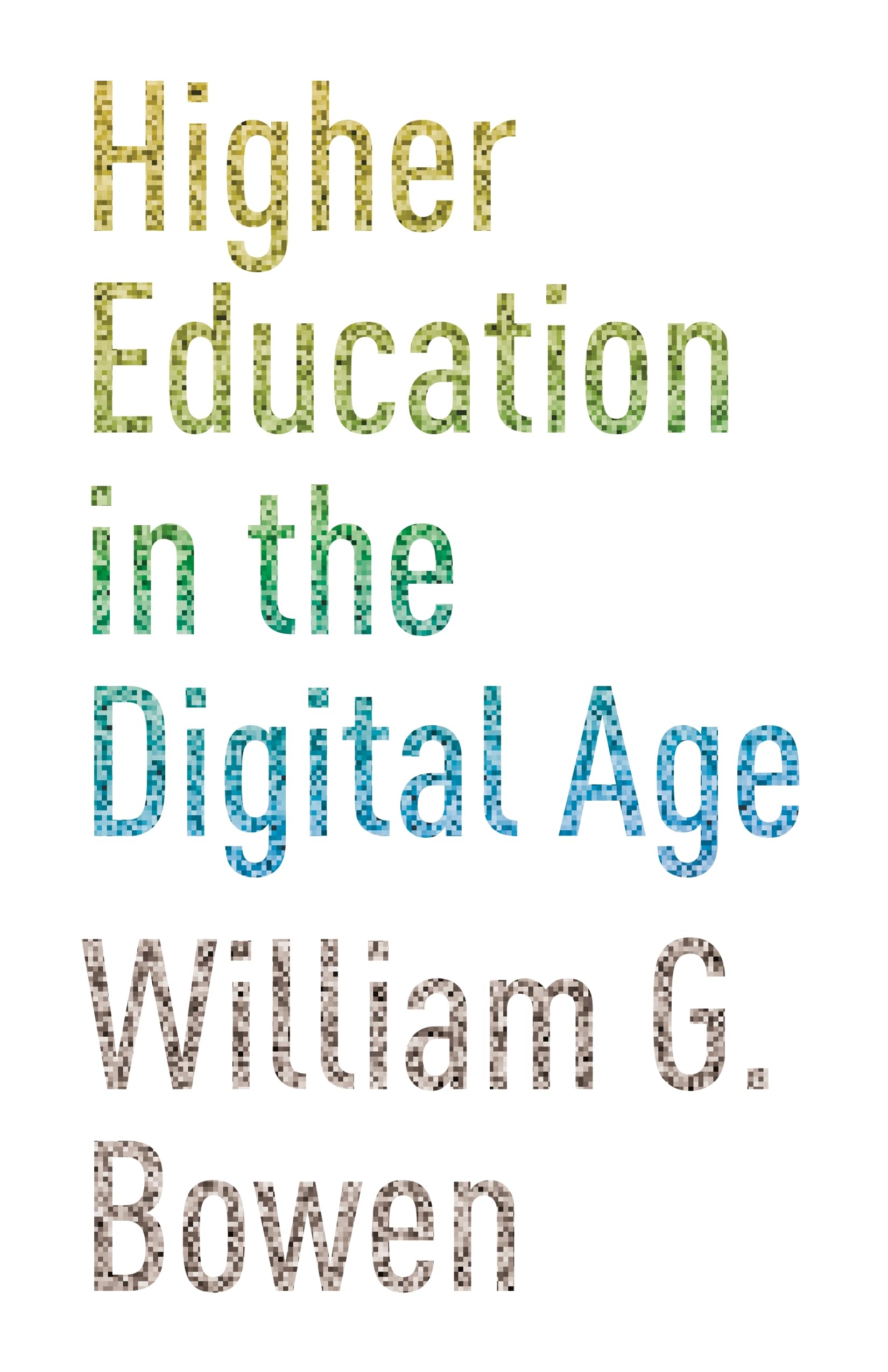
Full description not available
J**S
Great insights into yesterday, murky vision of tomorrow
Part One -- the problems -- is spot on, Part Two -- the techie solutions -- not so much. The relatively prosaic development of MOOCs -- e-learning at enormous scale -- has been interesting but not all that important. MOOCs gave administrators and op-ed writers like Bowen and Thomas Friedman plenty of popular apocalyptic notions, but it seems the real advances have yet to be made in less glitzy areas like K-12 preparation, pedagogy, curriculum, governance and social integration. Education is evolving from a public good to a consumption good, a semi-private media and entertainment landscape of human capital enhancement, micro-credentialing and personal fulfillment.
J**E
Technology in higher education is not to replace but enhance success
At age 79, William Bowen, former president of Princeton University and the Mellon Foundation, was selected as a lecturer for the Tanner Lectures on Human Values at Stanford University. His book, Higher Education in the Digital Age, is based on those two lectures that took place in 2012 along with responses from highly esteemed professionals in the field of higher as well as Bowen’s own commentary to those responses. In the first chapter, Costs and Productivity in Higher Education, Bowen summarizes the issue of affordability and the rising costs of college. Bowen then discusses solutions in the form of online platforms as part of his second lecture entitled Prospects for an Online Fix. He offers his critique and recommendations based upon his vast knowledge and experience while humbly admitting that he is doing his best to keep up with the changes that are occurring at a staggering pace.Bowen’s perspective is rare and refreshing in that he acknowledges the significance of the practical necessities such as cost and graduation rates but not at the expense of devaluing the intangible purposes of character building and citizenship fostered through higher education. He frames this in the concept of the productivity quotient whereas the way to increase productivity is through lowering costs and increasing student learning via completion rates and time to complete degree. Although he makes an exception that this formula is not entirely measurable as student learning cannot only be reduced to those outcomes. Bowen argues, and Howard Gardner supports in his response, that the residential learning community, “minds rubbing minds,” eyeball to eyeball communication, are vital and powerful and no online platform should solely replace these pedagogies. Yet technology has evolved to become a resource that higher education must embrace. Bowen suggests that a portfolio approach is best as it provides a comprehensive educational experience. In order for this to be successful, the faculty must be involved and, ideally, there would be collaboration between well respected schools with a demonstrated capacity to execute initiatives.Bowen understands that restoring the public’s trust in colleges and universities is paramount to the continued success of American higher education. He promotes technology as a solution to this issue because it has the potential to both improve the success of college students while decreasing costs. One hesitation Bowen raises is that there is a lack of empirical evidence to support online platforms improve learning outcomes. Bowen stresses the need for “a willingness to question established norms including models of decision making,” but only done so in conjunction with well performed assessments. These cost savings initiatives must be done in way that that are visible to the public and help to restore the faith that colleges and universities are making efforts for change.Throughout the book Bowen recognizes the discrepancies that exist between institutions that are financially secure and the larger number of other schools that do not have the money, resources or people to make these initiatives possible. Technology platforms such as MOOCs could possibly reduce or eliminate some of these discrepancies and provide an opportunity for better matching of students to colleges and universities based on competencies instead of financial means. These changes could have a positive effect on time to completion and college completion rates. But Bowen also identifies that there is a stewardship that should be engrained with prestigious institutions so that their advances truly do benefit the greater good of not only higher education but society at large. Examples such as Stanford’s Class2Go and MIT’s Open Office program demonstrate such stewardship that contributes greatly to our society, opening access and once again, advancing our standing as a world leader in higher education.
R**N
A thorough discussion of online education
An established higher education system is in a transformation, new technologies are moving all or part of the classroom online. This book talks about related issues and what we should expect to see in the near future.
W**Y
Not that great
I bet he never took an online class. This book is rather general and misses a lot of subtlety about higher education.
K**N
A Whole New World
Throughout the past several years, education as a whole has been changing at a rapid pace. Specifically, the most significant changes have occurred in the field of higher education. This era of higher education is commonly referred to as the digital age, mostly due to the rise of massive open online courses (MOOCs), online, and hybrid degrees. A major contribution to the aforementioned rise is the snowballing cost of higher education. Students simply need cheaper ways to receive college degrees. Is there an answer for what William Bowen refers to as the cost disease? His book, Higher Education in the Digital Age, attempts to answer that question through a general evaluation of the developing technologies and introduction of current and future debates.Bowen is a former president of Princeton University and the Mellon Foundation, and holds a level of expertise in the field that is rivaled by few individuals. The bulk of the writing within these pages is based on the Tanner Lectures on Human Values at Stanford University in 2012. He explains why he thinks technology has the potential to really bring the costs back to where they should be without harming the purpose of higher education: learning. Bowen recognizes that the time of simply sitting in a classroom and listening to a professor lecture is slowly coming to an end, but he hopes not completely. Therefore, his wish is that higher education moves toward an integration of what both the past and newer technologies have to offer. In the very short history of MOOCs, academic leaders, including Bowen, have seen how education can be affordable. In my opinion, this revelation was terrifying for many of them at first, but now I think some are opening up to the trend.One thing Bowen talks about in the book is the idea of a portfolio approach to education, but I feel that there are similar techniques already in place in some areas of higher education. For example, I had to create a portfolio as a physical education major during my college years. Most of it included different experiences I had outside of the classroom. Another topic he touched on that I find most interesting is the fact that future debates will include how institutions will work together, specifically different professors. Many professors will, or do, use MOOCs to aid in their teachings on a certain subject. As a new professor, I would not hesitate to sign up for a MOOC and learn from a tenured professor at Stanford. He could possibly teach me some invaluable teaching strategies to engage college-level students.Overall, Bowen presents several ideas, both positive and negative, that will stir up higher education institutions around the country. The future of higher education is unknown, so those of you working in the field can really benefit from reading this book. We all need to be reminded that change can help mold boring techniques from the past into exciting techniques of the future. Education needs a makeover and the time is now.
L**S
Five Stars
It was timely and it was what I needed.
Trustpilot
2 months ago
2 weeks ago