
DOWNLOAD THE APP


Customer Services
Copyright © 2025 Desertcart Holdings Limited
DOWNLOAD THE APP
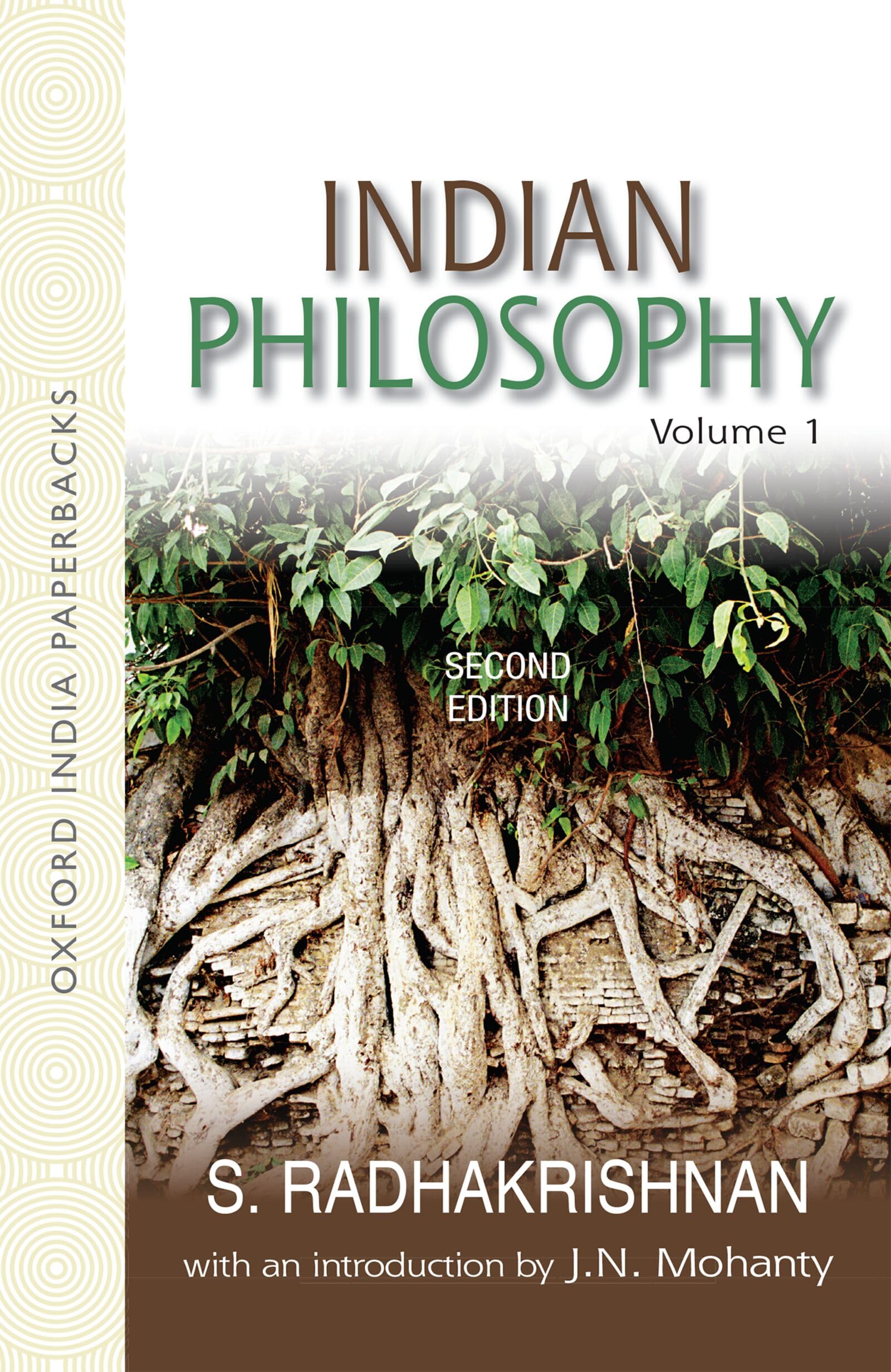
Indian Philosophy: Volume I: with an Introduction by J.N. Mohanty: v. 1 (Oxford India Collection) (Oxford India Collection (Paperback)) : Radhakrishnan: desertcart.co.uk: Books Review: Indian Philosophy - I may have attempted this book in the heady mixed up 60's but all I can say now in my dwindling days this is a book needed to explain in detail of Indian Religious Philosophy from the movement of a population into North India from the Vedas to Buddhism. Its a detailed study into world faiths & can be applied to greater understanding into how this has fitted into world faiths in general; for those trying to figure our a solution of our crazy mixed up world. But quite heavy if your wrist muscles are weak with old age. Review: As Far As It Goes - Indian Philosophy, Volume I Scholarly and immense, but in accessible Victorian prose. I'm not surprised it's remained the standard text for so long - who would now even begin to attempt to collate the whole of a civilisation's philosophy! Simultaneously ambitious and sprawling, complete and partial, disciplined and wayward, pedantic and phantastic, objective and personal, this worthy tome is a gathering and a marker. It serves well as fundamental introduction to the avenues of understanding that the mode of `Indian' experience must go down to achieve wisdom. Some prior interest in Indian philosophy - and therefore some patience - is presumed even in its Victorian compendiousness. My interest in reading often depended on which parts I found most pertinent. The first hundred pages or so go over the polytheism/henotheism of the Veda, and there is some accounting of the various Hindu deities etc. I was happier once we got to the Upanishads and, from there, the on-going reconfigurations and considerations of the absolute that is the contribution of India to world philosophy - the various formulations of the ground that have been overlooked [or one of which has been posited thoughtlessly as absolute and primary] by the narrower, religiously influenced `western' tradition. But for such an apparently comprehensive tome, it does sometimes feel sketchy. The book is not self-contained. Radhakrishnan frequently refers to things he himself hasn't yet described within his own text: he references sunyata without having explained what that might be. In fact, he steers clear of an exposition of the way in which Buddhism might be fundamentally different from Hinduism. It increasingly appears, in the course of his writing, that Radhakrishnan is not entirely self-effacing. The book begins to give an interesting, historical sense of the time in which it was written [first pub. 1922] and the intellectual and social predispositions of its author as well as the state of historical knowledge at the time. Radhakrishnan writes about Indian Philosophy within the purview of Schopenhauer, Hegel, the then current fashions and initial understandings of western expositors, and his own Hinduism. Radhakrishnan finds Hinduism more tenable than Buddhism: `As a philosophy and religion, the Gita is more complete than Buddhism...' p449. He negatively characterises the Hinayana, `It is not a healthy minded doctrine. A sort of world hatred is its inspiring motive.' Academically, and logically, he is unable to come to terms with the relativistic negation of an absolute in the basic premises of Buddhism. Apparently the Mahayana is superior to the untenable Hinayana because, `A metaphysical substratum is admitted.' Eh? He often insists that Buddha never denied the reality of the Atman: `Buddha is silent about the Atman enunciated in the Upanishads. He neither affirms nor denies its existence.' He then contradicts such assertions: for example, when positively quoting Nagarjuna on the very next page: `The Tathagata sometimes taught that the Atman exists, and at other times he taught that the Atman does not exist...' [p326/7.] Radhakrishnan does not clarify what it is that is being asserted and what denied, and how this is or is not Atman, or what is intended in relation to Atman/Brahman by the 'neither existence nor non-existence' of the middle way. Nor does he investigate the implications of emptiness; he has instead an emotional reaction against it - which itself is symptomatically interesting - and his language gets surprisingly graphic. The areas of text that are most fractured, contradictory and incoherent [though over a large Victorian scale of tens of pages, smuggled in to an apparent propriety] are those where he attempts to reconcile his respect for Buddha as a sage with his Hindu convictions. His exposition comes under pressure and seems to me to be contradictory - precisely because he cannot give up on there being an independently existing transcendent reality. His exposition continually reinvests Buddhism with this. And reinvests Hinduism with the insights of Buddhism. He provides a brilliantly clinical and precise exposition of the tenets of the Madhyamika and then says: but 'the whole show of Nagarjuna's logic is a screen for his heart, which believed in an absolute reality.' And yet, in a way, this is perhaps what happened historically with the consolidations of Shankara. It would seem equally churlish however [and incorrect for a Buddhist] to deny that Buddhism is intimately related to Hinduism; dependent as all theorizing and insight is upon the conditions of its time. Or, perhaps, the centrality of emptiness to contemporary understandings of Buddhism are themselves just a fashion and focus of now. Certainly Radhakrishnan seems to be on firmer and more trans-historical ground in his exegesis of the fundamentals of Hindu understanding. Therein, this book is colossal and the worthy prose often climbs to an impressive and inescapable ecstatic.
| Best Sellers Rank | 1,488,080 in Books ( See Top 100 in Books ) 33 in Jainism (Books) 632 in Religious History of Hinduism 676 in Introduction to Philosophy |
| Book 2 of 2 | Oxford India Collection (Paperback) |
| Customer reviews | 4.6 4.6 out of 5 stars (383) |
| Dimensions | 2.79 x 13.72 x 21.59 cm |
| Edition | 2nd |
| ISBN-10 | 019569841X |
| ISBN-13 | 978-0195698411 |
| Item weight | 430 g |
| Language | English |
| Print length | 664 pages |
| Publication date | 30 April 2009 |
| Publisher | OUP India |
D**N
Indian Philosophy
I may have attempted this book in the heady mixed up 60's but all I can say now in my dwindling days this is a book needed to explain in detail of Indian Religious Philosophy from the movement of a population into North India from the Vedas to Buddhism. Its a detailed study into world faiths & can be applied to greater understanding into how this has fitted into world faiths in general; for those trying to figure our a solution of our crazy mixed up world. But quite heavy if your wrist muscles are weak with old age.
M**L
As Far As It Goes
Indian Philosophy, Volume I Scholarly and immense, but in accessible Victorian prose. I'm not surprised it's remained the standard text for so long - who would now even begin to attempt to collate the whole of a civilisation's philosophy! Simultaneously ambitious and sprawling, complete and partial, disciplined and wayward, pedantic and phantastic, objective and personal, this worthy tome is a gathering and a marker. It serves well as fundamental introduction to the avenues of understanding that the mode of `Indian' experience must go down to achieve wisdom. Some prior interest in Indian philosophy - and therefore some patience - is presumed even in its Victorian compendiousness. My interest in reading often depended on which parts I found most pertinent. The first hundred pages or so go over the polytheism/henotheism of the Veda, and there is some accounting of the various Hindu deities etc. I was happier once we got to the Upanishads and, from there, the on-going reconfigurations and considerations of the absolute that is the contribution of India to world philosophy - the various formulations of the ground that have been overlooked [or one of which has been posited thoughtlessly as absolute and primary] by the narrower, religiously influenced `western' tradition. But for such an apparently comprehensive tome, it does sometimes feel sketchy. The book is not self-contained. Radhakrishnan frequently refers to things he himself hasn't yet described within his own text: he references sunyata without having explained what that might be. In fact, he steers clear of an exposition of the way in which Buddhism might be fundamentally different from Hinduism. It increasingly appears, in the course of his writing, that Radhakrishnan is not entirely self-effacing. The book begins to give an interesting, historical sense of the time in which it was written [first pub. 1922] and the intellectual and social predispositions of its author as well as the state of historical knowledge at the time. Radhakrishnan writes about Indian Philosophy within the purview of Schopenhauer, Hegel, the then current fashions and initial understandings of western expositors, and his own Hinduism. Radhakrishnan finds Hinduism more tenable than Buddhism: `As a philosophy and religion, the Gita is more complete than Buddhism...' p449. He negatively characterises the Hinayana, `It is not a healthy minded doctrine. A sort of world hatred is its inspiring motive.' Academically, and logically, he is unable to come to terms with the relativistic negation of an absolute in the basic premises of Buddhism. Apparently the Mahayana is superior to the untenable Hinayana because, `A metaphysical substratum is admitted.' Eh? He often insists that Buddha never denied the reality of the Atman: `Buddha is silent about the Atman enunciated in the Upanishads. He neither affirms nor denies its existence.' He then contradicts such assertions: for example, when positively quoting Nagarjuna on the very next page: `The Tathagata sometimes taught that the Atman exists, and at other times he taught that the Atman does not exist...' [p326/7.] Radhakrishnan does not clarify what it is that is being asserted and what denied, and how this is or is not Atman, or what is intended in relation to Atman/Brahman by the 'neither existence nor non-existence' of the middle way. Nor does he investigate the implications of emptiness; he has instead an emotional reaction against it - which itself is symptomatically interesting - and his language gets surprisingly graphic. The areas of text that are most fractured, contradictory and incoherent [though over a large Victorian scale of tens of pages, smuggled in to an apparent propriety] are those where he attempts to reconcile his respect for Buddha as a sage with his Hindu convictions. His exposition comes under pressure and seems to me to be contradictory - precisely because he cannot give up on there being an independently existing transcendent reality. His exposition continually reinvests Buddhism with this. And reinvests Hinduism with the insights of Buddhism. He provides a brilliantly clinical and precise exposition of the tenets of the Madhyamika and then says: but 'the whole show of Nagarjuna's logic is a screen for his heart, which believed in an absolute reality.' And yet, in a way, this is perhaps what happened historically with the consolidations of Shankara. It would seem equally churlish however [and incorrect for a Buddhist] to deny that Buddhism is intimately related to Hinduism; dependent as all theorizing and insight is upon the conditions of its time. Or, perhaps, the centrality of emptiness to contemporary understandings of Buddhism are themselves just a fashion and focus of now. Certainly Radhakrishnan seems to be on firmer and more trans-historical ground in his exegesis of the fundamentals of Hindu understanding. Therein, this book is colossal and the worthy prose often climbs to an impressive and inescapable ecstatic.
R**N
Reasons for purchasing this book
I can only say that the book reached me in excellent condition. I wanted to purchase this book because Radhkrishnan was a very good philosopher, and wrote realistically and meaningfully about the Hindu philosophy. In the UK, Christians don't read books by Hindu philosophers and are 'poorer' for it. I have read other books by Radhakrishnan, but this book will serve a special purpose for me. After perusal, I want to write a short review for Amazon.co.uk., but this will take time, because I'm now reading some books on Science and Christian Faith. Furthermore, Radhakrishnan's books are not an easy read and require a lot of concentration. I'm a very keen Christian, who would like to communicate the Christian Faith to Hindus, and I can think of no better way than to see how I would stand up to a strong Hindu philosopher, who was a genuinely good man. I wouldn't have normally written this piece, but your questainnaire was so worded that I had to respond...Robert Selvendran.
D**N
Still useful
I've only used the second volume, as I have no interest in the opinions of the materialists, Jains, or Buddhists. That deals with Hindu philosophers, arranging them in the traditional categories. Any historian of philosophy has to tread a careful path between a dead catalogue of opinions and a presentation which obscures the original with too many modern comparisons and personal views. On the whole, Radhakrishnan did well in this respect, and he tried to show not just what was written, but why. But, of course, he had his own beliefs. He was an idealist, and so Shankara and Ramanuja got a sympathetic treatment, while realists were dismissed simply because they weren't idealists. This is still the most detailed and comprehensive survey of Indian philosophy, but it is difficult to use. The problem is the amateurish index. It averages just over one entry per page, where scholarly works usually have five to ten. Since he also indexes every name, the result is that you will find Tennyson and St Luke, but not guna!
C**N
This is a wonderful book... but please be aware that it's the second edition as of 1929. Yes, there is a new introduction - but it's three pages long. I am not complaining; Radhakrishnan writes in absolutely gorgeous, articulate, nuanced English, and his grasp of the ideas and ability to transmit, contextualize and evaluate them is completely wonderful. And he used to be PRESIDENT OF INDIA!!! The very idea of a scholar/politician/philosopher existing in our time and leaving us such a wonderful masterpiece boggles my mind. I've been studying and practicing Buddhism for 25 years, and I wanted to learn more about the origin and context of the Buddha's teaching, and that has been immensely inspiring and helpful to me - I recommend it. Whatever your reasons for approaching this subject, I strongly recommend that if you're not already somewhat familiar with it, you start with "Indian Philosophy, a very short introduction," by Sue Hamilton. It's a 150 page book that will give you a wonderful entry into the vast survey that Radhakrishnan's two volumes and 1500 pages will provide you. The Very Short Introduction will also give you a good sense of whether you want to explore the Radhakrishnan or other works (for instance, the Upanishads and the Bhagavad Gita). Indian Philosophy: A Very Short Introduction I'm so grateful I came across Sue Hamilton's book and I'm so grateful to have both volumes of Radhakrishnan's. In any case, whatever your quest or journey is, please continue. Blessed be.
S**A
This book could be subtitled as 'A Rational Analysis of Eastern Philosophy and Religion'. I am impressed by the ways Dr. S. Radhakrishnan writes: without taking any side, any bias, he tell the philosophical tales of each school of Indian Religion. The book appears to be synthesised with extreme care, word by word, and is laid chronologically with utterly rational and secular view. Writer sorts out every superstitious nonsense which prevailed as authority as he moves through the Dogmatic Post-Rig-Vedic period. This masterpiece comes in two volume. This is the first volume with 664 pages. It covers the ancient Indian religion; from Rig-Veda to Buddhism via. Upanishads, Epics, Jainism, The Bhagavad Gita. Can be read by both scholars and laymen. These couple of volumes are more than sufficient for any one willing to know or study Eastern thought.
R**B
Love this book! Fascinating and mind bending. Highly recommended.
D**V
Must read from an intellectual of many hues
P**S
The most reliable writer on these subjects I am aware of.
Trustpilot
1 day ago
2 months ago