🌟 Rethink humanity’s story—because knowing the past is the ultimate power move.
Sapiens: A Brief History of Humankind by Yuval Noah Harari is a globally acclaimed bestseller that offers a sweeping, thought-provoking analysis of human history, culture, and evolution. Ranked #3 in History of Civilization & Culture, this book challenges conventional beliefs by revealing how shared myths and imagined realities have shaped societies. With over 130,000 glowing reviews and premium packaging, it’s both an intellectual must-read and a perfect gift for the discerning professional.


| Best Sellers Rank | #27,321 in Books ( See Top 100 in Books ) #2 in History of Civilization & Culture #33 in Cultural Anthropology (Books) #78 in History & Philosophy of Science (Books) |
| Customer Reviews | 4.6 4.6 out of 5 stars (131,824) |
| Dimensions | 6 x 1.37 x 9 inches |
| Edition | Illustrated |
| ISBN-10 | 0062316095 |
| ISBN-13 | 978-0062316097 |
| Item Weight | 2.5 pounds |
| Language | English |
| Part of series | A Brief History Series |
| Print length | 464 pages |
| Publication date | February 10, 2015 |
| Publisher | Harper |
L**Y
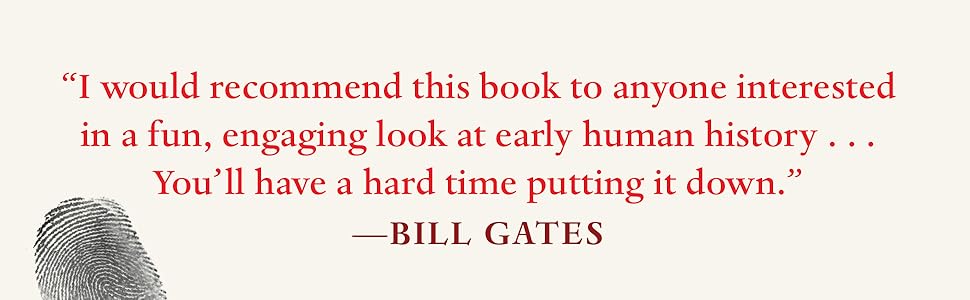
Invites the ordinary person to re-evaluate commonly held beliefs about evolution and history
The brilliance of “Sapiens” is that it encourages the ordinary person to peek through a doorway into a critical analysis of the complex tapestry of human evolution and history. I understand if you are a World History scholar you would be familiar with all of these theories, and might prefer all of the points of view be presented with sources cited as a research paper. And someone caught up in the treadmill of life such as me would never read it. In the age of specialization we live in now, it is far too easy for the vast majority of us to pass through life caught up in the mores of our societies, fixated on the microscopic details of each of our respective fields of specialization without seriously questioning any of it. This is not to say the points made in the book should be accepted uncritically; in fact, one of the underlying and most important messages of the book is the need for critical examinations of our belief systems. I was fascinated by the idea that our common systems of belief – religion, natural law, government law, economic theories, and so on - are all based on fictions that are given power to the degree that groupings of individuals are willing to accept them. I was familiar with this notion in a peripheral way – the point was certainly driven home during the mortgage market collapse in 2007. When people stopped believing in the value of mortgage-backed securities, the value collapsed and threatened the viability of our entire financial system. But the fact that all of human evolution and civilization has been powered by the unique ability of homo sapiens to create and believe in fictional realities is very intriguing. The book is worth reading for this insight alone, but there is far more to it than that. “Cold indifference driven by economic greed” - I was struck by a passage that compared the numbers of those who have been intentionally harmed due to nationalism and religion to those who have been brutalized, tortured and killed simply due to cold indifference driven by economic greed. The owners of the slaves who lived short, hellish lives on sugar plantations were not motivated by animosity towards the slaves – they did it because it was the only way to profit on the production of sugar – labor costs would have been far too high otherwise to justify the investment. Just as is the case with the cruel treatment of farm animals today; babies separated from their mothers at birth, never allowed to play or socialize, fattened in confined pens for a few short months, and then slaughtered in a horrific way. The industrial age, and factories – child labor, 18 hour days, 7 day work weeks – this existed once in the U.S. and still exists in other countries today, justified because it encourages growth, spending, and boosts the economy. The passages on religion and spiritual beliefs are certainly sobering; after thinking about it for some time, I decided that if my belief in spirituality is a comforting fiction, that I will continue to allow myself to retreat to it. We are so embedded in a world of imagined reality it is impossible to distinguish the objective from the subjective anyway. For example, a view of human history such as Sapiens is based on an interpretation of the world as perceived through our senses, but can we really trust our senses? Does the color blue exist, or is it a product of our collective imagination? There is a point in our written history in which the color blue is never mentioned. As it is, Sapiens successfully argues the power of sheer belief to give rise to reality – the very house I live in exists because someone at some point looked at the spot of land it is on, and imagined a house standing there. If our realities are shaped by the power of our imaginations, I will continue to hold on to my belief in a spiritual version of my mother because it is so important to me. Sapiens is indeed engaging, but I would not necessarily describe it as “fun,” – some of the insights are too dreadful and sobering to describe it in such a flippant way – but it is important to step off the treadmill of life from time to time to ask the questions that the book encourages us to examine. It is indeed a gift to have such a clear, thoughtful, 10,000 foot analysis of human systems and belief presented in such a compelling and thought-provoking way. Sapiens serves as an excellent starting point for further research and analysis.
A**E
Hugely entertaining and informative and depressing
“Tolerance is not a Sapiens trademark.” Sapiens: A Brief History of Humankind, by Yuval Noah Harari is one of the most entertaining and informative books I’ve read in a long time. It usually takes me longer to get through nonfiction than fiction, but I blew through this book despite it being a bit of a tome. In fact I didn’t even notice how long it was until I saw the paper version later. It’s that accessible and so much fun to read. I learned so much about history, social culture, and the human race from Sapiens. For instance, this following idea blew me away: gossip, not physical strength or military cunning, is what makes leaders and binds communities and nations. It seems we developed language just to talk about each other, not for trade or power or more. I loved how Mr. Harari the word “fiction” (aka common myths) to describe the concepts that let large numbers of strangers cooperate across space and time: “There are no gods in the universe, no nations, no money, no human rights, no laws, and no justice outside the common imagination of human beings.” This is kind of terrifying, but also quite true if you stop to think about it. I also found it darkly amusing and irreverent how he talks about philosophies and hate groups and religions and economic models, all in the same breath: “Some religions, such as Christianity and Nazism, have killed millions out of burning hatred… Capitalism has killed millions out of cold indifference coupled with greed.” I got a crash course in mega fauna, those giant animals that existed on earth for thousands of years until humans killed them off in a matter of decades: the giant diprotodon, a 2.5 ton wombat, dragon-like lizards, snakes seven feet long, a 450 pound six foot kangaroo, a marsupial lion as massive as the modern tiger, a flightless elephant bird, ten feet tall and half a ton (the largest bird in the world), and the giant lemur (earth’s largest primate). “Don’t believe our ancestors lived in harmony with nature. Homo sapiens hold the record among all organisms for driving the most plant and animal species to their extinctions. We have dubious distinction of being the deadliest species in the annals of biology.” Mr. Harari trashes the Agricultural Revolution: “This is the essence of the Agricultural Revolution: the ability to keep more people alive under worse conditions.” Nor does he spare the Scientific Revolution: “The Scientific Revolution and modern imperialism were inseparable.” Naturally, religion doesn’t stand a chance, especially the monotheist ones of today which are described as far more fanatical and missionary than the more tolerant open-minded polytheist religions of old. Only Buddhism seems to get a bit of a pass. Each concept and chapter of human history is explained with compelling examples, from economics to history to biology to psychology and so on. In some ways, it seems we’re heading forward, with less violence than ever before, new forms of consciousness, life continuing as we could not imagine it, but continuing all the same. For e.g., Mr. Harari explains that ecological degradation is not the same as resource scarcity, and that in fact, our resources (solar and wind power, man made materials, etc) are constantly increasing, and are likely to continue to do so. The environment on the other hand… But in more ways, Sapiens is an indictment. It is undeniable that “a significant proportion of humanity’s cultural achievements owe their existence to the exploitation of conquered populations,” that “there is no justice in history” and that perhaps happiness is the act of “synchronizing one’s personal delusions of meaning with the prevailing collective delusions.” The parts about animal husbandry are incendiary. From age old practices to modern slaughterhouses, “tens of billions of animals have been subjected to a regime of industrial exploitation whose cruelty has no precedent in the annals of planet Earth. If we accept a mere tenth of what animal rights activists are claiming, then modern industrial agriculture might well be the greatest crime in history.” The descriptions of some of these practices are chilling, perhaps enough to persuade you towards vegetarianism. I found it strangely comforting, in these bad sad days of war and terrorism and misogyny and hatred, to be reminded that this phase we’re in where we work as urban labourers and office workers has only lasted a couple hundred years. The 10,000 years before that, we were farmers and herders, and even that is a vanishing second compared to the tens of thousands of years of human hunters and gatherers. We have a long way to go and much more to learn. And anyway, the nihilists have always known that “from a purely scientific viewpoint, human life has absolutely no meaning.” If you’re tender about things like religion, capitalism, or even human rights, Sapiens won’t give you a break. But it is one rollicking relevant read.
N**)
Book is great! Strongly recommended!
J**O
awesome
K**A
Brilliant!
W**L
For the curious amongst us, this book delivers incredible outside-in perspective connecting the dots on who we are as human beings, where we come from, why we behave the way we do, and the motivations, fears and precedents that underlie so much of how and why we behave as societies and sometimes defy societal norms to behave as individuals out for our own personal gains.
O**O
Ce livre est une grande réussite ! A lire absolument pour tout personne intéressée par l'histoire longue, et les questions existentielles fondamentales associées. Il décrit les grandes phases de l'humanité, articule les passages de l'une à l'autre, et s'efforce d'identifier les courants de fonds de l'histoire, les dynamiques stables, mais aussi son aspect chaotique i.e. imprévisible. Ce survol historique est TRES bien écrit. Dense mais j'aimais étouffant. Bien documenté mais pas ostensiblement érudit. Très structuré et facile à suivre, mais puissant. Il y a aussi dans le ton une certaine décontraction rafraîchissante. Lorsque des questions n'ont pas de réponses définitives (souvent sur un sujet pareil) l'auteur décrit clairement les opinions scientifiques les plus fréquentes et ne conclus en général pas définitivement. Dans l'ensemble l'approche parait d'une grande honnêteté intellectuelle. Et je le répète, c'est un régal à lire ! Ce lire m'a fait pensé à 'Guns, Germs and Steel' de Jared Diamond. Et effectivement, celui ci est mentionné dans les remerciements de fin de livre comme quelqu'un qui lui a appris à rechercher la vision d'ensemble.
Trustpilot
3 weeks ago
1 month ago