
下载应用程序


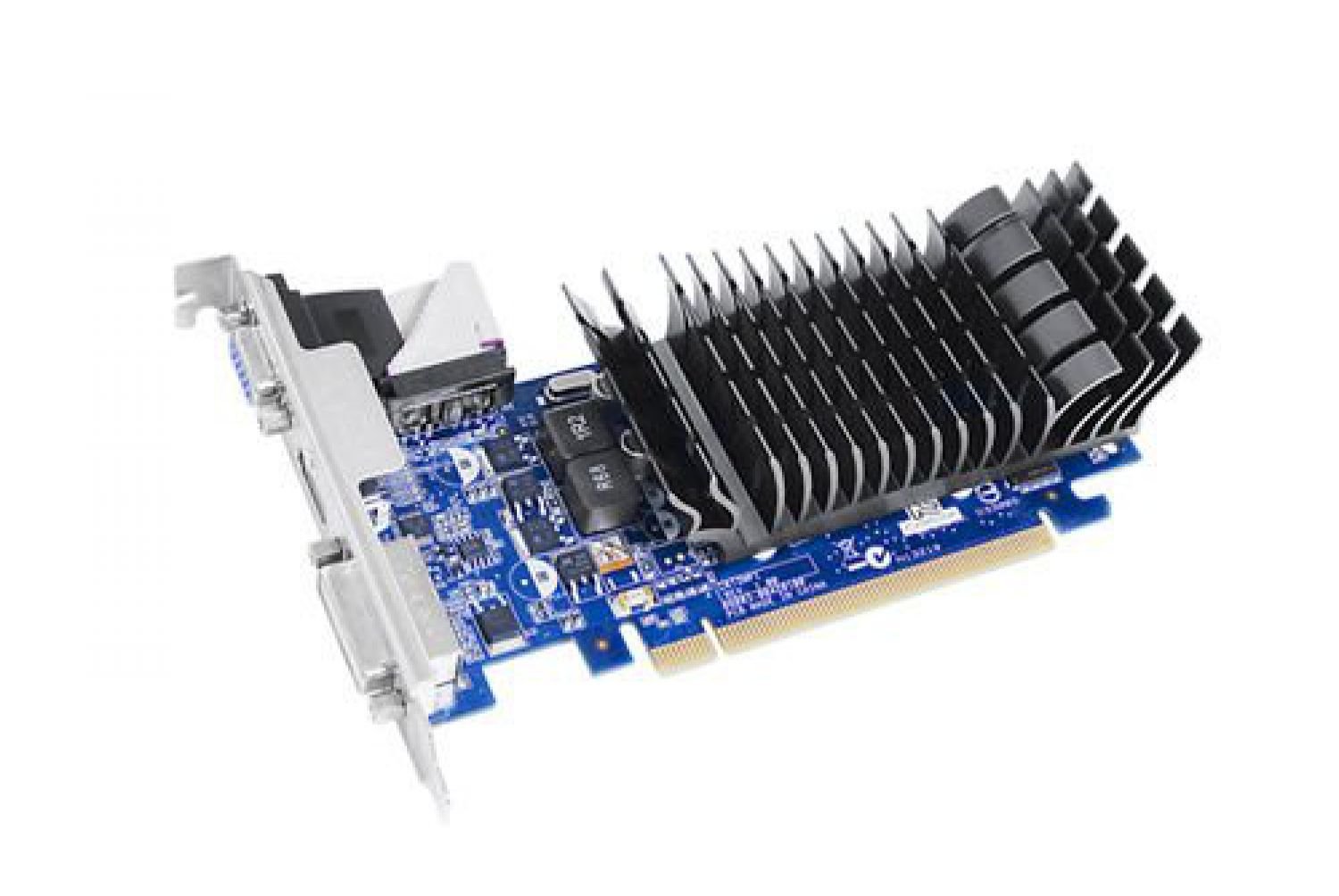
🎯 Upgrade your visuals silently and stylishly—because your workspace deserves the best.
The ASUS GeForce 210 is a low-profile, fanless video card featuring a 589 MHz engine clock and 1GB DDR3 memory on a 64-bit interface. Designed for silent operation and efficient HD multimedia playback, it supports up to 2560x1600 resolution and fits easily into compact PCs. Ideal for HTPCs and office setups, it offers a cost-effective upgrade over onboard graphics without requiring additional power connections.
| ASIN | B004I5UDO6 |
| Best Sellers Rank | #3,687 in Computer Graphics Cards |
| Customer Reviews | 3.8 3.8 out of 5 stars (1,348) |
| Date First Available | January 5, 2011 |
| Is Discontinued By Manufacturer | No |
| Item Weight | 1.34 pounds |
| Item model number | EN210 SILENT/DI/1GD3/V2(LP) |
| Manufacturer | ASUS Computer International Direct |
| Product Dimensions | 9 x 6.5 x 2 inches |
H**I
Nice, Cost-Effective Upgrade to Motherboard Graphics for a Non-Gamer
Easy install into an HP Tower. The on-board Radeon 4200 video was very sluggish and bogged down my AMD Quad Core in Win10 with 5 gB RAM. In fact, it would not (no matter what driver), fill the full screen of a 27" monitor at 1080p. This is not a gaming application, but more for flat graphics (like an SDR Waterfall Display of radio signals). After installing this card and the accompanying driver, my processor load dropped from 30% to 18%, the video was much sharper (text/fonts more easily read), and the sluggishness I had been experiencing with the motherboard video disappeared. For some reason, the contrast on the display is also much better, making text easier to read. The big plus was I did not have to upgrade my power supply in the tower. The fact that it does not use a fan, but rather a large heat sink was also nice. For my purposes, this was a good investment, and a perfect fit to my applications. It was $30 or so when I bought it, I see it has gone up, since then. Overall, could not be more pleased, not because it is the greatest graphic card in the world, but it outperforms the motherboard graphics by a lot, works with existing power supply and didn't cost a fortune.
W**N
No sound, low heat, good for HD video, lousy for games.
When it became clear that my HTPC was going to have problems due to the on-board graphics being a legacy chipset that was barely supported and would not output in 16:9 aspect ratio over HDMI, I searched for an inexpensive solution to that problem. The ASUS GeForce 210 was that answer. It has no fan, so it's completely silent (something I value in an HTPC). It has enough power to handle 1080p video and output 5.1 DTS without any hiccups (depending on your CPU, as well, I'd imagine). It's easy to install, supports half-height bays if you have a slim HTPC, and doesn't require any extra power connections. The drivers provided are a bit old, so you'll want to ignore the CD that comes with this and download the latest GeForce drivers for this device. Understand also that this won't work with Nvidia's game optimizing software. In truth, you wouldn't want this for gaming. It can handle some recent games on lowest settings (and still lags) but this is not really a gamers' video card. However, for an HTPC or standard office PC that just needs a replacement for on-board video, this is a step up from some of the legacy onboard chipsets you'll find out there. It does a great job with Kodi, Netflix, Hulu Plus, VLC, and YouTube. I've played 1080p H.264 and HEVC with no issues, and it gets along with my Yamaha receiver and Epson projector, too, which is important in an HTPC graphics card. Bottom line: It does what I expected it to do. It works great for an HTPC and the price was fantastic. If you just need a basic card for HD video, this would be a good choice.
E**T
Good choice for use with Ubuntu Linux
This card replaced an OEM GeForce 8 card that didn't work well with Ubuntu 12.04 LTS, and didn't support VDPAU. I wanted something that would be compatible with their NVIDIA proprietary driver packages, the usual video players, and Google Earth. I'm not a gamer, so NVIDIA's entry-level products were a good match for my needs. I initially considered a GT 430, but that turned out to be too demanding for the power supply I had. So, it really came down to a choice between a 210 and a GT 520. The 210 had a couple of things going for it: (1) it would also work with Ubuntu 10.04.4 LTS, which is still supported; (2) it's a little less expensive; (3) it was available in a fanless/silent product, which was really attractive for a machine that would be used in a quiet residential environment. I tend to be somewhat brand-loyal to EVGA, but their silent 210 got terrible reviews -- and not just here. The word on the street was their conventional version with the fan was OK, but if I wanted passive cooling, ASUS was the way to go. I've been using this for six months now, and it has performed flawlessly. The only downside is it blocks a PCI-E x1 slot (which I wasn't using). If I were making a similar purchase decision today, it would be between this and a GT 610.
E**S
Quiet, Low-Power GPU for Basic Use
Quiet, Low-Power GPU for Basic Use The ASUS GeForce 210 is one of those cards that does just enough if your needs are modest. I put this into an older desktop that lost onboard video, and it brought the system back to life without fuss. Installation was quick, drivers updated automatically, and I had HDMI out to a TV in minutes. It runs completely silent thanks to the passive heatsink—great for an HTPC or office machine where noise matters. Performance is where expectations need to be realistic. This card is not for gaming beyond the simplest titles, but it handles 1080p video playback, YouTube, Netflix, and dual-monitor setups without issue. It’s a decent upgrade from integrated graphics in older machines, and being low-profile, it fits easily into compact cases. The downside is age and value. At today’s prices, you’re paying a premium for a card that was entry-level a decade ago. The large heatsink also blocks a neighboring slot in tighter builds, so plan around that. For roughly the same money, there are GT 710 or even GT 1030 cards that perform better and support newer standards. Bottom line: A silent, no-frills solution for video output and light use. Works fine for HD playback and office tasks, but dated performance and pricing make it better suited as a stopgap or legacy PC fix rather than a future-proof choice.
M**L
Cette carte graphique m'a permis de gonfler mon vieux PC et de pouvoir utiliser un écran Wide 23 pouces. Trois connectiques vidéo incluant DVI et HDMI. Carte sans ventilation donc silencieuse. Installation très facile et fonctionnement direct avec les drivers par défaut fournis sur le CD d'installation. Nombreuses possibilités de réglages. Excellent produit pour bureautique et multimédia standard (n'étant pas "gamer" je ne peux donner d'avis sur les capacités de cette carte dans les jeux rapides). Lecture HD sans souci. Carte graphique de très bon rapport qualité prix. A conseiller. Qualité et rapidité de livraison habituelles de la part d'Amazon. Emballage sérieux.
R**O
Ideal para montar en un barebone multimedia... No cuenta con ningún ventilador por lo que es imposible que sea más silenciosa... a lo que hay que añadir un buen rendimiento gráfico, que si bien no es la mejor de las tarjetas gráficas, hace su fución para equipos multimedia. Un buen produto a un buen precio tal y como aparece en las fotos.
P**D
I have a beloved old studio PC which has been so extensively upgraded in the nine years since I bought it in 2003 that few of the original components still remain. One of those components - the dual screen graphics card - started dying on me last month. It's a respectable enough machine running Windows XP Pro SP3 with a dual-core 2.4GHz CPU and 3.5GB of DDR2 RAM. It has been customised to run very quietly so a silent graphics card is perfect. I don't use my machine for serious gaming, mainly music production, watching DVDs and occasional video editing. I am pleasantly surprised how versatile and powerful a GPU one can buy with such a relatively low outlay. This card has three outputs which is surplus to requirement as I only require two monitors. One of the outputs is HDMI which is a welcome step forward as I have long hated fiddling about with the screw-in VGA plugs and their thick, inflexible cables which put such a physical strain on the hardware in a tight spot. Having physically installed the card (very simple and easy) the PC booted up in Setup mode having detected that I'd been fiddling with its innards, so I just selected "Exit Without Saving" and loaded Windows as normal. It loaded in low-res mode, XP automatically installed its own high-def audio drivers and then prompted me to reboot, which I did. Easy. Didn't even have to use the CD-ROM. The increase in performance with BBC iPlayer was unexpectedly dramatic. I have generally been very content with everything but my system has always had a slightly jerky playback with BBC iPlayer particularly on the HD material. The BBC iPlayer files are highly compressed and require a lot of real-time decompression and processing during playback which leads to a lot of frame drops and banding etc. Since the new card has been installed both standard and HD programmes on iPlayer have run as smoothly as a DVD without a glitch. This card would seem to be the logical choice for the budget-conscious PC builder or anyone upgrading or replacing their older graphics cards. More versatile connectivity, smooth video playback, digital audio output via HDMI and a silent component. I would probably get something more rugged if I spent a lot of time playing games or used this as a video editing computer but this is more than good enough for regular multimedia PC use.
S**O
MAC / HACKINTOSH: Se volete costruire un hackintosh questa è la migliore scheda video che possiate acquistare! Ed il prezzo è IRRISORIO! Riconosciuta nativamente da osx 10.9.4 mavericks. Se installate osx sul vostro hackintosh con una sistro (Niresh ad esempio), attivando la funzione:"GraphicsEnabler=Yes" , la scheda video verra perfettamente riconosciuta e funzionerà alla massima risoluzione e con l'accelerazione grafica perfettamente supportata (qe/ci funzionanti alla perfezione). Contenuti in flash: FLUIDISSIMI ANCHE IN FULL HD! Grafica di Mavericks: senza alcun tipo di lag o problema... PERFETTA! WINDOWS Per chi magari ha un processore dual core con grafica integrata e cerca qualcosa di meglio questo è l'ideale! Supporta anche giochi non molto pesanti. CONCLUSIONI: Consigliatissima per Hackintosh (prezzo irrisorio,prestazioni eccellenti), per Windows andrei più' sulle Ati alla stessa fascia di prezzo.
S**O
Habe die Karte als Ersatzteil bestellen müssen, nachdem meine beiden Bildschirme schwarz geblieben sind. Ich spiele zwar keine Spiel am PC, habe aber Win 7 mit dem Aero-Desktop aktiviert und zwei 24"-Bildschirme (einer Querformat, einer Hochformat) zu einem erweiterten Desktop geschaltet. Mein Anspruch an die Grafikkarte beschränkt sich also auf diese Form der Windows-Anwendungen und flüssiger Video-Wiedergabe. Und genau das kann sie auch. Vorteile: Schnelle und einfache Installation der Karte im Gehäuse. Auch die Installation der aktuellen Treiber ist mittels NVIDIA-Webseite unter Win7 kein Problem gewesen. Die gewünschte Desktop Konfiguration war schnell eingerichtet. Die Bildwiedergabe ist klar, farbecht (was die Monitore halt hergeben) und flüssig. Da die Karte keinen Lüfter hat, ist sie entsprechend leise bzw. stumm. Nachteile: Die beiden Anschlüsse DVI und HDMI liegen so dicht beieinander, dass mein Adapter HDMI->DVI (für den zweiten Bildschirm) nicht zusammen mit dem normalen DVI-Kabel (für den ersten Bildschirm) angesteckt werden konnte. Ich musste mir stattdessen ein Kabel HDMI->DVI kaufen, den Adapter konnte ich nicht mehr gebrauchen. (Weil ich das aber als seltenes Einzelschicksal betrachte, gebe ich trotzdem fünf Sterne.) Fazit: Insgesamt bin ich mit der Karte sehr zufrieden. Lediglich die einzelnen Steckanschlüsse könnten weiter auseinander liegen.
TrustPilot
4天前
1 个月前