
下载应用程序


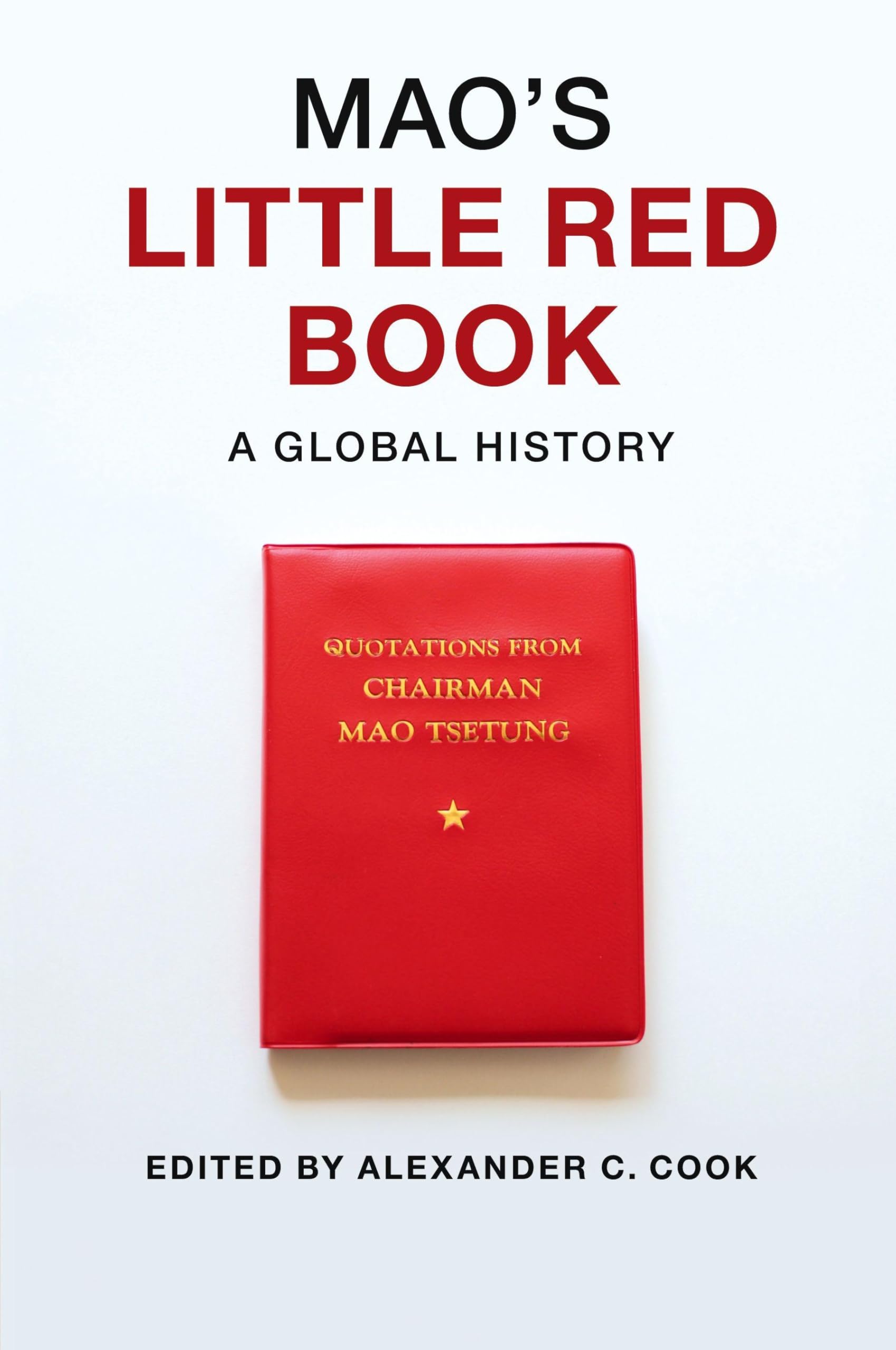
desertcart.com: Mao's Little Red Book: A Global History: 9781107665644: Cook, Alexander C.: Books Review: uneven essays. but some insightful stuff and i learned ... - uneven essays. but some insightful stuff and i learned alot. will be passing along to other students of the cultural revolution as it has some very interesting information Review: They bring nothing good to the table - Why would anyone study the writings of a mad man? Leftists and so-called Revolutionaries everywhere are nothing but thugs. They bring nothing good to the table. They are evil. They want control over you and your successive offspring. Liberty is what is needed. From Necrometrics.com: People's Republic of China, Mao Zedong's regime (1949-1975): 40,000,000 (dead at his own hand - jrb) [sources in alphabetical order]•Agence France Press (25 Sept. 1999) citing at length from Courtois, Stephane, Le Livre Noir du Communism: ◦Rural purges, 1946-49: 2-5M deaths ◦Urban purges, 1950-57: 1M ◦Great Leap Forward: 20-43M ◦Cultural Revolution: 2-7M ◦Labor Camps: 20M ◦Tibet: 0.6-1.2M ◦TOTAL: 44.5 to 72M •Jasper Becker, Hungry Ghosts : Mao's Secret Famine (1996) ◦Estimates of the death toll from the Great Leap Forward, 1959-61: ◾Judith Banister, China's Changing Population (1984): 30M excess deaths (acc2 Becker: "the most reliable estimate we have") ◾Wang Weizhi, Contemporary Chinese Population (1988): 19.5M deaths ◾Jin Hui (1993): 40M population loss due to "abnormal deaths and reduced births" ◾Chen Yizi of the System Reform Inst.: 43-46M deaths •Brzezinski: ◦Forcible collectivization: 27 million peasants ◦Cultural Revolution: 1-2 million ◦TOTAL: 29 million deaths under Mao •Daniel Chirot: ◦Land reform, 1949-56 ◾According to Zhou Enlai: 830,000 ◾According to Mao Zedong: 2-3M ◦Great Leap Forward: 20-40 million deaths. ◦Cultural Revolution: 1-20 million •Jung Chang, Mao: the Unknown Story (2005) ◦Suppression of Counterrevolutionaries, 1950-51: 3M by execution, mob or suicide ◦Three-Anti Campaign, 1952-53: 200,000-300,000 suicides ◦Great Leap Forward, 1958-61: 38M of starvation and overwork ◦Cultural Revolution, 1966-76: > 3M died violent deaths ◦Laogai camp deaths, 1949-76: 27M ◦TOTAL under Mao: 70M •Dictionary of 20C World History: around a half million died in Cultural Rev. •Eckhardt: ◦Govt executes landlords (1950-51): 1,000,000 ◦Cultural Revolution (1967-68): 50,000 •Gilbert: ◦1958-61 Famine: 30 million deaths. •Kurt Glaser and Stephan Possony, Victims of Politics (1979): ◦They estimate the body count under Mao to be 38,000,000 to 67,000,000. ◦Cited by G & P: ◾Walker Report (see below): 44.3M to 63.8M deaths. ◾The Government Information Office of Taiwan (18 Sept. 1970): 37M deaths in the PRC. ◾A Radio Moscow report (7 Apr. 1969): 26.4M people had been exterminated in China. ◾(NOTE: Obviously the Soviets and Taiwanese would, as enemies, be strongly motivated to exaggerate.) •Guinness Book of World Records: ◦Although nowadays they don't come right out and declare Mao to be the Top Dog in the Mass Killings category, earlier editions (such as 1978) did, and they cited sources which are similar, but not identical, to the Glaser & Possony sources: ◾On 7 Apr. 1969 the Soviet government radio reported that 26,300,000 people were killed in China, 1949-65. ◾In April 1971 the cabinet of the government of Taiwan reported 39,940,000 deaths for the years 1949-69. ◾The Walker Report (see below): between 32,2500,000 and 61,700,000. •Harff and Gurr: ◦KMT cadre, rich peasants, landlords (1950-51): 800,000-3,000,000 ◦Cultural Revolution (1966-75): 400,000-850,000 •John Heidenrich, How to Prevent Genocide: A Guide for Policymakers, Scholars, and the Concerned Citizen: 27M death toll, incl. 2M in Cultural Revolution •Paul Johnson doesn't give an overall total, but he gives estimates for the principle individual mass dyings of the Mao years: ◦Land reform, first years of PRC: at least 2 million people perished. ◦Great Leap Forward: "how many millions died ... is a matter of conjecture." ◦Cultural Revolution: 400,000, calling the 3 Feb. 1979 estimate by Agence France Presse, "The most widely respected figure". •Meisner, Maurice, Mao's China and After (1977, 1999), doesn't give an overall total either, but he does give estimates for the three principle mass dyings of the Mao years: ◦Terror against the counterrevolutionaries: 2 million people executed during the first three years of the PRC. ◦Great Leap Forward: 15-30 million famine-related deaths. ◦Cultural Revolution: 400,000, citing a 1979 estimate by Agence France Presse. •R. J. Rummel: ◦Estimate: ◾Democide: 34,361,000 (1949-75) ◾The principle episodes being... ◾All movements (1949-58): 11,813,000 ◾incl. Land Reform (1949-53): 4,500,000 ◾Cult. Rev. (1964-75): 1,613,000 ◾Forced Labor (1949-75): 15,000,000 ◾Great Leap Forward (1959-63): 5,680,000 democides ◾War: 3,399,000 ◾Famine: 34,500,000 ◾Great Leap Forward: 27M famine deaths ◾TOTAL: 72,260,000 ◦Cited in Rummel: ◾Li, Cheng-Chung (Republic of China, 1979): 78.86M direct/indirect deaths. ◾World Anti-Communist League, True Facts of Maoist Tyranny (1971): 64.5M ◾Glaser & Possony: 38 to 67M (see above) ◾Walker Report, 1971 (see below): 31.75M to 58.5M casualties of Communism (excluding Korean War). ◾Current Death Toll of International Communism (1979): 39.9M ◾Stephen R. Shalom (1984), Center for Asian Studies, Deaths in China Due To Communism: 3M to 4M death toll, excluding famine. •Walker, Robert L., The Human Cost of Communism in China (1971, report to the US Senate Committee of the Judiciary) "Casualties to Communism" (deaths): ◦1st Civil War (1927-36): .25-.5M ◦Fighting during Sino-Japanese War (1937-45): 50,000 ◦2nd Civil War (1945-49): 1.25M ◦Land Reform prior to Liberation: 0.5-1.0M ◦Political liquidation campaigns: 15-30M ◦Korean War: 0.5-1.234M ◦Great Leap Forward: 1-2M ◦Struggle with minorities: 0.5-1.0M ◦Cultural Revolution: .25-.5M ◦Deaths in labor camps: 15-25M ◦TOTAL: 34.3M to 63.784M ◦TOTAL FOR PRC: 32M to 59.5M •July 17, 1994, Washington Post (Great Leap Forward 1959-61) ◦Shanghai University journal, Society: > 40 million ◦Cong Jin: 40 million ◦Chen Yizi: 43 million in the famine. 80 million total as a result of Mao's policies. •Weekly Standard, 29 Sept. 1997, "The Laogai Archipelago" by D. Aikman: ◦Between 1949 and 1997, 50M prisoners passed through the labor camps, and 15,000,000 died (citing Harry Wu) •WHPSI: 1,633,319 political executions and 25,961 deaths from political violence, 1948-77. TOTAL: 1,659,280
| ASIN | 1107665647 |
| Best Sellers Rank | #479,909 in Books ( See Top 100 in Books ) #396 in Asian Politics #579 in Chinese History (Books) #13,522 in American History |
| Customer Reviews | 4.1 4.1 out of 5 stars (20) |
| Dimensions | 6 x 0.69 x 9 inches |
| Edition | New |
| ISBN-10 | 9781107665644 |
| ISBN-13 | 978-1107665644 |
| Item Weight | 1 pounds |
| Language | English |
| Print length | 299 pages |
| Publication date | April 14, 2014 |
| Publisher | Cambridge University Press |
R**O
uneven essays. but some insightful stuff and i learned ...
uneven essays. but some insightful stuff and i learned alot. will be passing along to other students of the cultural revolution as it has some very interesting information
J**.
They bring nothing good to the table
Why would anyone study the writings of a mad man? Leftists and so-called Revolutionaries everywhere are nothing but thugs. They bring nothing good to the table. They are evil. They want control over you and your successive offspring. Liberty is what is needed. From Necrometrics.com: People's Republic of China, Mao Zedong's regime (1949-1975): 40,000,000 (dead at his own hand - jrb) [sources in alphabetical order]•Agence France Press (25 Sept. 1999) citing at length from Courtois, Stephane, Le Livre Noir du Communism: ◦Rural purges, 1946-49: 2-5M deaths ◦Urban purges, 1950-57: 1M ◦Great Leap Forward: 20-43M ◦Cultural Revolution: 2-7M ◦Labor Camps: 20M ◦Tibet: 0.6-1.2M ◦TOTAL: 44.5 to 72M •Jasper Becker, Hungry Ghosts : Mao's Secret Famine (1996) ◦Estimates of the death toll from the Great Leap Forward, 1959-61: ◾Judith Banister, China's Changing Population (1984): 30M excess deaths (acc2 Becker: "the most reliable estimate we have") ◾Wang Weizhi, Contemporary Chinese Population (1988): 19.5M deaths ◾Jin Hui (1993): 40M population loss due to "abnormal deaths and reduced births" ◾Chen Yizi of the System Reform Inst.: 43-46M deaths •Brzezinski: ◦Forcible collectivization: 27 million peasants ◦Cultural Revolution: 1-2 million ◦TOTAL: 29 million deaths under Mao •Daniel Chirot: ◦Land reform, 1949-56 ◾According to Zhou Enlai: 830,000 ◾According to Mao Zedong: 2-3M ◦Great Leap Forward: 20-40 million deaths. ◦Cultural Revolution: 1-20 million •Jung Chang, Mao: the Unknown Story (2005) ◦Suppression of Counterrevolutionaries, 1950-51: 3M by execution, mob or suicide ◦Three-Anti Campaign, 1952-53: 200,000-300,000 suicides ◦Great Leap Forward, 1958-61: 38M of starvation and overwork ◦Cultural Revolution, 1966-76: > 3M died violent deaths ◦Laogai camp deaths, 1949-76: 27M ◦TOTAL under Mao: 70M •Dictionary of 20C World History: around a half million died in Cultural Rev. •Eckhardt: ◦Govt executes landlords (1950-51): 1,000,000 ◦Cultural Revolution (1967-68): 50,000 •Gilbert: ◦1958-61 Famine: 30 million deaths. •Kurt Glaser and Stephan Possony, Victims of Politics (1979): ◦They estimate the body count under Mao to be 38,000,000 to 67,000,000. ◦Cited by G & P: ◾Walker Report (see below): 44.3M to 63.8M deaths. ◾The Government Information Office of Taiwan (18 Sept. 1970): 37M deaths in the PRC. ◾A Radio Moscow report (7 Apr. 1969): 26.4M people had been exterminated in China. ◾(NOTE: Obviously the Soviets and Taiwanese would, as enemies, be strongly motivated to exaggerate.) •Guinness Book of World Records: ◦Although nowadays they don't come right out and declare Mao to be the Top Dog in the Mass Killings category, earlier editions (such as 1978) did, and they cited sources which are similar, but not identical, to the Glaser & Possony sources: ◾On 7 Apr. 1969 the Soviet government radio reported that 26,300,000 people were killed in China, 1949-65. ◾In April 1971 the cabinet of the government of Taiwan reported 39,940,000 deaths for the years 1949-69. ◾The Walker Report (see below): between 32,2500,000 and 61,700,000. •Harff and Gurr: ◦KMT cadre, rich peasants, landlords (1950-51): 800,000-3,000,000 ◦Cultural Revolution (1966-75): 400,000-850,000 •John Heidenrich, How to Prevent Genocide: A Guide for Policymakers, Scholars, and the Concerned Citizen: 27M death toll, incl. 2M in Cultural Revolution •Paul Johnson doesn't give an overall total, but he gives estimates for the principle individual mass dyings of the Mao years: ◦Land reform, first years of PRC: at least 2 million people perished. ◦Great Leap Forward: "how many millions died ... is a matter of conjecture." ◦Cultural Revolution: 400,000, calling the 3 Feb. 1979 estimate by Agence France Presse, "The most widely respected figure". •Meisner, Maurice, Mao's China and After (1977, 1999), doesn't give an overall total either, but he does give estimates for the three principle mass dyings of the Mao years: ◦Terror against the counterrevolutionaries: 2 million people executed during the first three years of the PRC. ◦Great Leap Forward: 15-30 million famine-related deaths. ◦Cultural Revolution: 400,000, citing a 1979 estimate by Agence France Presse. •R. J. Rummel: ◦Estimate: ◾Democide: 34,361,000 (1949-75) ◾The principle episodes being... ◾All movements (1949-58): 11,813,000 ◾incl. Land Reform (1949-53): 4,500,000 ◾Cult. Rev. (1964-75): 1,613,000 ◾Forced Labor (1949-75): 15,000,000 ◾Great Leap Forward (1959-63): 5,680,000 democides ◾War: 3,399,000 ◾Famine: 34,500,000 ◾Great Leap Forward: 27M famine deaths ◾TOTAL: 72,260,000 ◦Cited in Rummel: ◾Li, Cheng-Chung (Republic of China, 1979): 78.86M direct/indirect deaths. ◾World Anti-Communist League, True Facts of Maoist Tyranny (1971): 64.5M ◾Glaser & Possony: 38 to 67M (see above) ◾Walker Report, 1971 (see below): 31.75M to 58.5M casualties of Communism (excluding Korean War). ◾Current Death Toll of International Communism (1979): 39.9M ◾Stephen R. Shalom (1984), Center for Asian Studies, Deaths in China Due To Communism: 3M to 4M death toll, excluding famine. •Walker, Robert L., The Human Cost of Communism in China (1971, report to the US Senate Committee of the Judiciary) "Casualties to Communism" (deaths): ◦1st Civil War (1927-36): .25-.5M ◦Fighting during Sino-Japanese War (1937-45): 50,000 ◦2nd Civil War (1945-49): 1.25M ◦Land Reform prior to Liberation: 0.5-1.0M ◦Political liquidation campaigns: 15-30M ◦Korean War: 0.5-1.234M ◦Great Leap Forward: 1-2M ◦Struggle with minorities: 0.5-1.0M ◦Cultural Revolution: .25-.5M ◦Deaths in labor camps: 15-25M ◦TOTAL: 34.3M to 63.784M ◦TOTAL FOR PRC: 32M to 59.5M •July 17, 1994, Washington Post (Great Leap Forward 1959-61) ◦Shanghai University journal, Society: > 40 million ◦Cong Jin: 40 million ◦Chen Yizi: 43 million in the famine. 80 million total as a result of Mao's policies. •Weekly Standard, 29 Sept. 1997, "The Laogai Archipelago" by D. Aikman: ◦Between 1949 and 1997, 50M prisoners passed through the labor camps, and 15,000,000 died (citing Harry Wu) •WHPSI: 1,633,319 political executions and 25,961 deaths from political violence, 1948-77. TOTAL: 1,659,280
J**Y
Informative, but where is the perspective?
A collection of essays by academics about Mao's Little Red Book, i.e., the Quotations of Chairman Mao Zedong, promises to be a tough read. Amazingly, for the most part, this book isn't. As the essays trace the distribution and influence of the book in various parts of the world, we can see it for the icon it truly was. As the authors point out, by taking short, sometimes pithy quotations out of the context of Mao's longer works, his words could be put to pretty much any purpose a reader wanted. It is interesting, though in hindsight not surprising, that Mao's quotations met their biggest opposition in communist countries, including the Soviet Union and its satellite--but, of course not Albania, where it was co-opted by the ruling party in maintaining its schism from the Soviets. In the West, the book was adopted by students, communist auto workers, and the Black Panthers. But, perhaps more so, it was taken as a badge by anyone wishing to rebel (or seem to be rebelling) against society. It is as a non-political icon that Mao's book still lives on in contemporary China, where you can buy stationery and other items derived from it, while shopping in trendy over-priced districts who wouldn't know the real China if they fell into it. As I said, this book is surprisingly readable and, for the most part, very informative. It suffers, however, when the author of a particular piece fails to provide any perspective. Thus the piece on Tanzania shows the influence of Mao's book, but hardly analyzes its long-term consequences. The French section is repetitive, burdened by academicese, and loses sight of the big picture--if there is one. Even in the best articles here, there is no attempt to contrast the admirable parts of Mao's thinking, such as his criticism of racism, with the horrible reality of life in Cultural Revolution era China or, indeed, the years of famine and persecution that preceded it. A reader can't help but think these authors, for the most part, don't see the contradiction between Mao's words and his actions. I guess John Lennon (quoted in this book) said it best: But if you go carrying pictures of Chairman Mao, you ain't gonna make it with anyone anyhow.
M**N
Excellent
M**Y
A.1.!!!