We remain fully operational. Our teams are working around the clock to ensure your deliveries continue safely.

下载应用程序


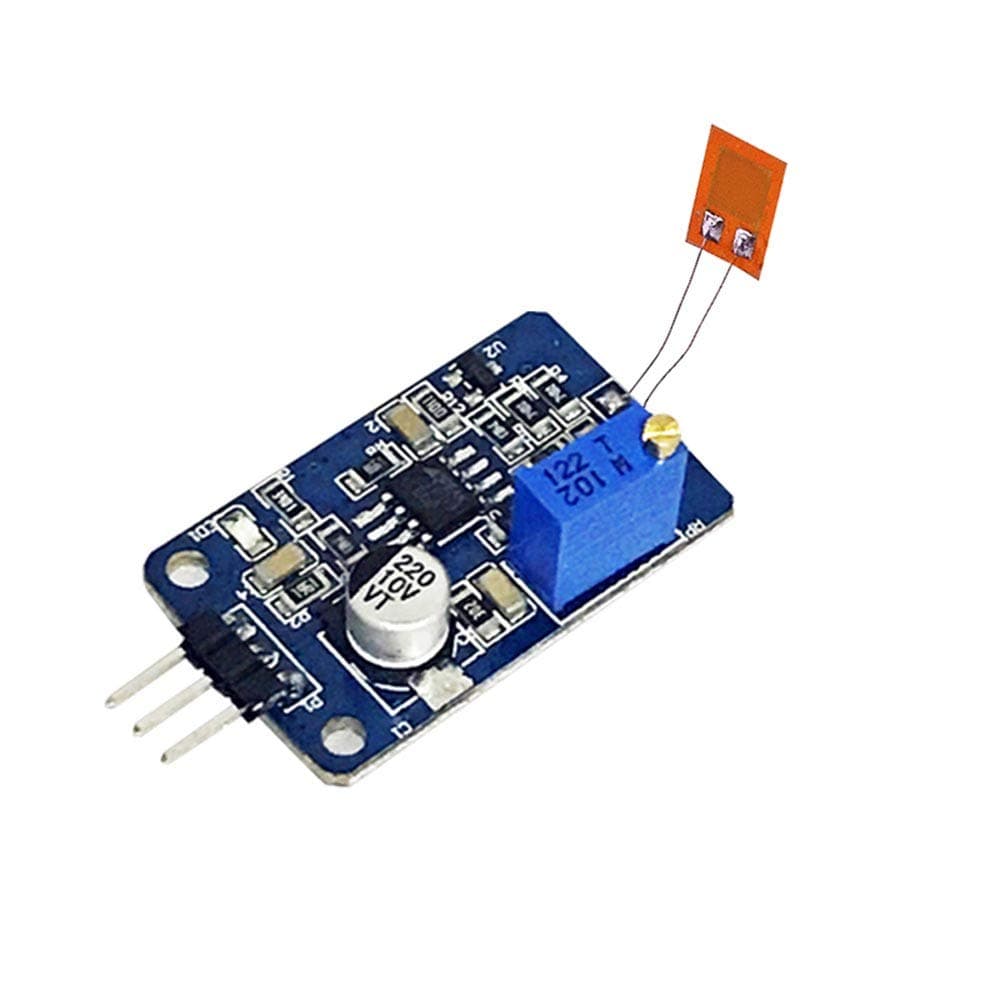


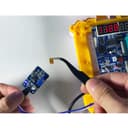
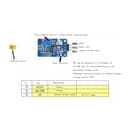
📐 Flex your tech savvy with precision sensing that keeps you ahead of the curve!
The Taidacent Strain Gauge 350 Ohm Bend Flex Sensor Module offers a compact, durable solution for precise bending angle measurement (0-30°) with a reliable 0-5V analog output. Featuring a built-in blue LED power indicator and adjustable zero potentiometer, it integrates seamlessly with Arduino and similar platforms, making it ideal for advanced DIY projects and professional sensor applications.


| ASIN | B084ZQB3FJ |
| Customer Reviews | 4.5 4.5 out of 5 stars (17) |
| Date First Available | 27 November 2023 |
| Item Weight | 10 g |
| Manufacturer reference | ZC-bendingsensor-0220 |
| Package Dimensions | 11.2 x 7.8 x 1.9 cm; 10 g |
J**N
I plan on using the strain gauge module as a load cell to accurately determine the amount of filament remaining on the reel for my 3D printer. I'll glue the strain gauge to a flexible lever arm and activate the module when the filament reaches a certain level to reduce the required dynamic range. I should be able to get it accurate to a few grams of available filament left on the reel. I will input the strain gauge module's output to an HX711 Load Cell Amplifier A/D and connect that output to an Arduino to process. The strain gauge module has a Wheatstone bridge followed by an amplifier to bring the voltage to a 5V range. Note that there are many 350 ohm strain gauge sensors available on Amazon that are similar to that which this module uses for less than a dollar per unit so experimenting is inexpensive.
O**M
Never could get this little gauge going - but I think it might have been my application. Pretty obvious connections and the output can be used directly into a little arduino with not too much drama. Should work ok for typical Arduino applications where you just need some fine-feedback for stuff ilke motor torque maximums or whatever. Wish I could have figured it out better, but it does seem to give some feedback. One star off because of lack of documentation for average users.
K**J
Works as expected on analog pins. Outputs are reasonably consistent (depends a lot on how you design the rest of the setup and interference from things like ceiling fans), but I found it's much easier to set triggers based on wide 100mV gaps rather than trying to get a precise numerical estimation of weight. It's also just fun to play around with.
B**N
Well, the module arrived but it was just the module. I know there is information here on the listing, but it would be nice to have a small card with specifications listed. This way, I know exactly what I’m looking at when I pull it for a project. Also, it would be nice if there was a PDF that characterizes the module in complete detail. Finding detailed documentation for cheap modules seems to be on par with finding a unicorn on the moon.
T**R
Feets are a bit short, even with the extended version. But I'm making it work for my project. Which is a proof of concept and this is a cheap and great device to prove that out.
TrustPilot
2 个月前
3天前