We remain fully operational. Our teams are working around the clock to ensure your deliveries continue safely.

下载应用程序


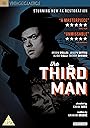
![The Third Man [DVD]](https://m.media-amazon.com/images/I/91c0Z2UTMsL._AC_SL3840_.jpg)
Buy anything from 5,000+ international stores. One checkout price. No surprise fees. Join 2M+ shoppers on Desertcart.
Desertcart purchases this item on your behalf and handles shipping, customs, and support to SINGAPORE.
The Third Man has been beautifully restored in 4K for the first time, showcasing the genius of this celebrated British noir, voted the ‘The greatest British film of all time’ by a British Film Institute poll. Holly Martins (Joseph Cotton, Citizen Kane ), a naïve writer of pulp westerns, arrives in Vienna to meet his old friend Harry Lime (the incomparable Orson Welles) nut finds that Lime has apparently been killed in a suspicious accident. Martins, too curious for his own good, hears contradictory stories about the circumstances of Limes death and as witnesses disappear he finds himself chased by unknown assailants. Complicating matters are the sardonic Major Calloway (Trevor Howard, Brief Encounter), head of the British forces, and Lime’s stage actress mistress, Anna Schmidt (Alida Valli). Will Martin’s curiosity lead him to discover things about his old friend that he’d rather not know? Brilliantly scripted by Graham Greene and set to Anton Karas’ evocative zither score, this justly celebrated classic is further enhanced by Robert Krasker’s Academy Award winning cinematography and Orson Welles in one of his most iconic screen roles. DVD extras: DISC 1 Feature Audio Commentary Famous Fan Featurette Restoring the Third Man Interview & Zither Performance by Cornelia Mayer Guardian Interview Cotton (audio) Guardian Interview Greene (audio) Joseph Cotton’s Alternative Opening (Audio) DISC2 Shadowing The Third Man Dangerous Edge Third Man on Radio (Audio) Trailer Review: The Peak Of Noir - The Third Man is an iconic classic of noir filmaking and also a fascinating study of a divided city in the post-WWII period. The two disc set includes the movie itself along with some minor features but also the documentary Shadowing The Third Man on the 2nd disc. This documentary is nearly as good as the film itself. Of particular note is the musical score which famously included a no 1 hit in the US billboard charts and is one of the great scores ever produced. I haven't been able to get the Harry Lime Theme played on the zither out of my head since. The Third Man is a character study of a film built on suspense and intrigue. Set in post-war Vienna, the lead character is an American trash novellist Holly Martins played by Joseph Cotton. He finds himself in an unfamiliar place and facing unexpected obstacles as he attempts to track down the truth of what happened to his friend Harry Lime. The backdrop of a devastated city, of the occupying forces (specifically UK and Russian), the multi-ethnic composition of the Viennese people all feature continuously without ever being the main focus of attention. The main focus is on the people - who should Holly Martins trust and who is on his side? Looking through the eyes of an audience 60 years later only adds to the intrigue. Orson Welles is cast to steal the show and he does have some magnificent lines including a brief monologue referring to Switzerland that is a stunner. His initial appearance, standing stock still in the Harry Lime Doorway is a piece of art as powerful as most portraits. Other than that though Welles over-acts in a way that the more dour and troubled characters played by Cotton, Alida Valli, and Trevor Howard do not. Perhaps this reflects the naivety of optimism in the crumbling former jewel of the mighty Habsburg empire. Valli in particular is excellent. Her role as the distraught Anna Schmidt carries both a sadness and a defiance that marks each of her apperances on screen with tremendous pathos right up to the very end. The political dynamics of the time play subtly into the drama with the tensions between the occupying allies all too clear as well as the impact of the occupation on the Viennese themselves. There is no sense of recrimination for the Austrian role in WWII and the locals are cast sympathetically. Paul Hörbiger as the janitor is unbelievable given the revelations about him in the Shadowing The Third Man documentary. Equally extras and bit part characters are for the main given an interesting part to fulfil even if only in passing. I did though find Ernst Deutsch's portrayal of Baron Kurtz to be a cartoonish presence and too closely associated in my own mind with the kind of characters found in the propoganda films in the decade previous to The Third Man. The true star of the film though is Vienna. Wien is a magnificent city (and I'm not just saying that because I type this review while sat in it) full of history. Harry Lime's apartment is located just opposite the imposing Habsburg complex and the clue to that location is the statue - it is of Holy Roman Emperor Karl Josef in Josefplatz. The streets and building structure around Vienna still look in many places as they did in The Third Man though what has changed is the resurrection from the ashes of the war. To look at the city then and now is to know what conditions existed at the time and rationing, black marketeering, and an uncertain future haunt every step of the film. Shadowing The Third Man on the 2nd disc is a must watch. It details the making of the film including the creative tensions between Hollywood producer Selznick and the British director Carol Reed. It shows the US marketing that would have inspired me never to watch the film had I based it on those adverts. Most of all though it tells a gripping story of the people and places involved in the making of the film. The Third Man is great, with the understanding provided by Shadowing the depths that were partially obscured are fully luminated and it is easy to appreciate this work as a masterpiece. Review: A long term top - The Third Man (Carol Reed, 1949, 104') Produced by Carol Reed, Uncredited: Alexander Korda, David O Selznick Written by Graham Greene, Music by Anton Karas. Starring Joseph Cotten, Alida Valli, Orson Welles, Trevor Howard. Cinematography by Robert Krasker, Editing by Oswald Hafenrichter. A simple story: American pulp novelist Holly Martins travels to shadowy, postwar Vienna, only to find himself investigating the mysterious death of an old friend, black-market opportunist Harry Lime. The Third Man won the 1949 Grand Prix at the Cannes Film Festival, the British Academy Award for Best Film, and an Academy Award for Best Black and White Cinematography in 1950. A British film noir, and one of the best British films ever. It is particularly remembered for its atmospheric cinematography, musical score and performances, and has been continuously popular ever since. Further, the screenplay by novelist Graham Greene was subsequently published as a novella of the same name. The atmospheric use of black-and-white expressionist cinematography by Robert Krasker, with harsh lighting and distorted camera angles, is a key feature of The Third Man. Combined with the unique theme music, seedy locations, and acclaimed performances from the cast, the style evokes the atmosphere of an exhausted, cynical post-war Vienna at the start of the Cold War. Anton Karas, who wrote and performed the score only using the zither, had its title music "The Third Man Theme" topping the international music charts in 1950, and periodically again beyond. >> On top of the international actors, Viennese and/or Burgtheater actors played the local characters, assembling in total a very prominent list for even for the most minor roles. The full cast was ▪ Joseph Cotten as Holly Martins ▪ Alida Valli as Anna Schmidt ▪ Orson Welles as Harry Lime ▪ Trevor Howard as Major Calloway ▪ Bernard Lee as Sgt Paine ▪ Wilfrid Hyde-White as Crabbin ▪ Erich Ponto as Dr Winkel ▪ Ernst Deutsch as 'Baron' Kurtz ▪ Siegfried Breuer as Popescu ▪ Paul Hörbiger as Karl, Harry's Porter ▪ Hedwig Bleibtreu as Anna's Landlady ▪ Robert Brown as British Military Policeman in Sewer Chase ▪ Alexis Chesnakov as Brodsky ▪ Herbert Halbik as Hansl ▪ Paul Hardtmuth as the Hall Porter at Sacher's ▪ Geoffrey Keen as British Military Policeman ▪ Eric Pohlmann as Waiter at Smolka's ▪ Annie Rosar as the Porter's Wife ▪ Joseph Cotten as the Narrator (pre-1999 US version) ▪ Carol Reed as the Narrator (pre-1999 UK, and all post-'99 versions) Before writing the screenplay, Greene worked out the atmosphere, characterisation and mood of the story by writing a novella. There are various differences to the film, including the nationality of both Holly (named Rollo) and Harry, who are both English in the book. Popescu's character is an American called Cooler. Most relevently, there is also a difference of ending. In the novella, it is implied that Anna and Rollo (Holly) are about to begin a new life together - in stark contrast to the unmistakable snub by Anna that marks the end of the film. Anna does walk away from Harry's grave in the book, but the text continues: "I watched him striding off on his overgrown legs after the girl. He caught her up and they walked side by side. I don't think he said a word to her: it was like the end of a story except that before they turned out of my sight her hand was through his arm -- which is how a story usually begins. He was a very bad shot and a very bad judge of character, but he had a way with Westerns (a trick of tension) and with girls (I wouldn't know what)." Welles fuelled a theory of his influence on the film with an interview he gave in 1958, in which he said that he had had an important role in making The Third Man, but that it was a "delicate matter, because [he] wasn't the producer". In an interview with Peter Bogdanovich, however, he said that his involvement was minimal: "It was Carol's picture". However, Welles undoubtedly did contribute some of the film's best-known dialogue. Bogdanovich also stated in that the whole film would be unthinkable without Welles' films of the '40s. "Carol Reed, I think, was definitely influenced by Orson Welles, the director, from the films he had made." In the United Kingdom it was the most popular movie at the British box office for 1949. In Austria, "local critics were underwhelmed" and the film ran for only a few weeks. Still, the Viennese Arbeiter-Zeitung, although critical of a "not-too-logical plot", praised the film's "masterful" depiction of a "time out of joint" and the city's atmosphere of "insecurity, poverty and post-war immorality".... 225 - The Third Man (Carol Reed, 1949, 104') -A long term top - 17/2/2013
| ASIN | B00X7RHM40 |
| Actors | Alida Valli, Bernard Lee, Joseph Cotten, Orson Welles, Trevor Howard |
| Aspect Ratio | Unknown |
| Customer reviews | 4.7 4.7 out of 5 stars (2,427) |
| Director | Carol Reed |
| Is discontinued by manufacturer | No |
| Language | English (Dolby Digital 5.1) |
| Media Format | PAL |
| Number of discs | 2 |
| Package Dimensions | 19 x 13.7 x 1.4 cm; 80 g |
| Producers | Alexander Korda |
| Release date | 20 July 2015 |
| Run time | 1 hour and 40 minutes |
| Studio | Studiocanal |
| Writers | Graham Greene |
M**Y
The Peak Of Noir
The Third Man is an iconic classic of noir filmaking and also a fascinating study of a divided city in the post-WWII period. The two disc set includes the movie itself along with some minor features but also the documentary Shadowing The Third Man on the 2nd disc. This documentary is nearly as good as the film itself. Of particular note is the musical score which famously included a no 1 hit in the US billboard charts and is one of the great scores ever produced. I haven't been able to get the Harry Lime Theme played on the zither out of my head since. The Third Man is a character study of a film built on suspense and intrigue. Set in post-war Vienna, the lead character is an American trash novellist Holly Martins played by Joseph Cotton. He finds himself in an unfamiliar place and facing unexpected obstacles as he attempts to track down the truth of what happened to his friend Harry Lime. The backdrop of a devastated city, of the occupying forces (specifically UK and Russian), the multi-ethnic composition of the Viennese people all feature continuously without ever being the main focus of attention. The main focus is on the people - who should Holly Martins trust and who is on his side? Looking through the eyes of an audience 60 years later only adds to the intrigue. Orson Welles is cast to steal the show and he does have some magnificent lines including a brief monologue referring to Switzerland that is a stunner. His initial appearance, standing stock still in the Harry Lime Doorway is a piece of art as powerful as most portraits. Other than that though Welles over-acts in a way that the more dour and troubled characters played by Cotton, Alida Valli, and Trevor Howard do not. Perhaps this reflects the naivety of optimism in the crumbling former jewel of the mighty Habsburg empire. Valli in particular is excellent. Her role as the distraught Anna Schmidt carries both a sadness and a defiance that marks each of her apperances on screen with tremendous pathos right up to the very end. The political dynamics of the time play subtly into the drama with the tensions between the occupying allies all too clear as well as the impact of the occupation on the Viennese themselves. There is no sense of recrimination for the Austrian role in WWII and the locals are cast sympathetically. Paul Hörbiger as the janitor is unbelievable given the revelations about him in the Shadowing The Third Man documentary. Equally extras and bit part characters are for the main given an interesting part to fulfil even if only in passing. I did though find Ernst Deutsch's portrayal of Baron Kurtz to be a cartoonish presence and too closely associated in my own mind with the kind of characters found in the propoganda films in the decade previous to The Third Man. The true star of the film though is Vienna. Wien is a magnificent city (and I'm not just saying that because I type this review while sat in it) full of history. Harry Lime's apartment is located just opposite the imposing Habsburg complex and the clue to that location is the statue - it is of Holy Roman Emperor Karl Josef in Josefplatz. The streets and building structure around Vienna still look in many places as they did in The Third Man though what has changed is the resurrection from the ashes of the war. To look at the city then and now is to know what conditions existed at the time and rationing, black marketeering, and an uncertain future haunt every step of the film. Shadowing The Third Man on the 2nd disc is a must watch. It details the making of the film including the creative tensions between Hollywood producer Selznick and the British director Carol Reed. It shows the US marketing that would have inspired me never to watch the film had I based it on those adverts. Most of all though it tells a gripping story of the people and places involved in the making of the film. The Third Man is great, with the understanding provided by Shadowing the depths that were partially obscured are fully luminated and it is easy to appreciate this work as a masterpiece.
D**I
A long term top
The Third Man (Carol Reed, 1949, 104') Produced by Carol Reed, Uncredited: Alexander Korda, David O Selznick Written by Graham Greene, Music by Anton Karas. Starring Joseph Cotten, Alida Valli, Orson Welles, Trevor Howard. Cinematography by Robert Krasker, Editing by Oswald Hafenrichter. A simple story: American pulp novelist Holly Martins travels to shadowy, postwar Vienna, only to find himself investigating the mysterious death of an old friend, black-market opportunist Harry Lime. The Third Man won the 1949 Grand Prix at the Cannes Film Festival, the British Academy Award for Best Film, and an Academy Award for Best Black and White Cinematography in 1950. A British film noir, and one of the best British films ever. It is particularly remembered for its atmospheric cinematography, musical score and performances, and has been continuously popular ever since. Further, the screenplay by novelist Graham Greene was subsequently published as a novella of the same name. The atmospheric use of black-and-white expressionist cinematography by Robert Krasker, with harsh lighting and distorted camera angles, is a key feature of The Third Man. Combined with the unique theme music, seedy locations, and acclaimed performances from the cast, the style evokes the atmosphere of an exhausted, cynical post-war Vienna at the start of the Cold War. Anton Karas, who wrote and performed the score only using the zither, had its title music "The Third Man Theme" topping the international music charts in 1950, and periodically again beyond. <<<What sort of music it is, whether jaunty or sad, fierce or provoking, it would be hard to reckon; but under its enthrallment, the camera comes into play ... The unseen zither-player ... is made to employ his instrument much as the Homeric bard did his lyre. >>> On top of the international actors, Viennese and/or Burgtheater actors played the local characters, assembling in total a very prominent list for even for the most minor roles. The full cast was ▪ Joseph Cotten as Holly Martins ▪ Alida Valli as Anna Schmidt ▪ Orson Welles as Harry Lime ▪ Trevor Howard as Major Calloway ▪ Bernard Lee as Sgt Paine ▪ Wilfrid Hyde-White as Crabbin ▪ Erich Ponto as Dr Winkel ▪ Ernst Deutsch as 'Baron' Kurtz ▪ Siegfried Breuer as Popescu ▪ Paul Hörbiger as Karl, Harry's Porter ▪ Hedwig Bleibtreu as Anna's Landlady ▪ Robert Brown as British Military Policeman in Sewer Chase ▪ Alexis Chesnakov as Brodsky ▪ Herbert Halbik as Hansl ▪ Paul Hardtmuth as the Hall Porter at Sacher's ▪ Geoffrey Keen as British Military Policeman ▪ Eric Pohlmann as Waiter at Smolka's ▪ Annie Rosar as the Porter's Wife ▪ Joseph Cotten as the Narrator (pre-1999 US version) ▪ Carol Reed as the Narrator (pre-1999 UK, and all post-'99 versions) Before writing the screenplay, Greene worked out the atmosphere, characterisation and mood of the story by writing a novella. There are various differences to the film, including the nationality of both Holly (named Rollo) and Harry, who are both English in the book. Popescu's character is an American called Cooler. Most relevently, there is also a difference of ending. In the novella, it is implied that Anna and Rollo (Holly) are about to begin a new life together - in stark contrast to the unmistakable snub by Anna that marks the end of the film. Anna does walk away from Harry's grave in the book, but the text continues: "I watched him striding off on his overgrown legs after the girl. He caught her up and they walked side by side. I don't think he said a word to her: it was like the end of a story except that before they turned out of my sight her hand was through his arm -- which is how a story usually begins. He was a very bad shot and a very bad judge of character, but he had a way with Westerns (a trick of tension) and with girls (I wouldn't know what)." Welles fuelled a theory of his influence on the film with an interview he gave in 1958, in which he said that he had had an important role in making The Third Man, but that it was a "delicate matter, because [he] wasn't the producer". In an interview with Peter Bogdanovich, however, he said that his involvement was minimal: "It was Carol's picture". However, Welles undoubtedly did contribute some of the film's best-known dialogue. Bogdanovich also stated in that the whole film would be unthinkable without Welles' films of the '40s. "Carol Reed, I think, was definitely influenced by Orson Welles, the director, from the films he had made." In the United Kingdom it was the most popular movie at the British box office for 1949. In Austria, "local critics were underwhelmed" and the film ran for only a few weeks. Still, the Viennese Arbeiter-Zeitung, although critical of a "not-too-logical plot", praised the film's "masterful" depiction of a "time out of joint" and the city's atmosphere of "insecurity, poverty and post-war immorality".... 225 - The Third Man (Carol Reed, 1949, 104') -A long term top - 17/2/2013
J**.
Excellent movie
Excellent movie
J**N
1st class product and service.
1st class product and service.
P**K
Atmospheric gripping classic
Extremely atmospheric fast moving thriller dealing with the corruption and pathos that war brings in its wake. Fascinating for history and the sight of the once beautiful Vienna in ruins too. The cinematography is terrific - lots of the tricks of German expressionism to highten anxiety. A memorable classic.
G**N
Reflects its time
Great actors
B**9
The Third Man .
Brilliant oldies movie brought back to life , Love it . Added this to my 4k movie collection if you like your old movies , get it
C**L
Review of Der dritte Mann
Excellent dubbing into German and a fascinating background story of the making of this film
ア**ー
映画やビデオは、大抵一度しか見ません。本当は、何度も見るべきですね。その度に、モヤモヤとしていたことや新しいことを発見します。
J**A
As is typical of the company's releases, Criterion's version of The Third Man is definitive. It's a beautiful restoration of both image and sound, supplemented by a wealth of interesting material about the making of the film. (Just hearing the original film treatment read by a fine actor, for example, makes you realize again what a great storyteller Graham Greene was in prose, quite apart from the masterpiece of a script he crafted for this film.) And what a film it is! It's perfectly paced by director Carol Reed, memorably acted by Joseph Cotton, Orson Welles, Trevor Howard and many others (with wonderful layers of tension, humor and romance), and stunningly photographed -- mostly at night -- by cinematographer Robert Krasker (for which he won a richly-deserved Oscar). Even the theme music, composed and performed on the zither by Anton Karas, was a huge hit in both the UK and the US. Surely one of the great film noirs of all time, The Third Man was also voted the best British film of the 20th Century by the British Film Institute. If you love movies, you'll love this film. Criterion brought out their version in Blu-ray in 2008. This version is now legendary.The original film was shot by three crews working simultaneously, with two handling the night exteriors and interior sets while another shot the few daytime exteriors. Reed apparently didn't supervise the daytime unit as closely as the others, and, with one or two notable exceptions (the famous ending, for example), those sequences aren't as memorable as the night exteriors and the interior sets. Thus, they don't seem to be especially improved by either Criterion's restoration or the Blu-ray technology. But the night and interior shots! Wow! Everyone who knows the movie talks about the "wet streets" where much of the action takes place. In the Criterion Blu-ray version, we see these streets in a wholly new way. They have a beautiful sparkle and luminosity that shades into the deep nighttime blackness of the buildings and the atmosphere. Surely this is what Reed and Krasner actually saw and wanted us to see. Close-ups of the actors reveal subtle changes in the eyes and in facial expressions that are much more veiled in the DVD (not to mention VHS) formats. The range of grays -- between the film's deep, unlit blacks and it spotlit whites, is far richer and more nuanced in this version. The set designs are more detailed to the eye; the actors' wardrobes easier to study. So this is not only a very fun version for fans of the film. It's also by far the best version for people who enjoy the building blocks of movies -- the cinematography, the lighting, the art direction. Those are big advantages, in my opinion. Now for the bad news. The Blu-ray edition went out of print not long after it was released. Due to some apparently undisclosed issues over the future rights to the film, it looks unlikely to ever be released again. (Now and then I've contacted Criterion about it, but they're not saying much.) Therefore this edition has become breathtakingly expensive in the aftermarket. I looked at it a year ago and it was selling for $100. This year it seems to be up to $200. I considered myself lucky to get a new, unopened one for $150. I don't regret it for a moment, but then again, I've loved this movie for years and I had a pretty good idea what a step up the Criterion Blu-ray would be. It's totally met my expectations. Then again, I can't imagine another movie I'd spend $150 on. The rival Studio-Canal Blu-ray version of the film is pretty good, and may well be fine for all but zealots like me. The regular Criterion DVD version of the film, though also out of print, is much less expensive in the aftermarket, and it includes the extras, which are terrific. So if you've "gotta, gotta" have the undisputed best version of The Third Man, in all likelihood this is it. But it's going to cost you. If, on the other hand, just enjoying this great movie is reward enough, consider some of the other versions on the market.
G**S
100 % OK Goede verzending en besteld item beantwoorde volledig aan de beschrijving van de verkoper ( uiterst tevreden ) :-):-):-)
C**E
Il film più bello di sempre
D**N
on time delivery ,great movie