We remain fully operational. Our teams are working around the clock to ensure your deliveries continue safely.

下载应用程序


Buy anything from 5,000+ international stores. One checkout price. No surprise fees. Join 2M+ shoppers on Desertcart.
Desertcart purchases this item on your behalf and handles shipping, customs, and support to SINGAPORE.
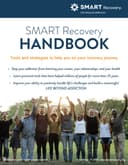
SMART Recovery 3rd Edition Handbook : Hardin, Rosemary, Hardin, Rosemary, Abbott, Dr. William, Braastad, Jim, Frahm, John, Lindel, Randy, Phillips, Richard, Steinberger, Henry: desertcart.co.uk: Books Review: Excellent Book - As someone who is currently recovering from drinking and currently attending smart groups i found this book both a lot to take in, but also very helpful and helps u think differently - a must for anyone with addition just take small chunks at a time as there is a lots of superb info in the book, my only tiny issue is the cover could have been laminated and bit thicker - but hey its the content that counts! good luck! Review: Really useful - Has a lot of useful advice
| Best Sellers Rank | 159,820 in Books ( See Top 100 in Books ) |
| Customer reviews | 4.7 4.7 out of 5 stars (1,619) |
| Dimensions | 21.59 x 0.66 x 27.94 cm |
| ISBN-10 | 061585267X |
| ISBN-13 | 978-0615852676 |
| Item weight | 417 g |
| Language | English |
| Print length | 112 pages |
| Publication date | 1 Jan. 2013 |
| Publisher | Adashn, Incorporated |
J**D
Excellent Book
As someone who is currently recovering from drinking and currently attending smart groups i found this book both a lot to take in, but also very helpful and helps u think differently - a must for anyone with addition just take small chunks at a time as there is a lots of superb info in the book, my only tiny issue is the cover could have been laminated and bit thicker - but hey its the content that counts! good luck!
B**S
Really useful
Has a lot of useful advice
A**N
Great Start to Recovery from Addiction
Great Start to Recovery from Addiction, using a SMART approach. But only a start. I would recommend my own book: The Alcohol Therapy Workbook by Antony Simpson, for a more detailed approach to recovery.
A**R
Great read
Best book for soberarity. Full of interesting ideas. thanks
T**X
Purchased for a family member
Very good book , purchased for a family member . Bought as required for smart groups
A**S
Tiny font size. No use for my older friend who I bought it for.
Tiny font size.
J**N
Good book
Excellent
G**D
Excellent Book, well written, thought provoking , researched and result oriented
プ**中
行ってほしいです! きっと需要あるも思います! 中国語版もありますが、 すでにマンダリンの世界では、 ミーティングもあるのでしょうか?
E**S
This book is a real life-saver and having it on my Kindle to take with me is even better. This book outlines the basics of the SMART Recovery program and, in spite of its relatively short length, covers all of the essentials of overcoming addictions - everything from building motivation to examining your values to how to do a cost-benefit analysis for your addiction to how to cope with urges. The urge-coping skills section's particularly good - they offer quite a few "basic" and "advanced" strategies for coping with urges "in the moment." One of the advantages of this over 12-step programs is the fact that, unlike AA, it embraces the idea of full recovery; it doesn't see addiction as a chronic disease that you can control but never cure. In SMART you CAN eventually get to the point where you don't have to do anything special to "maintain." This point'll vary by person obviously, but it's absolutely possible. I know several people liked this book because it's non-religious. I would like to clarify that this is a perfectly acceptable program for those of us who are religious. In many ways I actually find this more consistent with my Christian values than AA was. If anything, I think AA as a program is the one that's problematic from a religious perspective. Not to go off on an anti-AA rant, but here it goes: apart from disagreeing with several key ideas behind AA (e.g. the "disease model"), I disliked the implicit subjectivism and, quite frankly, magical thinking involved in AA. If you wanted your "Higher Power" to be a doorknob, that's fine in AA. (Now, obviously, your doorknob isn't a source of actual power, either spiritual or otherwise, but what's that to AA?). In meetings people would often say "well, my Higher Power's like this..." or "my higher power's like that..." The two ideas presented might totally contradict each other and be viewed as, in some sense, "true" as far as the group goes. Half the time the ideas presented are some god the speaker made up and formed in their own image - their "Higher Power" is the god they wished existed, not the one that actually does. What you end up with is smorgasbord religion and what some authors have described as "moralistic therapeutic deism." In any case, I'll stop ranting - my purpose here isn't to bash AA. The program and handbook also help you "de-claw," normalize, and demythologize the urges. I used to think of urges as completely unbearable, awful, and permanent (i.e. if I don't engage in my compulsive behavior I'll feel 100% bad 100% of the time until I do and I won't be able to stand it). They show instead that having urges is a normal part of early recovery; they aren't awful, permanent (they do, in fact, pass if you let them), or intolerable. Thinking in that way, especially when combined with urge coping skills and the ability to be more accepting of urges (I don't like them and wish I didn't have them but I can live with them while I'm getting away from the addiction), has made a tremendous difference in my ability to cope. I can now see urges and urge-coping as being like muscles - the more I use urge-coping the stronger the rational part of my mind becomes and the more I give in and engage in the behavior the stronger that becomes. If you like the Rational Recovery books ("The Small Book," "Taming The Feast Beast," etc.), especially the earlier ones where they were still primarily using REBT, you'll love this book. SMART doesn't have concepts that correspond exactly to "the Beast" or AVRT that I've found yet (they're not described in the handbook), but the programs compliment each other well. Yeah, I know RR and Jack Trimpey walked away from support groups, but I still like the combination. The other thing I like is that this program works for all kinds of addictive and compulsive behavior (or, I imagine, even plain old bad habits; to give away the big secret). Whether you're quitting alcohol, cocaine, bulimia, or gambling, you can apply a lot of the same principals. Granted, there are some differences between quitting bulimia and quitting alcohol - you don't have to drink alcohol but you do have to eat - but a lot of the same ideas work in both cases; things like building and maintaining motivation and the urge coping skills are identical. My only complaint about the Kindle edition is that it's sometimes a little hard to navigate and if it has page numbers/markings I haven't been able to find them. On the other hand, the nice thing about the Kindle edition is that it's easy to carry around (if I have my Kindle I have the book - I don't need to add another book to my bag) and it's easy to read in public if you don't want to spread around the fact that you're recovering from an addiction. (I take the train to work a lot of days; reading on the Kindle obviously looks just like reading any other book). I highly recommend this book if you're trying to quit a compulsive behavior. This is a wonderful alternative to 12-step programs.
A**R
A positive read. This book is a workbook, complete with excercises to work through. I am sure it's principles will help me in recovery.
M**D
Love the teachings in this book. Extremely helpful as a reminder to a 1 year sober person!
TrustPilot
2 周前
3 周前