We remain fully operational. Our teams are working around the clock to ensure your deliveries continue safely.

下载应用程序


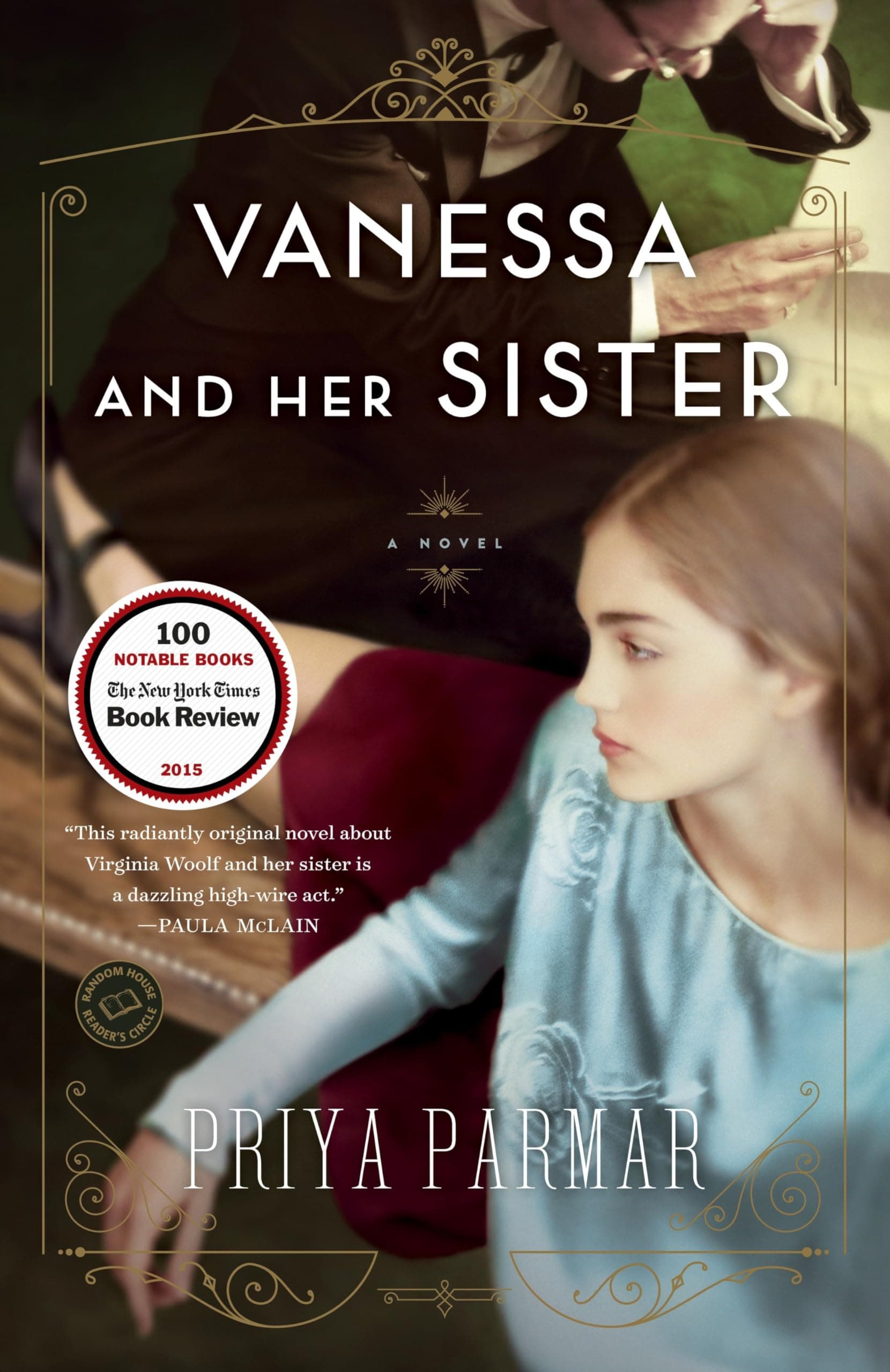
desertcart.com: Vanessa and Her Sister: A Novel: 9780804176392: Parmar, Priya: Books Review: I LOVED IT - I loved this book. I can often say i like a book, but rarely say I love one. This one I did. I don't know how she managed it, but Parmar somehow brought the entire Bloomsbury group back from the dead. I had to keep reminding myself that all those letters and postcards were her creation and not historical documents. If this were a story about a fictitious group of characters, it would have been a great read, but in this book she created a sort of an alternate universe, populated by utterly convincing people who uncannily resembled and yet were not the famous figures she tells about. I can’t imagine the discipline it must have taken to pull this off. I would guess most readers of the book are somewhat familiar with Virginia Woolf, are vaguely aware that she may have had siblings, and are less aware of the rest of the cast of characters. Parmar’s uncanny re-imagining of these people makes this irrelevant to the pleasure that reading the book gives. It makes clear, from the vantage point of Virginia’s sister Vanessa, that while many in their circle were brilliant and very influential in their fields, they had a much bigger impact as a group, one which reverberates through all of our lives today. Beginning just at the end of the Victorian era, the so-called Bloomsbury group turned social and sexual mores upside down and kicked these ideals so far out the door that they never found their way back in. It’s astonishing to see how thoroughly and unhesitatingly they did so. In an era when heterosexual monogamy was the only acceptable way of life, this group happily embraced every alternative without so much as a raised eyebrow. Half—no not half, the majority of them—were gay or bisexual. Polyamory, though not called by that name, was cheerfully tolerated. The only one troubled by any of this was Vanessa, and it is this which makes Parmar’s choice of her as protagonist so interesting. Vanessa was a true romantic and wanted nothing more than to fall in love with one person of the opposite sex and live happily ever after. No one in her group seemed to share this aspiration, least of all her sister, who trampled it. It might not have been the author’s intention, but I think it wouldn't be wrong to see Vanessa’s heartbreak and confusion as an allegory for the faltering search for a new and happier kind of morality by entire subsequent generations, up to and including our own. The book neither makes nor even hints at any facile lessons or conclusions from all this. It makes us as readers feel that we have acquired the ability to read Vanessa’s thoughts. From this intimate perspective, we get to experience this amazing collection of individuals and the way they loved, hurt, and entertained one another. What also makes Vanessa a great central character is that she is deeply aware—sometimes painfully so—of her own feelings, and tells us about them with unflinching truthfulness. If she is initially in denial about her betrayal by both her sister and her husband, she knows this is so and tells us about it. When she accepts it, she tells them both plainly what she feels without excuse. I’d like to balance all this praise by finding something to criticize about Parmar’s book, but I can’t seem to think of anything. It’s a beautifully structured, highly polished, and brilliantly crafted work of art. I haven't enjoyed anything else I’ve read this much in a long time. Get this book and read it, or you’ll be missing out on something rare and remarkable. Review: Strangely Compelling - First off I have to admit I'm not a fan of Virginia's writing. I went into this book really more interested in Vanessa and knowing next to nothing about the group of intellects that she and her family were part of in the early 1900's. I was worried this book would be a difficult read but actually it's a quick read and despite the fact that parts are rather mundane (Vanessa puts everything in this diary) I found it rather compelling. There are almost too many character to keep track of or care about and some are just in letter's that you don't even meet until the end but if you get Vanessa, Virginia, Clive (Vanessa's husband) and the main Stephen's family and family friend Lytton then you'll be okay. Roger comes in nearer the end but at least he makes an impression. Also it's hard to explain this without sounding perhaps awful because Virginia of course is mentally ill but she's also a manipulative witch. I didn't like her at all. She had such a need to be the center of things, especially with her sister, that it's actually painful to watch her worm her way into and destroy her sister's marriage. And Clive is such an idiot... It was a strangely compelling read for me.
| Best Sellers Rank | #2,658,156 in Books ( See Top 100 in Books ) #1,982 in Biographical Historical Fiction #2,568 in Biographical & Autofiction #3,289 in Sisters Fiction |
| Customer Reviews | 4.1 4.1 out of 5 stars (1,290) |
| Dimensions | 5.18 x 0.81 x 8.02 inches |
| Edition | Reprint |
| ISBN-10 | 0804176396 |
| ISBN-13 | 978-0804176392 |
| Item Weight | 10.4 ounces |
| Language | English |
| Print length | 384 pages |
| Publication date | October 13, 2015 |
| Publisher | Ballantine Books |
D**Z
I LOVED IT
I loved this book. I can often say i like a book, but rarely say I love one. This one I did. I don't know how she managed it, but Parmar somehow brought the entire Bloomsbury group back from the dead. I had to keep reminding myself that all those letters and postcards were her creation and not historical documents. If this were a story about a fictitious group of characters, it would have been a great read, but in this book she created a sort of an alternate universe, populated by utterly convincing people who uncannily resembled and yet were not the famous figures she tells about. I can’t imagine the discipline it must have taken to pull this off. I would guess most readers of the book are somewhat familiar with Virginia Woolf, are vaguely aware that she may have had siblings, and are less aware of the rest of the cast of characters. Parmar’s uncanny re-imagining of these people makes this irrelevant to the pleasure that reading the book gives. It makes clear, from the vantage point of Virginia’s sister Vanessa, that while many in their circle were brilliant and very influential in their fields, they had a much bigger impact as a group, one which reverberates through all of our lives today. Beginning just at the end of the Victorian era, the so-called Bloomsbury group turned social and sexual mores upside down and kicked these ideals so far out the door that they never found their way back in. It’s astonishing to see how thoroughly and unhesitatingly they did so. In an era when heterosexual monogamy was the only acceptable way of life, this group happily embraced every alternative without so much as a raised eyebrow. Half—no not half, the majority of them—were gay or bisexual. Polyamory, though not called by that name, was cheerfully tolerated. The only one troubled by any of this was Vanessa, and it is this which makes Parmar’s choice of her as protagonist so interesting. Vanessa was a true romantic and wanted nothing more than to fall in love with one person of the opposite sex and live happily ever after. No one in her group seemed to share this aspiration, least of all her sister, who trampled it. It might not have been the author’s intention, but I think it wouldn't be wrong to see Vanessa’s heartbreak and confusion as an allegory for the faltering search for a new and happier kind of morality by entire subsequent generations, up to and including our own. The book neither makes nor even hints at any facile lessons or conclusions from all this. It makes us as readers feel that we have acquired the ability to read Vanessa’s thoughts. From this intimate perspective, we get to experience this amazing collection of individuals and the way they loved, hurt, and entertained one another. What also makes Vanessa a great central character is that she is deeply aware—sometimes painfully so—of her own feelings, and tells us about them with unflinching truthfulness. If she is initially in denial about her betrayal by both her sister and her husband, she knows this is so and tells us about it. When she accepts it, she tells them both plainly what she feels without excuse. I’d like to balance all this praise by finding something to criticize about Parmar’s book, but I can’t seem to think of anything. It’s a beautifully structured, highly polished, and brilliantly crafted work of art. I haven't enjoyed anything else I’ve read this much in a long time. Get this book and read it, or you’ll be missing out on something rare and remarkable.
B**Y
Strangely Compelling
First off I have to admit I'm not a fan of Virginia's writing. I went into this book really more interested in Vanessa and knowing next to nothing about the group of intellects that she and her family were part of in the early 1900's. I was worried this book would be a difficult read but actually it's a quick read and despite the fact that parts are rather mundane (Vanessa puts everything in this diary) I found it rather compelling. There are almost too many character to keep track of or care about and some are just in letter's that you don't even meet until the end but if you get Vanessa, Virginia, Clive (Vanessa's husband) and the main Stephen's family and family friend Lytton then you'll be okay. Roger comes in nearer the end but at least he makes an impression. Also it's hard to explain this without sounding perhaps awful because Virginia of course is mentally ill but she's also a manipulative witch. I didn't like her at all. She had such a need to be the center of things, especially with her sister, that it's actually painful to watch her worm her way into and destroy her sister's marriage. And Clive is such an idiot... It was a strangely compelling read for me.
K**.
Sisters in Bloomsbury...
The narrative choice to tell the real-life interconnected stories of the two Stephen sisters (Virginia Woolf and Vanessa Bell), their siblings and assorted Bloomsbury friends and acquaintances through a fictionalized 'diary' was very clever and well done. I have done some extensive biographical reading on most of the central protagonists, and so it was wonderful to actually have some factual knowledge for comparison and contrasts, and it seems that this author really got not only the well-known factual details right, but also the historical period and the atmosphere of the times...it was a pleasure from beginning to end. I read the physical book first (beautiful type and cover graphics, as well as author interview at end of book), and then listened to the CD, which was beautifully read by multiple well-known working character actors, so it was an added treat. Excellent.
J**L
A complicated relationship
This book was selected by my Book Club and I was very eager to read it. I like history and the fact that it told the story from Virginia Woolf's sister's point of view was intriguing. I read the book on my iPad and it would be a better choice to read the hard copy . The list of characters is long and each individual has one or more nicknames, some of which were tough to follow because I could not easily flip back to the character list in the front of the book. I enjoyed the story but didn't love it. The book dragged from time to time and I forced myself to finish it. Having said that, the author draws a fascinating picture of Virginia through the eyes of her sister and I learned new facts about her. This is a key factor in what I read.
L**N
Great Period Piece
Really enjoyed this book bc I love historical fiction. The book was written as journal entries, another format that I enjoy. With its focus on literature, art, the Bloomsbury group, and the various settings it held my interest. I had trouble keeping the characters straight and had to keep looking at the list of characters in the front of the book(kindle version). Other than that I'd recommend this for anyone who enjoys period pieces-- early 1900s, Brittain.
N**S
I absolutely loved this book. Priya Parmar is a beautiful writer and a joy to read. Her characters are so real you are sorry to say goodbye to them at the end. This will be one of my favorite books.
N**B
Only two stars I'm afraid ( I started out with three). I value the effort and time put into the research but in hindsight I do not know why - as the author says herself - such a well-documented group of friends and artists as the Bloomsbury Group needs to be fictionalized. The book does not only tell the story from the perspective of (a fictional) Vanessa- it gives a clear one-sided view in her favour and against Virginia. That's ok, I guess, but we do not know if Vanessa Stephens herself would have supported such a publication. The heart of the book - or the intended heart is a conflict between sisters which is announced as astonishing. I think it is perfectly realistic, as all families have some seed of betrayal or power games in them and - to be honest - it is a private thing and either you publicize a book of letters uncommented (if you are given the admission that is), or you write fiction. But you don't combine the two to something which may have existed. The Bloomsbury group has contributed such a lot to arts and society and I think we should be grateful for it, without exploiting their personal relationships. Neither Vanessa nor Virginia are here to comment or defend themselves. As I am writing this I am realizing that in fact I do not know why this book was published. To me it seems like a previous dissertation on the Stephens Sisters was turned into a fictional novel. Which could be interesting - but I think it oversteps several boundaries with no real artistic justification. In addition Vanessa Bell herself doesn't get much credit - while writing the fictional diary as the one who is NOT the woman of letters, her paintings are only very broadly described - if at all.
M**T
I adored this. I finished it a few days ago and have waited to try and convey what I loved about it, but really all I can say is that it is one of the best things I've read in years. Just perfect in every way. My kindle notes are absurd, with entire pages highlighted, thus defeating the purpose. I've ordered a paper copy as well, to put on the physical shelf of rare books I loved to just pick and dip randomly back into. I know this copy will soon be scribbled over in notes. It was hard to believe someone had made this up. I felt surely this must actually be Vanessa's 'real' journal. Or is Priya Parmar a spooky woman who transcribed this with a ouija board? The characters are vivid and electrifying, and the sentences are like reading brush strokes of the vary paintings mentioned. Here she is Monet, here the words are tumbled onto the page in thick, mad colours, like Van Gogh. Such that reading it was akin to the weirdly physical experience one has in galleries, stepping closer to peer at this part of the canvass, standing back to consider that. It's a triumph. I am off to order 'Exit the Actress' and I cannot wait to see what Priya does next.
L**A
Enlish Literary society before World War !. Great portrayal of the early life of Virginia Woolf, and her talented family and friends, and her psychosis.
C**N
A fascinating, fictIonalized story of Vanessa Bell and VirgInia Woolf which manages to incorporate most of the facts of the Bloomsbury group. I found that at times it dragged a lit - became too repetitive and predictable - but it definitely merits reading and is also a great refresher of the people and the times. I enjoyed it very much.
TrustPilot
2天前
1 个月前