We remain fully operational. Our teams are working around the clock to ensure your deliveries continue safely.

下载应用程序


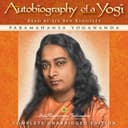
desertcart.com: Autobiography of a Yogi (Audible Audio Edition): Paramahansa Yogananda, Ben Kingsley, Self-Realization Fellowship: Books Review: ...for Christians - The Autobiography of a Yogi is much loved by millions around the world - it is even translated into Russian and Chinese - so another commentary by those who are drawn to meditation and eastern religious perspective is unnecessary. My comments I hope are for those Christians particularly, who would like to deepen their experience of God, but are wary about confusing their own religious beliefs by being influenced by theologies that may be in conflict with their own. Much of the world is in a crisis of faith. Marginalized by modernism, darwinism, humanism, and the constant minimizing of spiritual and religious life. Radical fundamentalism in Islam and elsewhere, is gaining credibility, often just out of desperate resistance to moral relativism, at least on the surface. Suddenly in the age of information, many religious and spiritual choices are available, some questionable pop versions of profound traditions, some bizarre distortions, both of which can consume the precious commodities of faith and enthusiasm (Greek: with the feeling of God) and trap a person in a merry-go-round of distractions from a true experience of God. And there are others that are inspiring and life changing, that may not be the doorway to one's own spiritual path, but nevertheless are the precious outstretched hand of God, infinite in his ability to nudge his children toward their true home and identity in Spirit. Truly it is difficult to figure out which is gold and which is 'fool's gold, and the same voice of cautious that is important in order to be discriminating can also overpower the gentle voice of a Soul call. Some Christians, i.e., Unitarians for instance, feel that the influence of other religions only deepens their own belief structures. This is neither right or wrong, it is matter of temperament. Others do not want to have to think about the validity or consistency of the theology they, for whatever reasons, call their own. And this is certainly a legitimate concern - after all, faith is most useful when it is committed and non-conflicted. As both a Ph.D. in Philosophy, and as ordained Lutheran Minister, and 40 year practitioner of Yoga Meditation, it is not tangential for me to study and integrate useful things into deepening my spiritual life and experience. Studying theology and the various spiritual traditions and sorting the wheat from the chaff is is part of my professional scholarly pursuits, it is what I do. So I hope this is helpful! Let's look at the landscape objectively. Theologically, there are over 2000 different protestant sects with a wide diversification of interpretation of scripture. The Russian and Greek Orthodox have many abrupt differences with the Roman Catholic, and both have global differences with Protestantism. There is the LDS Church, and a host of esoteric Christian sects some dating to the time of Christ. Suddenly, we have choices, other than what we were born into! This is as much a headache as it is illuminating. Which one is right? Which one is wrong? Or this not the point at all? What of all these different interpretations were just the beginning - the beginning to a direct experience of God, that is not vulnerable to the written word? Theologians and scholars, and I will cautiously include myself, have a widely diversified interpretation of scripture, and biblical history, And since mid- 20th centuries, with the discovery of the Dead Sea Scrolls and the Nag Hamadhi Scrolls, we have scripture that predates the centuries of rewrites and modifications by mortals al with their own ideas about exactly what Jesus taught! Few scholars would deny the levels of rewrites and over-rights that of occurred through the centuries. And to suddenly have fresh scriptures such as these is mind bending to say the least. The crisis of faith goes all the way to the top! Today Christian theologians are as much at each other's throats in 21st century as they were in the 4th century at the Council of Nicaea where fist fights literally broke out between bishops of the very very diverse Christian sects that existed at the time. Men at work and play. What scriptures to finally be included in the Bible we know today and accepted as Divine Truth, and which ones were to be tossed out, was predominately decided at Nicaea, by a Roman Emperor, who like all emperors truly believed he was Divine, and who it is now known was not a Christian at all (until his `cover-the-bases' conversion on his death bed - 400 years after Christ spoke the words. Most modern theologians are in a horrible predicament because they simply cannot in good conscience, accept a non-christian's choices. Gospels like Philip and Thomas, even the Pseudo-Clementines (Recognitions) and the Protevangelium and others - are clearly legitimate, if not more pure, than the strongly conflicted Synoptic Gospels that disagree on every other page, nor are they bound up with the hostile language of Paul, who's open animosity to the Jerusalem Church (Nazarene) of Jesus and his family, composes about half of the New Testament. And Paul didn't even know Jesus, claiming only his `divine perception' of Jesus. Nor did he spend much time in contact with Peter and James (brother of Jesus and the one that Jesus clearly states as the one you should follow `for whom heaven and earth were created') - the time can be measured in weeks, not months or years. I personally happen to believe that Paul's hellenized, novelized, and romanticized, version, though strongly in contradiction with Jesus' own teachings, actually was Divinely inspired, and important in the proliferation of the teachings, but only for the purpose of creating a watered down version, that common people could embrace and could be easily accepted. One might compare this to the proliferation of Islam today. But the price has been horrific and could actually destroy the `church' as we know it. I go into this for a purpose. Coming to grips with the crisis in faith and finding a solution is what is needed. It is no secret that the Church as been at war on obfuscating scientific discoveries for centuries. And now it is no secret that the Gospels are quite flawed. What we don't need is a crisis of faith without a path to resolution - a resolution that will lead to a deeper more personal conviction that transcends the `apparent' contradictions. God is at no inconvenience when it comes to genius and Christians need not be concerned that somehow Science will find a universe absent of God! The Truth can handle skepticism and discernment effortlessly! Consider what that muddled scriptural scenario means, in terms of what the 'Word' means in scripture. Discerning an accurate depiction of what Jesus taught - is like someone saying somethings in the 1600`s, almost 200 years before there was a United States, and when the average person only lived 35 years - and only nobles and monks could read and write - and taking His words, that were finally written down by people many years later, by people who did not hear them directly, little more than hearsay - and then this being rewritten by different humans with their various agendas, and then interpreted today by a bunch of political motivated men, fiercely in competition with each other to the point of killing one another, and finally to be decided on by politically appointees under the thumb of megalomaniac Emperor like Mao or Stalin! This is exactly the history of the Gospels, now accepted by the vast majority of Christians as the true Word. In reality the Emperor of Rome, Constantine the Great `decided' what was the truth and what was not, through his bishops - and his decision making was based on the political consolidation of an empire torn apart, and in desperate need of reigning in the wildly diverse Christians sects, now an influential political force to be reckoned with, but also with the incumbent mystery religions of the time through the Roman Empire. Add to this - the centuries of tweaking before and after, not to mention what happens when one becomes absorbed in the fascinating history of Jesus' Messianic Judaism and how it was distorted and evolved into Pauline Roman Christianity, the whole conundrum can be stupefying. One may realizes, that the interpreting scripture is a nest of worms, without a reference point. This is not to diminish the import of the Scriptures, but to clearly point out that without a rosetta stone, it is near impossible to discern a `final unequivocal true version'. Don't worry, I would not toss a grenade into anyone spiritual well being without pointing the way to safety! Conflict can be illuminating and advance the spiritual seekers understanding. And Jesus certainly does not fail to provide the path to resolution! What if the `Word' is not black marks on white paper, slaves to the limitations of mortal minds, vulnerable to interpretation and misconception by both well meaning and deceptive men alike? Heaven knows how hard it is to send an email and have someone not confuse your intentions! Words!!! But what if the "Word' that proceedth out of the `mouth of God' is in fact the very stuff of God, and knowable in such a way that it cannot be misinterpreted? Isn't this the nature of `Truth'? What if we do as Jesus admonished us to do "Be still and know that I am Lord". That reference point is the experience of God within. We are admonished by Jesus to `Love thy God with all thy heart, and all thy mind...', but how are we to love God, if we don't know God? And this is exactly the purpose of meditation and what Yogananda seeks to provide us an introduction to. He teaches the science of stilling the mind, and there behind the roar of our thoughts, fears, worries - there we `know'. Here... all scriptures come into focus. It doesn't matter what religion you belong to or what you believe - The Autobiography of a Yogi, is a introduction to the science of Meditation. Yogananda is deeply steeped in Christian theology (See his fabulous interpretation of the Bible), as was his Guru. Not only is this a fascinating account of modern day saints who dedicated their lives to God, it is an introduction to the scientific techniques to having a direct experience of the Soul, the spark of God with in. One can then interpret the scriptures from their heart, from their own inner truth, and here they come alive so personally. All else is small print. I would just add: Although this is a great version of Autobiography of Yogi, that if you do decide to go on and learn the techniques of meditation - go to Yogananda's organization, Self Realization Fellowship, ONLY, not the knock offs. Review: A Transformative Journey into Spirituality - Autobiography of a Yogi is an extraordinary and inspiring book that truly opened my eyes to the profound depths of spirituality and self-discovery. Paramahansa Yogananda’s storytelling is captivating—he shares his incredible journey with such honesty and humility that it feels like you’re walking alongside him through every experience. The book beautifully blends Eastern philosophy, mystical experiences, and practical teachings, making complex spiritual concepts accessible to readers from all backgrounds. I especially appreciated the way Yogananda introduces readers to the ancient wisdom of yoga and meditation, while also sharing fascinating encounters with saints, sages, and spiritual masters. What makes this autobiography stand out is its timeless relevance. Whether you are new to spirituality or have been on the path for years, there is something in this book that resonates deeply. It encourages self-reflection, inspires inner peace, and opens the door to a higher understanding of life and the universe. The detailed accounts of miracles, yogic powers, and divine experiences add a magical quality that keeps you hooked till the very end. Beyond just a memoir, it is a guide to living a more conscious and meaningful life. Overall, Autobiography of a Yogi is not just a book; it’s a transformative journey. I highly recommend it to anyone interested in spirituality, personal growth, or simply looking for a profound and uplifting read. It has certainly enriched my life and continues to inspire me every time I revisit its pages.
B**Y
...for Christians
The Autobiography of a Yogi is much loved by millions around the world - it is even translated into Russian and Chinese - so another commentary by those who are drawn to meditation and eastern religious perspective is unnecessary. My comments I hope are for those Christians particularly, who would like to deepen their experience of God, but are wary about confusing their own religious beliefs by being influenced by theologies that may be in conflict with their own. Much of the world is in a crisis of faith. Marginalized by modernism, darwinism, humanism, and the constant minimizing of spiritual and religious life. Radical fundamentalism in Islam and elsewhere, is gaining credibility, often just out of desperate resistance to moral relativism, at least on the surface. Suddenly in the age of information, many religious and spiritual choices are available, some questionable pop versions of profound traditions, some bizarre distortions, both of which can consume the precious commodities of faith and enthusiasm (Greek: with the feeling of God) and trap a person in a merry-go-round of distractions from a true experience of God. And there are others that are inspiring and life changing, that may not be the doorway to one's own spiritual path, but nevertheless are the precious outstretched hand of God, infinite in his ability to nudge his children toward their true home and identity in Spirit. Truly it is difficult to figure out which is gold and which is 'fool's gold, and the same voice of cautious that is important in order to be discriminating can also overpower the gentle voice of a Soul call. Some Christians, i.e., Unitarians for instance, feel that the influence of other religions only deepens their own belief structures. This is neither right or wrong, it is matter of temperament. Others do not want to have to think about the validity or consistency of the theology they, for whatever reasons, call their own. And this is certainly a legitimate concern - after all, faith is most useful when it is committed and non-conflicted. As both a Ph.D. in Philosophy, and as ordained Lutheran Minister, and 40 year practitioner of Yoga Meditation, it is not tangential for me to study and integrate useful things into deepening my spiritual life and experience. Studying theology and the various spiritual traditions and sorting the wheat from the chaff is is part of my professional scholarly pursuits, it is what I do. So I hope this is helpful! Let's look at the landscape objectively. Theologically, there are over 2000 different protestant sects with a wide diversification of interpretation of scripture. The Russian and Greek Orthodox have many abrupt differences with the Roman Catholic, and both have global differences with Protestantism. There is the LDS Church, and a host of esoteric Christian sects some dating to the time of Christ. Suddenly, we have choices, other than what we were born into! This is as much a headache as it is illuminating. Which one is right? Which one is wrong? Or this not the point at all? What of all these different interpretations were just the beginning - the beginning to a direct experience of God, that is not vulnerable to the written word? Theologians and scholars, and I will cautiously include myself, have a widely diversified interpretation of scripture, and biblical history, And since mid- 20th centuries, with the discovery of the Dead Sea Scrolls and the Nag Hamadhi Scrolls, we have scripture that predates the centuries of rewrites and modifications by mortals al with their own ideas about exactly what Jesus taught! Few scholars would deny the levels of rewrites and over-rights that of occurred through the centuries. And to suddenly have fresh scriptures such as these is mind bending to say the least. The crisis of faith goes all the way to the top! Today Christian theologians are as much at each other's throats in 21st century as they were in the 4th century at the Council of Nicaea where fist fights literally broke out between bishops of the very very diverse Christian sects that existed at the time. Men at work and play. What scriptures to finally be included in the Bible we know today and accepted as Divine Truth, and which ones were to be tossed out, was predominately decided at Nicaea, by a Roman Emperor, who like all emperors truly believed he was Divine, and who it is now known was not a Christian at all (until his `cover-the-bases' conversion on his death bed - 400 years after Christ spoke the words. Most modern theologians are in a horrible predicament because they simply cannot in good conscience, accept a non-christian's choices. Gospels like Philip and Thomas, even the Pseudo-Clementines (Recognitions) and the Protevangelium and others - are clearly legitimate, if not more pure, than the strongly conflicted Synoptic Gospels that disagree on every other page, nor are they bound up with the hostile language of Paul, who's open animosity to the Jerusalem Church (Nazarene) of Jesus and his family, composes about half of the New Testament. And Paul didn't even know Jesus, claiming only his `divine perception' of Jesus. Nor did he spend much time in contact with Peter and James (brother of Jesus and the one that Jesus clearly states as the one you should follow `for whom heaven and earth were created') - the time can be measured in weeks, not months or years. I personally happen to believe that Paul's hellenized, novelized, and romanticized, version, though strongly in contradiction with Jesus' own teachings, actually was Divinely inspired, and important in the proliferation of the teachings, but only for the purpose of creating a watered down version, that common people could embrace and could be easily accepted. One might compare this to the proliferation of Islam today. But the price has been horrific and could actually destroy the `church' as we know it. I go into this for a purpose. Coming to grips with the crisis in faith and finding a solution is what is needed. It is no secret that the Church as been at war on obfuscating scientific discoveries for centuries. And now it is no secret that the Gospels are quite flawed. What we don't need is a crisis of faith without a path to resolution - a resolution that will lead to a deeper more personal conviction that transcends the `apparent' contradictions. God is at no inconvenience when it comes to genius and Christians need not be concerned that somehow Science will find a universe absent of God! The Truth can handle skepticism and discernment effortlessly! Consider what that muddled scriptural scenario means, in terms of what the 'Word' means in scripture. Discerning an accurate depiction of what Jesus taught - is like someone saying somethings in the 1600`s, almost 200 years before there was a United States, and when the average person only lived 35 years - and only nobles and monks could read and write - and taking His words, that were finally written down by people many years later, by people who did not hear them directly, little more than hearsay - and then this being rewritten by different humans with their various agendas, and then interpreted today by a bunch of political motivated men, fiercely in competition with each other to the point of killing one another, and finally to be decided on by politically appointees under the thumb of megalomaniac Emperor like Mao or Stalin! This is exactly the history of the Gospels, now accepted by the vast majority of Christians as the true Word. In reality the Emperor of Rome, Constantine the Great `decided' what was the truth and what was not, through his bishops - and his decision making was based on the political consolidation of an empire torn apart, and in desperate need of reigning in the wildly diverse Christians sects, now an influential political force to be reckoned with, but also with the incumbent mystery religions of the time through the Roman Empire. Add to this - the centuries of tweaking before and after, not to mention what happens when one becomes absorbed in the fascinating history of Jesus' Messianic Judaism and how it was distorted and evolved into Pauline Roman Christianity, the whole conundrum can be stupefying. One may realizes, that the interpreting scripture is a nest of worms, without a reference point. This is not to diminish the import of the Scriptures, but to clearly point out that without a rosetta stone, it is near impossible to discern a `final unequivocal true version'. Don't worry, I would not toss a grenade into anyone spiritual well being without pointing the way to safety! Conflict can be illuminating and advance the spiritual seekers understanding. And Jesus certainly does not fail to provide the path to resolution! What if the `Word' is not black marks on white paper, slaves to the limitations of mortal minds, vulnerable to interpretation and misconception by both well meaning and deceptive men alike? Heaven knows how hard it is to send an email and have someone not confuse your intentions! Words!!! But what if the "Word' that proceedth out of the `mouth of God' is in fact the very stuff of God, and knowable in such a way that it cannot be misinterpreted? Isn't this the nature of `Truth'? What if we do as Jesus admonished us to do "Be still and know that I am Lord". That reference point is the experience of God within. We are admonished by Jesus to `Love thy God with all thy heart, and all thy mind...', but how are we to love God, if we don't know God? And this is exactly the purpose of meditation and what Yogananda seeks to provide us an introduction to. He teaches the science of stilling the mind, and there behind the roar of our thoughts, fears, worries - there we `know'. Here... all scriptures come into focus. It doesn't matter what religion you belong to or what you believe - The Autobiography of a Yogi, is a introduction to the science of Meditation. Yogananda is deeply steeped in Christian theology (See his fabulous interpretation of the Bible), as was his Guru. Not only is this a fascinating account of modern day saints who dedicated their lives to God, it is an introduction to the scientific techniques to having a direct experience of the Soul, the spark of God with in. One can then interpret the scriptures from their heart, from their own inner truth, and here they come alive so personally. All else is small print. I would just add: Although this is a great version of Autobiography of Yogi, that if you do decide to go on and learn the techniques of meditation - go to Yogananda's organization, Self Realization Fellowship, ONLY, not the knock offs.
P**A
A Transformative Journey into Spirituality
Autobiography of a Yogi is an extraordinary and inspiring book that truly opened my eyes to the profound depths of spirituality and self-discovery. Paramahansa Yogananda’s storytelling is captivating—he shares his incredible journey with such honesty and humility that it feels like you’re walking alongside him through every experience. The book beautifully blends Eastern philosophy, mystical experiences, and practical teachings, making complex spiritual concepts accessible to readers from all backgrounds. I especially appreciated the way Yogananda introduces readers to the ancient wisdom of yoga and meditation, while also sharing fascinating encounters with saints, sages, and spiritual masters. What makes this autobiography stand out is its timeless relevance. Whether you are new to spirituality or have been on the path for years, there is something in this book that resonates deeply. It encourages self-reflection, inspires inner peace, and opens the door to a higher understanding of life and the universe. The detailed accounts of miracles, yogic powers, and divine experiences add a magical quality that keeps you hooked till the very end. Beyond just a memoir, it is a guide to living a more conscious and meaningful life. Overall, Autobiography of a Yogi is not just a book; it’s a transformative journey. I highly recommend it to anyone interested in spirituality, personal growth, or simply looking for a profound and uplifting read. It has certainly enriched my life and continues to inspire me every time I revisit its pages.
M**K
A amazing book!
This should be required reading in high school. A amazing book!
R**A
The Autobiography of a yogi is a thought provoking book about spirituality.
The Autobiography of a yogi has sparked my interest in reading spiritual books like the Bible and the Bhagavad Gita for the insightful pearls of wisdom they contain. These insights really make the book enjoyable to me. The Gita is India's most important spiritual text. The goal of the science of yoga is stated in Psalms 46:10 in the Bible. The goal of yoga is to achieve inner stillness so that a person can know God. I am not an overly religious person, but I do think inner stillness can be a worthy goal for every person. This book is filled with quotes from the Bible and the Gita. There is a passage from the Bhagavad Gita that talks about how the nature of man is to be active and not lazy. The writing in this book is very vivid. Yogananda's description of how beautiful Kashmir is makes me want to book a flight just to see the beauty of nature there. I would love to see the caves and cathedrals in southern India described in this book. This autobiography is not easy to read, but the information is valuable. Some of the names and words in the book are hard to pronounce. One thing is certain. Paramahansa Yogananda had a fascinating life. There is one photo in the book that shows him addressing a crowd of people. The caption under this photo states that in thirty two years in the West, he taught 100,000 people the practice of Kriya yoga. Kriya yoga is a form of yoga that relaxes a person senses and organs. It can improve concentration and quality of sleep. Several miracles are described in this book that are hard to believe. There is a picture of a woman who did not eat or drink anything for over fifty years. There is another incidence of a miracle where the author suddenly has the ability to speak English just by praying to his guru. This book suggests that anyone is capable of performing a miracle if their belief in the Divine is strong enough. The beliefs of Paramahansa Yogananda influenced a diversity of people like Gandhi and plant scientist Luther Burbank. Millions of regular citizens all over the world continue to be influenced by his form of meditation. One of the beliefs of his self realization fellowship is that yoga can liberate a person for physical disease and improve mental and spiritual health. This is a very hopeful message that makes this book so appealing to me. I highly recommend this book.
K**O
This book gives me hope. I laughed and cried.
My all time favorite book!!!
R**A
Is this all true...all the claims in this book ???
This is an amazing book, with a lot of knowledge and not a lot of judgement. Yogananda respects and praises all world religions, and is not advocating Hinduism in any way. I think Steve Jobs popularity, and the news at his death that this was the only book on his iPad and that he read every year, is having the effect of bringing this book into the mainstream. Americans are truly now, for the first time, beginning to acknowledge the power and the truth of yogis, saints, yoga, hinduism, etc. No one should blame this book for Steve Jobs death, he made his choice of not getting medical treatment for his cancer, and he paid for his choice with his life (death ?). And here's something even more fascinating. On pp 262, 'Babaji is ever in communion with Christ; together they send out vibrations of redemption and have planned the spiritual technique of salvation for this age.' And on page 265, there is mention of Babaji, who has lived in the Himalayas for many centuries. 'Only one reason motivates Babaji to live forever: the desire to furnish humanity with a concrete example of its own possibilities.' Amazingly, I believe this. Babaji sees very few people in this world. And those too only at his choosing, and when he wants. My Dad has actually met Babaji, so I know this is all true ! I would say that this book is very inspiring. I think the moment you stop doubting and start believing that everything that is said in this book is true, you will begin to understand, and your life will open up to infinite possibilities. 03.15.2012 - Finished the book a few days ago. Very informative indeed. The author has so much credibility, that I am inclined to believing him. And Yogananda talks a lot about supernatural phenomena, incidents and events unimaginable really. The detailed references to the Bible, as well as to other sources, make his book all the more credible. A very good read, I got a lot out of it."
A**H
A Powerful and Deep Book
Autobiography of a Yogi is a great book that made me think deeply about life, God, and the universe. It has many spiritual lessons and helped me understand myself better. I gave it 4 stars because some of the words were hard to understand. But it’s the kind of book you can read again and again—and each time, you’ll learn something new. If you’re looking for a book that opens your mind and heart, this is a good one to read.
D**D
Great book
Great book very inspiring
TrustPilot
1天前
1 个月前