Some deliveries may take a little longer than usual due to regional shipping conditions.

下载应用程序


Full description not available
R**R
One of my favorite intro to philosophy books
My Intro to Philosophy professor used the book: Readings on the Ultimate Questions: An Introduction to Philosophy. This book is a fantastic companion to the Readings book. Many of the examples given are in a "doing philosophy" style instead of "reading philosophy" which is a better way to learn philosophy. In any event, many questions my professor asked were from this companion book, so I had an enormous leg up on the rest of the class. I pretty much knew what questions he was going to ask ahead of time, and I had already reflected on them before class. It made this class on of the best courses I've ever taken.I would say that if your professor uses Readings on the Ultimate Questions as a text for the course you'd be stupid not to get this one too. Even if your professor doesn't use that text, this is a great companion to an intro philosophy course to help you get started doing philosophy instead of simply reading about it.
B**E
Great quality, practically brand new
There are no damages to the book, practically new, use it for class all the time
D**N
Satisfactory Introduction in Some Respects
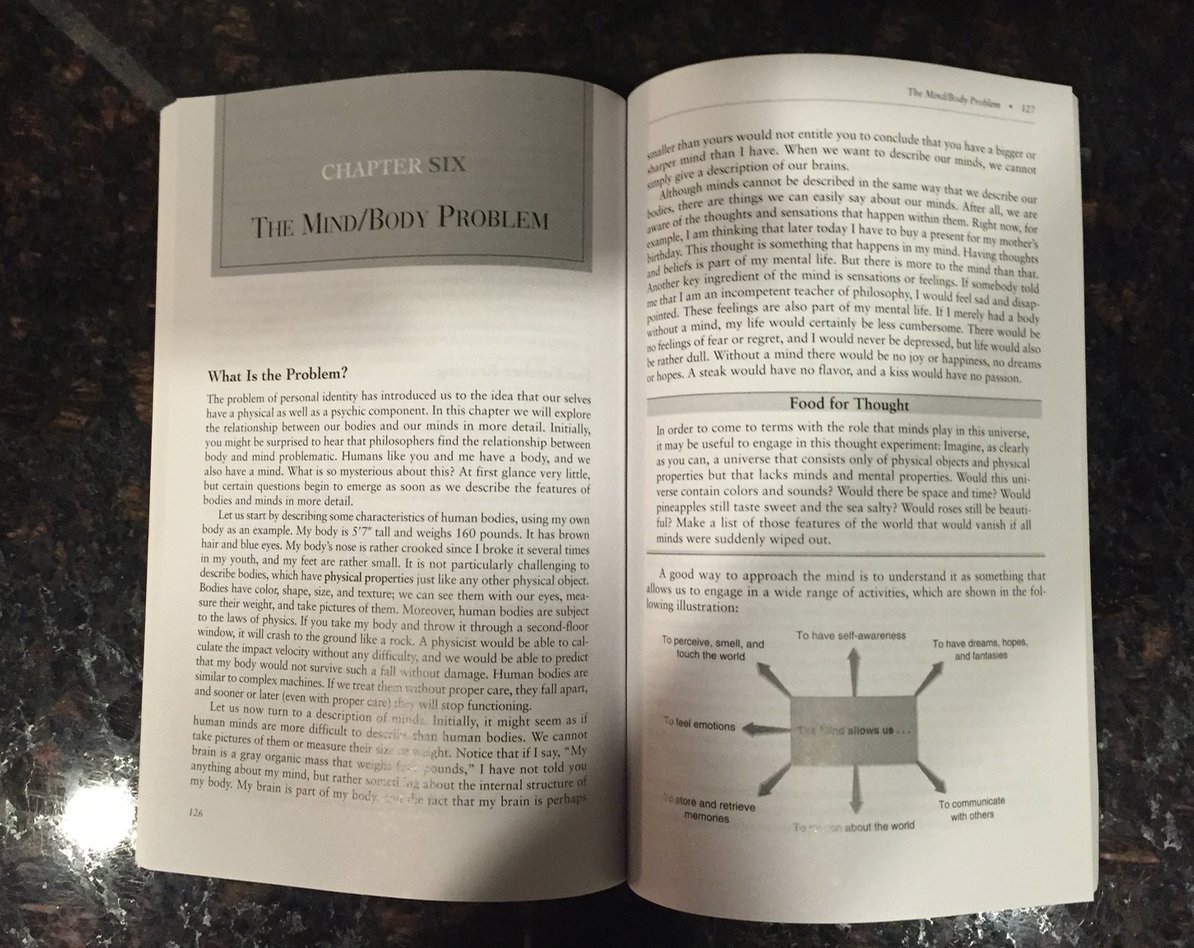
I’ve really had a difficult time finding decent books to use in teaching my introductory philosophy courses. Given all the approaches one could take to a first introduction to philosophy, e.g., historical, secondary-literary synopsis, excerpts of works on big issues, and a survey of the most important texts in philosophy, I think Rauhut’s books are some of the better ones I’ve found. In the way that I just phrased that last remark I hope it is clear that I have reservations. Let me say what’s good about this book, first, then I’ll remark on a few of its shortcomings.One of the things this book has going for it is that Rauhut covered some of the big issues in philosophy, and has a correlated text with excerpts from all the best papers pertaining to the subject. That is, the individual topics in this book, which constitute its chapters’ focuses (e.g., morality, the god question, the basic question of epistemology, namely, how can we know anything, etc.) has a sort of companion text (“Readings on the Ultimate Questions: An Introduction to Philosophy”), in which the chapter are filled with portions of text written by great philosophers in history, as well as contemporary scholars in philosophy departments, sometimes referred to as “philosophers.” Taken together, the potency of this text (and the other one, too), “Ultimate Questions” triple their value.This text is clearly written and reasonably well thought out. One of the things it does more, which I think other texts need to do, is include diagrams, such as flow diagrams. Being a secondary text, whose function is, primarily, to explain the big issues in a somewhat thorough, yet quick way, requires a great deal of organization. I think this book achieves this with its setup and clear communication. The most valuable part of this book is, without a question, the part that finds no correlating chapter in the “Readings on the Ultimate Questions,” namely, the chapter on “philosophical tools.” I cannot express how much I would have liked to have known of and had access to this chapter when I taught from the “Readings” text. Most students come into a philosophy class without the slightest clue about what reason is, what constitutes an argument, and how to evaluate an argument –an unfortunate consequence of the American K-12 system and its obsession with standards, process, and memorization, rather than understanding. Even if Rauhut doesn’t do as thoroughgoing of a job as I’d like, the content contained is basically priceless and lifts a great burden from both teacher and student (or layperson) when it comes to trying to gain some traction in the area of reason and other philosophical tools (e.g., methods of inquiry).The bad in this book is really the bad that exists in the “Readings”: what was chosen as subjects aren’t really the most important subjects in philosophy. They may be some of the more approachable and more interesting, depending on your background. In some places, Rauhut certainly tries to tie in important issues. For example, there is no chapter on metaphysics or, say, metaphysical monism versus dualism; but Rauhut does draw Descsrtes’ dualism into a chapter on the nature of personal identity. In essence, the issue I have with this text and the other is that the reader could come away from the text, having read it fairly carefully, and come away not knowing what metaphysics is. Another example: not really having said anything about philosophy’s relation to science is a deficiency. Finally, I don’t like that there is much in the way of historical reference to the development of the ideas presented; the history informs us well of philosophical developments, how they developed, why, and what motivating/influential forces were in play. There are some portion of philosophical history (e.g., medieval) and major branches of philosophy (e.g., aesthetics) that aren’t even covered, maybe not even mentioned! This is not to say that other texts are as comprehensive as I’d like –in fact, I have not found a completely satisfactory text, but merely that this is as good as the best I’ve found so far, and certainly sufficient in many respects.If you want a big-issues approach in an introduction to philosophy, I can recommend reading this book and its companion, “Readings on the Ultimate Questions.” If you want some of the more important issues in philosophy, I can make some recommendations, including Bertrand Russell’s “The Problems of Philosophy,” for one. If you want a historical approach, Enoch Stumpf’s text is very readable and gentle.
M**E
Use For My Philosophy Class.
I earn a B+(89) in the class. I should have brought the book way earlier. It was every interesting to learn many new things by yourself then listening to a professor talk. That's why our professor use this book to inform ourself to get ready to talk about what we read so we all had a clear understanding what to expect in class. Anyways, enjoy the book even if it's not for a class still enjoyable.
B**N
Enjoyable and interesting read.
Great service from Amazon, as expected. This book is very interesting. Despite the fact that it was a required textbook for a philosophy and religion course, I enjoyed reading it. The different subjects forced my critical thinking to a level I have not reached prior. Highly recommend.
B**S
Not Advance Level
A basic intro to philosophy college level book.
M**L
Good and Greater
Wonderful beginners book for philosophy. Its short, sweet and explains in detail the good and bad of every argument and philosophy. I love it for that reason but it leaves you with being less opinionated than other books on philosophy which is the only thing i don't like.
B**N
I'm a firm believer that the best teachers show you a picture but dont tell you ...
I'm a firm believer that the best teachers show you a picture but dont tell you what to see. In this book I feel that he is trying to tell you what you should think, which I don't like. I also love philosophy, but foubd this book very boring and difficult to concentrate on.
A**R
Great book
Is one of the best academic books about philosophy I've read. Great level of information, good language and really understandable!Good job! (Really useful for uni's courses of philosophy, especially for the majors!)
TrustPilot
1 个月前
5天前