
下载应用程序



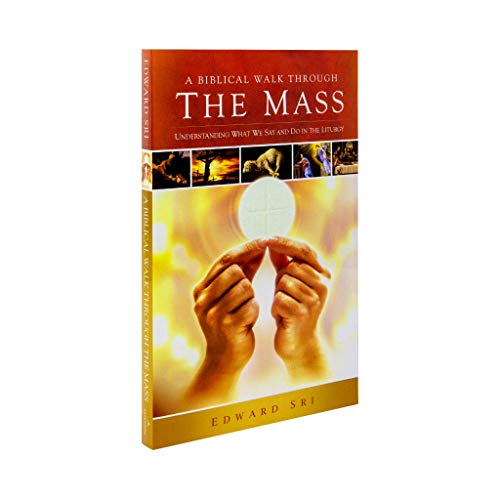


A Biblical Walk Through the Mass (Book): Understanding What We Say and Do In The Liturgy [Edward Sri] on desertcart.com. *FREE* shipping on qualifying offers. A Biblical Walk Through the Mass (Book): Understanding What We Say and Do In The Liturgy Review: A Clear Explanation of the Biblical Connections and the Holy Mass - Edward Sri wrote an interesting and informative explanation of the Catholic Mass. His book titled A BIBLICAL WALK THROUGH THE MASS gave readers an understanding and the biblical roots of the celebration of the Mass. Those who are not Catholic will understand the Mass and the historical/biblical basis behind the rites of the Mass and other Catholic sacraments. Catholics should have a better understanding of the Faith. Sri mentioned the Eucharist's connection with the Jewish Passover. He cited sections of the New Testament (1 Corinthians 5: 7-8, 1 Peter 1:19, and Revelations 5:6)to mention examples of biblical examples of the Eucharist. Sri also made the connection between Exodus 12: 8-12 and the use of the term Lamb of God. In other words, there is a biblical connections between the Passover and Mass. Sri carefully explained the concept of the Real Presence via The Lamb of God. The chapter re the Introductory Rites explained how Catholics and Catholic priests begin the Mass. For example the Sigh of the Cross was a rite used very early in the History of Christianity. The Sigh of the Cross was a sacred reminder of the presence of God and to give blessing to what the faithful do at Mass and during other times away from Mass. Sri cited Tertullian (c. 160-225)who expounded on the Sigh of the Cross. St. Johbn Chrysostom (347-407 AD)mentioned the importance of the Sigh of the Cross. The Sign of the Cross has roots in the Hebrew Bible or Old Testament. Mention is made of the Ancient Hebrews making as sacred sign which is mentioned in Ezekiel 8. Sri also cites Revelation 7:3 and 9:4 to further explain the significance of the Sign of the Cross. As Catholics should know, the Sign of the Cross is accompanied invoking God's name and blessing. Biblical references include Genesis 12:8, 13:4, and 21:33. Other Old Testament citations are found in Psalm 54:1, 124:8, 124:8. Sri used New Testament citations for involking God's name such Luke 24:47, Acts 10:43,plus citations from John's Gospel. The Sign of the Cross is followed by the priest's Apolstolic Greeting to which parishoners respond with the phrase, "And with your spirit" which signfies the Catholic priest's Holy Ordination which is taken in part from John's Gospel 20:21-23. The Introductry Rites include the Confiteor or I Confess. This rite is included in the DIDACHE which was written between c. 50-98 AD. The Confitieor is clearly mentioned in the DIADACHE, and the Sacrment of Confession is again referred in John 20-21-23. Sri mentioned Old Testament phrases re Confession such as Leviticus 5:5, Numbers 5:7, Danial 9:20, Nehemiah 1:6, etc. In re Confession, Sri included other biblical references from the Old and New Testament. The Catholic Introductory Rites are followed by The Liturgy of the Word which usually has sections of the Old Testament, the Psalms, the Epistles, and Gospels. What may surprise non-Catholics is that anyone who attends Mass every day of the week would have an exposure to almost the entire Bible v1a the three cycle. The Ancient Hebrews and Jews had their own readings. What may interest readers the Septuagint(c. 287-247 BC) which was a Greek translation of much of the Heberew Bible and is surprisingly a more accurate translation. Some of the Ancient Hebrews had different Hebrew texts, but the translators of the Septuagint had access to older and more accurate Hebrew texts. In fact, the canon of the Hebrew Bible was not settled until 90 AD. The Homily is followed by The Prayer of the Faithful which is as old as St. Justin Martyr (c. 155 AD). The Book of Acts 12:1-7 refers to such a prayer. The role of the Priests' intercession is referenced by 1 Peter 2:9, Revelations, 1:5-6, and John's Godpel (chatper17). Sri was careful in explaining the roots of the Eucharist. The use of bread meant more than food in Old Testament references (Genesis 32:54, 37: 25, 1 Kings 13:8-9, 16-19, Leviticus26:26, etc.). Similar Old Testament references explained the sacred use of wine. The Eucharist was based on these references, and the early Catholic Church included the concept of the Real Presence. Sri mentioned the Real Presence was mentioned in John 6: 53-64 and The Last Supper. The Eucharist was clearly stated in the DIDACHE mentioned above. Sri made an interesing comment re the Words of Institution and Consecration. Sri wrote that these words are familar to Catholics, but their repeated mention may make these phrases too familar because Cathholics may take these phrases for granted without realizing just how important they are. The book under review and a careful reading of the Catholic Catechism may help Catholics to fully appreciate the Eucharist. Sri explained that the concluding Rites and dismissal are reminders that Catholcism is a religion of renewal, and the reminders of the Mass ought to remain with Catholics until a renewal of the next Mass. In other words, devout Catholics should not leave the Mass unaffected. Edward Sri's book A BIBLICAL WALK THROUGH THE MASS enhanced the meaning of Holy Mass for devout Catholics. The book is also useful in providing a reasoned explanation of the Catholic Sacraments to those who are not familar with Catholcism. The book should have a bibligraphy to help with further study. Sri's book is a clear explanation of the Mysteries of the Faith. James E. Egolf February 4, 2012 Review: Book does exactly what it promises...explains the Mass. - This book helped me understand our Catholic Mass immensely. Easy reading but very thorough in explanations. It stays in my library along with other favorite books.


| Best Sellers Rank | #130,612 in Books ( See Top 100 in Books ) #50 in Catholicism (Books) #136 in Christian Evangelism (Books) |
| Customer Reviews | 4.8 4.8 out of 5 stars (2,189) |
| Dimensions | 5.5 x 0.5 x 8.25 inches |
| Edition | Ldg |
| ISBN-10 | 1935940007 |
| ISBN-13 | 978-1935940005 |
| Item Weight | 8 ounces |
| Language | English |
| Print length | 160 pages |
| Publication date | January 3, 2011 |
| Publisher | Ascension Press |
J**F
A Clear Explanation of the Biblical Connections and the Holy Mass
Edward Sri wrote an interesting and informative explanation of the Catholic Mass. His book titled A BIBLICAL WALK THROUGH THE MASS gave readers an understanding and the biblical roots of the celebration of the Mass. Those who are not Catholic will understand the Mass and the historical/biblical basis behind the rites of the Mass and other Catholic sacraments. Catholics should have a better understanding of the Faith. Sri mentioned the Eucharist's connection with the Jewish Passover. He cited sections of the New Testament (1 Corinthians 5: 7-8, 1 Peter 1:19, and Revelations 5:6)to mention examples of biblical examples of the Eucharist. Sri also made the connection between Exodus 12: 8-12 and the use of the term Lamb of God. In other words, there is a biblical connections between the Passover and Mass. Sri carefully explained the concept of the Real Presence via The Lamb of God. The chapter re the Introductory Rites explained how Catholics and Catholic priests begin the Mass. For example the Sigh of the Cross was a rite used very early in the History of Christianity. The Sigh of the Cross was a sacred reminder of the presence of God and to give blessing to what the faithful do at Mass and during other times away from Mass. Sri cited Tertullian (c. 160-225)who expounded on the Sigh of the Cross. St. Johbn Chrysostom (347-407 AD)mentioned the importance of the Sigh of the Cross. The Sign of the Cross has roots in the Hebrew Bible or Old Testament. Mention is made of the Ancient Hebrews making as sacred sign which is mentioned in Ezekiel 8. Sri also cites Revelation 7:3 and 9:4 to further explain the significance of the Sign of the Cross. As Catholics should know, the Sign of the Cross is accompanied invoking God's name and blessing. Biblical references include Genesis 12:8, 13:4, and 21:33. Other Old Testament citations are found in Psalm 54:1, 124:8, 124:8. Sri used New Testament citations for involking God's name such Luke 24:47, Acts 10:43,plus citations from John's Gospel. The Sign of the Cross is followed by the priest's Apolstolic Greeting to which parishoners respond with the phrase, "And with your spirit" which signfies the Catholic priest's Holy Ordination which is taken in part from John's Gospel 20:21-23. The Introductry Rites include the Confiteor or I Confess. This rite is included in the DIDACHE which was written between c. 50-98 AD. The Confitieor is clearly mentioned in the DIADACHE, and the Sacrment of Confession is again referred in John 20-21-23. Sri mentioned Old Testament phrases re Confession such as Leviticus 5:5, Numbers 5:7, Danial 9:20, Nehemiah 1:6, etc. In re Confession, Sri included other biblical references from the Old and New Testament. The Catholic Introductory Rites are followed by The Liturgy of the Word which usually has sections of the Old Testament, the Psalms, the Epistles, and Gospels. What may surprise non-Catholics is that anyone who attends Mass every day of the week would have an exposure to almost the entire Bible v1a the three cycle. The Ancient Hebrews and Jews had their own readings. What may interest readers the Septuagint(c. 287-247 BC) which was a Greek translation of much of the Heberew Bible and is surprisingly a more accurate translation. Some of the Ancient Hebrews had different Hebrew texts, but the translators of the Septuagint had access to older and more accurate Hebrew texts. In fact, the canon of the Hebrew Bible was not settled until 90 AD. The Homily is followed by The Prayer of the Faithful which is as old as St. Justin Martyr (c. 155 AD). The Book of Acts 12:1-7 refers to such a prayer. The role of the Priests' intercession is referenced by 1 Peter 2:9, Revelations, 1:5-6, and John's Godpel (chatper17). Sri was careful in explaining the roots of the Eucharist. The use of bread meant more than food in Old Testament references (Genesis 32:54, 37: 25, 1 Kings 13:8-9, 16-19, Leviticus26:26, etc.). Similar Old Testament references explained the sacred use of wine. The Eucharist was based on these references, and the early Catholic Church included the concept of the Real Presence. Sri mentioned the Real Presence was mentioned in John 6: 53-64 and The Last Supper. The Eucharist was clearly stated in the DIDACHE mentioned above. Sri made an interesing comment re the Words of Institution and Consecration. Sri wrote that these words are familar to Catholics, but their repeated mention may make these phrases too familar because Cathholics may take these phrases for granted without realizing just how important they are. The book under review and a careful reading of the Catholic Catechism may help Catholics to fully appreciate the Eucharist. Sri explained that the concluding Rites and dismissal are reminders that Catholcism is a religion of renewal, and the reminders of the Mass ought to remain with Catholics until a renewal of the next Mass. In other words, devout Catholics should not leave the Mass unaffected. Edward Sri's book A BIBLICAL WALK THROUGH THE MASS enhanced the meaning of Holy Mass for devout Catholics. The book is also useful in providing a reasoned explanation of the Catholic Sacraments to those who are not familar with Catholcism. The book should have a bibligraphy to help with further study. Sri's book is a clear explanation of the Mysteries of the Faith. James E. Egolf February 4, 2012
S**N
Book does exactly what it promises...explains the Mass.
This book helped me understand our Catholic Mass immensely. Easy reading but very thorough in explanations. It stays in my library along with other favorite books.
K**M
A Biblical Walk Through the Mass
I have returned to this book several times. As a non-Catholic who is considering joining the Catholic church, this book has given me a greater understanding of the parts of the Mass and how each is scripture based. Dr. Sri writes in a way that is easy to understand and yet is scholarly at the same time. I highly recommend this book, I purchased the physical copy but am considering getting it on Kindle as well.
M**N
Loving the Mass
As a born and raised Catholic who has attended Mass her whole life, this book really held my hand and took me step by step through the importance of each gesture and words spoken during an actual Mass. This book truly makes me wish Mass was said slower and we could actually take in all of the Glory that occurs. It was a true blessing to my spiritual life and the way I encounter Christ in the Mass.
M**N
A Readable Introduction to the Old Testament Foundations of the Mass
Edward Sri’s “A Biblical Walk through the Mass,” is an excellent introduction to the biblical antecedents of the Catholic Mass for the general reader. Each part of the Mass is addressed, in the order of the Mass, in brief (four- to seven-page) explanations of the element’s textual and theological roots in the Bible. Sri focuses more on the Jewish connections than those to the early Church. Thus, under Creed, Sri discusses the "Shema," but only mentions the Council of Nicaea (A.D. 325), at which the Creed was formalized, in reference to the 2011 publication of the new translation of the Roman Missal. Although one applauds the brevity of the discussion of the parts of the Mass, one would hope for a little more on the meaning of the Eucharist, especially given the richness of the literature (including "Lumen Gentium," the Dogmatic Constitution on the Church of the Second Vatican Council). The Eucharist, of course, is a sacrament, and that means that there is a bodily aspect to it: we move, we drink, and we eat. Aside from a few elements like the Sign of the Cross, Sri does not treat gestures, implements, and the ministers of the Mass, all of which have their Jewish antecedents, and which are critical to truly understanding the Mass. He does, fortunately, talk about bread, wine, and water (see Sections 13 and 14). When Sri does address the Mass’s ministers, it is understandably the priest he mentions, apart from his discussion of the homily, but the importance of the entire gathered community cannot be overstressed. (In the rare error, he identifies the minister of the Dismissal as the presiding priest rather than, properly speaking, the deacon unless a deacon is not available.) Despite those sundry reservations, this book is an appealing addition to the catechetical literature, both for new and aspiring Catholics as well as the Catholic layperson seeking a better understanding of the parts of the Mass. The general reader will appreciate that Sri eschews dense and unclear writing. In short, “A Biblical Walk through the Mass,” is easy to read, and one unfamiliar with the Old Testament foundation of the Mass will be enlightened.
B**L
Very good
Good and easy to understand
A**T
Great book.
Great read. Really gives the steps of Mass and answers questions even cradle Catholics may wonder about mass.
H**Z
Must Read for Catholic
Excellent book. I bought it to learn the mass in English, since I have my Catholic formation was in my native Spanish language. This book walks you through the mass and tells you what the rites means and the theological background behind it. I think that a sincere protestant would convert to Catholicism just by thoroughly examining the content of this book. Every Catholic should read this, as it will strengthen their faith. I read it almost completely in one day. I’m planning to read it again a few more times. Your understanding of what the Mass is and how closer it bring us to our Lord Jesus Christ is tremendous.
C**S
It's an easy read, but I took my time with it, and I'm really glad I bought it. I grew up Catholic, and went to a Catholic primary school, but the Mass wasn't ever really explained to us – we just learned what to do and say in Mass, and said it by rote. This book brings us back to the reason we're there, and brings a deeper understanding of the rituals of Mass, which is really interesting. I was a lapsed Catholic for many years, but now, I've come back to the fold, thanks in part to my better understanding. Thank you!
P**Y
Book is very very good. I learnt lots that I wasn't aware of about the Mass. Highly recommended to everyone.
M**P
This book was helpful and easy to read. Highly recommend!
S**N
Excellent
D**E
I bought this to help me understand the Mass more. I'm an older Catholic and don't really remember my catechism classes and now when I go to Mass I find myself wondering why this is done and why that is said, etc. I haven't started the book yet. A quick glance indicates that it might be a big 'heavy' but the structure is promising in that it takes you through each part of the Mass which is exactly what I wanted. I'll definitely get to it once I've finished re-learning the catechism via another book (The Question and Answer Catholic Catechism).
TrustPilot
1 个月前
1 个月前