We remain fully operational. Our teams are working around the clock to ensure your deliveries continue safely.

下载应用程序



Buy anything from 5,000+ international stores. One checkout price. No surprise fees. Join 2M+ shoppers on Desertcart.
Desertcart purchases this item on your behalf and handles shipping, customs, and support to SINGAPORE.
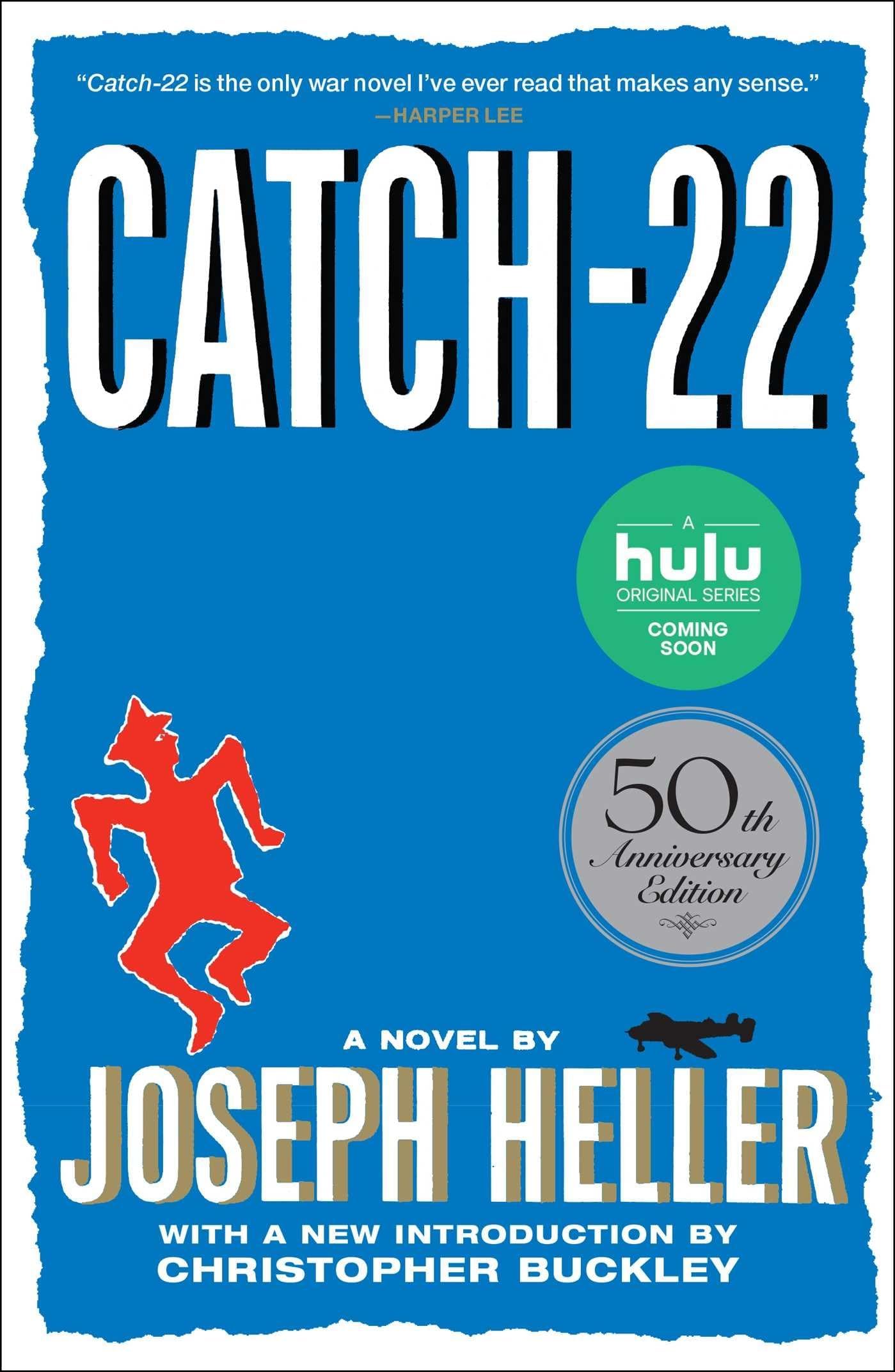
Catch-22: 50th Anniversary Edition [Heller, Joseph, Buckley, Christopher] on desertcart.com. *FREE* shipping on qualifying offers. Catch-22: 50th Anniversary Edition Review: This uproarious satirical novel by Joseph Heller prompted me... - This uproarious satirical novel by Joseph Heller prompted me to think of Robert Crichton's 'The Secret Of Santa Vittoria', another novel blending WWII and comedy. Published in 1961, 'Catch-22' was the forerunner of Richard Hooker's 1968 novel, 'Mash: A Novel About Three Army Doctors'. It's not about Army Doctor's in Korea, but about Army Air Force pilots and bombardiers during WWII stationed on the small island of Pianosa, west of Italy. In order to understand the insanity of this story, the reader has to comprehend what Catch-22 means. In chapter five, Doc Daneeka explains to Yossarian ( main character ) and Orr, his roommate, why he can't ground them due to insanity: "There was only one catch and that was Catch-22, which specified that a concern for one's own safety in the face of dangers that were real and immediate was the process of a rational mind. Orr was crazy and could be grounded. All he had to do was ask; and as soon as he did, he would no longer be crazy and would have to fly more missions. Orr would be crazy to fly more missions and sane if he didn't, but if he was sane he had to fly them. If he flew them he was crazy and didn't have to; but if he didn't want to he was sane and had to. Yossarian was moved very deeply by the absolute simplicity of this clause of Catch-22 and let out a respectful whistle."That's some catch, that catch-22," he observed."It's the best there is," Doc Daneeka agreed." This catch was why none of the bombing personnel were able to avoid flying mission after mission. The main character is Captain Yossarian, a bombardier who is convinced he is going to die on a mission. In chapter two, he explains to fellow officer, Clevinger why: "They're trying to kill me," Yossarian told him calmly. "No one's trying to kill you," Clevinger cried. "Then why are they shooting at me?" Yossarian asked. "They're shooting at everyone," Clevinger answered. "They're trying to kill everyone." "And what difference does that make?" Yossarian's fear of dying on a bombing raid was enhanced by his group commander, Colonel Cathcart. His lack of compassion was buoyed by his desire to be a general and more importantly, to be featured in 'The Saturday Evening Post'! If the Air Force wanted 40 missions before you could go home, the Colonel wanted 45. Every time someone came close to obtaining the target number of missions for being sent home, Colonel Cathcart raised the required number again. The Colonel is only one of the complex characters in this novel. I have many favorite characters and situations in this sometimes disturbing, but whimsical story. The first is Lt. Milo Minderbinder, the mess hall officer. From day one, he wheels and deals like no other war time entrepreneur. He gets away with his shenanigans by telling everyone that they have a share in his enterprises. In chapter 22, he explains his egg business: ..." I make a profit of three and a quarter cents an egg by selling them for four and a quarter cents an egg to the people in Malta I buy them from for seven cents an egg. Of course, I don't make the profit. The syndicate makes the profit. And everybody has a share." He gets into so many businesses that he even deals with the Germans! In chapter 24, he takes a contract from the Germans to bomb his own base: "This time Milo had gone too far. Bombing his own men and planes was more than even the most phlegmatic observer could stomach, and it looked like the end for him...Milo was all washed up until he opened his books to the public and disclosed the tremendous profit he had made." Then he says in the same chapter: "I'd like to see the government get out of war altogether and leave the whole field to private industry. "As the Milo character gets deeper into the book, it only gets more humorous. My second favorite is Major Major Major Major, the squadron commander, who looked like Henry Fonda! People who met him were always impressed by how unimpressive he was! In chapter nine, we learn: "With a little ingenuity and vision, he had made it all but impossible for anyone in the squadron to talk to him, which was just fine with everyone, he noticed, since no one wanted to talk to him anyway." In chapter ten, we find that: "Major Major never sees anyone in his office while he's in his office." But you can see him, if he is not in his office. If you try to barge into his tent, he goes out the window. I know it's confusing, but his first, middle and last name was Major, thus the four 'majors' when he got promoted to, you guessed it, Major.This book is a riot. My third favorite is Major-------de Coverley, Major Major Major Major's executive officer. Throughout the novel he has a blank for his first name. His function is uncertain at best. He basically pitches horseshoes all day, kidnaps Italian workers, and rents apartments for his men to use on rest leave. As soon as he hears of a city that the U.S.Army has captured, he's on his way there, usually at the head of the procession in a Jeep. No one ( friend, or foe ) knows who he is! But the reader knows that he is there just to rent apartments for his men. His picture appears in many publications, as if he is is leading the conquering army. I'm telling you this book is a gas. There are two subplots that are absolutely hysterical. The first involves the Chaplain's hostile assistant, Cpl. Whitcomb. The corporal comes up with the following generic condolence letter: "Dear Mrs., Mr., Miss, or Mr. And Mrs. Daneeka: Words cannot express the deep personal grief I experienced when your husband, son, father, or brother was killed, wounded, or reported missing in action."This one was sent to Doc Daneeka's wife, even though the Doc wasn't dead. Col. Cathcart feels this letter will prove his concern for his men and finally get him in The Saturday Evening Post. He promotes Whitcomb to sergeant! The second subplot revolves around our hero, Yossarian. After Yossarian tells Lt. Nately's whore that Nately was killed in action, She tries to kill Yossarian and she relentlessly pursues him chapter, after chapter. Nobody knows why she wants to slay him, but it is funny. The reader will also meet: Chaplain Tappman, who is intimidated by everyone; Nurses Cramer and Duckett; Hungry Joe and his screaming nightmares; Chief White Halfoat, who knows he is going to die of pneumonia; Aarfy, the navigator; and Huple, the fifteen year old pilot, just to mention a few. How Joseph Heller kept track of all these characters is unbelievable.There is so much going on in this book that I had to take notes to remember who is who, and who did what.This is a great American classic and should be read by book lovers of all genres. The great American author Studs Terkel states in the `other voices' section of this book: "You will meet in this astonishing novel, certainly one of the most original in years, madmen of every rank: Major Major Major, on whose unwilling frame the gold leaf is pinned because of his unfortunate resemblance to Henry Fonda; Doc Daneeka, who is declared dead despite his high temperature; Hungry Joe and his fistfights with Huple's cat; ex-pfc Wintergreen, who has more power than almost anybody." Enough said? Review: It was love at first sight - That was fifty years ago. I was ten or eleven, Catch 22 was a year old or maybe two. My brother, in college, recommended this book. I liked it so much I read it beginning on New Year every year until I went to college. I just reread it for the first time in forty some years. It’s still brilliant. It’s still startlingly funny and it still hurts down deep. It rose above the realistic novels written immediately after the Second World War. It rose above Mailer and Jones and Shaw. When asked why he’d never written another book like Catch 22, Heller’s answer was “Who has?” Of course he was right. A couple of the great wave of novels that followed the Second World War stand shoulder to shoulder with the catch; Slaughter House Five and Gunter Grass’s Dog Years come to my mind. Lots of very good novels came out of the war, first novels from writers like Gore Vidal and Norman Mailer, Irwin Shaw and James Jones, Thomas Heggens, who won a Tony for the stage version of his novel, Mr. Roberts, James Gould Cozzens, who won a Pulitzer for Guard of Honor. None of those good books compare. Catch 22 entered the language. For a few years the blue paperback with the dancing soldier puppet was everywhere. Yossarian, the novel’s hero, spends the novel trying not to die in the war. A difficult job, since his colonel raises the number of missions he must fly from twenty-five to seventy, in an attempt to impress the Saturday Evening Post. Since I last read this I served in the army, where sooner or later everybody winds up working for Colonel Cathcart. I’m thinking that besides its anarchic appeal for youth, there were at that time millions of Veterans many of whom shared it’s cynicism about the organizations they worked for. If you’ve never read it, you’ve missed a great read. If you read it a long time ago It might be time to enjoy it again. I suspect you’ll still laugh whenever Heller tells you to. And like love at first sight it will probably still break your heart.
| Best Sellers Rank | #4,918 in Books ( See Top 100 in Books ) #62 in War Fiction (Books) #170 in Classic Literature & Fiction #254 in Literary Fiction (Books) |
| Book 1 of 2 | Catch-22 Series |
| Customer Reviews | 4.4 4.4 out of 5 stars (14,851) |
| Dimensions | 5.5 x 1.36 x 8.44 inches |
| Edition | Anniversary |
| ISBN-10 | 1451626657 |
| ISBN-13 | 978-1451626650 |
| Item Weight | 1.02 pounds |
| Language | English |
| Print length | 544 pages |
| Publication date | April 5, 2011 |
| Publisher | Simon & Schuster |
R**O
This uproarious satirical novel by Joseph Heller prompted me...
This uproarious satirical novel by Joseph Heller prompted me to think of Robert Crichton's 'The Secret Of Santa Vittoria', another novel blending WWII and comedy. Published in 1961, 'Catch-22' was the forerunner of Richard Hooker's 1968 novel, 'Mash: A Novel About Three Army Doctors'. It's not about Army Doctor's in Korea, but about Army Air Force pilots and bombardiers during WWII stationed on the small island of Pianosa, west of Italy. In order to understand the insanity of this story, the reader has to comprehend what Catch-22 means. In chapter five, Doc Daneeka explains to Yossarian ( main character ) and Orr, his roommate, why he can't ground them due to insanity: "There was only one catch and that was Catch-22, which specified that a concern for one's own safety in the face of dangers that were real and immediate was the process of a rational mind. Orr was crazy and could be grounded. All he had to do was ask; and as soon as he did, he would no longer be crazy and would have to fly more missions. Orr would be crazy to fly more missions and sane if he didn't, but if he was sane he had to fly them. If he flew them he was crazy and didn't have to; but if he didn't want to he was sane and had to. Yossarian was moved very deeply by the absolute simplicity of this clause of Catch-22 and let out a respectful whistle."That's some catch, that catch-22," he observed."It's the best there is," Doc Daneeka agreed." This catch was why none of the bombing personnel were able to avoid flying mission after mission. The main character is Captain Yossarian, a bombardier who is convinced he is going to die on a mission. In chapter two, he explains to fellow officer, Clevinger why: "They're trying to kill me," Yossarian told him calmly. "No one's trying to kill you," Clevinger cried. "Then why are they shooting at me?" Yossarian asked. "They're shooting at everyone," Clevinger answered. "They're trying to kill everyone." "And what difference does that make?" Yossarian's fear of dying on a bombing raid was enhanced by his group commander, Colonel Cathcart. His lack of compassion was buoyed by his desire to be a general and more importantly, to be featured in 'The Saturday Evening Post'! If the Air Force wanted 40 missions before you could go home, the Colonel wanted 45. Every time someone came close to obtaining the target number of missions for being sent home, Colonel Cathcart raised the required number again. The Colonel is only one of the complex characters in this novel. I have many favorite characters and situations in this sometimes disturbing, but whimsical story. The first is Lt. Milo Minderbinder, the mess hall officer. From day one, he wheels and deals like no other war time entrepreneur. He gets away with his shenanigans by telling everyone that they have a share in his enterprises. In chapter 22, he explains his egg business: ..." I make a profit of three and a quarter cents an egg by selling them for four and a quarter cents an egg to the people in Malta I buy them from for seven cents an egg. Of course, I don't make the profit. The syndicate makes the profit. And everybody has a share." He gets into so many businesses that he even deals with the Germans! In chapter 24, he takes a contract from the Germans to bomb his own base: "This time Milo had gone too far. Bombing his own men and planes was more than even the most phlegmatic observer could stomach, and it looked like the end for him...Milo was all washed up until he opened his books to the public and disclosed the tremendous profit he had made." Then he says in the same chapter: "I'd like to see the government get out of war altogether and leave the whole field to private industry. "As the Milo character gets deeper into the book, it only gets more humorous. My second favorite is Major Major Major Major, the squadron commander, who looked like Henry Fonda! People who met him were always impressed by how unimpressive he was! In chapter nine, we learn: "With a little ingenuity and vision, he had made it all but impossible for anyone in the squadron to talk to him, which was just fine with everyone, he noticed, since no one wanted to talk to him anyway." In chapter ten, we find that: "Major Major never sees anyone in his office while he's in his office." But you can see him, if he is not in his office. If you try to barge into his tent, he goes out the window. I know it's confusing, but his first, middle and last name was Major, thus the four 'majors' when he got promoted to, you guessed it, Major.This book is a riot. My third favorite is Major-------de Coverley, Major Major Major Major's executive officer. Throughout the novel he has a blank for his first name. His function is uncertain at best. He basically pitches horseshoes all day, kidnaps Italian workers, and rents apartments for his men to use on rest leave. As soon as he hears of a city that the U.S.Army has captured, he's on his way there, usually at the head of the procession in a Jeep. No one ( friend, or foe ) knows who he is! But the reader knows that he is there just to rent apartments for his men. His picture appears in many publications, as if he is is leading the conquering army. I'm telling you this book is a gas. There are two subplots that are absolutely hysterical. The first involves the Chaplain's hostile assistant, Cpl. Whitcomb. The corporal comes up with the following generic condolence letter: "Dear Mrs., Mr., Miss, or Mr. And Mrs. Daneeka: Words cannot express the deep personal grief I experienced when your husband, son, father, or brother was killed, wounded, or reported missing in action."This one was sent to Doc Daneeka's wife, even though the Doc wasn't dead. Col. Cathcart feels this letter will prove his concern for his men and finally get him in The Saturday Evening Post. He promotes Whitcomb to sergeant! The second subplot revolves around our hero, Yossarian. After Yossarian tells Lt. Nately's whore that Nately was killed in action, She tries to kill Yossarian and she relentlessly pursues him chapter, after chapter. Nobody knows why she wants to slay him, but it is funny. The reader will also meet: Chaplain Tappman, who is intimidated by everyone; Nurses Cramer and Duckett; Hungry Joe and his screaming nightmares; Chief White Halfoat, who knows he is going to die of pneumonia; Aarfy, the navigator; and Huple, the fifteen year old pilot, just to mention a few. How Joseph Heller kept track of all these characters is unbelievable.There is so much going on in this book that I had to take notes to remember who is who, and who did what.This is a great American classic and should be read by book lovers of all genres. The great American author Studs Terkel states in the `other voices' section of this book: "You will meet in this astonishing novel, certainly one of the most original in years, madmen of every rank: Major Major Major, on whose unwilling frame the gold leaf is pinned because of his unfortunate resemblance to Henry Fonda; Doc Daneeka, who is declared dead despite his high temperature; Hungry Joe and his fistfights with Huple's cat; ex-pfc Wintergreen, who has more power than almost anybody." Enough said?
J**Y
It was love at first sight
That was fifty years ago. I was ten or eleven, Catch 22 was a year old or maybe two. My brother, in college, recommended this book. I liked it so much I read it beginning on New Year every year until I went to college. I just reread it for the first time in forty some years. It’s still brilliant. It’s still startlingly funny and it still hurts down deep. It rose above the realistic novels written immediately after the Second World War. It rose above Mailer and Jones and Shaw. When asked why he’d never written another book like Catch 22, Heller’s answer was “Who has?” Of course he was right. A couple of the great wave of novels that followed the Second World War stand shoulder to shoulder with the catch; Slaughter House Five and Gunter Grass’s Dog Years come to my mind. Lots of very good novels came out of the war, first novels from writers like Gore Vidal and Norman Mailer, Irwin Shaw and James Jones, Thomas Heggens, who won a Tony for the stage version of his novel, Mr. Roberts, James Gould Cozzens, who won a Pulitzer for Guard of Honor. None of those good books compare. Catch 22 entered the language. For a few years the blue paperback with the dancing soldier puppet was everywhere. Yossarian, the novel’s hero, spends the novel trying not to die in the war. A difficult job, since his colonel raises the number of missions he must fly from twenty-five to seventy, in an attempt to impress the Saturday Evening Post. Since I last read this I served in the army, where sooner or later everybody winds up working for Colonel Cathcart. I’m thinking that besides its anarchic appeal for youth, there were at that time millions of Veterans many of whom shared it’s cynicism about the organizations they worked for. If you’ve never read it, you’ve missed a great read. If you read it a long time ago It might be time to enjoy it again. I suspect you’ll still laugh whenever Heller tells you to. And like love at first sight it will probably still break your heart.
R**N
I bought the book on the strength of its reputation, not quite knowing what to expect. A pleasant surprise it was, with some passages downright hilarious.
R**L
Not really impressed with the cover paper material but the book is really good.
P**.
More about the book itself than the story - the quality of the paper is low and the ink bleeds so the words aren't sharp. Buying this paperback is an advert for switching to an ereader.
T**K
A masterpiece
J**R
Catch-22 is perhaps the most bizarre novel I've read. It's tangential, disjointed funny and sad. It's very much tongue-in-cheek for the vast majority of the time, but when it it's not, it's poignant. From some of the most insane dialogue to scenes of personal horror, the book ties together the literal madness of war and the gritty truth of it. The idea of Catch-22 has become part of the general vernacular in most English speaking nations since the 1970s and most of us have used it to describe a damned if you do, damned if you don't situation. The catch stems from the idea that as a combat pilot, you can only be grounded in perfect physical health if you're mad. If you ask to be grounded though, you must be sane because only mad men want to fly combat missions. Having asked to be grounded, how do you then prove you're mad? Do you go on parade naked? Do you attend a funeral sitting naked up a nearby tree? Do you have horrific nightmares at the thought of flying no more missions? You can try, but you won't succeed because of Catch-22. When you read this novel, you'll quickly discover that such a catch can only exist because everyone is mad. From Private to General, there is not a sane man to be found. Even the psychiatrist is quite plainly mad. The result is some real laugh out loud moments as we follow Yossarian through his struggles to be sent home alive. But when we read of the horrors through which he has lived, we begin to understand. There isn't too much dwelling on the facts of post-traumatic stress, and if you didn't know of such a thing, you would find it hard to spot in the novel - it is never discussed, never referred to and the resulting madness seems part of everyday life on base. I found I came to like Yossarian and think him the most sane of all, especially in comparison to the likes of Hungry Joe, Colonel Korn and General Scheisskopf (you don't need to know much German to see what Heller did there!). I found Catch-22 wasn't a novel I felt compelled to keep reading, largely because of its disjointed nature - it does hop around in time and space a lot - but when I did pick it up, I flew through it, often smiling to myself, often with an eyebrow raised. I smiled when I finished the book because ultimately I really enjoyed it. I now want to get my hands on the film and see just how true to the book it manages to stay.