We remain fully operational. Our teams are working around the clock to ensure your deliveries continue safely.

下载应用程序


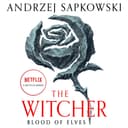
desertcart.com: Blood of Elves (Audible Audio Edition): Andrzej Sapkowski, Peter Kenny, Danusia Stok - translator, Orbit: Audible Books & Originals Review: A stunning beginning to a fantasy series destined for greatness - Humans, elves, dwarves, and gnomes have lived and worked together for centuries; however, those centuries of peace are nearing an end as these races begin to fight amongst themselves. War is rapidly approaching and the Child Surprise is wanted by many for the power she houses within her to turn the tide of the impending battle. The Child Surprise, a young princess name Cirilla, has the power to change the world or destroy it. But she is not alone, for she was destined to meet the famous witcher Geralt of Rivia and Geralt was destined to protect her from the many who so desperately want her power. And thus officially begins the story of the witcher in Andrzej Sapkowski’s first book of his 'Witcher' series, 'Blood of Elves'. The story “A Question of Price” told by Geralt in The Last Wish had the Queen of Cintra, Calanthe, promising her granddaughter, the Child Surprise, to Geralt. The very end of The Last Wish left readers with Geralt leaving Nenneke and Melitele’s Temple in search of the Child Surprise, for he had been waiting for her to be born. After a siege on her home in Cintra, the Child Surprise, Princess Cirilla, is found by Geralt. Young, alone, and afraid, Geralt takes Ciri under his protection and destiny begins to work its magic. What a way to begin a fantasy series. With the plot being about a child of destiny and this child being destined to someone else and that someone else being said child’s protector, one would think the story is a typical, cliché, and predictable fantasy story. On the contrary, 'Blood of Elves' is incredibly unique and is in no way predictable. The first in the 'Witcher' series is, like its predecessor: well-written, action-packed, and humorous. With the premise stating that Geralt and Ciri were destined to be together, it is great to begin with the witcher and the princess. Their relationship is not that of lovers, but rather as a father and daughter and it works beautifully! Because of destiny, Geralt is thrust into the role of not only protector, but of father and it is one he never thought he would have. Same goes for Ciri: she was very young when she lost her parents and Geralt is not only her guardian, but a father she doesn’t remember having. One would think before reading that, due to Geralt’s personality in 'The Last Wish', he may find Ciri a nuisance; however, the scenes with them together are wonderful to read. They get along very well, joke around with each other, and Geralt has taught Ciri to defend herself, though he still keeps a sharp eye on her. This is a pleasant surprise for readers who assumed the aforementioned. There is a wonderful blend of serious action and witty comedy throughout the story. Sapkowski improved on writing his battle scenes, making it easier for the reader to imagine how Geralt and the others are fighting. Dandelion is still as humorous as ever and a new character is introduced that is just as funny: Triss Merigold. Triss is a sorceress like Yennefer and met Geralt through her as well. When she travels to find Geralt at Kaer Morhen, the home and training grounds of the witchers, she is able to meet Ciri there. Geralt and a handful of other witchers have been training the young princess on how to fight and defend herself; however, these men have forgotten a very important fact about Ciri that Triss was not shy to remind them about: that she is a teenage girl blossoming into womanhood. The exchange of dialog between Triss and the witchers during this explanation is clever and a crack up for readers to read. The only true downside about 'Blood of Elves' is the length of the chapters. There are only seven chapters, but each one spans roughly about 50 pages each. This makes it difficult to pick a stopping point, whether a reader wants to stop or not; however, there are gaps between the events that happen where readers can stop if they need to, which Sapkowski probably strategically placed knowing how long he would make each chapter. And, if readers ever forget while reading what the title of the book is, do not fear. Sapkowski refers to the title many times. The first time it is mentioned is in the first 20 pages, for of the different names given to Ciri (child of destiny, the Child Surprise), she is also called a child of Elder Blood, the blood of elves. Also within these first few pages, much is explained about destiny, Ciri, and how Geralt and Ciri were destined to be together, so anyone who has not read The Last Wish will be caught up on what is happening and those who have read it will be reminded. 'Blood of Elves' is a beautifully written book and a wonderful way to officially begin the 'Witcher' Series. Every turn of the page offers events and happenings that will make it difficult to put the book down, disregarding the long chapters and the difficulty in finding a stopping point. Readers will admire Geralt more as a hero than he was in The Last Wish and will fall in love with his father-daughter relationship with Ciri. It is a book that one can start with if one is curious about the series, but the series would be much more enjoyable and easier to follow if one has read the prequel first. Due to its well-written prose and the large world Sapkowski created, one will immediately want to pick up the sequel, 'The Time of Contempt', shortly after finishing. Review: Good start to a series, but stumbles on its own - My first introduction to "The Witcher" universe/series was, like most English speaking audiences I imagine, via the game - however prior to that I completed the collection of short stories contained in "The Last Wish" and was impressed enough to pre-order "Blood of Elves". I'll get the negative out of the way right at the start - the book will be a large disappointment if you're expecting a self-contained novel or were more interested in Geralt de Rivia, the protagonist of the computer game and "The Last Wish". I agree with some of the other reviewers in that the book is incorrectly marketed. This is understandable given the popularity of Geralt. The book, while it does feature him in a good deal of the chapters and in reference, is focused on his ward/foster child, Ciri. Based on the description on the back of the book, you'd think it was the other way and the child would only feature in a few segments. However I found that reading "The Last Wish" prior to this novel definitely fleshed out the few interactions that we see Geralt have, and I would highly recommend any newcomers to the series pick that up first before moving onto "Blood of Elves". Additionaly, and probably more frustrating, is that - like any first book in a planned series - there is no actual end to the novel. This isn't a problem if you're EXPECTING it, but it's a let down when you're down to the last chapter and realize that nothing brought up will be accomplished. In a worst-case scenario, the rest of "The Witcher" series doesn't get published and except for those Polish speaking amongst us, we're left hanging. If you can wrap your mind around the fact that this is a setup novel, and Geralt is not the primary character, then you will enjoy it just a little bit more. To the good stuff. Despite the fact that Geralt is not the main character, I think we're left with a pretty well-rounded and developed cast. Ciri was, to me at least, surprisingly good as a main character. She doesn't come off as overly naggy (as sometimes the "young child of hope" often do - Luke Skywalker, I'm looking at you), and Sapkowski offers a good timeline of her development. The rest of the cast is just as well developed, and we get to see a little more of Dandilion and Yennefer from "The Last Wish". I enjoyed the layout of the novel itself, as it generally moves from Ciri's development one chapter, to a "big picture" or Geralt chapter next, and so on. In hindsight the layout provides an excellent setup for the eventual English sequel - enough that, hopefully, the reader can jump right into the action whenever it's published. I didn't have any problems with the translation. True, some of the descriptions are generic, but I blame that partially on some of the fantasy genre as a whole. I might be the only one in thinking this, but I felt that in both this novel and "The Last Wish" the focus was not on the world itself (epic battles, fanciful creatures, hero-meets/marries-girl, etc.) but attempting to develop more human relationships among its characters, good and bad...although I STILL don't really understand the reasons why of Geralt and Yennefer, but that's probably just me. That's not to say that the book does not have its share of magic, monsters, and bad guys, but it does offer some interesting insights into seemingly simple situations. Sapkowski does succeed, in English, at creating believable and relatable characters (as much as in any fantasy novel). In summation, pick this book up if you're a fan of "The Witcher" universe but know that it is essentially a build-up and nothing else. If you can't stand cliff-hangers or waiting for any kind of conclusion, it might be best to wait until there's a solid release date for the next book.
A**K
A stunning beginning to a fantasy series destined for greatness
Humans, elves, dwarves, and gnomes have lived and worked together for centuries; however, those centuries of peace are nearing an end as these races begin to fight amongst themselves. War is rapidly approaching and the Child Surprise is wanted by many for the power she houses within her to turn the tide of the impending battle. The Child Surprise, a young princess name Cirilla, has the power to change the world or destroy it. But she is not alone, for she was destined to meet the famous witcher Geralt of Rivia and Geralt was destined to protect her from the many who so desperately want her power. And thus officially begins the story of the witcher in Andrzej Sapkowski’s first book of his 'Witcher' series, 'Blood of Elves'. The story “A Question of Price” told by Geralt in The Last Wish had the Queen of Cintra, Calanthe, promising her granddaughter, the Child Surprise, to Geralt. The very end of The Last Wish left readers with Geralt leaving Nenneke and Melitele’s Temple in search of the Child Surprise, for he had been waiting for her to be born. After a siege on her home in Cintra, the Child Surprise, Princess Cirilla, is found by Geralt. Young, alone, and afraid, Geralt takes Ciri under his protection and destiny begins to work its magic. What a way to begin a fantasy series. With the plot being about a child of destiny and this child being destined to someone else and that someone else being said child’s protector, one would think the story is a typical, cliché, and predictable fantasy story. On the contrary, 'Blood of Elves' is incredibly unique and is in no way predictable. The first in the 'Witcher' series is, like its predecessor: well-written, action-packed, and humorous. With the premise stating that Geralt and Ciri were destined to be together, it is great to begin with the witcher and the princess. Their relationship is not that of lovers, but rather as a father and daughter and it works beautifully! Because of destiny, Geralt is thrust into the role of not only protector, but of father and it is one he never thought he would have. Same goes for Ciri: she was very young when she lost her parents and Geralt is not only her guardian, but a father she doesn’t remember having. One would think before reading that, due to Geralt’s personality in 'The Last Wish', he may find Ciri a nuisance; however, the scenes with them together are wonderful to read. They get along very well, joke around with each other, and Geralt has taught Ciri to defend herself, though he still keeps a sharp eye on her. This is a pleasant surprise for readers who assumed the aforementioned. There is a wonderful blend of serious action and witty comedy throughout the story. Sapkowski improved on writing his battle scenes, making it easier for the reader to imagine how Geralt and the others are fighting. Dandelion is still as humorous as ever and a new character is introduced that is just as funny: Triss Merigold. Triss is a sorceress like Yennefer and met Geralt through her as well. When she travels to find Geralt at Kaer Morhen, the home and training grounds of the witchers, she is able to meet Ciri there. Geralt and a handful of other witchers have been training the young princess on how to fight and defend herself; however, these men have forgotten a very important fact about Ciri that Triss was not shy to remind them about: that she is a teenage girl blossoming into womanhood. The exchange of dialog between Triss and the witchers during this explanation is clever and a crack up for readers to read. The only true downside about 'Blood of Elves' is the length of the chapters. There are only seven chapters, but each one spans roughly about 50 pages each. This makes it difficult to pick a stopping point, whether a reader wants to stop or not; however, there are gaps between the events that happen where readers can stop if they need to, which Sapkowski probably strategically placed knowing how long he would make each chapter. And, if readers ever forget while reading what the title of the book is, do not fear. Sapkowski refers to the title many times. The first time it is mentioned is in the first 20 pages, for of the different names given to Ciri (child of destiny, the Child Surprise), she is also called a child of Elder Blood, the blood of elves. Also within these first few pages, much is explained about destiny, Ciri, and how Geralt and Ciri were destined to be together, so anyone who has not read The Last Wish will be caught up on what is happening and those who have read it will be reminded. 'Blood of Elves' is a beautifully written book and a wonderful way to officially begin the 'Witcher' Series. Every turn of the page offers events and happenings that will make it difficult to put the book down, disregarding the long chapters and the difficulty in finding a stopping point. Readers will admire Geralt more as a hero than he was in The Last Wish and will fall in love with his father-daughter relationship with Ciri. It is a book that one can start with if one is curious about the series, but the series would be much more enjoyable and easier to follow if one has read the prequel first. Due to its well-written prose and the large world Sapkowski created, one will immediately want to pick up the sequel, 'The Time of Contempt', shortly after finishing.
D**L
Good start to a series, but stumbles on its own
My first introduction to "The Witcher" universe/series was, like most English speaking audiences I imagine, via the game - however prior to that I completed the collection of short stories contained in "The Last Wish" and was impressed enough to pre-order "Blood of Elves". I'll get the negative out of the way right at the start - the book will be a large disappointment if you're expecting a self-contained novel or were more interested in Geralt de Rivia, the protagonist of the computer game and "The Last Wish". I agree with some of the other reviewers in that the book is incorrectly marketed. This is understandable given the popularity of Geralt. The book, while it does feature him in a good deal of the chapters and in reference, is focused on his ward/foster child, Ciri. Based on the description on the back of the book, you'd think it was the other way and the child would only feature in a few segments. However I found that reading "The Last Wish" prior to this novel definitely fleshed out the few interactions that we see Geralt have, and I would highly recommend any newcomers to the series pick that up first before moving onto "Blood of Elves". Additionaly, and probably more frustrating, is that - like any first book in a planned series - there is no actual end to the novel. This isn't a problem if you're EXPECTING it, but it's a let down when you're down to the last chapter and realize that nothing brought up will be accomplished. In a worst-case scenario, the rest of "The Witcher" series doesn't get published and except for those Polish speaking amongst us, we're left hanging. If you can wrap your mind around the fact that this is a setup novel, and Geralt is not the primary character, then you will enjoy it just a little bit more. To the good stuff. Despite the fact that Geralt is not the main character, I think we're left with a pretty well-rounded and developed cast. Ciri was, to me at least, surprisingly good as a main character. She doesn't come off as overly naggy (as sometimes the "young child of hope" often do - Luke Skywalker, I'm looking at you), and Sapkowski offers a good timeline of her development. The rest of the cast is just as well developed, and we get to see a little more of Dandilion and Yennefer from "The Last Wish". I enjoyed the layout of the novel itself, as it generally moves from Ciri's development one chapter, to a "big picture" or Geralt chapter next, and so on. In hindsight the layout provides an excellent setup for the eventual English sequel - enough that, hopefully, the reader can jump right into the action whenever it's published. I didn't have any problems with the translation. True, some of the descriptions are generic, but I blame that partially on some of the fantasy genre as a whole. I might be the only one in thinking this, but I felt that in both this novel and "The Last Wish" the focus was not on the world itself (epic battles, fanciful creatures, hero-meets/marries-girl, etc.) but attempting to develop more human relationships among its characters, good and bad...although I STILL don't really understand the reasons why of Geralt and Yennefer, but that's probably just me. That's not to say that the book does not have its share of magic, monsters, and bad guys, but it does offer some interesting insights into seemingly simple situations. Sapkowski does succeed, in English, at creating believable and relatable characters (as much as in any fantasy novel). In summation, pick this book up if you're a fan of "The Witcher" universe but know that it is essentially a build-up and nothing else. If you can't stand cliff-hangers or waiting for any kind of conclusion, it might be best to wait until there's a solid release date for the next book.
S**A
A must-read for fantasy lovers
I’ll review this book in lieu of writing reviews for each book in the series, since it’s one of my favorites. The Witcher series is fantastic, period. I’ve played the video games (well, at least the first one), and watched the show; and if you like either of those you need to read the book; since the characters and universe have so much more depth to them than you’d think, and only the books do them justice. Some spoilers, for the entire series: I’d never been a huge fan of Geralt or Yennefer before reading the books. I envisioned Geralt as the stoic womanizer fantasy stereotype, and Yennefer as another stereotype - promiscuous, selfish and borderline. I still think these characters start out that way, but the author develops them so well you can watch them evolve over the course of the series. The reader gradually witnesses Geralt revising his stance on neutrality, contemplate his ability to feel and emphasize, and find the balance between free will, chaos, and destiny. Likewise, Yennefer comes to terms with her inability to bear children and learns to look beyond her identity as a sorceress. Ciri ties them together, acting as an anchor between all three characters and growing with them. Ciri as a character is also very well-developed. Her story is harder to read, especially when you get to the Time of Contempt, since the traumatic things she goes through are a thousand times worse because she’s a teenager. Still reading the Tower of Swallows. Will update this review when I complete the series.
E**E
fun read
liking the series
A**R
I like the story.
Better than Netflix it is worth the time to read the books,and play the video games. The rpg is fun too.
K**L
I love the Witcher saga, and especially this book. I recommend this book if you like fantasy books. The 1st season of the Netflix show basically stopped right before the start of this book, as it was based on a set of short novels. The book print is basic, good for the price, but don't expect a collectible quality. I think I will not buy the other books, until there is a good quality edition in one set.
R**E
Review of book: Blood of elves is certainly not the best one in the series (to me) but a great start to the saga. Sapkowski's writing style to is very easy to read and understand. There was little amount of fantasy elements in it. Only 1 or 2 major fighting events. But the world-building is great, the dialogues, humors and Geralt's sarcastic replies were great. The character interaction and development is a major merit of Blood of Elves, especially Ciri-Yennefer relationship. It has a great start and end but I'm lost in middle. The book cover can look good if I find a way to hide that netflix logo. Review of Deliver service: I received the book before the estimated date so I am happy for it. But the book was in a 'OK' condition.
J**D
Bra bok!
D**N
The Witcher series is interesting. I am not a huge fan of this series but the books were entertaining.
C**N
I really enjoyed reading the Witcher series, and Saga Book 1 felt like one of the classic sword and sorcery epic cycle. You get decent world building and a strong background about Geralt. It's a long cycle (5 books for the main series), so it has a slow start, but it's a page turner.