We remain fully operational. Our teams are working around the clock to ensure your deliveries continue safely.

下载应用程序



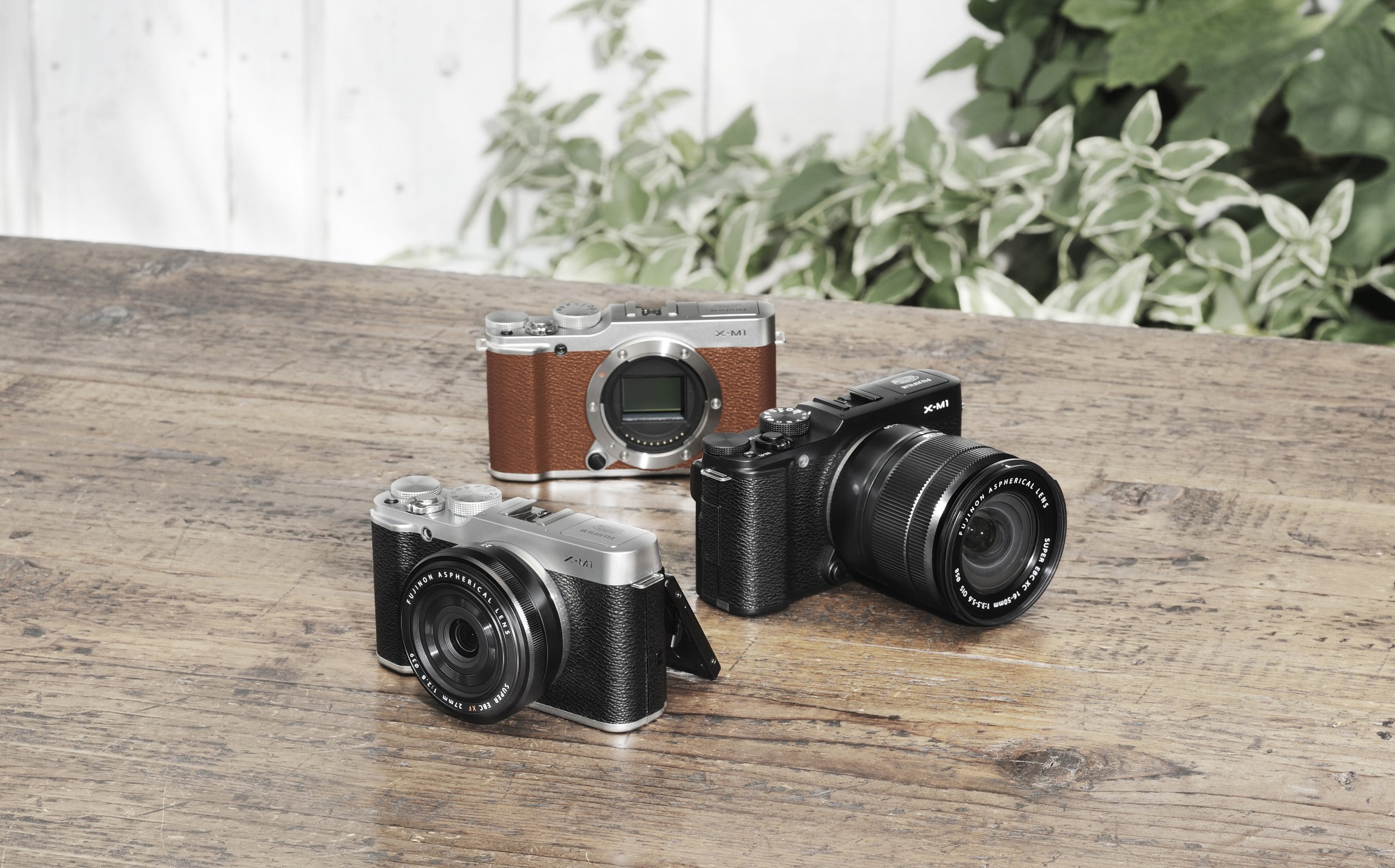


📸 Elevate your travel photography game—compact power meets pro-level quality!
The Fujifilm X-M1 is a lightweight mirrorless camera featuring a 16MP APS-C X-Trans CMOS sensor paired with a versatile 16-50mm optical image stabilized zoom lens. It offers a 3-inch tilting LCD with 920k-dot resolution, built-in Wi-Fi for effortless image transfer, and Full HD 1080p video recording with stereo sound. Designed for travel and everyday photography, it delivers DSLR-quality images in a compact, stylish package favored by enthusiasts seeking simplicity without sacrificing performance.
| ASIN | B00DCM0DVE |
| Aperture modes | Aperture Priority |
| Are Batteries Included | Yes |
| Aspect Ratio | 1.58:1 |
| Auto Focus Technology | Center, Continuous, Contrast Detection, Face Detection, Multi-area, Single, Tracking |
| Autofocus | Yes |
| Autofocus Points | 49 |
| Best Sellers Rank | #168,700 in Electronics ( See Top 100 in Electronics ) #680 in Mirrorless Cameras |
| Bit Depth | 12 Bit |
| Brand | Fujifilm |
| Camera Flash | Built-In |
| Camera Lens | Built-in Zoom Lens |
| Color | Black |
| Compatible Devices | [Fujifilm X] |
| Compatible Mountings | Other |
| Connectivity Technology | Wi-Fi |
| Continuous Shooting | 5.6 FPS |
| Crop Mode | 1.58:1 |
| Customer Reviews | 3.9 3.9 out of 5 stars (76) |
| Digital Scene Transition | False |
| Digital-Still | No |
| Display Fixture Type | Tilting |
| Display Resolution Maximum | 920000 |
| Display Type | LCD |
| Dots Per Screen | 920000 |
| Effective Still Resolution | 16 MP |
| Expanded ISO Maximum | 25600 |
| Expanded ISO Minimum | 100 |
| Exposure Control | Adv., Advanced SR AUTO, Aperture Priority, Automatic, Custom, Landscape, Manual, Portrait, Program AE, SP, Shutter Priority, Sport |
| File Format | JPEG (Exif Ver 2.3)*2 / RAW (RAF format) / RAW+JPEG (Design rule for Camera File system compliant / DPOF-compatible) |
| Flash Memory Bus Interface Type | SD Bus |
| Flash Memory Supported Size Maximum | 2048 GB |
| Flash Memory Type | SDHD |
| Flash Memory UHS Speed Class | U1 |
| Flash Memory Video Speed Class | C10 |
| Flash Modes | Auto, On/Fill, Off, Slow Sync, Rear Curtain |
| Flash Sync Speed | 1/180 sec |
| Focal Length Description | 50 millimeters |
| Focus Features | TTL Contrast Detection |
| Focus Mode | Continuous-Servo AF (AF-C) |
| Focus Type | Manual Focus |
| Form Factor | Mirrorless |
| Global Trade Identification Number | 00074101022902 |
| HDMI Type | Type C Mini HDMI |
| Hardware Interface | AV Port |
| Has Color Screen | Yes |
| Image Capture Type | Video |
| Image stabilization | Optical |
| Item Weight | 1 Pounds |
| JPEG Quality Level | Fine |
| Lens Construction | 12 elements in 10 groups |
| Lens Correction Type | Optical Image Stabilization (OIS) |
| Lens Type | Zoom |
| Manufacturer | Fujifilm |
| Maximum Aperture | 3.5 f |
| Maximum Focal Length | 50 Millimeters |
| Maximum Image Size | 16 MP |
| Maximum Shutter Speed | 1/4000 Seconds |
| Metering Methods | Multi, Average, Spot |
| Minimum Focal Length | 16 Millimeters |
| Minimum Shutter Speed | 30 seconds |
| Model Name | X-M1 |
| Model Number | X-M1 Kit w/ 16-50mm (Black) |
| Model Series | X |
| Movie Mode | Yes |
| Night vision | No |
| Number of Diaphragm Blades | 7 |
| Optical Zoom | 3.1 x |
| Photo Sensor Resolution | 16 MP |
| Photo Sensor Size | APS-C (23.6 x 15.6 mm) |
| Remote Included | No |
| Screen Size | 3 Inches |
| Self Timer | 10, 2, 5 |
| Sensor Type | CMOS |
| Shooting Modes | Aperture Priority, Automatic, Manual, Program AE, Shutter Priority |
| Skill Level | Amateur |
| Special Feature | Travel |
| Supported Image Format | JPEG, RAW |
| Total Still Resolution | 16 MP |
| Total USB 2.0 Ports | 1 |
| Total USB Ports | 1 |
| Total Video Out Ports | 1 |
| Touch Screen Type | Non-touchscreen |
| UPC | 074101022902 |
| Video Capture Format | AVC |
| Video Output | HDMI |
| Video Resolution | FHD 1080p |
| Viewfinder | Electronic |
| White Balance Settings | Auto |
| Wireless Technology | Yes |
| Write Speed | 5.6 fps |
| Zoom | Optical Zoom |
J**N
It's early but...
Oddly, I've become a bit of a Fujifilm lover. Not sure why. First camera ever was a Canon fTB-n 35mm brick. got so tired of carrying that 6 pound monster (with 35-105 Hoya zoom) that I gave up SLR's and bought an early Ricoh point and shoot and loved it. When the digital revolution arrived I started with a 1 mp Sony Mavica with a floppy disk! Moved up to a fantastic 2 megapixel Toshiba....then bought a series of Fuji's just by chance. Back in 2007 when I was flush and wanted a real legacy camera I went into my local dealer and said give me a Leica....and they asked me a few questions and I walked out with a Fuji F30 point and shoot, 6mp. Took it to Croatia and it is still some of the very best pictures I've ever taken and they compared very well with my Nikon D40. Fantastic battery life, fantastic low light, tiny, what pictures. Still have it, still take it with me on trips. I currently have an Olympus OM-D EM-5 which was the treat I gave myself, and i love it. Weather sealed, the whole deal. Very complex and even a couple years later I still have trouble using all its features. But something happened a few years ago...I saw the Fuji X10. And I said, I have to have one of those. I bought one as a closeout after the white orb fiasco was fixed. And I have to tell you, that's probably the best camera I have ever owned (and that includes the D40, Lumix bridge camera, a bunch of Fujifilms including the F30, F40fd, F100 exr, e550, Canon S95, Canon G10 and a few others). Then I bought my wife an X20 which I think is even better. STarted coveting an X20 but then the X30 came out and I started pricing it. But in reality, it didn't offer much I wanted beyond an X20, and the X20 is arguably incrementally better than the X10....and while I was researching that I hit on a few reviews of the XM-1 that said it took...oh...extraordinary....exceptional....DSLR quality....pics. APS-C sensor. Not just good images, or acceptable....but extraordinary. It has cool lines. And then I found an open box brand new XM-1 for $417 with the 16-50 lens. It took me a couple days to get its features down and OK, yes, it doesn't have panorama, which I like but I'll have the other two cameras with me....and it doesn't have a viewfinder, but you know? Neither did my S 95 and my F30....and I don't use the viewfinder THAT much anyway; i mean, hardly ever on my G10,....but I wish it had pro low light. Level? Never use it. It is funny to me (I'm 59) to hear people talk about disappointing it is that it is plastic....horrors! Sit down kids and let gramps tell you a story....back in the 70's great cameras were things like the Nikon F, the Nikkormat, the Canon fTB-n, the Canon F1, Canon EF and Canon A-1, the Pentax K1000....all solid steel, designed to go to the moon and survive a nuclear blast. Then, around the early 70's two things happened. First olympus came out with the OM-1 which sort of blew the whole idea that an SLR had to be "big" out of the water...then Canon came out with the AE-1. Small, light, and....horrors...plastic....But it changed the whole ballgame, friends, and the beauty of the XM-1 is that it is solid and light. Yes, the lens isn't as solid as my Olympus 14-150 but it moves smoothly, is razor sharp, and does the job. The whole package is a bit remarkable. It took a bit of getting used to to set it up so it focused properly, learn how to use MF, but the versatility in general is there. This isn't my everything camera; that's my EM-5, but I bought this because I wanted a sensor that wouldn't leave anything to chance for spectacular pictures. I'm planning on taking this to Europe in a few weeks and will put it through its paces; i'm looking for reliability, fantastic pics (I shoot jpg), looking forward to trying the wi fi and wireless transfer to my Ipad. It has enough filters and enough modes to keep me happy. Yes, Fuji, if you can put the same advanced options like pro low light and panorama in the next upgrade I'll be thrilled, but for now this camera has everything - very compact, lightweight, solid feel, good kit zoom, initial pictures I've taken are razor sharp, fast focus, fast start up, built in flash, and I like the tilting screen. Very minimalist and as you can tell from my opening sentences I am leaning toward simple. The joy in photography for me is taking the picture and enjoying it rather than sweating out over which setting to use and this fits the bill. It's got enough user settings to keep me happy and it will be very interesting to see whether I continue to use my EM-5 as much, although when the weather's lousy or I need my 2X digital zoom and 14-150 zoom lens It'll be with me...oh yeah, that's the one other thing my XM-1 lacks - the digital zoom. And as far as lenses go, invariably once I put a wide-tele zoom on my camera - 14-150, or 12-50 on my EM-5 or the 24-112 on my X10.....that's all I ever use. I never remove it. Carrying more than one lens is what killed my interest with my fTB-n. So, 1-2 month update. As I said, i bought this because I am an X10 user and fan; my "high end" camera is an Olympus OM-d EM-5 and you can see from prior reviews that I've owned Canon, Nikon, Lumix, and a bunch of Fujifilm. For some reason I like fujifilm. Not that I don't like my G10, or D40....anyway. I bought this because I wanted an X30 but found this open box XM-1 with the 16-50 lens for $400 on Amazon. It has an APS-C sensor and I thought it was time to see what the big deal about sensor envy is about. I just used this in France and stopped using it after one day for two reasons - one, there was a spot of dust on the sensor (as an open box camera this came - I am not kidding - with the body in a plastic sandwich bag. Once I found the spot and got rid of it - that disappeared. The other problem, and I wasn't sure why - was that many of my pics looked seriously over exposed on the monitor. I had to fiddle with the exposure control to make them look decent. It turns out this was related to my settings and the actual pictures on a PC or my Ipad were perfect. But for a day or two I was kind of concerned. battery life is great. I have found that low light is kind of tough to shoot with any setting except auto. Those are terrific. I find the Olympus is more customizable and that leads me to my conclusion that this camera is sort of a compact interchangeable mirrorless "bridge" camera, in that it is best suited for snapshots, travel, etc with some versatility. It is very lightweight, the 16-50 lens is tack sharp; yes, it doesn't feel like a metal camera but it is very solid and well made. I do wish it had digital telezoom and panorama function. I am confused why they'd leave those off. So it isn't as customizable as an em-5 but it doesn't purport to be. If you understand what this camera is, and that it takes, as DP Review said "astounding" pictures, you should be happy. I have learned that I am a fair photographer; i am not going to win awards, I love good travel pictures and put them in Blurb albums, I love color and love re-living my overseas trips, and occasionally I find a picture is really artsy. So for professional versatility and delusional fooling myself that I am really creative I love my Olympus; for amazing retro looks, feel, size, and complete versatility I am completely sold on the X10/X20 (and look forward to seeing what the consensus is on the X30) but if I was just going out on a trip and wanted superb jpg in a great package I'd happily take the XM-1. I guess there is aftermarket panorama software but I like the panorama function on the X10. Oh, and another oversight - no voice memo on the XM-1. Deal killer? No. Would I downgrade? Not unless I felt I was misled by Fujifilm, and it was all right there in front of me when I ordered. If I wanted to spend more on a Fuji with those features I could have. if I want those features, I'll schlep my EM-5 along.
V**A
Best camera I have ever owned.
To begin with I am a canon DSLR owner on my third DSLR 60d with a couple of prime lenses(50mm, 85mm) and a nice L lenses. I bought this specifically for a European trip with the kids because I did not want to lug my DSLR around. Overall I have to say this camera produced the some of the best ever pictures we have ever taken. Here is my summary: Lens: Sharp throughout its range, I could not detect any defects in the images. The quality was on par with a L lens. Since this is a f3.5 the brokeh was not as nice as a 85mm, but it still produced very nice brokeh, the colors were nice and was almost as sharp as a 50mm prime throughout its range. Camera: Amazing pictures, and I loved the pop produced by the Velvia effect. Amazing jpegs, and I can use 90% of the images produced without editing. The noise level was on par or even better than a DSLR. I also loved the usability and most of the layout of the menus. I was able to figure out most of the features,however I would recommend reading the manual because there are some weird quirks. I used this with aperture primary mode with face detection. Focus was mostly quick and accurate. Not as quick as a DSLR, but then again since this is not using a viewfinder having a similar level of accuracy is probably not possible. I initially thought that I would regret not getting the model with the EVF, but not so. I found that having the tilting LCD allowed me to compose quick, and take pictures at unusual angles at very crowded locations in Paris and Italy. An other advantage is that when you ask somebody to take a picture there is no explanation needed :D. Cons: Its easy to accidentally change settings. Make sure you check the aperture, exposure etc before taking a picture. Its good practice to do so anyway. If you select silent mode or any bracketing mode it will turn off the flash, the flash will not fire even if it is popped up. Focus and flash cycling is slower than a DSLR. But then again I am comparing this with a DSLR which it is not, so keep that in mind. In AV mode during daylight I have to set meter + a few notches if not the images appear a bit darker. Note that when there is a lot of light the preview appears a lot darker than reality, so keep that in mind and don't overexpose too much because of that. The wifi app works(tried on android) but it is a bit basic and has its own quirks. For example when you browse, view and image and go back it does not remember the location, which is quite annoying when there are 100+ images. The only other con is the lenses are super expensive. Unlike Canon there are not $100 primes , etc, but judging by the quality of the kit lens, one is probably paying $$$ for some very good glass. Summary: Hands down this is the best ever camera I have ever owned. Produces vivid, and stunning images straight out of the camera. I am almost considering selling my canon gear, because images out of this little thing is so good. Seriously looking at the x-t1 as the next camera.
C**E
Quick delivery, both the picture quality and the built quality of the camera are excellent... love it!