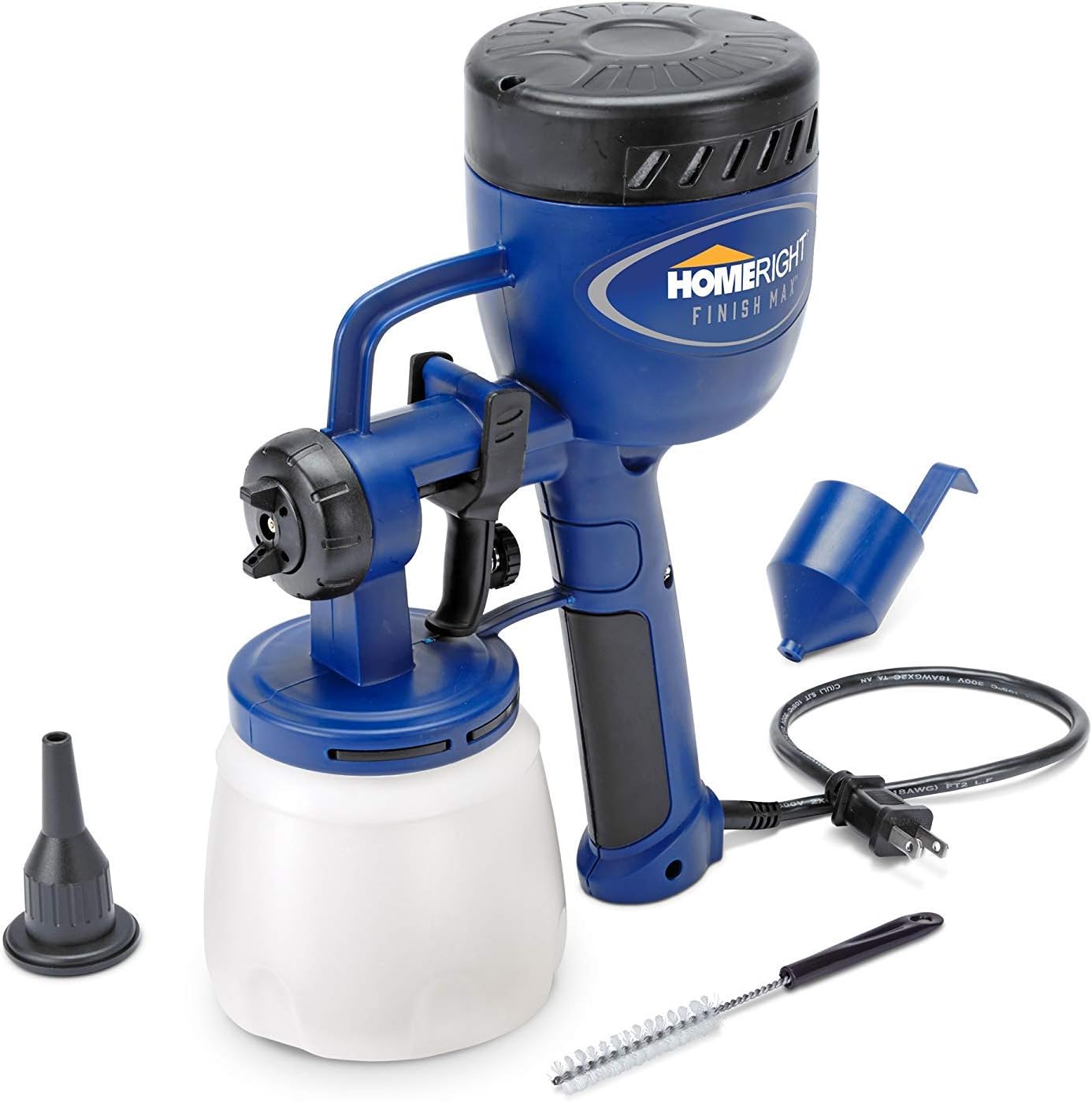




HOMERIGHT C800766 Finish Max Fine Sprayer, Blue
Product ID: 64983771
Details
- BrandHOMERIGHT
- ColourBlue
- MaterialPlastic Brass
- Tank volume27 Fluid
⚡400W powerful motor
🎨3 spray patterns (H/V/C)
🖌️27oz large paint capacity
Desertcart purchases this item on your behalf and handles shipping, customs, and support to SINGAPORE.
🎯 Spray Like a Pro, Finish Like a Boss!
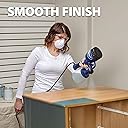
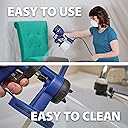
The HomeRight Finish Max Fine Sprayer is a 400W electric HVLP paint sprayer featuring three adjustable spray patterns and a generous 27-ounce paint container. Lightweight and beginner-friendly, it handles thicker paints with minimal thinning and works seamlessly with oil and water-based coatings. Perfect for DIYers aiming for smooth, professional finishes on furniture, cabinets, and crafts.


| ASIN | B003VKFDEO |
| Batteries Required? | No |
| Batteries included? | No |
| Best Sellers Rank | 743,583 in DIY & Tools ( See Top 100 in DIY & Tools ) 2,085 in Paint Sprayers |
| Colour | Blue |
| Coverage | 8" spray pattern |
| Customer Reviews | 4.1 4.1 out of 5 stars (5,678) |
| Date First Available | 21 Aug. 2012 |
| Finish | Eggshell |
| Included Components | Finish Max, Viscosity Cup, Air Blow Nozzle, Cleaning Brush |
| Item Package Quantity | 1 |
| Item Weight | 1.41 kg |
| Item model number | C800766 |
| Manufacturer | Home Right |
| Material | Plastic Brass |
| Part Number | C800766 |
| Pattern | Sprayer |
| Power Source | AC/DC |
| Product Dimensions | 12.7 x 22.86 x 31.75 cm; 1.41 kg |
| Size | Finish Max |
| Special Features | Lightweight |
| Style | Finish Max |
| Usage | Interior/Exterior |
D**N
Not UK compatible
I excitedly ordered the HomeRight Finish Max sprayer not realising that this is manufactured for the US. The product image clearly shows the US socket, but I assumed that as it was being advertised in the UK it would be a UK compatible item. It is not. The cable is only about 20 inches long, which means that I would also have to purchase a US to UK Plug adapter and then a long length extention cable to make it work, besides the point that the voltage would be different. I contacted the seller who arranged the return.
M**L
We've had this sprayer for around a year and had only used it on small projects. That is until we had a lot of extra time at home and decided to tackle painting our kitchen cabinets. And let me make one thing very clear, the only thing I know about painting was picked up by a handful of YouTube videos. We focused on the edges first and then followed with steady 50% overlapping sweeping passes across the big surfaces. I can't tell you if this is correct or not, but our results were outstanding. absolutely! It also comes with a little viscosity cup, which I'll admit, I lost a while back but we ran all our primer and paint through these paint strainers to make sure there was no clumps and everything sprayed great. https://www.amazon.com/gp/product/B000PA09V0/ref=ppx_yo_dt_b_search_asin_title?ie=UTF8&psc=1 XMA Header Image TCP Global 50 Pack of Paint Strainers with Fine 190 Micron Filter Tips - Premium"Pure Blue" Ultra-Flow Blue Nylon Mesh - Cone Paint Filter Screen amazon.com Now, before jumping right into to slinging paint, my advice would be to go WAY over the top (literally) with your masking and paint booth. Spend the time now, you'll be thankful later. And make sure to wear breathing and eye protection. My wife and I each have one of these by 3M respirators https://www.amazon.com/gp/product/B0009F5KDS/ref=ppx_yo_dt_b_search_asin_title?ie=UTF8&psc=1 and they work perfectly, while not making us overheat like our N95 masks sometimes do. Very reasonable cost when we bought them, but with COVID who knows? Ok, so we removed the doors and set up craft paper covered folding tables inside a plastic sheet room in the garage. Although I wish we would've span it over the top also because the overspray gets everywhere! Also, plan ahead because depending on the size of your kitchen, you're going to need a lot of space, or plan to paint in shifts, but we didn't want to be moving them around too much. Also, get a bunch of the little table tents to prop the panels up off the surface, so you can get a good coat all around. **one more tip for the doors - do the backs first. We primed first, but when it came to paint, we did two coats to the backs until we were happy, then flipped them all and hit the fronts with three coats and are very happy. NO BRUSH STROKES! The main reason for doing backs first is that even if the tents happen to leave small tick marks in the surface, it's on the back side and. you'll never see or focus on them.** Now back inside to do the frames. We went to the trouble of masking the inside of the cabinets and the best results I had was cutting cardboard to just bigger than each opening. I then cut a hole big enough to reach through and tape them in place. The hole is easy to cover back up before spraying. < Not sure that makes sense, but stick with me. With all of that effort yielded, we did get the results we were hoping for, but I think that if I had it to do over again, I would have bought more primer & paint and just shot them inside and out. Also, take EVERYTHING out of the cabinets...no matter which process you follow. Much less stressful, trust me. Truthfully though, this sprayer is so easy to use, and the only odd thing I ran into, was when painting over my head for extended periods of time, I opened the paint reservoir and turned the straw 180 degrees so that it pulled paint from the back instead of front. That'll make more sense when you start working with it. Hope this helps somebody.
S**L
Very good you need stepdown converter in India works on 120volts
C**O
Excelente para pintar dos casas juntas de dos niveles, al principio dude que pudiera pintar la casa con la pistola pues p nse que era más para muebles y cosas pequeñas pero 😮 ohh sorpresa la pared es rugosa y muy difícil de pintar con brocha o con rodillo sería mucho tiempo y muy cansado y tedioso pero con esta pistola en un día pinte las dos casas de volada y súper fácil, ya después solo detalles por qué la pared como mencioné es muy rugosa solo una pasada poniendo la pistola de lado para llegar a pequeñas zonas donde casi no llegaba la pintura pero ya con la práctica solo con una pasada quedaba listo sin necesidad de otra pasada, hay que combinar muy bien la viscosidad por ejemplo una pintura vinil acrílica de 7 años que es muy espesa entre un 40 a 50% de agua y lo mismo de pintura, si es pintura más baja o barata de 1 a 3 años se mezcla 3 partes de pintura y una de agua por qué es menos espesa y de verdad que muy fácil y rapidísimo, todos los vecinos pasaban a felicitarme por la rapidez y facilidad de pintar y cubrir toda la pared, tip: hay que limpiar muy bien todo los accesorios y puntas entre cada rellenado del contenedor de pintura, la mejor compra por mucho recomendadisima...!!! Y para muebles y proyectos pequeños no se diga acabado profesional, en serio muy buena herramienta para pintar, desde una casa completa hasta cualquier mueble de tu casa y hasta la herrería.
M**T
Literally pulled the trigger for ten seconds and it caught fire. I would give a 1 star but the seller was quick to act and I was fully refunded..
M**R
I purchased this sprayer in order to minimize and to speed up the work of staining a 100+ foot long dogeared privacy fence. My wife and I stained the outer (nice and flat) face of our fence with rollers. We took 8 hours working together to stain the fence, and we had to work through the difficulties of rough, uneven lumber, deep grain, and quite a bit of unevenness of the vertical boards. It was miserable work, made worse by "premium" 3/8" roller covers that went flat really quickly. I knew nothing about sprayers. Therefore after reviewing the product reviews here at Amazon I made this "faith based" decision. :) And removed from consideration some cheaper models made by major vendors that had lower reviews. BOY, am I glad I bought this thing! I just completed the staining of the "bad" inner side of the same 100' fence - posts and cross members included - by myself - with the HomeRight sprayer in about 4 hours, start to finish. I experimented with spraying water before committing to solid color Behr stain for the actual job and reviewed the movable parts and adjustments. There are two adjustments: spray density (using a thumb screw on the trigger that limits the travel of the trigger); and spray pattern - vertical, horizontal or round/symmetric. My productivity on rough lumber surfaces like this unfinished fencing increased *dramatically*. The plain side of the fence drove me NUTS with a roller. The sprayer simply fills all visible voids - grain, splits and cracks - with NO extra work and NO time spent re-doing bare missed spots. The nature of painting is quite different with rollers vs. this sprayer. The roller painted side of the fence received a very thick coat that covers almost all of the grain pattern - mainly because we had to go over almost every square foot two or three times in some places. I prefer to apply multiple thin coats. The sprayer is the right tool for this - the stain went on in a feathered way with lots of transparency unless I slowed WAY down very deliberately. The spray stained parts dry quite quickly. On the other hand, I read that with a sprayer 20% or more of the paint or stain is wasted as overspray, and I think that's conservative. With a roller you waste stain with too heavy application - with a sprayer you waste stain from drift. So pick your poison. Bottom line: a sprayer (this one) is a great tool for applying *thin*, controlled thickness coats of stain or paint. The side I did so quickly *will* need a second coat. But two thin coats are much preferable to one gloppy thick coat. The drift of the over spray is significant - after a couple of hours the air intake filters on the top of the power unit (well in back of the direction of spraying) were colored the same red of the stain and will probably block up in the near future, which means that if you're using solvent based paints, you should probably use a respirator, and eye protection is a very good idea too. (watch out for eyewear lenses being covered by paint spray in some windy conditions.) The one hindrance is limited capacity. You're always filling the stupid little 800 ML (almost 1 qt) jar, and I fumbled the jar quite a few times and got paint on everything. And pouring paint from a 5 gal bucket into the jar is sloppy business. But it's a tradeoff. After several hours of using this sprayer I would *not* want to lift a 1/2 gallon - 1 gallon jar attached to the sprayer. :) Cleanup is straightforward. You have to take the jar hardware apart and wash everything - the feed tube and a protective cover for the air supply come out readily. The sprayer nozzle assembly is 4 pieces - the outer screw cover, spray turret, a plastic doohicky under that, and the brass needle nozzle - and it likewise all has to be rinsed. Then (for acrylic) run soapy water through the unit. I strongly recommend buying this sprayer if you have a big outside staining or painting job. Indoors - I'm not certain how it would work out.
Trustpilot
1 month ago
1 month ago