
Buy anything from 5,000+ international stores. One checkout price. No surprise fees. Join 2M+ shoppers on Desertcart.
Desertcart purchases this item on your behalf and handles shipping, customs, and support to SINGAPORE.
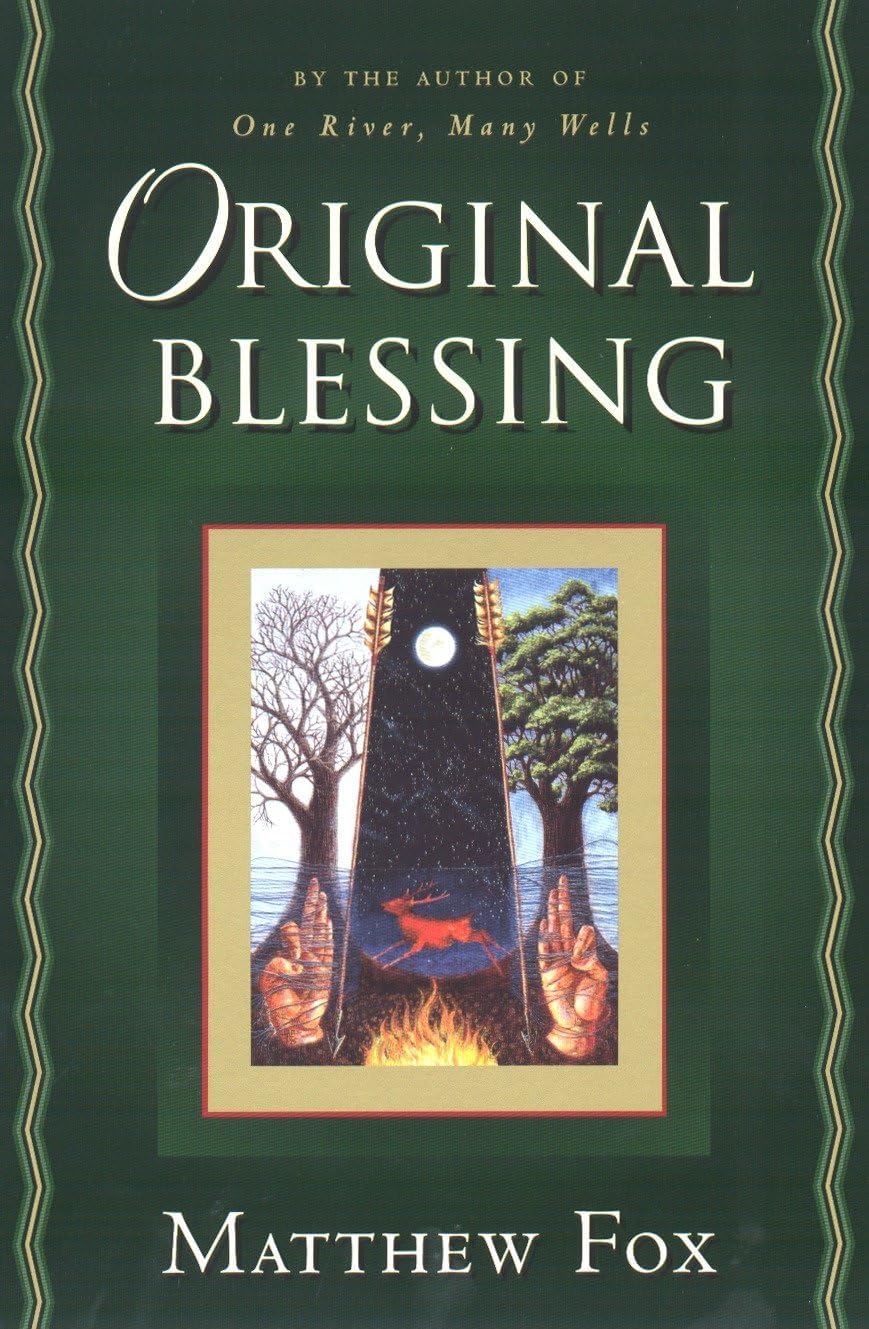
Here is a reissue of the critically acclaimed bestseller, named one of the "20 books that changed the world" in New Age Journal's Annual Source Book for 1995. Maverick theologian Matthew Fox provides a daring view of historical Christianity and a theologically sound basis for personal discovery of spiritual liberation. In this revolutionary work, Fox shows how Christianity once celebrated beauty, compassion, justice, and provided a path of positive knowledge and ecstatic connection with all creation. Review: A True Blessing and a Fresh Outlook on Christianity! - Ever wondered what it would be like to worship God without the guilt? Ever wonder what it would be like to see and know God through what God has created? Ever wonder why we are so different, yet we are all the same? Is it possible to be on equal grounds with one another, in the eyes of Divinity, despite some of us being of a different ethnic background, religion or female? Does God love us no matter what? The answer to these and other questions will be found in this wonderful book, "Original Blessing: A Primer in Creation Spirituality Presented in Four Paths, Twenty-Six Themes and Two Questions" by Matthew Fox, a one time Roman Catholic, turned Episcopalian Benedictine Monk. The Four Paths are: 1) The Via (Path) Postiva (Positive) which is something that we get. Themes 1-10 are found on this path. 2) The Via Negativa (Negativity) which is something we lose, or let go of. Themes 11-14 are found here. 3) The Via Creativa (Creativity) which is celebrating who we really are, the image of the Divine. Themes 15-20. 4) The Via Transformativa (Transformation) which is how we become who we are destined to be. Themes 21-26. There are three appendixes in the book, the first deals with Question One and the second with Question Two. The third appendix gives a list of books especially recommended to read for this type of spirituality and this book uses that list quite often when referencing. Each chapter (what this book calls "Themes") starts off with plenty of quotations from different sources, all relevant to the subject of that particular theme. This book has several references and can come off as a bit scholarly, but if one takes his or her time, there is a lot of information strung throughout the book, the reader will surely be quite satisfied with the effort. It isn't difficult reading, but it can come off that way sometimes. I got this book in excellent condition. It is a paperback with a dark green cover. The book is relatively heavy and fold back on itself, so during reading, I had to hold on to the book. I couldn't just sit the book down on a table and read. I got this book through desertcart Prime which is normally 2 business days, but because there was a weekend and a holiday, it was a couple of days shy of a week when I finally got the book (an oversight on my part). I was recommended this book by a friend who was into Celtic Spirituality. He told me that this book helped him get started on his path. I am glad that I did get this book, because it has helped me put into perspective of how I can practically put what I learn from the Irish and Scottish monks into everyday use in this day and age. I proudly give it 5 stars and highly recommend it to everyone! Review: wonderfull content, poor typeface - Excellent content, but the print font is poor.
| Best Sellers Rank | #157,157 in Books ( See Top 100 in Books ) #858 in Christian Church History (Books) #1,090 in Inspirational Spirituality (Books) #1,699 in Christian Self Help |
| Customer Reviews | 4.5 out of 5 stars 215 Reviews |
J**S
A True Blessing and a Fresh Outlook on Christianity!
Ever wondered what it would be like to worship God without the guilt? Ever wonder what it would be like to see and know God through what God has created? Ever wonder why we are so different, yet we are all the same? Is it possible to be on equal grounds with one another, in the eyes of Divinity, despite some of us being of a different ethnic background, religion or female? Does God love us no matter what? The answer to these and other questions will be found in this wonderful book, "Original Blessing: A Primer in Creation Spirituality Presented in Four Paths, Twenty-Six Themes and Two Questions" by Matthew Fox, a one time Roman Catholic, turned Episcopalian Benedictine Monk. The Four Paths are: 1) The Via (Path) Postiva (Positive) which is something that we get. Themes 1-10 are found on this path. 2) The Via Negativa (Negativity) which is something we lose, or let go of. Themes 11-14 are found here. 3) The Via Creativa (Creativity) which is celebrating who we really are, the image of the Divine. Themes 15-20. 4) The Via Transformativa (Transformation) which is how we become who we are destined to be. Themes 21-26. There are three appendixes in the book, the first deals with Question One and the second with Question Two. The third appendix gives a list of books especially recommended to read for this type of spirituality and this book uses that list quite often when referencing. Each chapter (what this book calls "Themes") starts off with plenty of quotations from different sources, all relevant to the subject of that particular theme. This book has several references and can come off as a bit scholarly, but if one takes his or her time, there is a lot of information strung throughout the book, the reader will surely be quite satisfied with the effort. It isn't difficult reading, but it can come off that way sometimes. I got this book in excellent condition. It is a paperback with a dark green cover. The book is relatively heavy and fold back on itself, so during reading, I had to hold on to the book. I couldn't just sit the book down on a table and read. I got this book through Amazon Prime which is normally 2 business days, but because there was a weekend and a holiday, it was a couple of days shy of a week when I finally got the book (an oversight on my part). I was recommended this book by a friend who was into Celtic Spirituality. He told me that this book helped him get started on his path. I am glad that I did get this book, because it has helped me put into perspective of how I can practically put what I learn from the Irish and Scottish monks into everyday use in this day and age. I proudly give it 5 stars and highly recommend it to everyone!
W**D
wonderfull content, poor typeface
Excellent content, but the print font is poor.
A**E
One of my Favorite Books - But Quality of Pages and Tiny Print is Very Poor
Very disappointed with the quality of the pages - which are like newsprint - with text that is too small, which makes this extremely difficult for me to read. I have had several copies of this book over the years, and the quality of this particular copy is very poor compared to other editions I have had (and always wound up giving away because the book - the writing - is excellent). However, I gave this a 5 star rating because this is one of the best spiritual books I have ever read - and I have read many over the decades. This book presents a view of Christianity based on the ancient Wisdom Teachings (followed by Jesus), which run in contradistinction to fundamentalism. Rev. Matthew Fox has a very comprehensive, inspirational, ecumenical, ecological theology which sees Life on Earth - as originally filled with goodness. Instead of there being "Original Sin" (fall/redemption theology) - there is "Original Blessing" (creation spirituality).
J**T
The Word as Creative Energy
I bought this book for a single chapter: "Debar the Creative ENERGY OF LIFE" This chapter can help you understand: "The Word was in the beginning, and the Word was with God, and the Word was God." And the Word became flesh and lived amoung us...The original "word" used for "The Word" was Debar, which means Creative and dynamic energy. This chapter alone can help Christians understand that Lord Jesus Christ is really the foundational energy of the universe, that is dynamic and creative. This understanding points to the primordial Light of Lord Jesus Christ,(all things were made through him) and goes hand in hand with Fox's understanding of The Cosmic Christ. Also the Word as Creative energy is in accord with the theology of St John, as he sets the readers of the gospel of John up to focus on Jesus as an object of devotion. And as I have found devotion is the doorway into the creative energy of life, the Jesus that is the same yesterday today, and tomarrow. I hope the book helps us you find the way of Jesus to be the eternal light of the universe.
K**S
A revolutionary rediscovery of Christianity
It's been a long time since I first read this book--almost twenty years--and I'd forgotten just how brilliant it is until I recently returned to it. If anything, my admiration for it this second time around has increased. I honestly think the book is one of the most original theological reflections to come out of the twentieth century. Like all works of genius, the thesis is simple and elegant. Fox's central claim is that Christianity in the west (not so much in the orthodox east) has focused upon the nonscriptural notion of original sin at the expense of scripture's exuberant message of joyful original blessing. Original sin, which appears to be the fifth-century contribution of Augustine, generates a worldview centering around a primordial fall salvaged by a bloody sacrifice (Christ's). From this way of approaching reality, humans are depraved, the world is fallen, and experiences such as beauty or the erotic are immediately suspect as temptations. The original blessing model, which Fox claims can be traced back to the Genesis account of God's creation of a "good" universe, argues instead for a panentheism that sees God--and God's goodness, light, beauty, and love--in (but not exhausted by) the created order, thereby opening up the possibility that humans are good because made in God's image, and that the world and all of God's gifts should be celebrated rather than condemned. Put slightly differently: the original sin model sees fallenness as the norm and goodness (which, given our depraved nature, is possibly only by grace, which in turn becomes a kind of magic bullet) the exception. The original blessing model sees goodness and continuous grace as the norms, and fallenness as the exception. Fox isn't naive. He recognizes that sin exists, and that it does great damage in the world. But he sees the cause of sin in dualism--the artificial splintering or fragmentation of God's reality into opposing and hence warring dyads--heaven and earth, eros and agape, man and woman, us and them, human and nature. This fragmentation not only violates the wholeness (and holiness) of creation, but sets in motion psychological and social currents that lead to violence. How different both Christianity and the world would be today had our foremothers and fathers counted their original blessings instead of morbidly fixating on original sin! Hopefully, the Church is becoming more aware of its forgotten identity. Please, read this book and discover a new and liberating way to live and think your faith.
K**T
This Book Changed My Life
I borrowed this book from a friend, but had to replace her copy because I had taken such copious notes in the one she loaned me. I come from a Lutheran background, with about 25 years of non-denominational, fundamentalist church-going on top of that. I have never known anything other than the sin/redemption idea of spirituality! Matthew Fox's writing opened my mind to the idea that God is absolutely crazy about me and nothing I can do will lessen his love for me. I feel I'm finally free to explore the God that I was always hoping to find; the God that isn't disappointed in my daily lack of spiritual perfection. I can understand why this book makes some people so mad-- it questions why religions are so strongly bent on keeping people in a system that upholds the male-dominated, "pleasure equals sin" dogma. I also recommend Rob Bell's book, "Love Wins" as an additional resource that will enhance your spiritual seeking.
G**K
It is great for all who want to serve the "unchurched" and ...
This is an important work. It helps overcome the damage done by preachers of retribution theology. God doesn't make junk. It ties into the Benedictine, Franciscan and Jesuit spiritualities that God is present in each and every person and in all of Creation. It is great for all who want to serve the "unchurched" and Spiritual Bout Not Religious (SBNR) Like Fr Berry said, "Put the Bible back on the shelf, God reveals Himself in nature."
A**N
Agree, but...
I of course agree with the author's basic premise that it would be better to regard creation from a "blessing" perspective rather than an original sin and damnation one. But,I find that I don't trust his scholarship. The book isn't meant to be a scholarly treatise, but rather an exposition of his point of view. Still, as a linguist, I can't excuse his apparent fabrication of etymologies. He footnotes sources for other sorts of claims he makes, but never when it is a question of word origins and histories. I have the impression that if he feels his point would be embellished by saying this or that word originally meant such and such, he just says so, without offering any source. Those I have checked are dubious or apparently wrong. This apparently cavalier attitude to accuracy in this regard I find lowers my respect for him as a writer and my interest in what he has to say.
M**O
A life companion
One of the most challenging, non-threatening roads to spirituality.
D**D
Like a neighbourhood librarian
I'm not used to write review when everything is alright, I limit myself just to put some stars. But in this case, I have to confess that Steven with his handwritten note excited me.
M**M
Five Stars
prompt delivery, a classic work well worth being widely read.
L**Y
Four Stars
Condition was good. I have not read it all yet It is deep to be taken in small doses.
N**)
Liked some bits
Liked some bits, but overall it was too religious for me.....maybe the clue was in the title! I also found it overly elaborate in structure. In addition, I noticed that some of the claims about the nature of St. Augustine's views had been flexed a little for the author's convenience...not quite the truth! I have Matthew Fox's book `Meister Ekhart: A Mystic Warrior for Our Times', which I found impressive and liked very much indeed.
Trustpilot
2 weeks ago
3 weeks ago