
Buy anything from 5,000+ international stores. One checkout price. No surprise fees. Join 2M+ shoppers on Desertcart.
Desertcart purchases this item on your behalf and handles shipping, customs, and support to SINGAPORE.
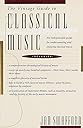
The most readable and comprehensive guide to enjoying over five hundred years of classical music -- from Gregorian chants, Johann Sebastian Bach, and Wolfgang Amadeus Mozart to Johannes Brahms, Igor Stravinsky, John Cage, and beyond. The Vintage Guide to Classical Music is a lively -- and opinionated -- musical history and an insider's key to the personalities, epochs, and genres of the Western classical tradition. Among its features: -- chronologically arranged essays on nearly 100 composers, from Guillaume de Machaut (ca. 1300-1377) to Aaron Copland (1900-1990), that combine biography with detailed analyses of the major works while assessing their role in the social, cultural, and political climate of their times; -- informative sidebars that clarify broader topics such as melody, polyphony, atonality, and the impact of the early-music movement; -- a glossary of musical terms, from a cappella to woodwinds; -- a step-by-step guide to building a great classical music library. Written with wit and a clarity that both musical experts and beginners can appreciate, The Vintage Guide to Classical Music is an invaluable source-book for music lovers everywhere. Review: "The Vintage Guide to Classical Music" by Jan Swafford - Striking a Responsive Chord - Music has been an important part of my life from the beginning. Somewhere in a dust-covered box lies a 45-RPM vinyl record of me as a 2 year-old belting out "Jesus Loves Me" at a church fair in Newburyport, Massachusetts! Beginning in the third grade, I studied violin and piano, and added organ in my junior high years. Singing has continued to be part of my life - solo work, choruses, church choirs and on stage - since my auspicious beginnings as a tuneful toddler! I took some basic courses in music appreciation as part of my liberal arts undergraduate education. So, my knowledge of classical music is probably deeper than that of most individuals who are not professional musicians. Consequently, I was amazed and delighted with how much new information I learned as I worked my way through Jan Swafford's "The Vintage Guide to Classical Music: An Indispensable Guide for Understanding and Enjoying Classical Music." Mr. Swafford is an award-winning composer and musicologist who currently lectures in English as a faculty member at Tufts University here in the Boston area. Swafford sets the tone for the book in the opening paragraph of his introduction: "Enduring works of music not only refelct their composers and their times, but have the capacity to reflect many peoples and many times. While every kind of music is intended to be heard, some is meant to be reheard and re-created in new performances, to grow in meaning, to become part of our lives and our culture, to represent the best we've done. In societies both Western and Eastern, these qualities define a body of music that is called 'classical.'" This very helpful tome is actually comprised of several books in one. At one level it is a chronological history of classical music. At another level, it is a compendium of mini-biographies of close to one hundred significant composers. Each biography ends with suggestions regarding which compositions by this composer would serve as the best introduction to his work. The book also contains a comprehensive glossary of musical terms, and offers a practical guide to building a classical music library. This volume is a portable treasure chest of fascinating and useful information for any lover of music - or for anyone who wants to learn more about, and better appreciate, good music. It has already made a difference in the way that I listen to music - my own CD's and WCRB, Boston's local classical FM station (102.5 on your FM dial!) Before reading this book, I had little exposure to, or appreciation of, American composer Charles Ives. Swafford has managed the whet my appetite for Ives' music, and I plan to add some of Ives' compositions to my personal collection. I also found fascinating the relationships and interconnections among many of the 19th century European composers. For example, the complex relationships among Johannes Brahms, Robert Schumann, and Schumann's wife, Clara, are the stuff of soap opera. For Swafford, this book was clearly a labor of love. He does a masterful job of harmonizing his passion for music with his erudition and broad knowledge of the full spectrum of classical music - from the Renaissance up to recent times. I can't think of a single music lover I know who would not find something of value and delight in this book. Enjoy! Al Review: A great introduction - I bought my first copy of this book back in 1993. As a young adult and wanting to expand my musical horizons by listening to and learning about classical music back then, this was one of the first books I purchased that provided biographical details along with information on their best known works. It also provided descriptions of musical terms and brief histories of the various eras of composition. It is written to educate and enhance the reader's enjoyment of the music and, at least in my case, direct the reader to expand and explore beyond what is just between the covers. I read my first copy in a few days and my then Boxer puppy chewed it up shortly thereafter when I carelessly left it out on the coffee table and he apparently needed a chew toy. As is my custom, the new found fervor for classical music waned a bit--I went on the jazz for awhile and still listened to my classic rock--but returned again a couple years ago. During my initial phase of zeal in the early 90s at the height of the cd boom, most box sets and double disc sets were beyond what I could afford. Classical discs always seemed to be priced slightly higher than other genres and that included single discs from the major label. My newly regained zeal coupled with the much lower cost of the cds prodded me into wanting to re-read what I may have forgotten and even what didn't fit my tastes back then. So I found this book again, ordered a new copy, and read cover to cover in a few days making notes of other composers and works I'd have to check out online and maybe purchase in the future. So yes, I highly recommend this book to anyone and everyone with an interest in and love for the great composers and their masterworks.

| Best Sellers Rank | #60,913 in Books ( See Top 100 in Books ) #11 in Music Appreciation (Books) #25 in Music Reference (Books) #60 in Music History & Criticism (Books) |
| Customer Reviews | 4.7 out of 5 stars 359 Reviews |
A**E
"The Vintage Guide to Classical Music" by Jan Swafford - Striking a Responsive Chord
Music has been an important part of my life from the beginning. Somewhere in a dust-covered box lies a 45-RPM vinyl record of me as a 2 year-old belting out "Jesus Loves Me" at a church fair in Newburyport, Massachusetts! Beginning in the third grade, I studied violin and piano, and added organ in my junior high years. Singing has continued to be part of my life - solo work, choruses, church choirs and on stage - since my auspicious beginnings as a tuneful toddler! I took some basic courses in music appreciation as part of my liberal arts undergraduate education. So, my knowledge of classical music is probably deeper than that of most individuals who are not professional musicians. Consequently, I was amazed and delighted with how much new information I learned as I worked my way through Jan Swafford's "The Vintage Guide to Classical Music: An Indispensable Guide for Understanding and Enjoying Classical Music." Mr. Swafford is an award-winning composer and musicologist who currently lectures in English as a faculty member at Tufts University here in the Boston area. Swafford sets the tone for the book in the opening paragraph of his introduction: "Enduring works of music not only refelct their composers and their times, but have the capacity to reflect many peoples and many times. While every kind of music is intended to be heard, some is meant to be reheard and re-created in new performances, to grow in meaning, to become part of our lives and our culture, to represent the best we've done. In societies both Western and Eastern, these qualities define a body of music that is called 'classical.'" This very helpful tome is actually comprised of several books in one. At one level it is a chronological history of classical music. At another level, it is a compendium of mini-biographies of close to one hundred significant composers. Each biography ends with suggestions regarding which compositions by this composer would serve as the best introduction to his work. The book also contains a comprehensive glossary of musical terms, and offers a practical guide to building a classical music library. This volume is a portable treasure chest of fascinating and useful information for any lover of music - or for anyone who wants to learn more about, and better appreciate, good music. It has already made a difference in the way that I listen to music - my own CD's and WCRB, Boston's local classical FM station (102.5 on your FM dial!) Before reading this book, I had little exposure to, or appreciation of, American composer Charles Ives. Swafford has managed the whet my appetite for Ives' music, and I plan to add some of Ives' compositions to my personal collection. I also found fascinating the relationships and interconnections among many of the 19th century European composers. For example, the complex relationships among Johannes Brahms, Robert Schumann, and Schumann's wife, Clara, are the stuff of soap opera. For Swafford, this book was clearly a labor of love. He does a masterful job of harmonizing his passion for music with his erudition and broad knowledge of the full spectrum of classical music - from the Renaissance up to recent times. I can't think of a single music lover I know who would not find something of value and delight in this book. Enjoy! Al
T**T
A great introduction
I bought my first copy of this book back in 1993. As a young adult and wanting to expand my musical horizons by listening to and learning about classical music back then, this was one of the first books I purchased that provided biographical details along with information on their best known works. It also provided descriptions of musical terms and brief histories of the various eras of composition. It is written to educate and enhance the reader's enjoyment of the music and, at least in my case, direct the reader to expand and explore beyond what is just between the covers. I read my first copy in a few days and my then Boxer puppy chewed it up shortly thereafter when I carelessly left it out on the coffee table and he apparently needed a chew toy. As is my custom, the new found fervor for classical music waned a bit--I went on the jazz for awhile and still listened to my classic rock--but returned again a couple years ago. During my initial phase of zeal in the early 90s at the height of the cd boom, most box sets and double disc sets were beyond what I could afford. Classical discs always seemed to be priced slightly higher than other genres and that included single discs from the major label. My newly regained zeal coupled with the much lower cost of the cds prodded me into wanting to re-read what I may have forgotten and even what didn't fit my tastes back then. So I found this book again, ordered a new copy, and read cover to cover in a few days making notes of other composers and works I'd have to check out online and maybe purchase in the future. So yes, I highly recommend this book to anyone and everyone with an interest in and love for the great composers and their masterworks.
A**R
The Best Introduction to the Great Composers
If you are looking for a single book to introduce you to the great classical composers, this is the one. The book is arranged historically and takes the reader from medieval music through the twentieth century. The author writes in an engaging, opinionated, and often humorous style which kept me interested throughout. One of the best features of the book is the short biography of each composer. Swafford does a great job of bringing these musical geniuses to life, warts and all. Forget any preconceived notions you have about stuffy historical figures. These guys were quirky, colorful, and very human. Many of them were so vividly portrayed I could imagine a screenplay being written about their lives. For each composer, he describes their key musical contributions with recommendations for listening. I added his recommendations to my Spotify account so I was able to listen to each work as I read the book. It was like taking a fun course in classical music (without the tests). There were only a couple of things to quibble about with the book. First, I am a lifelong classical music lover but I do not read music, so some of the more technical sections on music theory were a bit hard for me to follow. There is however, a glossary in the back which was quite helpful with this. Second (and I know this is a matter of my personal taste), a great deal of time is spent on atonal composers of the 20th century, a style of music I find (with a few exceptions) to range from unpleasant to unlistenable, while Johann Strauss is mentioned in passing in a single sentence. Again, these are quibbles reflecting my own background and tastes. Overall, this is an excellent book which I highly recommend.
A**S
Best read critically
This is an easily understood history of classical music, including mini-biographies of important composers. Both the glossary of musical terms and the recommendations of compositions are useful. I think the author overlooked some of the greatest compositions--recommending Terry Riley's In C while ignoring such great classics of the standard repertoire as Tchaikovsky's Violin Concerto, Beethoven's Piano Concerto No. 5, and Brahms's Violin Concerto and Double Concerto is so perverse as to border on the bizarre. The author's recommendations will be indispensable in helping me expand my experience of classical music.
M**.
Perfect Reference Book for New and Seasoned Listeners Alike
This book is exactly what I was looking for. I just recently started listening to Classical music. I wanted a better understanding of what I was hearing. Swafford's book is perfect as a reference to a vast number of composers. The essays are short, concise, informative, but also entertaining. His opinions do shine through quite a bit, but I like that. It reminds me that we all like different things and it makes me feel better about not liking certain composers or styles. This book helps me appreciate who they are and why they matter, but Swafford's tone makes me feel comfortable developing my own opinion by encouraging me to listen to the music. There is a great little section in the back that lists important works by each composer so that the reader/listener has a nice starting point. This section has been a huge blessing to me personally as there is way too much classical music for a new listener to sort through. I have no complaints. This book is great and is worth every penny. Sure, you may want more info on some composers, but that's what makes this a great reference book. Swafford makes you WANT to learn and, most importantly, listen.
E**H
A Splendid Gateway
It sounds simple enough: write a series of short essays about all the classical composers that truly matter. The result though is actually a coherent and comprehensive tour through the language of the music, the composers themselves, and the evolution of the techniques and orchestration used over the centuries - and it is FUN to read. The writing style is jaunty and descriptive and deeply reflective of the music being described. Try to describe sound, music, has got to be one of the most difficult challenges there is in writing but Jan Swafford never waivers, the book is compelling and colorful all the way through. Picked at random, here's a typical description: "In contrast to the thunderous playing of Liszt, Chopin never used fortissimo but rather shaded his dynamics downward toward the intimate and nearly inaudible." Or how about this description of Wagner: "By the late nineteenth century he would haunt the Western cultural tradition as pervasive myth and sacred monster." You just must read on. This book also provides carefully chosen advice on which music you should start with for each composer. Within the body of the book these are detailed with Swafford usual colorful and concise language. At the back an appendix summarizes are the recommendations. So far this appendix has cost me several hundred dollars in happily spent purchases, with many more to come. If you are at all interested in the subject of classical music then this is a splendid gateway.
B**R
Marvellously interesting
I want to join the chorus of praise for this book. It's been my only reading matter since I started it and I put it down only to call up YouTube or to play a CD I happen to own. I love the style - high-flown, personal, inspiring, sometimes touching, sometimes snarky. It got a bit shakey during the section on Wagner - not adequate, perhaps, to the polite expression of the author's opinion of Wagner the man. That's as far as I've got - I'm about to start on Verdi. I was thrilled that the greatest of my musical beloveds, Bach and Schubert, were treated with as much admiration and love as even I could wish. I had a quick look ahead and it seems that another of my favourites, Hugo Wolf, doesn't get a mention. Oh well, one can't expect perfection. The little essays on technical subjects are clear but it's the historical overview that has been really helpful to me. I've got books on most of my favourites but it's nice to have my understanding of their works reinforced and, often, expanded. I also enjoyed seeing just where other composers like Monteverdi and Domenico Scarlatti fitted into musical history and which of their works are the most rewarding - the CDs are winging their way to me. I will have lots more new information to digest as the book heads into the twentieth century and I look forward to developing new tastes, because Jan Swafford is a writer who is not ashamed to share his enthusiasms.
G**H
An excellent book with sharp opinions
Until I got to retirement age, I had been a big fan of classical music without really knowing much about it. I finally ordered this book to get myself some education. The author has his strong opinions, but what the heck, so do I. I am never going to become a fan of atonal music -- in my opinion, the quickest & surest way of emptying a concert hall. But it was a bit disturbing to learn that Richard Strauss was "a pig" and that Bruckner was a "nincompoop" -- not that these facts affect their music in the slightest. Two coincidences strengthened my opinion of this book. I had recently discovered Beethoven's Piano Concerto #4 on YouTube (Bernstein / Zimerman) and it blew me away. Swafford agrees that the Fourth is Beethoven's best piano concerto. The second coincidence was Theodore Dalrymple's very enthusiastic mention of the Haydn String Quartets. I began listening to some of them on YouTube and realized that there was a complete universe of beautiful music I had never noticed before. Swafford has basically the same opinion, that classical music has nothing to compare with the Haydn Quartets. There is a world of excellent information in this book, & I recommend it highly.
V**.
Wonderfully comprehensive and informative
This book is an excellent introduction to the history, terminology and composers of classical music for those who wish to have a better understanding of the wonderful diversity of classical music, and those who created it. For decades i have loved this music and have wanted to greatly increase my overall knowledge of the subject. This book was written by one who is clearly immersed in the subject, and who not only possesses wide knowledge of historical facts, but who is also deeply in touch with the creators of these pearls of great price. Thank you so much, Jan Swafford, for educating us in a clear, witty and easily-comprehensible manner. You have greatly compounded not only my interest in - but also my understanding of - these works of art. I would highly recommend this book to anyone who wishes to increase not only their enjoyment of, but also comprehension of, the world of classical music.
C**N
Buona storia della Musica, anche se sintetica.
È scritta bene e, sebbene sintetica, va abbastanza a fondo. Una cosa che mi ha un pò infastidito è che alcuni riquadri di approfondimento continuano su più pagine, assieme al testo normale, per cui non ssi sa se seguire prima il testo per per tornare indietro e leggere l'approfondimento, o fare il contrario.
R**T
They don't come much better than this
A superb book that manages to combine the history and development of classical music with the lives of the major composers as well as going into great detail about their individual works. The fact that it is in chronological rather than alphabetical order helps one to see how music developed through the centuries and also who was contemporaneous with who. As someone who can only just about work out the names of the notes on a stave this is the book that I never thought existed. It has explained the structure of types of composition in a way that even I can enjoy and (mostly) understand. It's a riveting book that I'm thoroughly enjoying. I'm 3/4 of the way through and have read every page. Although the author makes recommendations throughout the book there is a great section at the end of the book listed by composer which summarizes all the works recommended. The only problem I've had is that it has tempted me to buy far too many CDs since I started reading it!
A**N
There is much to recommend this book as an introduction to classical music
There is much to recommend this book as an introduction to classical music. However, if one is coming to it as a complete layperson, then it might seem that important foundational concepts are being taken for granted. I would suggest coming to this after getting a few basic concepts straight. Then it is a thoroughly enjoyable and quite informative book on the subject.
J**E
Fabulous guide to classical music.
Decided to educate myself about classical music so bought this book. It’s great! Short biographies of the composers (who knew Handel got into fist fights??) as well as helpful guides to what pieces to start with from each. My music collection is steadily growing as a result.
Trustpilot
1 month ago
1 month ago