
Buy anything from 5,000+ international stores. One checkout price. No surprise fees. Join 2M+ shoppers on Desertcart.
Desertcart purchases this item on your behalf and handles shipping, customs, and support to SINGAPORE.
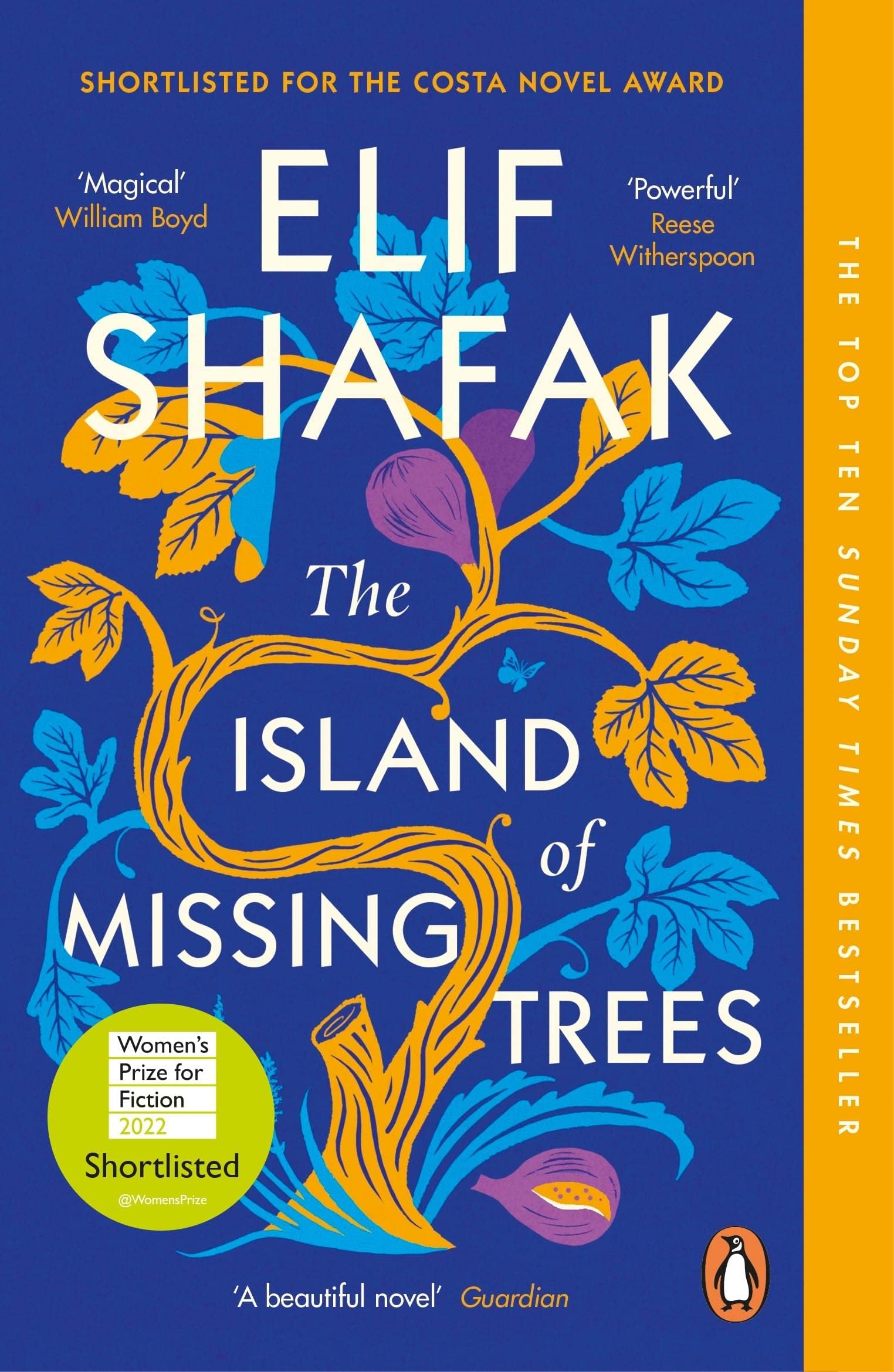
SHORTLISTED FOR THE WOMEN'S PRIZE FOR FICTION 2022 THE TOP TEN SUNDAY TIMES BESTSELLER & REESE WITHERSPOON BOOK CLUB PICK ***** You don't fall in love in Cyprus in the summer of 1974. Not here, not now. In 1974, two teenagers, from opposite sides of a divided Cyprus, meet at a tavern in the city they both call home. The tavern is the only place that Kostas, who is Greek, and Defne who is Turkish, can meet in secret, hidden beneath the leaves of a fig tree growing through the roof of the tavern. This tree will witness their hushed happy meetings, and will be there when the war breaks out and the teenagers vanish. Decades later in north London, sixteen-year-old Ada has never visited the island where her parents were born. She seeks to untangle years of her family's silence, but the only connection she has to the land of her ancestors Is a fig tree growing tin the garden of their home . . . ***** 'This book moved me to tears . . . in the best way. Powerful and poignant' Reese Witherspoon 'A brilliant novel -- one that rings with Shafak's characteristic compassion' Robert Macfarlane 'This is an enchanting, compassionate and wise novel and storytelling at its most sublime' Polly Samson *** ELIF SHAFAK'S NEW NOVEL, THERE ARE RIVERS IN THE SKY , IS AVAILABLE FOR PRE-ORDER NOW *** Review: It broke my heart. - The thing about books like The Island of Missing Trees is that they never slip from memory. They are always fresh and clear. The plot, the characters, and sometimes even certain lines. The Island of Missing Trees is so much and only Shafak could’ve skillfully managed to string it all together, without any thread going to waste. The Island of Missing Trees is a love story – not just of two people, but also of a fig tree, of a teenager and her family, of love that we have for our homelands from which we are forced to flee, or have to in order to lead better lives, and more than anything else, it is a love story of people and nature. Two teenagers fall in love in Cyprus – one Turkish, the other Greek. They meet at a taverna which is home to them. Kostas and Defne meet in secret, away from people’s prying eyes, in a tavern with a fig tree at its center. The fig tree watching all, observing their love, and jotting memories as time goes by. A war breaks out. The lovers are separated only to meet decades later, and what happens after that is one of the plot points of the book I don’t want to reveal. The book travels between the past and the present, giving the readers the perspective of the fig tree, of Kostas and Defne’s daughter Ada, and more importantly of what happens to countries when borders are most sought after. Shafak’s writing is emotional, it is gut-wrenching in so many places – when she speaks of home, of what it is to be driven away, to see neighbours turning on you – it makes you think of the countries currently in conflict and it is all about this – land for them, home for the people who live there. The layers to this novel are plenty. On one hand, Shafak tackles mental health and its navigation, on the other – the country at war not only with outsiders, but with itself when it comes to love, of ties that are thicker than blood, and ultimately on the idea of what is home and what makes it familiar. I hope this novel makes it to the shortlist of the Women’s Prize for Fiction 2022. Review: One of my favourites by the author! - Extraordinarily brilliant levels of storytelling narrated with depth and emotional intelligence, a relevant and compelling piece in today’s divided world. Highlights the intergenerational relations between conflict, forced migration and the constant grief that encapsulates those who witness it. Especially loved the talking Fig Tree, whose perspective in the backdrop of a Greek-Turkish conflict offered a unique insight on climate change; how humans look down upon other beings who are superior to us in multitudes. The book also offers a gentle insight into the cruel truth of the world - humans destroy while nature protects. That environmental damage inflicted by humans destroy not just species in isolation but also their unique connections. While they protect each other like a collective whole, we continue to remain divided and destructive.


| Best Sellers Rank | #3,028 in Books ( See Top 100 in Books ) #2 in Environment & Nature #5 in Earth Sciences Books #209 in Contemporary Fiction (Books) |
| Customer Reviews | 4.6 out of 5 stars 27,138 Reviews |
V**A
It broke my heart.
The thing about books like The Island of Missing Trees is that they never slip from memory. They are always fresh and clear. The plot, the characters, and sometimes even certain lines. The Island of Missing Trees is so much and only Shafak could’ve skillfully managed to string it all together, without any thread going to waste. The Island of Missing Trees is a love story – not just of two people, but also of a fig tree, of a teenager and her family, of love that we have for our homelands from which we are forced to flee, or have to in order to lead better lives, and more than anything else, it is a love story of people and nature. Two teenagers fall in love in Cyprus – one Turkish, the other Greek. They meet at a taverna which is home to them. Kostas and Defne meet in secret, away from people’s prying eyes, in a tavern with a fig tree at its center. The fig tree watching all, observing their love, and jotting memories as time goes by. A war breaks out. The lovers are separated only to meet decades later, and what happens after that is one of the plot points of the book I don’t want to reveal. The book travels between the past and the present, giving the readers the perspective of the fig tree, of Kostas and Defne’s daughter Ada, and more importantly of what happens to countries when borders are most sought after. Shafak’s writing is emotional, it is gut-wrenching in so many places – when she speaks of home, of what it is to be driven away, to see neighbours turning on you – it makes you think of the countries currently in conflict and it is all about this – land for them, home for the people who live there. The layers to this novel are plenty. On one hand, Shafak tackles mental health and its navigation, on the other – the country at war not only with outsiders, but with itself when it comes to love, of ties that are thicker than blood, and ultimately on the idea of what is home and what makes it familiar. I hope this novel makes it to the shortlist of the Women’s Prize for Fiction 2022.
A**R
One of my favourites by the author!
Extraordinarily brilliant levels of storytelling narrated with depth and emotional intelligence, a relevant and compelling piece in today’s divided world. Highlights the intergenerational relations between conflict, forced migration and the constant grief that encapsulates those who witness it. Especially loved the talking Fig Tree, whose perspective in the backdrop of a Greek-Turkish conflict offered a unique insight on climate change; how humans look down upon other beings who are superior to us in multitudes. The book also offers a gentle insight into the cruel truth of the world - humans destroy while nature protects. That environmental damage inflicted by humans destroy not just species in isolation but also their unique connections. While they protect each other like a collective whole, we continue to remain divided and destructive.
K**R
Wholesome, spiritual telling of a tear in two times.
'Çanim' is a word I first came across in 2010. A friend would text me, "çanim". If absolutely nothing else, I will be grateful to Elif Shafak for bringing back this word into my life, and my active memory. Çanim is also how I would describe this book Island of Missing Trees for myself. Based across two time periods in Cyprus and London, this book aptly transports the reader to the end of the Middle East, and Mediterranean. Shafak's gobsmacking amount of research and attention to detail in keeping this fictional tale as true to real events has my whole, entire heart. This is the writing, with heart and intention, that I aspire towards. Reading of a colonial authority imposing war in today's time seemed eerily real with unending parallels, and if anything it made me see the loss of both humanity and ecology just as much. Shafak's deep sense of spirituality and universal connectedness, something I have loved and admired even in Forty Rules of Love, takes centre stage in this story, at least for me. Where fibres of beings are attached to fabrics of time along the threads of fate. So seemingly she blends in Sufism with Gibran that my heart was bursting with a connectedness I cannot explain. The island of missing trees is a story of a culture of people, often being sidelined and clubbed into a minority. Always at the behest of colonial powers forcing them to leave their homes. In Shafak's beautiful book, she tells us yet another story of forced migration but this is mostly a story of love - secretive, romantic, platonic, conditional, unconditional, ecological, spiritual, sacrificial.
A**.
Interesting read
Interesting read
S**A
Beautiful
Beautiful
M**T
Wonderful read
Wonderful
A**R
Content
Didn't complete reading.... The flow of the book is not as i expected
B**I
Read it to fall in love with Nature #mustread
रस निष्पत्ति - , शृंगार🥰 (in readers) भाव निर्मिति - उदासीनता😔, भय 😨( in characters) What do you notice when you look at a tree - design of leaves - girth of trunk - depth of roots - different hues - barrenness of branches Well I always look at the canopy first. How huge it is, what all can it envelope. Just like the huge support system that family and friends can provide I remember so many advices about relocating to First world countries for better opportunities. In those difficult times to leave was so easy but to stay so difficult. Yet I chose to stay 'coz when you leave, a part of you stays back. How could I have been whole again We all have to leave home someday though, to build houses. Hoping that these houses will become home again by placing the bricks of ambitions & cementing it with memories "that is what migrations and relocations do to us: when you leave your home for unknown shores, you don’t simply carry on as before; a part of you dies inside so that another part can start all over again" The heart of the story lies in devastation caused by colonialism, forcing people to migrate thus losing what was theirs Love of Greek Kostas & Turkish Defne was unacceptable in the divided Cyprus. Yet they fight & win a life together 'coz all love stories deserve Happily Everafters. But process to reach there breaks something inside you. The fight to seek what is yours, takes away something that changes you to what you are not Just like a tree which when replanted in another country, might grow but its fruits might not taste the same This story is about a fig tree (which doesn't belong to any race, colour, but belongs to all) & Ada (Kostas & Dephne's daughter), both who are seeking life in new shores Authors writing is enigmatically creative. Much like taking an unpaid vacation to Cyprus - exploring its terrain & cuisine. This book will make you fall in love with its writing & your surroundings The unique features of this book are - narrator Fig tree - detailed Mediterranean cuisine - enigmatic superstitious rituals
A**E
Great read - and very informative
I read this book as I was contemplating a trip to Cyprus. I loved it! It was very good at providing context for the devastating split in this small island nation.
E**S
Gran novela
Excelente escritora. Nunca me decepciona. Felicidades a Elif Shafak
M**S
One of the most beautiful books of 2021!
A beautiful story from one of my favorite authors, Elif Shafak. When I heard that she was publishing a new book, I was overwhelmed with joy. To say that I adore this author would be an understatement. I read many of her works, including “The Forty Rules of Love”, “The Three Daughters of Eve”, and “Black Milk”. She is a great writer, who approaches difficult and emotional topics with delicate sensitivity, and her new book was a genuine pleasure to read. Kostas and Defne are two teenagers who are madly in love with each other. Kostas is a Greek Cypriot, while Defne is a Turkish Cypriot – this difference threatens their love. They meet in a taverna and their forbidden love grows with each day that passes. In the middle of the taverna, there is a fig tree, which bears witness to their encounters and a myriad of other things. War breaks out and things change, for the both of them. Decades later, Kostas returns to the island, in search of his lost love. Will he find it? And what will happen next? You will have to read the book to find out. The story will also introduce you to Ada, a young girl who is trying to figure out who she is and whose only connection to the far island of Cyprus is a tree growing in her garden. This story is moving and beautifully written. The sublime storytelling draws you from the first page and you can easily sense the motivation behind the book, the author’s intense desire for equality and peace. She explores so many different themes but I think the one that spoke to me the most was the emigrant life, and how we are always carrying a piece of our home wherever we go. Our homeland is part of our identity, no matter where we might find ourselves. What were the things I loved most about the book? • It reminded me about my home and the fact that I carry it in my heart wherever I go. As you will see, a large part is narrated by a fig tree. She remembers her life back in Cyprus, her roots so to say. “I still carry the island with me, though. The places where we were born are the shape of our lives, even when we are away from them. Especially then. Now and again in my sleep I find myself in Nicosia, standing under a familiar sun, my shadow falling against the rocks, reaching towards the prickly broom bushes that burst with blossoms, each as perfect and as bright as the golden coins in a children’s fable.” • It spoke of how we must let go of who we used to be in order to make room for the current self. Elif Shafak speaks about migration not only as a process but also as an influencing factor on our identity. “Because that is what migrations and relocations do to us: when you leave your home for unknown shores, you don’t simply carry on as before; a part of you dies inside so that another part can start all over again.” • Reference to the poems of C.P. Cavafy, one of the most distinguished poets of the 20th century. “Arriving there is what you are destined for/But do not hurry the journey at all…” • Story of forbidden love – I was rooting hard for Defne and Kostas to remain together. Their love story is beautiful and sad at the same time, and reminded me of the old cliché, true love never dies. “You know what I’ve been thinking since? I’ve been thinking that you are my country. Is that a strange thing to say? Without you, I don’t have a home in this world; I am a felled tree, my roots severed all round; you can topple me with the touch of a finger.” • Countless references to nature, and especially to trees. The author skillfully reminds us we are all connected, and that both trees and humans grow roots, which shape our identity. The key to happiness is being able to leave those roots behind and form new ones, discovering a new part of ourselves. “The Island of Missing Trees” is a beautiful novel, one that will definitely stir a lot of emotions inside. It will cause you to ask a lot of questions about who you are, especially if you are living far away from your homeland. Rich in descriptions and with numerous mentions of cultural differences and traditions, it inspires and delights at the same time. One of the best reads of 2021!
V**S
Beautifully written!
The writing was truly beautiful and offered me a much deeper understanding of Cyprus’s history. Elif Shafak is an incredibly talented writer, and her ability to weave history, emotion, and narrative together is remarkable.
S**A
story is 5 stars
The book I received has missing pages. Three chapter are repeated and around 30 pages are not there.
Trustpilot
3 weeks ago
1 week ago