
Buy anything from 5,000+ international stores. One checkout price. No surprise fees. Join 2M+ shoppers on Desertcart.
Desertcart purchases this item on your behalf and handles shipping, customs, and support to SINGAPORE.
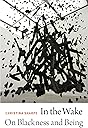
In this original and trenchant work, Christina Sharpe interrogates literary, visual, cinematic, and quotidian representations of Black life that comprise what she calls the "orthography of the wake." Activating multiple registers of "wake"โthe path behind a ship, keeping watch with the dead, coming to consciousnessโSharpe illustrates how Black lives are swept up and animated by the afterlives of slavery, and she delineates what survives despite such insistent violence and negation. Initiating and describing a theory and method of reading the metaphors and materiality of "the wake," "the ship," "the hold," and "the weather," Sharpe shows how the sign of the slave ship marks and haunts contemporary Black life in the diaspora and how the specter of the hold produces conditions of containment, regulation, and punishment, but also something in excess of them. In the weather, Sharpe situates anti-Blackness and white supremacy as the total climate that produces premature Black death as normative. Formulating the wake and "wake work" as sites of artistic production, resistance, consciousness, and possibility for living in diaspora, In the Wake offers a way forward. Review: One of the most important books of its time--searing, eloquent, impeccable. - In the Wake stands at the thematic and methodological crossroads of Black literary, visual and queer studies and philosophy. Its evocations are so haunting and yet so seared into present/time, that they parallel Coltrane, part a complex and lush lyric/line that one can follow if focused, partly a brilliant engagement thatโs operating just at the outer edges of oneโs intellectual reach because of the ways in which it plays/with inherited forms that arenโt capacious enough to contain their subjects and expression. Like Coltrane, Sharpe plays and fractures form in the wake of Black life, insisted upon, as she puts it, in the face of imminent and immanent Black death and โin the residence timeโ inhabited by our ghosts and our Gods. In the Wake makes path-breaking methodological interventions, arguing not for inter- or multi-disciplinarity, but asserting, rather, that โwe must become undisciplined.โ Sharpe addresses the making and unmaking of (narrative, memory-laden, cross-temporal) afterlives of enslavement marked by continuous and connected traumas and argues for a โnew mode and method,โ one she models to luminous effect. Sharpeโs curatorial practice is both so broad in Diasporic time and place and so precise in the rich and resonant tones of the archival notes she plays, that it both engages multiple (visual, performance, print, family) archives and moves past them to sit with the quotidian ruptures that were lodged but (so often) not logged. Sharpeโs thinking about โThe Ship: the Trans* Atlanticโ is a Diasporic and cross-disciplinary tour de force in a book that itself is a hallmark achievement. Sharpe manages to give voice to that which is beyond language, beyond border and nation, beyond human worth, beyond a grammar that can contain this expression. The work stuns in how it holds so many ideas and objects of analysis together with such eloquence and force. Christina Sharpe accomplishes a rare thing: it is beautifully, lushly written academic prose thatโs impeccably curated, deeply historical, and also both philosophically precise and evocative. This is a rare feat in a field that returns to her subject again and again because language and form are not expansive enough to hold (to invoke her term) the questions such an existential dilemma as Black diasporic wakefulness. Such a signal achievement will be read and taught widely. Review: Nourishing - This is a book for the intellect, the spirit, and the soul. It' a challenging and liberating read. Christina Sharpe shares a gift.
| Best Sellers Rank | #47,072 in Books ( See Top 100 in Books ) #10 in Black & African American Literary Criticism (Books) #137 in African American Demographic Studies (Books) #159 in Black & African American Biographies |
| Customer Reviews | 4.8 out of 5 stars 317 Reviews |
P**N
One of the most important books of its time--searing, eloquent, impeccable.
In the Wake stands at the thematic and methodological crossroads of Black literary, visual and queer studies and philosophy. Its evocations are so haunting and yet so seared into present/time, that they parallel Coltrane, part a complex and lush lyric/line that one can follow if focused, partly a brilliant engagement thatโs operating just at the outer edges of oneโs intellectual reach because of the ways in which it plays/with inherited forms that arenโt capacious enough to contain their subjects and expression. Like Coltrane, Sharpe plays and fractures form in the wake of Black life, insisted upon, as she puts it, in the face of imminent and immanent Black death and โin the residence timeโ inhabited by our ghosts and our Gods. In the Wake makes path-breaking methodological interventions, arguing not for inter- or multi-disciplinarity, but asserting, rather, that โwe must become undisciplined.โ Sharpe addresses the making and unmaking of (narrative, memory-laden, cross-temporal) afterlives of enslavement marked by continuous and connected traumas and argues for a โnew mode and method,โ one she models to luminous effect. Sharpeโs curatorial practice is both so broad in Diasporic time and place and so precise in the rich and resonant tones of the archival notes she plays, that it both engages multiple (visual, performance, print, family) archives and moves past them to sit with the quotidian ruptures that were lodged but (so often) not logged. Sharpeโs thinking about โThe Ship: the Trans* Atlanticโ is a Diasporic and cross-disciplinary tour de force in a book that itself is a hallmark achievement. Sharpe manages to give voice to that which is beyond language, beyond border and nation, beyond human worth, beyond a grammar that can contain this expression. The work stuns in how it holds so many ideas and objects of analysis together with such eloquence and force. Christina Sharpe accomplishes a rare thing: it is beautifully, lushly written academic prose thatโs impeccably curated, deeply historical, and also both philosophically precise and evocative. This is a rare feat in a field that returns to her subject again and again because language and form are not expansive enough to hold (to invoke her term) the questions such an existential dilemma as Black diasporic wakefulness. Such a signal achievement will be read and taught widely.
K**R
Nourishing
This is a book for the intellect, the spirit, and the soul. It' a challenging and liberating read. Christina Sharpe shares a gift.
A**R
A Poignant and Timely Gift
Sharpe's In the Wake accomplishes the necessary and difficult work of "sitting in the room with history" and of developing a useful and novel methodology for practicing the same ('wake work'). Working through literary, visual, and personal texts, she develops and theorizes four interrelated terms ("the wake"; "the ship"; "the hold"; and "the weather") for describing and engaging facets of Black life. Both accessible and theoretically rigorous, the care with which Sharpe set down these words comes through with every sentence. It is truly a gift.
S**E
Must Read if Interested in Black Studies
I studied Africana and Poli Sci as an undergrad and it's absolutely a shame I didn't read Sharpe until I graduated. The author has a unique way of using basic writing tools (questions, parentheses, definitions) in such an effective way. For example, early in the text the author explores how the latin definition of the word "opportunity" relates to water, which later connects to the legacies of transatlantic slavery. Sharpe forces the reader to think deeply about anti-blackness and it's manifestation. It was a tougher read for me but absolutely grateful for this work.
C**N
A must read for everyone
This was the most powerful non-fiction book that I read in 2017. I spent the rest of the year hearing the echoes of it in a lot of my thinking and writing. I recommend it to anyone who is thinking about the legacy of slavery and where we go from here -- that is, everyone.
G**S
Everyone should read
As a white woman in and from the midwest this book has been life altering. THANK YOU!!!!!! I feel more prepared as to how I can be a better ally and human to the delicate history of what it means to be black in America. This book is poetically written, and wonderfully articulate. I would love for this book to be a part of public high school education.
R**.
Worth your time and appropriately angry
Well thought out a significant read.
S**3
stunning piece of theory
I have read a great deal of literary criticism, literary theory, and philosophy. This is extraordinary. Her metaphor of living "in the wake" centers her narrative and provides an extremely powerful tool for understanding the rhetorical violence of racism. Wondrously powerful piece of theory by Christina Sharpe.
M**S
The legacy of the slave trade present in the lives of my black friends now.
An eye-opener into the legacy of slavery for black people and essential understanding/awareness if you are white in a multi-racial context.
C**E
How to be Black and Be...
I remember talking with the late, great Caribbean intellectual, George Beckford (GBeck to his friends) about whether it was possible for a scholar to be objective. I had thought about it for a long time, and, aware that I was not sufficiently schooled to trust my own notions, wished to ask a great thinker, one steeped in the appropriate disciplines, what he thought. I was relieved when he agreed that in the social sciences and in the humanities, such a thing was impossible. Christina Sharpe is not about the spurious business of "scholarly objectivity" in this book. Instead she does what all good teachers do. She enfolds scholarship and her very own self, her personal experienceโof art, language, learning, the world, historyโinto a grand sharing about blackness and being. This book is a necessary read, especially for black people. I do not capitalize black, or blackness. It is for me a given, beyond any attempted reduction, beyond one culture's mode of inscription, in the history and lives of black people. In metaphor and the music of her own thought and existence, Christina Sharpe demonstrates, how, never mind all past and present violence, this continues to be so.
I**H
Christina Sharpe paints a much bigger picture
Prepare yourself for something unexpected. I'm half way in. I read it very quickly because the arguments are compelling, but now I need to take stock and let 'the wake' sink in, because seeing the bigger picture shows me so many more closed doors I never even knew were doors that were closed until I took Sharpe's advice. It's helped me spots the signs that are here right now, and that's the tough one. 'The past is not past'.
K**E
authentic, personal, accessible and ground breaking
In the Wake is a ground-breaking book that reflects on personal tragedies, historical violence, current movements and politics. Sharpe, throughout her book, uses multiple meanings of the word โwakeโ to confront the continued repercussions of chattel slavery and anti-blackness. Christina Sharpe moves away from victimhood and toward a new vision of Black liberation by engaging with the words and stories of other prominent scholars such as Dionne Brand, Frantz Fanon and Saidiya Hartman. Sharpe deeply connects with her audience; I found this book authentic, personal, accessible and beautiful. She uses visual and literary cultural artifacts throughout, telling and connection stories of present-day premature Black deaths, Middle Passage survivors, contemporary African migrants, Haitian refugees and Wake work. Wake work is how Black diaspora continue to live and thrive with the mourning, the aftermath of chattel slavery, the wake. Wake work is communal self-care, building up of Black folks, loving through the pain, naming and seeking justice in an unjust word. I am so glad I bought this book instead of borrowing it from the library as I have already come back to it a few times and this book will be added to my list of books I want to read over and over.
B**N
One of the most important books of recent years
Powerful and vital
Trustpilot
2 months ago
2 weeks ago