🔧 Elevate Your Craft with STANLEY's Precision!
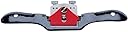
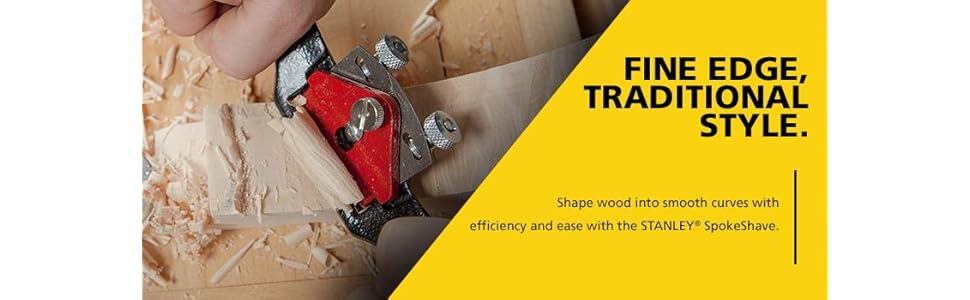
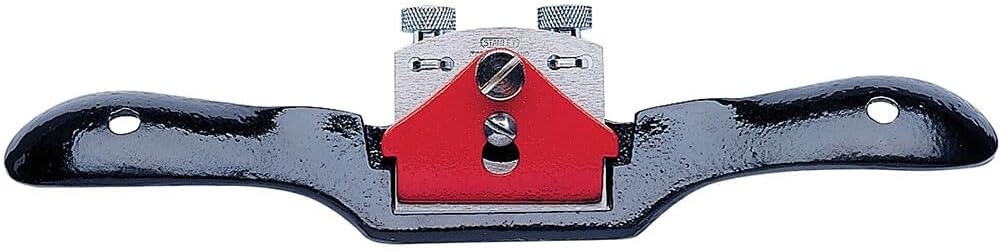
The STANLEY Hand Planer, SpokeShave, Flat Base (12-951) is a modern, manual tool designed for woodworking professionals and hobbyists. Weighing only 0.85 pounds and featuring a durable metal handle, this hand planer offers precision and comfort for all your woodworking needs. With dimensions of 13.5 x 14.7 x 1.2 inches, it’s compact enough for easy handling and storage, making it an essential addition to any toolkit.


| ASIN | B00002X1ZG |
| Base Material | Cast Iron |
| Best Sellers Rank | #756,663 in Tools & Home Improvement ( See Top 100 in Tools & Home Improvement ) #133 in Power Handheld Planers |
| Brand | STANLEY |
| Brand Name | STANLEY |
| Color | Black |
| Customer Reviews | 4.2 out of 5 stars 902 Reviews |
| Cutting width | 2.13 Inches |
| Global Trade Identification Number | 00076174129519 |
| Included Components | Spoke Shave plane |
| Item Type Name | STANLEY Hand Planer, SpokeShave, Flat Base (12-951) |
| Item Weight | 13.6 ounces |
| Manufacturer | Stanley |
| Manufacturer Part Number | 12-951 |
| Manufacturer Warranty Description | Manufacturer |
| Material | Blend |
| Material Type | Blend |
| Model Number | 12-951 |
| Power Source | manual |
| Style | Classic |
| Style Name | Classic |
| UPC | 787721813682 076174129519 713976532474 754262189309 724137142968 699994320975 094700743978 797267530912 752913174247 043953796866 758710429634 602461087691 |
| Unit Count | 1.0 Count |
P**0
Works great for a $15 spoke shave
Package arrived undamaged. Features are well made with NO obvious defects. The "as received" good condition prompted me to test it as received without performing any further rework or "tuning up." OUT OF THE BOX FIRST USE -- Without honing the iron / blade I set it up and started making shavings on a test piece of wolmanized 2x4. Much to my delight it worked great! For a $15 spoke shave at this price point to work well out-of-the-box was unexpected. A new edge on the blade and proper honing will enable thinner shavings. For occasional use this low cost tool is ideal. Remember to use it with the grain and to draw it or push it at about a 45 degree angle to get things started. Also, you can vary the reveal of the iron or blade so one side shaves more wood than the other. In a normal hand plane you strive for even exposure. This spoke shave tip is helpful for rounding square stock. You can be aggressive with the blade size that has more exposure and then switch to the lesser side when finishing the surface. Lastly, a quick rag wipe of 3 in 1 oil on the sole helps to reduce the likelihood of chatter. Sharpening the iron (aka, the blade for purists) -- it is too small to fit either of the scarey sharp fixtures I own so I had to free hand sharpen on my Worksharp 3000. The original cutting edge came sharpened to a 25 degree angle. It came with a decent cutting edge. I flattened the back of the iron and the freehand sharpened the bevel. I flipped it over to deburr and reinstalled it in the spoke shave. I was able to make long thin shavings in pine pushing or pulling. Impressive! My Stanley spoke shave had proper quality control. That is, the adjusting screws, iron and mouth were properly made and the extent of "tune up" was sharpening the iron. Reading the reviews one would conclude there tends to be piece-to-piece variability. That is, some are great and are ready-to-use while some are real stinkers. If you get one and it is not acceptable just return it for another or get a refund. Mine is proof that you can get a reasonably priced spoke shave that works quite well as received. A simple vinyl plastic sleeve that snaps closed is included which protects the tool when stored in your tool box or on a tool tray.
C**K
Stanley #151 Spokeshave - good tool after tuning.
Stanley #151 Spokeshave. Judging from the other reviews here the quality control on these must be a bit random. The one I received was not perfect out of the box nor was it worthless junk. All the parts and pieces were there but the casting were a little rough in spots. Of course the blade needed some attention, like all new plane blades, chisels, etc. Was factory sharp, but not really usable. It took me a couple of hours to tune the spokeshave and now it works very well, at least is more than just usable for me. The bottom was cupped a bit so needed flattening. The bed behind the iron had a few bumps from casting and the paint was very thick and uneven. A few minutes with a small file took care of that. The cap iron was also a bit rough and looked like they dip painted it and just let the paint run. Ended up taking that part to the belt sander to remove most of the paint on the back and get it somewhat flat. Sharpening the blade wasn’t too hard after I screwed it to a short board so it would fit in my sharpening jig. Re-ground the bevel as it wasn’t even all the way across. Fixing that and flattening the back took the most time here, but once done I was able to sharpen and hone to a very good edge pretty quickly. After tuning it works very well. I like the adjustment screws, with a little fiddling around got so I could really fine tune the cut. Now I can get some very thin feathery savings and leaves the stock glass smooth. So far I’ve used this on a pine board, some mahogany, and oak. Worked well on all three, minor tear out on the pine, but I think that was me getting used to this tool. (and probably not paying enough attention to the direction of the grain). Changes I’d suggest - First they could keep about half of the paint, way too thick on the parts that need to fit. Second the cap iron has shoulders that don’t meet with the shoulders in the mouth so the cap iron could be a bit wider. The castings could be a bit smoother, but on an in-expensive tool like this it’s not a deal breaker to me. All in all I think this is a good tool and a very good price. After a bit of tweaking and tuning it’s probably a better tool than my skills.
M**J
Excellent value- with a little tuning
I owned two spokeshaves before I bought this- the Kunz 151 Flat Spokeshave and the Kunz Round Bottom Spokeshave , both of which perform fairly well, after some time spent tuning them. I've had them for over 20 years, and they do a good job of shaping. But setting them up and adjusting the blade can be an annoying, hit or miss affair as you tap the blade one way and then another, trying to get thin shavings and avoid chatter when cutting. My search on Amazon led me to the Stanley, which offers two screw adjustments that promised to make using it much easier than using the Kunz spokeshaves. I was a bit concerned about the quality, given the negative reviews, and the fact that it's not made in England by Record anymore, but decided to order it anyway. I could always return it if it turned out to be junk. It's not junk. It's a very well made spokeshave, especially considering the low price- cheaper than the non-adjustible Kunz units. And it's not made in China, either. As delivered, the sole showed a lot of rough machining marks, so the first step was to flatten the sole, which I accomplished with my inexpensive Harbor Freight diamond hone block. (This is bargain at $10, BTW.) I went from 200 to 600 grit in four steps and got a mirror-smooth surface in no time. Next step was to flatten the back of the blade, also using the diamond block, and hone the edge. The result of perhaps 20 minutes of work is a really fine performing spokeshave for very little money. I'm currently using the Stanley to shape wooden bows for archery, which it does very well, cutting smoothly on a variety of woods. If this tool cost $35 or $50, I'd only give it three or four stars, but at the asking price it's a five-star value. I doubt you can find a better spokeshave for twice the money.
J**R
VERY Worth the money!
Setup of any hand wood plane/shaver is MANDATORY! Save your crap review for someone who actually knows what they’re doing and quit whining that your tool didn’t work “out of the box”. No plane or shaver will EVER do that. You must know how to fettle the tool before taking it to wood...PERIOD! I highly suggest watching Paul Sellers or Rex videos on YouTube if you don’t know what I mean... With that said, let’s get into it :) I purchased both the Stanley “951” and the Kunz “151” spokeshaves after a small hiccup in Amazon’s delivery -I will not get into that here. I wanted to see the difference between the two after being forced to accept both so here we go! After receiving the Kunz first, I set it up and took it to an off cut to see what it could do. It was surprisingly good. However after receiving the Stanley, I was blown away by the difference! 1. The Kunz’s mouth is garbage compared to the Stanley. The machining was erratic at best. If I wanted to, I’d have to file the mouth to make it sort of comparable. 2. Every single screw minus the adjustment knobs for the blade were machined with slots for a screwdriver on the Stanley -not so much on the Kunz. The cap iron screw is some sort of elongated machine screw with an enormous knob that just feels cheap! 3. The Stanley is much heavier, making the work easier. The Kunz is very lightweight and I often had to fight it to get the shavings I was after. 4. The cap iron on the Stanley is much larger and covers more surface area compared to the Kunz. The Stanley’s is made of iron while the Kunz’s is made of cheap thin aluminum. 5. The soles are dramatically different as well. The Kunz has a very wide nearly flat sole compared to the Stanley’s slightly narrower sole. The Kunz’s was flat in both the forward and side projection while the Stanley’s was flat only in the widest projection with a very slight rounded front to rear camber. This is extremely important to point out because if you have ever used a spokeshave, you will appreciate the slight rounded sole as it makes getting into inside corners that much easier and this was machined out of the box!! 6. The blade irons were only different in the fact I didn’t have to flatten the back of the Stanley nearly as much as I had to on the Kunz. With that said, I had a harder time honing the bevels on the Stanley blade, but I that’s due to the difference of steel but I’m not certain who uses what. Either way, I was able to get the bevels set on both without too much fuss on my wet stones. 7. The Stanley is a more faithful reproduction of the vintage #151 than the Kunz and is even stamped “No. 151” on the back! Overall, I managed to get the Kunz to do a good job, but the Stanley was easier to set up and it did a better job than the Kunz. I’m an experienced woodworker and have tried a lot of planes and shavers and for the money, this Stanley “951” is a MUCH better buy IMO.
A**I
Decent quality, but NOT sharp out of the box - you will need to sharpen - comparison to Veritas
The tool is all metal and decent quality for the price - not a high end tool but you I paid $30. It will function well after some tuneup, and will last a lifetime. The blade came chipped and literally as dull as a butter knife, but 20 minutes of work got it sharp. In case you are unsure whether you want to step up to a Veritas - I have both, here's my take on it: - The Veritas came razor sharp out of the box and was ready to go. The Stanley was literally unusable without some serious effort sharpening. - The mouth of the veritas is much tighter, and it comes with a couple of shims to make it even tighter if desired. This reduces tearout. - The blade of the Veritas is 2-3 times thicker than the one of the Stanley, and it's made of much better steel. The thickness should lead to less chatter, but to be honest I haven't had any chattering with the Stanley either. - The adjustments on the Veritas are very accurate and have little play. The blade on the Stanley has over 1/16" play in the adjusters. - The look and feel. The finish on the Veritas is superb, the wooden handles feel amazing, and the brass screws and adjusters look great. The Stanley is made of cheap cast iron with a pretty ugly coat of paint on it. None of this affects how well it works, but the Veritas makes me smile and the Stanley does not. - The Veritas is made in Canada and the Stanley is from the far east.
A**.
Great tool for a good price
I needed a spokeshave for a project and since I could not afford to buy top brands such as Lie-Nielsen or Pinnacle which are machined to the highest standards, I decided to purchase Stanley 12-951 that seemed the best value among the cheaper brands. When I received the tool, I discovered that the back of the throat plate had not been ground flat and therefore I had to use some elbow grease to grind it flat myself, as it is shown in the pictures. Another advantage of the top brands is that their blades are made of A2 high speed steel, which is supposed to hold the edge longer and do not need to be sharpened as often. I discovered that I could buy a replacement blade made of A2 steel by IBC that would fit the Stanley tool. Both blades are well machined and flat, although the IBC blade is a little thicker, which I think it does not matter for a spokeshave as much as it matters for a plane iron. Although both blades are sharp enough to cut out of the box, what most people do not realize is that all cutting tools made of steel need to be sharpened by hand before they are used in order to achieve best performance. After sharpening both blades, they cut flawlessly and I could not see any difference between their performance. Stanley does not say what kind of steel the blade is made of and because I used them on a small project, I did not use them long enough for them to get dull and in need of re-sharpening but I would expect the IBC blade to keep the edge longer. Although I do not own a top brand spokeshave to compare, I do not expect the performance of my spokeshave with the IBC blade to be inferior in any significant way to the top brands. And now, I need to justify the 5-star rating since the tool came with obvious machining flaws. When people rate a merchandise based on what one gets in a merchandise that is more that 5 times more expensive, I think that that rating is not only misleading, but unhelpful for the prospective buyers. When people pay such a low price for a tool, they should expect some rough edges, and when those rough edged you can remove yourself with some elbow grease, then it is like making a Ford Escort run like a Cadillac and still pay the price for a Ford Escort. Even when one buys an extra IBC blade that is almost as expensive as the Stanley spokeshave, the tool with the two blades is still much cheaper than the top brands that are at least 5 times more expensive than this spokeshave.
J**C
Good quality product
Decent quality for the price but does require flattening and sharpening to make useable. I find that putting some beeswax on the sole helps tremendously. Just advance the blade ever so slightly until a shaving is produced.
A**N
Long term
Had this spokesman for some years now works well, sturdy and holds a sharp edge.
F**N
Essential tool for doing hand wood working
Great tool at a very good price. Very handy, I always reach for it. Like most affordable hand tools this one is not ready to be used right out of the box. The blade is only roughly sharpened to 25'. You will have to put the final sharpening by hand with wet stone or diamond plates and finish the sharpening by polishing it on a leather strop. This tool is an essential par of working wood by hand. Also it is a real charm to use it. In my case it is almost a ZEN experience. If this comment was useful for you, please consider clicking the like button. This really help.
M**R
good quality
ok
F**Z
Buena adición a mi taller
Un excelente producto... Lo probé antes de hacer el ajuste al filo y funcionó muy bien... Después de rectificar el filo, es excelente... Me hubiese gustado que se agregase una cuchilla adicional, pero no siempre obtienes lo que deseas... La funda se atora al sacar el escochebre, pero una vez utilizándolo la realidad no lo andas guardando... Buena compra
M**S
a very poor copy
The screws don't fit properly, so adjusting is very difficult. very disappointed
P**O
Buena
Muy bueno solo que esperaba que fuera curva su base es plana pero todo bien
Trustpilot
5 days ago
3 days ago