

Desertcart purchases this item on your behalf and handles shipping, customs, and support to SINGAPORE.
⚡ Clean smarter, connect stronger — don’t let your gear fall behind!
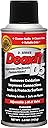
Hosa CAIG DeoxIT Contact Cleaner is a 5 oz aerosol spray designed to rapidly deoxidize and chemically enhance electrical contacts and metal surfaces. Highly rated and trusted in the automotive and electronics industries, it ensures superior conductivity and long-term corrosion protection for professional-grade performance.


| ASIN | B00006LVEU |
| Best Sellers Rank | #350 in Automotive ( See Top 100 in Automotive ) #2 in Electrical Cleaners |
| Brand | Hosa |
| Brand Name | Hosa |
| Cleaning Agent Formulation | Hard Surface Cleaner |
| Customer Reviews | 4.7 out of 5 stars 14,894 Reviews |
| Global Trade Identification Number | 00728736021716 |
| Item Form | Aerosol |
| Item Type Name | Instrument Cable |
| Item Volume | 148 ml |
| Item Weight | 142 g |
| Manufacturer | 0 |
| Material Feature | Spray |
| Material Features | Spray |
| Model Number | HOS D5S6 |
| Number of Items | 1 |
| Part Number | FBA_DeoxIT D5S-6 |
| Scent | Hosa |
| Size | 5 Ounce (Pack of 1) |
| Special Features | Antibacterial |
| Specific Uses For Product | Contact |
| Surface Recommendation | Metal |
| UPC | 728736021716 |
| Unit Count | 5 Ounce |
| Warranty Description | Limited Lifetime |
D**T
This is THE stuff for most metal-to-metal electrical contact cleaning.
The Deoxit D5 arrived within 4 business days of my placing the order. I bought this stuff to service wafer switches and tuning capacitors in my vintage SW radio gear. The other versions of DeOxit do work on other electronic surfaces (potentiometers or gold-plated fingers for example), but this seems to be the best stuff for corroded switch, relay, and variable capacitor bronze fingers. As the wafer switches are difficult to impossible to repair or replace, you want to try to clean and refurbish them whenever possible rather than swap them out for problematic used units or hens-teeth NOS units. This does the trick on anything that is not physically damaged (I.E. bent or missing switch fingers). It is also not cheap. Fortunately, you need very little to have the desired effect (reliable connections between moving contacts) within the device being serviced. As a bonus, the can has an “L-M-H” setting on the spray button. I have found that the conservative “L” setting has always been fine for my intended purpose. This is my third purchase and I will buy more as required.
Z**0
Magic Juice
This stuff is well worth the money and belongs in every musicians work station. By far the absolute best “contact cleaner” I have ever used. A little goes a long way and does the job right the first time, every time.
O**E
Audio cleaner works fine at desk
A small can, but it earns its space on my studio shelf. I bought this DeoxIT for my MIDI keyboard knobs and a scratchy fader on my old audio interface. One Saturday night before a mix deadline, I sprayed a little into the fader, ran it back and forth, and the crackle pretty much disappeared. That saved me from bouncing tracks through a backup interface. The straw tube helps me hit tight spots, so my synth jacks and patch cables stay less noisy. My only complaint, the spray feels a bit aggressive, so I have to lay down paper towels and be careful near wood surfaces. I wish the nozzle had a finer control.
J**O
Amazing stuff! We call it "Technician in a Can".
I've used one form or another of this product since the mid '70s and it's fantastic. I'd found out about it from a magazine back then called Audio Amateur and at that time, the similar product was called Cramolin. As with DeoxIT, it came in a red and a blue variety. The blue is/was a preservative for newly manufactured contacts and the red is/was a cleaner and preservative. Theoretically, the blue may provide longer/better protection while the red is better for cleaning and restoring contacts which are already oxidized. You can clean contacts with the red, then remove it, then treat with the blue to get the best protection of already oxidized contacts, but in practice, the red alone works so well that it's extremely effective to simply clean and treat the contacts in one step using only the red. As a result, I use about one can of blue for every ten or more cans of the red. For most uses, most folks only need the red (D) variety. I don't want that to make it sound like I go through cans and cans of the stuff, but since I work in the electronics field, I do use a lot more than most people. As has been mentioned in several other reviews, you need very little of it to do most jobs. A single can will last a very long time even for someone who is constantly working on a lot of equipment. After finding out how well it worked on audio connections and potentiometers, I introduced the folks at the electronics company where I worked to it. All of the technicians and engineers were amazed and it soon became a staple. We designed, manufactured, installed, and serviced various telemetry and process control equipment. A lot of this gear as well as equipment made by others that we were called upon to service was in areas with corrosive atmospheres like oilfield, refinery, water/wastewater treatment, laboratory, and other locations where hydrogen sulfide, chlorine, hydrochloric acid fumes, etc., are present, leading to lots of contact-related problems. It's been extremely effective over these many years, and although the name and formula has changed since the "Cramolin" days, the new stuff seems to still be very good. I've also used it on very high voltage connectors and one of the amazing properties of it is that while it improves contact integrity and lowers contact resistance dramatically, it does not break down and cause leakage or flashover when used on high voltage systems. I've used it for years on photomultiplier tube and Geiger tube devices (radiation survey and monitoring equipment), and never had any problems with it. These systems usually operate with bias voltages between 900 and 1500 Volts, but sometimes run up to 2500V. A fantastic example of how it works was something we did many years ago where we had a batch of very old thermal self-resetting circuit breaker devices in a system. The problem was that they had silver contacts. Silver itself is the best conductor of all elements, but it is very reactive and oxidizes (tarnishes) very easily. These devices were sealed and "non-repairable". But their contact resistance was unacceptably high. I mixed a solution of Cramolin Red and a solvent (probably Freon TF back in those days), put it in a glass jar, and simply dropped these breakers into it and kept them submerged until the bubbles stopped coming out to make sure they were totally flooded with the solution. We then took them out, letting the fluid run back out of them, and then rapped them on a desk a dozen times or so to make the contacts inside "jiggle" a bit. That was enough to let the Cramolin work its way between the closed contacts. Measuring a number of these breakers before and after the treatment, the resistances started out between 100 and 200 milliohms. After treating them, the typical resistance went down to around 6 milliohms! The high current and low voltage these devices needed to carry meant that the voltage drops across them had been unacceptably high, but post-treatment, they operated beautifully. And stayed that way for years. Various other contacts which would heat up and cause other problems prior to treatment operated cool and with extremely low voltage drops after treatment. I've personally "repaired" countless potentiometers, switches, and various connectors over the years with this stuff. We call it "Technician in a Can", and it lives up to that name. I pre-treat a LOT of contacts prior to crimping them onto their wires, and it lowers the mating forces and improves the reliability of virtually any connector. It truly is special stuff. It's indispensable for technicians, manufacturers, audiophiles, etc. If I had a 55 gallon drum of it, I could take entire pre-amps and other audio gear and dunk it to fix all of the bad switch contacts and pots in one quick operation. :) The only thing that's a minor issue is that as with any contact cleaner that has (or is nothing but) a solvent, it will flush away the viscous goo that's often used to make a potentiometer have a "silky" feel to it when rotating. So when you're treating a pot, it's best to try not to allow any to get to the shaft/bushing part of the pot if you want to preserve the grease that's in that annulus. But it often totally fixes a "scratchy" pot by simply getting it on the resistive pad and then running the pot back and forth a dozen times or so. As with so many things, for some reason, manufacturers just love to make pot wipers with silver plating. Bad idea! But all too common. Once that wiper tarnishes, the pot will sound awful since silver oxide is an insulator. The DeoxIT usually allows that oxide layer to be removed by simply rotating the pot a dozen times or so, and then it coats the wiper and the resistive element, preventing future problems and leaving the pot working/sounding excellent. Anyhow, all I can say is that this product has served me extremely well for nearly 40 years, and I highly recommend it.
N**A
Working longer than other contact cleaners.
Fixed the controls on my camera. I've used contact cleaner on the roller controls on my Canon camera and while it always gets them working again, they have issues again after a month. The DeoxIT cleaner is going strong after 3 months.
R**D
Clean those old electronics back to original co ditkom.
Miracle electrical lubricant/cleaner. Works very well on older equipment that has sat for a long time or been used for years. It will especially help with control knobs that get scratchy, popping or hissing.
K**.
It works fast
This stuff was awesome. I cleaned the jacks on my 1979 Yamaha guitar amp with it and it made all the difference. No static!! Just clean guitar sound. All I had to do was spray a little on a q-tip and scrub the post. Took like 20 seconds. Now I just have to remember how to play the guitar!!
R**.
Great contact cleaner
Works as intended. Will buy again.
T**T
Hosa Deoxit is the One
I first encountered Deoxit when editing a music magazine. The distributing company sent out a sample kit. I promptly took it home and attacked my old NAD 2020, a Norwegian designed and Chinese built integrated amp for our stereo system, vintage....1976 no less. I'd pushed the NAD aside for a couple of years because every single pot, knob, any moving object that adjusted the sound had gone terribly bad. The loud rude noises and fire cracker crackles sometimes got the dog jumping from his repose on the couch. With one treatment with spray and some wipes, and not having to go inside the unit....did it all from the outside....it totally cleared up all the problems: made pots, knobs, sliders, etc, easy to set in motion. Eliminated completely any noise: snap, crackles, pops. Completely. Only recently, ten years later, has one of the knobs exhibited any noise. You spend a little more on Deoxit but it saves you big time. The next occasion was a few weeks ago and purchasing the Hosa Deoxit spray from Amazon.ca for a problem in my home studio. Similar results, perhaps not as dramatic, but the deal is this: it cleans and clears anything out of the way of the audio signal path. With no impediments, no sludge or oxidized soldering jobs, connections, etc the result is better, fuller, clearer sound devoid of those snaps, crackles, etc. Follow directions. Do not use and operate a motor vehicle. Seeing if you're alert. Tbw
D**E
オーディオメンテナンスの定番
強力な洗浄作用 接続端子とか、分解したスイッチの接触面の洗浄に使用 用途によりGシリーズやFシリーズとの使い分け D5は洗浄が得意で強力に異物や酸化膜を洗浄した後 必要に応じてIPAまたはエタノールで洗浄します (D5そのもので流してしまうこともあり、ケースバイケース) 仕上げにDシリーズ(金メッキ端子、接点)と Fシリーズ(炭素系ボリューム摺動面) を使い分けています あとは、おおざっぱなアメリカ製らしく 噴射量の調整が不可能(3段階の意味なし) なので、いったん小瓶内に噴射し、綿棒やピンセットで 少量塗布というやり方をしています。 このスプレーで直接噴くと基盤や手がギトギトになります ただ、昔のサンハヤトの接点復活材みたいにキトギトべたべたで埃付着 と言うことは無く、比較的良く乾燥した感じになるので 自家使用で、鳴れば良い・面倒くさい・速攻でなんとかしたい場合は ノズルで吹き込みます(周囲に垂れた液を綿棒で吸い取っておけば 拭き残しが有っても、後々べたべたに埃が積もると言うことは無いです)
C**N
Muy bueno
Ecxelente producto, un poco caro, pero bien vale cada gota
L**Y
The magic elixir
Rated by the industry for reviving and cleaning dirty potentiometers or scratchy faders, and any other bad-contacts/switches. This has been the cheapest price i've found online but it is still quite expensive for what it is. Not sure if we are paying for a magic formula or the name. Perhaps there are cheaper alternatives out there but trial and error testing the competition may not be a cost effective experiment.
R**B
awesome
perfect to get rid of scratchy noise from your pots
Trustpilot
2 weeks ago
2 months ago