
Desertcart purchases this item on your behalf and handles shipping, customs, and support to SINGAPORE.
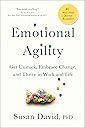
#1 Wall Street Journal Best Seller Winner of the Thinkers50 Breakthrough Idea Award desertcart Best Book of the Year Forbes Recommended Books for Leaders TED Talk sensation—over 12 million views! The counterintuitive approach to achieving your true potential, heralded by the Harvard Business Review as a groundbreaking idea of the year. The path to personal and professional fulfillment is rarely straight. Ask anyone who has achieved his or her biggest goals or whose relationships thrive and you’ll hear stories of many unexpected detours along the way. What separates those who master these challenges and those who get derailed? The answer is agility—emotional agility. Emotional agility is a revolutionary, science-based approach that allows us to navigate life’s twists and turns with self-acceptance, clear-sightedness, and an open mind. Renowned psychologist Susan David developed this concept after studying emotions, happiness, and achievement for more than twenty years. She found that no matter how intelligent or creative people are, or what type of personality they have, it is how they navigate their inner world—their thoughts, feelings, and self-talk—that ultimately determines how successful they will become. The way we respond to these internal experiences drives our actions, careers, relationships, happiness, health—everything that matters in our lives. As humans, we are all prone to common hooks—things like self-doubt, shame, sadness, fear, or anger—that can too easily steer us in the wrong direction. Emotionally agile people are not immune to stresses and setbacks. The key difference is that they know how to adapt, aligning their actions with their values and making small but powerful changes that lead to a lifetime of growth. Emotional agility is not about ignoring difficult emotions and thoughts; it’s about holding them loosely, facing them courageously and compassionately, and then moving past them to bring the best of yourself forward. Drawing on her deep research, decades of international consulting, and her own experience overcoming adversity after losing her father at a young age, David shows how anyone can thrive in an uncertain world by becoming more emotionally agile. To guide us, she shares four key concepts that allow us to acknowledge uncomfortable experiences while simultaneously detaching from them, thereby allowing us to embrace our core values and adjust our actions so they can move us where we truly want to go. Written with authority, wit, and empathy, Emotional Agility serves as a road map for real behavioral change—a new way of acting that will help you reach your full potential, whoever you are and whatever you face. Review: A comprehensive approach to engaging in life - I was first introduced to Susan David when I came across an article she wrote entitled " 'Choosing' to be happy doesn't work: Here's what to do instead" [...] Immediately, I was a fan! Here was someone speaking about the value of challenging emotions and the limit of imposed happiness. From there, I took her on-line quiz to assess my Emotional Agility and promptly received an email with my personal results (from her personal email address). I ordered the book right away and devoured it. David writes with this straight forward acceptance of human nature. We are human and that emotions are part of that experience, joy being just one of those emotions. It is a welcome relief from the books that ask you to just not argue with reality, that it is just you hurting you or that you just need to manifest good. While those books can have helpful tools. Those tools have limits. In contrast, David uses research to show the reason why positivity is difficult and how sometimes it can be a disservice to us. She also goes into depth about the importance of emotions that we tend to classify as negative such as grief, anger or sorrow -the lessons that they hold for us when we can examine them. She gives clear tools to help becomes aware of what our emotions are and how to not let them have control over our lives. While many of these tips may not seem groundbreaking, David takes it step further and ties this emotional awareness into the values that are important to us and how we can live a more value driven life. Her approach cuts to the heart of the matter in the most kind and encouraging way. Allowing the reader to be human, acknowledging that life is challenging and that the more that we accept ourselves entirely and with compassion, the more that we can engage in a meaningful life. The book was such a breathe of fresh air, heavily supported with research and thankfully, void of lengthy stories of how "John Doe came into my office and was feeling... "(those type of anecdotes are such irritating filler). I can't stop talking about it and recommending it to friends and strangers. Review: Very insightful - Emotional Agility by Susan David I really enjoyed reading this book. I first discovered Susan David and the concept of Emotional Agility from her interview on Impact Theory. I feel that I have practiced Emotional Agility without really having a name for it. In this book, Susan David walks us through the downfalls of being emotional rigid and how to become agile. Its not just a simple – be agile – discussion. She does a wonderful job of including examples and research. As in all the books I like, there are plenty of science based evidence to back up the theories that are put forth from the author. Early on in the book she mentions Viktor Frankl and his book Man’s Search for Meaning (on my list of books to read next). Viktor talks about creating space between stimulus and response. She takes this concept and says emotions are data points but not decision points. They can tell us about our environment but they do not make us make decisions – unless we let them. In walking through the process, Susan David outlines many of the ‘hooks’ we get entangled with when it comes to emotions. Then she shows us how to get ‘un-hooked’ and create better outcomes. I believe this is one of the aspects that makes this a good book. She gives plenty of real world examples on how to make practical changes to improve our lives. Its not just listing theories on the ‘hooks’, its also lays out a plan and path to a better more fulfilled life. One of my favorite parts of the book is when Susan talks about dead men goals. It is when we want to have a stress-free life. We don’t want any problems to disrupt our happiness. Susan says these are dead men’s goals – because dead people are the only ones that do not have any stress in their lives. This book should be on everyone’s list to read.


| Best Sellers Rank | #10,216 in Books ( See Top 100 in Books ) #18 in Popular Applied Psychology #21 in Popular Psychology Personality Study #49 in Emotional Self Help |
| Customer Reviews | 4.6 out of 5 stars 4,140 Reviews |
A**R
A comprehensive approach to engaging in life
I was first introduced to Susan David when I came across an article she wrote entitled " 'Choosing' to be happy doesn't work: Here's what to do instead" [...] Immediately, I was a fan! Here was someone speaking about the value of challenging emotions and the limit of imposed happiness. From there, I took her on-line quiz to assess my Emotional Agility and promptly received an email with my personal results (from her personal email address). I ordered the book right away and devoured it. David writes with this straight forward acceptance of human nature. We are human and that emotions are part of that experience, joy being just one of those emotions. It is a welcome relief from the books that ask you to just not argue with reality, that it is just you hurting you or that you just need to manifest good. While those books can have helpful tools. Those tools have limits. In contrast, David uses research to show the reason why positivity is difficult and how sometimes it can be a disservice to us. She also goes into depth about the importance of emotions that we tend to classify as negative such as grief, anger or sorrow -the lessons that they hold for us when we can examine them. She gives clear tools to help becomes aware of what our emotions are and how to not let them have control over our lives. While many of these tips may not seem groundbreaking, David takes it step further and ties this emotional awareness into the values that are important to us and how we can live a more value driven life. Her approach cuts to the heart of the matter in the most kind and encouraging way. Allowing the reader to be human, acknowledging that life is challenging and that the more that we accept ourselves entirely and with compassion, the more that we can engage in a meaningful life. The book was such a breathe of fresh air, heavily supported with research and thankfully, void of lengthy stories of how "John Doe came into my office and was feeling... "(those type of anecdotes are such irritating filler). I can't stop talking about it and recommending it to friends and strangers.
D**D
Very insightful
Emotional Agility by Susan David I really enjoyed reading this book. I first discovered Susan David and the concept of Emotional Agility from her interview on Impact Theory. I feel that I have practiced Emotional Agility without really having a name for it. In this book, Susan David walks us through the downfalls of being emotional rigid and how to become agile. Its not just a simple – be agile – discussion. She does a wonderful job of including examples and research. As in all the books I like, there are plenty of science based evidence to back up the theories that are put forth from the author. Early on in the book she mentions Viktor Frankl and his book Man’s Search for Meaning (on my list of books to read next). Viktor talks about creating space between stimulus and response. She takes this concept and says emotions are data points but not decision points. They can tell us about our environment but they do not make us make decisions – unless we let them. In walking through the process, Susan David outlines many of the ‘hooks’ we get entangled with when it comes to emotions. Then she shows us how to get ‘un-hooked’ and create better outcomes. I believe this is one of the aspects that makes this a good book. She gives plenty of real world examples on how to make practical changes to improve our lives. Its not just listing theories on the ‘hooks’, its also lays out a plan and path to a better more fulfilled life. One of my favorite parts of the book is when Susan talks about dead men goals. It is when we want to have a stress-free life. We don’t want any problems to disrupt our happiness. Susan says these are dead men’s goals – because dead people are the only ones that do not have any stress in their lives. This book should be on everyone’s list to read.
S**K
Explains the "why" but could go deeper on the "how"
I wanted to love this book, but I only just liked it. I got some good pieces of information out of it, but nothing too revolutionary. The biggest takeaway is something I knew already but something that was good to read in the way the author presented it, and that's the fact that negative emotions aren't bad to have. You can learn from them and use them to guide you to living a life that's more in tune with your values and soon you'll feel less negative emotions once you're operating all on the same frequency with yourself. I wanted this book to go deeper, though. I felt the explanations of how to do something, how to help yourself really get unstuck, stopped short. An issue I personally have is knowing what my values are...I just simply don't know them. It would have been nice if this book gave a bit more detail as to how one might be able to figure out their values, besides trial and error and listening to their emotional feedback. I value things but don't act on them, and I'm not sure if those are still things I actually value. Maybe they're just things I'd like to value, but it'd take a super big change in character for me to act on those values and I'm not sure how to do that (this book didn't help with that). Since I'm focused on those as my values, I'm ignoring whatever the hell my real values are. But without those values in place, I don't know what I'm left with. Maybe I'm a terrible person who doesn't value much? Who knows, I don't. Labeling emotions was a helpful exercise that I took away from this book; it's good to not place blame or judgment with how you feel and let things just *be* what they are without trying to force them into something else. That said, I read this book because I know changes need to happen in my life and while I'm not going to try to force those changes, I'm still not 100% sure how to solidly guide myself into those changes. I'm well-versed with mindfulness and I know that a big element of suffering is our human tendency to attach expectations to things, and letting go of those expectations is important. Emotional Agility touches upon this, but I felt the author could again go further in explaining how one can let go. There can be a lot of emotional trauma and history that leads one to hold onto something for dear life, even if it's hurting them to do so and they're aware of that (such as a past love that has no chance of being mended back into a relationship). But just being able to let go doesn't magically happen when you know that you should do it and why you should it (but oh, how I wish that were all it took). If a workbook based on this book was released, that would probably be extremely helpful for people, such as myself, who are still feeling stuck. I know the actions to take but I'm still weary on how to take those actions. Even if I know what step one is, I might not know how to get to step one or act upon my motivation to get myself there. There's a missing link, a disconnect, between where I'm currently at and how to start with what I want to change and embrace to ease my daily suffering with things. This is most likely my fault, not the author's fault, but if the author was willing to put together a workbook to expand on this book, I would surely purchase it. Something to get the ball rolling and help me build up the momentum of being able to get unstuck. This book has great ideas in it, it makes sense, it just didn't get me in a position where I could do something with that information. Still a good read, and I recommend it for anywhere looking for a place to start if they're feeling like the world is against them and they can't keep their head above water.
E**C
Want to move from "rigidity to agility?" Read this book!
During a 25+-year career in clinical psychology, I emphasized the role of belief systems, attitudes, and thinking how this was foundational in overcoming undesirable emotional and behavior problems. When I moved from clinical practice to the corporate world in 2003, I focused on helping leaders become exceptional leaders and leader coaches. In the corporate world much of my focus has ben on the role of attitude. How does that history relate to Dr. David’s outstanding book “Emotional Agility?” Too often people would ask if this approach was just “positive thinking.” Or, they would say “… but I’ll never be a positive thinker!” I immediately fell in love with “Emotional Agility” when in the first chapter I read quotes from Dr. Victor Frankl’s “Man’s Search for Meaning” and then on page 10, “Those that tout positive thinking are particularly off base.” Developing “emotional agility,” overcoming problems, and more importantly living a rich and fulfilling life is NOT about positive thinking but more about realistic, healthy thinking. Unlike many books, Dr. David offers specific and straightforward steps to build emotional agility based on “showing up, stepping out, walking your why, moving on, and thriving.” Another positive “hook” for me was her encouragement for people to accept and learn from ALL emotions including “bad” emotions such as anger. Being open to such emotions can not only help us learn from them but perhaps more importantly can give direction to move from these to other emotions that can have more positive impact. She also emphasizes that there is a “right amount of stress” (p. 180) since too often people think “I shouldn’t be feeling this way …” rather than recognizing that certain “negative emotions” can in fact help reach optimal performance. Throughout her book there are boxes with important additional information and helpful tips (e.g., page 93 offers suggestions writing and emotional processing) that make this book even more valuable. Even though I have taught undergraduate and graduate courses on similar content, have written a self-help book related to the role of thinking, have practiced cognitive-behavior therapy for over 25 years, and more, I found this book to be personally extremely beneficial and provided me with new insights and steps to help me be emotionally agile! For me, that is the strongest endorsement of a book. Ed Nottingham, PhD, PCC Consulting & Clinical Psychologist Author, It's Not As Bad As It Seems
C**V
Easy and pleasant reading, covering many topics in an exceptionally elegant and engaging manner.
I would recommend this book to anyone who want to make a positive change in their life and in the life of the others. Many authors studied and nicely presented, beyond the possibility of time and capacity of an amateur. Actually in this book I found what a Professor writing is.
M**.
Not just a book; an ongoing resource for emotional health, agility, and maintenance!
My wife and I have both read this book and/or listened to it on Audible multiple times. In our opinion, Dr. David's message has just right amount of theory backed by summarized research, stories that help demonstrate the theoretical application, and practical guidelines to follow to improve emotional functioning. Many readers/listeners may come to this book during a time of struggle, which of course if perfectly fine, and this book will likely help the struggling person get through that difficulty. However, if that's the path that leads you to read this, you should revisit the material once you've made it through that struggle or started to improve. It's likely that you will interpret, apply, and learn from the material in a way that is specific and focused on the problem you were dealing with. That path is healthy and undoubtedly helpful, but there's so much more value to get from "Emotional Agility" than that. "Emotional Agility" is a fantastic tool for learning how to fully appreciate and process emotional experiences that can become chronic and demoralizing over time if left unchecked. Dr. David's discussion of "bottling" and "brooding" is particularly helpful here. She walks the reader/listener through how this works in a variety of settings (i.e. work, home, school, romantic relationships, parent-child relationships, and in specific events or critical incidents). My wife and I have come to understand that if we use "Emotional Agility" as a kind of ongoing emotional and mental maintenance program, we continuously improve our abilities to handle difficult emotional experiences in stride no matter in what setting they occur. First responders (police, fire, EMS, dispatchers, corrections) should absolutely invest the time to read/listen to this material. I firmly believe it will help members of the public safety profession keep from developing burn-out and chronic stress associated with the experiences that public safety professionals are exposed to. Like continuing education, public safety professionals should incorporate "Emotional Agility" into at least an annual refresher. My wife and I highly recommend "Emotional Agility," but don't just read/listen to it once!
B**S
Nothing new, not best use of time
It is rare that I would order a book immediately upon learning about it, but that is what I did for Emotional Agility. Unfortunately, the book turned out to be a disappointment, and I will be returning it so I can recoup at least part of the nearly $20 that I'd spent on it. Like some other reviewers said, there is nothing new in this book. Given the author's professional background and the superlative review from Harvard Business Review, I was expecting something more along the lines of Charles Duhigg's The Power of Habit or even any of Malcolm Gladwell's work. Susan David mentions a few times in the book that she has spent 20 years researching emotions and yet the book is more a collection of anecdotes from studies other people have done, movies, and songs. I follow a number of publications on Facebook like QuietRevolution, Psych Central, etc. This book feels like what you would get if you put together all the various anecdotes and factoids from different clickbait articles you have read on your Facebook feed in the last 2-3 years. I was especially exasperated by the section on not comparing yourself against others on social media - how, for example, reading about someone's fancy doctor husband might lead one to suddenly feel down about her own husband who 'only' teaches special needs. It is old and basic advice and it felt condescending. Also, the most actionable advice given is in the form of a 12 point list (of platitudes) at the end of the book: "take ownership of your own development," "accept your full self," "welcome your inner experiences," "remember to "dance if you can."" This isn't to say that there is no value in this book - the anecdotes are generous and her writing is personal. I think it is most appropriate for, say, a new college student or a graduate just getting started in the world or for anyone who is new to the world of psychology and self-help. If you've been following the literature in meditation and mindfulness, habit formation, emotional intelligence, etc. you will likely not get any significantly new insights here.
A**R
Insightful and deeply meaningful
The book offers deep inner strength for living (or learning to live) an emotionally agile personal, professional and parental life. The beauty of the book lies in the simplicity of its language, making it a fantastic read. The richness of the book ‘Emotional Agility’ comes from the author Dr Susan David’s own life experiences from as early as a five-year old. I found it easy to relate to several examples and scenarios as these are the things that happen in real life. Finally, I now understand my own emotions and this makes me want to dance! Dr David takes a friendly and convincing approach to add meaning to everyday life. She gracefully allows you the autonomy to work out your own values, encourages to walk your own why and lets you choose your own meaningful life. Talking about autonomy, the author mentions ‘screw you’ money advice that she got from her mother. I could not have found a better way of putting it to my own two daughters. This is life made easy for me. And from the Emotional Agility manifesto, my favourite ones are: “Courage is not an absence of fear; courage is fear walking.” and “Embrace an evolving identity and release narratives that no longer serve you”. I love the book for its completeness as the author sheds insight into a wide spectrum of life situations and presents the tools to live through them with choice, courage and compassion. I thoroughly enjoyed reading the book. I have ordered more copies as it will make a great gift.
E**N
Un bon livre
Pour développer son intelligence émotionnelle, c'est un livre à lire. Clair et concis. Dès fois, j'aimerais plus de détails ou de méthodologie pour présenter des solutions, mais la narration est ordonnée et c'est bien argumenté.
A**X
Simply amazing how one book can have such an effect on one's whole world!
Simply put, this book has changed my life in serendipitous, awe-inspiring, amazing, fantastic, remarkable and lasting ways. I had been let go from my company and taking it all personally, begrudging the entire corporate world and blaming myself for not being able to fit in. A terrible time of brooding and "negative" emotions which I was trying desperately to make "positive" as we are wont to do. By sheer force of universal attraction, spending my days at the local library as a means to make a better working routine for myself, I was greeted with this book on display in the self-improvement section. What possessed me to pick it up and start reading it? I was hooked by the introduction as it described my present circumstances to a T. This book has enabled me to breathe again, to be free to feel again, to know my feelings and embrace them in ways I had not ever believed were possible. Get off the sadness-happiness continuum and welcome fear, anger, disgust, contempt, shame, guilt and envy back into your life! You will be so glad you did. I can't possibly put it into words, but these so-called "negative" emotions help us to no end! They help to guide our course as we navigate the often bizarre and arduous waters of the corporate ocean and the narrow yet convoluted rivulets of the family relationships we seemingly can't budge. Learn how to understand your feelings, thoughts and instincts, how to get unstuck and create healthy growth habits. It's the very way to live and grow as a human being, the foundation of one's identity and interactions with others. Buying my second or third copy, would care to give one to every person I know and often have conversations in public that start with "you know, human emotions are the most misunderstood and helpful qualities we possess yet we shun them and treat them as unwanted baggage -- they're evolutionary adaptations that have brought us such advantage we all carry them with us until the present day! Buy this book and read the intro -- I guarantee it'll change the way you live for the better Buy a second copy for someone in your life you care for and read them the first few pages Learn to connect with higher values and intellect and to 'walk your why' as a means to make it to your destination -- welcome and be welcomed by the whole glorious world Best wishes from Toronto, Canada!
J**E
Great and insightful read!
This is a personal retreat to help you gain new insights and ways to deal with your personal life, challenges and crises.
P**C
Really valuable and insightful insight - helping you thrive in life
If you want a book to help you thrive in the uncertainty of life, and be true to your beliefs and values, then this is a book you must read. The book provides great insight and practical guidance to help you grow in life. To allow you to acknowledge and understand emotions without being hijacked by them; and to act with purpose and make better decisions based on what you hold true to achieve your goals. The content offers a number of layers - at the top level, it provides a great structure and concepts that are relatively easy to grasp. The second read provides greater insight and understanding. And subsequent reference tends to unearth even further underneath. Considerable research has clearly gone into this book - and it has an impressive list of references. But much thought has evidently also gone into the writing - making the authors understanding and insight very accessible to the reader. Your personal values and the use of them provide a cornerstone of this approach - and they are covered very well in chapter 6. If you are struggling, a practical suggestion I was given that may also help you get started: search on the internet for a list of around 3-400+ values, run down the list quickly as a prompt and write down the ones that personally resonate (say around 50). Lay this starter list out on a table and move them around to identify the top 10 (or more) that appear core. You should definitely revisit and re-order them as you become more familiar with their use, using Susan David's guidance, but this seems a helpful practical way to get started. Emotional Ability is one of my "go-to" books - personally and professionally - and I thoroughly recommend it.
V**Ü
An absolute must-read: Brilliant and revolutionary!
There are books...and then there are special books. Special books written from the heart, well researched and practical. Special books with a true intention to help the reader improve his/her emotional state and quality of life. ‘Emotional Agility’ by Susan David, Ph.D., is one of these special books. It is an absolute must-read if you want to know how to better cope with crises, deal with change and get “unstuck” of repeating wearing thought patterns and emotions. Her book is definitely part of my top 3 collection when it comes to emotional agility and emotional intelligence! Susan David brilliantly describes the meaning of emotional agility and gives valuable tips and techniques on how to handle your emotions in the fast paced and challenging times we are living in. David explains that labeling your emotions with distinct vocabulary is the key to dealing with them. She also encourages to ask yourself, what the function of your emotion is, meaning: What can it be useful for and what is its intention? What is buried underneath it and what is it telling you? Therefore you may always ask yourself “what the func?”, questioning the function of your emotion, which helps you to create a healthy distance to it. Some of my favorite parts are: „...This means seeing feelings not as being ,good’ or ‚bad‘ but as just ‚being‘. Yes, there is this relentless assumption in our culture that we need to do something when we have inner turmoil. We must struggle with it, fix it, control it, exert brute-force willpower over it, remain positive. What we really need to do, though, is also what is most simple and obvious: nothing. That is, to just welcome these inner experiences, breathe into them and learn their contours without racing for the exits.“ „When you are emotionally agile, you don’t waste energy wrestling with your impulses. You simply make choices that are connected to what you value.“ I love how David explains how to get „unhooked“ of your spiral thoughts by „showing up“ to your emotions, then „stepping out“ and „walking your why“. Brilliant and revolutionary! What an amazing read. I know this sounds a bit overly excited, but I truly am impressed and can’t help but expressing my contentment! Mind you, I have marked important passages on almost every second page! Since I work as a speaker and trainer on the subject of mindset, emotional intelligence and agility, I am always happy to find such a high quality book about it and glad to recommend it to my clients. So much valuable information, many new perspectives, in-depth studies, practical tools, tips and refreshing inspirational thoughts on the subject: Everything I wish for in a personal development book. Thank you, Susan David, for this fantastic piece of work!
Trustpilot
3 weeks ago
1 month ago