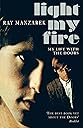
Light My Fire - My Life With The Doors
Product ID: 283071916
Desertcart purchases this item on your behalf and handles shipping, customs, and support to SINGAPORE.
The Doors were arguably the most important rock-and-roll band of the 1960s, unquestionably a catalyst for American music as we know it. Their music was the product of late-sixties southern California, with its idyllic facades. The Doors looked beyond these facades and wrote music about what they found, making them the ultimate symbol for rebellion and alienation: the key to the 1960s, counter-culture. Keyboardist Ray Manzarek co-founded the Doors with legendary guitarist Jim Morrison in 1965. Together with Robby Krieger and John Densmore they created a musical and cultural legend. Their original mix of jazz, classical, Californian surf, Flamenco guitar and Chicago blues made an irreversible impact on the music of the day, and the course of pop music ever since. Their worldwide popularity continues today with album sales of nearly two million a year. Ray Manzarek and Jim Morrison were both UCLA Film School graduates, best friends and rarely apart until Morrison moved to Paris shortly before his death in 1971. Ray Manzarek knows secrets about Jim Morrison and The Doors that others could only guess at; until now. In this unique musical biography, Manzarek reveals the truth behind the legendary rock band. His story gives illumination to the dark myths and lays to rest the rumours that have abounded about Jim Morrison and the band for years. Light My Fire truly gives us an insight into the times, the enigmatic lead singer, and the magic circle that was The Doors. Review: Great Book! - "We don't know what happened to Jim Morrison in Paris," Ray Manzarek insists in his autobiographical memoir of Morrison and the Doors, titled, perhaps inevitably, "Light My Fire." "To be honest, I don't think we're ever going to know. Rumors, innuendoes, self-serving lies, psychic projections to justify inner needs and maladies, and just plain goofiness cloud the truth." Manzarek was "musical leader" and keyboard player for The Doors, but his book, as it must be, is overwhelmingly about crazed, quixotic, muddle-headed Jim. "It really doesn't matter how an artist exits on the planet," Manzarek thinks. "It's the ART ... that matters. It's only the art that matters ... For me, that's what making music is all about. Plucking the notes out of the void. And for Jim it was about plucking the words out of the ether ... Images. Deep and penetrating. Confessional. Sometimes mundane, often profound. Never without meaning." Manzarek and Morrison met at the UCLA Film School in 1963, and much if not all of "Light My Fire" concerns the powerful, quasi-mystic bond the two men formed as students. Morrison came to California from swampy Florida and Manzarek from Chicago, but both had read the same books, seen the same movies and dreamed the same dreams. Morrison was "in love with the possibility that he could be an artist," Manzarek says. "In love with the idea of freedom! Freedom of expression, freedom of thought." Although Manzarek has written a conventional narrative that includes his own childhood and the multiple peregrinations of the four Doors up until Morrison's death in 1971, it is to Jim the Artist, Jim the Poet, Jim the Prophet that he always returns, writing in a tone so elegiac and in prose so thick with wonder it begins to fog your brain -- appropriately enough, when you think about the Doors. The band's life was short, and the mystique that still attaches to its name is in the nature of an urban legend. The bulk of the Doors' work seems badly dated, and the cultlike following they still enjoy says more about nostalgia than about music. "We were inside the song," Manzarek writes of the Doors' first musical session in Santa Monica. "And we were inside each other. We had given ourselves over to the rhythm, the chord changes, and the words. We had let go of our individual egos and surrendered to one another in the music ... There was only the music. The diamond was formed and it was clear and hard and luminous." Almost any page of "Light My Fire" contains similarly high-flown riffs: "We'll never make art again. We'll never make love on stage again. Jim and I will never do our Dionysius-and-Apollo dichotomy thing again." Manzarek writes of Morrison as an almost diagnosable split personality -- good boy/bad boy, "Jim" and "Jimbo" -- and attributes Morrison's drug-soaked demise plain and simple to "that rotter, Jimbo. The Doppelgänger." It's as convincing a description of a whacked-out artist as any other. And when he isn't eulogizing, or lambasting Oliver Stone, or lamenting the triumph of materialism in America, Manzarek provides a reliable inside account of the Doors and their era. We may not ever find out what happened in Paris, but there's enough rock history here to keep Manzarek on the shelves. All in All, This was a wonderful book to read. Review: Loved it. - Good read, Ray has a real passion for his story and his writing is like he is talking to you. Well done. Can't wait to finish it.
| Customer Reviews | 4.7 out of 5 stars 340 Reviews |
E**A
Great Book!
"We don't know what happened to Jim Morrison in Paris," Ray Manzarek insists in his autobiographical memoir of Morrison and the Doors, titled, perhaps inevitably, "Light My Fire." "To be honest, I don't think we're ever going to know. Rumors, innuendoes, self-serving lies, psychic projections to justify inner needs and maladies, and just plain goofiness cloud the truth." Manzarek was "musical leader" and keyboard player for The Doors, but his book, as it must be, is overwhelmingly about crazed, quixotic, muddle-headed Jim. "It really doesn't matter how an artist exits on the planet," Manzarek thinks. "It's the ART ... that matters. It's only the art that matters ... For me, that's what making music is all about. Plucking the notes out of the void. And for Jim it was about plucking the words out of the ether ... Images. Deep and penetrating. Confessional. Sometimes mundane, often profound. Never without meaning." Manzarek and Morrison met at the UCLA Film School in 1963, and much if not all of "Light My Fire" concerns the powerful, quasi-mystic bond the two men formed as students. Morrison came to California from swampy Florida and Manzarek from Chicago, but both had read the same books, seen the same movies and dreamed the same dreams. Morrison was "in love with the possibility that he could be an artist," Manzarek says. "In love with the idea of freedom! Freedom of expression, freedom of thought." Although Manzarek has written a conventional narrative that includes his own childhood and the multiple peregrinations of the four Doors up until Morrison's death in 1971, it is to Jim the Artist, Jim the Poet, Jim the Prophet that he always returns, writing in a tone so elegiac and in prose so thick with wonder it begins to fog your brain -- appropriately enough, when you think about the Doors. The band's life was short, and the mystique that still attaches to its name is in the nature of an urban legend. The bulk of the Doors' work seems badly dated, and the cultlike following they still enjoy says more about nostalgia than about music. "We were inside the song," Manzarek writes of the Doors' first musical session in Santa Monica. "And we were inside each other. We had given ourselves over to the rhythm, the chord changes, and the words. We had let go of our individual egos and surrendered to one another in the music ... There was only the music. The diamond was formed and it was clear and hard and luminous." Almost any page of "Light My Fire" contains similarly high-flown riffs: "We'll never make art again. We'll never make love on stage again. Jim and I will never do our Dionysius-and-Apollo dichotomy thing again." Manzarek writes of Morrison as an almost diagnosable split personality -- good boy/bad boy, "Jim" and "Jimbo" -- and attributes Morrison's drug-soaked demise plain and simple to "that rotter, Jimbo. The Doppelgänger." It's as convincing a description of a whacked-out artist as any other. And when he isn't eulogizing, or lambasting Oliver Stone, or lamenting the triumph of materialism in America, Manzarek provides a reliable inside account of the Doors and their era. We may not ever find out what happened in Paris, but there's enough rock history here to keep Manzarek on the shelves. All in All, This was a wonderful book to read.
B**R
Loved it.
Good read, Ray has a real passion for his story and his writing is like he is talking to you. Well done. Can't wait to finish it.
J**K
A must for all Doors Fans
Even if you are not one of those in the Manzarek camp in regards to the story of the history of the Doors this is still a really important read for any true Doors fan. As the guy who first introduced Jim to playing on a stage with a band and the person who formulated the concept of the Doors (With Morrison) that fateful day on Venice Beech, this book just has to be read. This book is a deeply intelligent and philosophical story about his time with Morrison and the band, as well an interesting look at his own personal background. Its greatest weakness is also its greatest strength, that being that its written by Ray Manzarek and thus can't be trully objective. However this is also its strength as a book, as it offers a deeply profound inside view of what life was like from inside the band. You can come away with your own take on things and how Manzarek see's certain things but you can't question how well it's written and just how powerfully it conveys the collective message of the Doors.
C**N
que buena compra!!!
Los libros me llegaron bien, no estaban en mal estado, aunque hay que tener en cuenta que son de segunda mano, no de primera, pero los míos estan perfectos. Ningun problema, todo bien, muy contenta con mi compra. Y no encontrarás nada más barato. Superbien.
A**O
Light My Fire - My Life With The Doors by Ray Manzarek
Ray Manzarek published Light My Fire - My Life With The Doors in 1999. Manzarek tells you of the immense luck he had as child of not only having access to music lessons but also of growing up in 1950s Chicago when all the blues greats were releasing singles upon singles while also visible in local markets and venues. In the early 1960s, Ray then went to Film School in Los Angeles, where he met fellow student and poet Jim Morrison. In the early chapters, Manzarek maintains a style of short clipped sentences that are not without artistic touches. Later, during the more involved part of the Doors story, he delivers much more dialogue in order to give you more insight into the characters. His friend, Jim, is of course the most developed, while John Densmore and Robby Krieger as well as assorted music industry persona are more in the background. Ray and Jim had worked out a kind of business plan that mixed the best of film school and eastern as well as Native American mysticism with a poetry driven blues, jazz, rock and psychedelic soundtrack as a shamanistic experience. While most of today’s bands try to relive the Rock N’ Roll myth, The Doors give you a credible claim how they patented the original hedonistic concept, at least from an American point of view. Manzarek also tells you of Jim’s confrontational redneck alcoholic alter personality, Jimbo, emerging more and more in order to destroy the Dionysian darling. Ray does admit dropping the odd tab of acid and smoking pot, but also was well grounded thanks to eastern style meditation and an extremely stable long term relationship/marriage in order to come out of the 19760s and 70s completely unscathed. Manzarek, of course, retells most of the famous Doors incidents with his mystical spin, but ends the narrative with Jim’s fateful departure to Paris. We unfortunately learn nothing of Ray’s life post 1971 where he, for instance produced the band X and played in numerous post Doors bands. He does however most emphatically dismiss the Oliver Stone The Doors movie. Manzarek unfortunately broke on through to the other side (of cancer) in 2013.
Trustpilot
1 month ago
5 days ago