

Beyond Order: 12 More Rules for Life
Product ID: 248813041
Desertcart purchases this item on your behalf and handles shipping, customs, and support to SINGAPORE.
The companion volume to 12 Rules for Life offers further guidance on the perilous path of modern life. In 12 Rules for Life , clinical psychologist and celebrated professor at Harvard and the University of Toronto Dr. Jordan B. Peterson helped millions of readers impose order on the chaos of their lives. Now, in this bold sequel, Peterson delivers twelve more lifesaving principles for resisting the exhausting toll that our desire to order the world inevitably takes. In a time when the human will increasingly imposes itself over every sphere of life—from our social structures to our emotional states—Peterson warns that too much security is dangerous. What’s more, he offers strategies for overcoming the cultural, scientific, and psychological forces causing us to tend toward tyranny, and teaches us how to rely instead on our instinct to find meaning and purpose, even—and especially—when we find ourselves powerless. While chaos, in excess, threatens us with instability and anxiety, unchecked order can petrify us into submission. Beyond Order provides a call to balance these two fundamental principles of reality itself, and guides us along the straight and narrow path that divides them. Review: As exquisite and thought-provoking as the former - We all know this, that after a huge, fabulous and highly-successful first of anything, following up is a tough call. The first 12 Rules for Life was such a delight, and a lovely introduction to some pretty highbrow philosophical mainstays that most people wouldn't easily face, that I had wondered, as I finished it a year or two ago, just WHAT Dr. Peterson would/could/might write next. That didn't matter much, of course, as that first "12 Rules..." was so brimming with great food for thought that I figured I could just flip it over and re-read it, a lot and for a long while, until whatever follow-up came out. My first impressions, on navigating its first dozen or so pages, was that it "felt" different from the first, a bit more intimate, and bit less academic and footnotey, but just as direct and linguistically precise. That's always a treat. There is a feeling, when reading Dr. Peterson, that he weighs his words very carefully (as he of course also recommends that we all strive to do) and that despite the great care he takes to wrap his ideas in just the right expressions, he never loses his trademark down-to-earth style and clear accessibility. Many with his academic credentials and experience would quickly sound lofty and a bit stilted in similar complicated landscapes of thought, but Dr. Peterson somehow keeps it fresh and within reach. That's not to say that any of this is "light" reading, as it is far too substantial to deserve such a label, but it feels more like deep, demanding and insightful conversation at a friend's house, than any sort of one-way lecture at some haughty institution. Indeed, there are many passages which are downright funny, plainly or a few layers beneath the obvious, and they serve to underline that dinner-conversation feeling, which keeps this book and its former near-namesake totally enjoyable, sweetly challenging and, at times, brutally direct. We are all on a similar journey, of grand, wonderful and sometimes despicable humanity, trying to dodge responsibility, cheat the game, choke our conscience, cover our tracks and protect the worst parts of ourselves, for some silly reason... Dr. Peterson reminds us of all that (and quite a bit more) and he manages to do this with total inclusivity, without talking "down" to anyone, making it clear that he too faces pretty much the same challenges, which spare no one. That kind of wisdom, paradoxically, could come from your favorite farmer, guru, midwife or bus-stop stranger, but Dr. Peterson does a much better job getting those thoughts on paper. The book is a gem. Lazy thinkers or change-reluctant readers may resist the workout, but they'll lose out. This is not a tough read, but it's not pop-psychology either. Review: This book changed the way I view many aspects of my life! - Beyond Order: 12 More Rules for Life is the highly anticipated follow-up to Jordan Peterson's bestselling book, 12 Rules for Life. In this book, Peterson continues his exploration of the intersection between psychology, philosophy, and religion, offering readers practical advice for navigating the complexities of modern life. The book is divided into 12 chapters, each of which explores a different aspect of life and provides readers with a "rule" for how to approach it. Some of the topics covered in the book include responsibility, identity, forgiveness, and creativity. One of the strengths of the book is its focus on practical, actionable advice. Peterson draws on a range of sources, from ancient mythology to contemporary psychology, to provide readers with concrete strategies for improving their lives. Whether you are looking to improve your relationships, develop a stronger sense of purpose, or overcome personal struggles, Peterson's insights and advice are sure to be helpful. Another strength of the book is Peterson's engaging and accessible writing style. He has a talent for distilling complex ideas into clear and understandable language, making the book easy to follow and enjoyable to read. However, it's important to note that the book is not without its controversies. Peterson has been criticized for some of his views, particularly around issues related to gender and identity politics. Some readers may find certain sections of the book challenging or offensive, and it's important to approach it with an open mind and a critical eye. Overall, Beyond Order is a thought-provoking and insightful book that is sure to be of interest to fans of Peterson's work. The book is full of practical advice and wisdom, and it offers readers a valuable perspective on how to navigate the complexities of modern life. Whether you are looking for guidance on personal growth, relationships, or creative endeavors, Beyond Order is sure to offer you valuable insights and tools for improving your life.
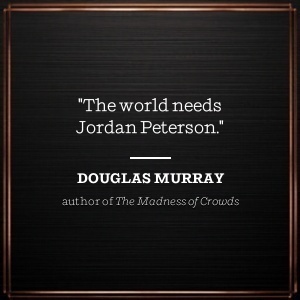
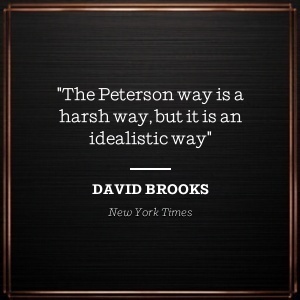
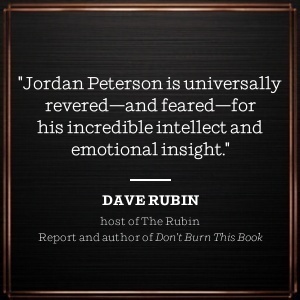
| Best Sellers Rank | #18,569 in Books ( See Top 100 in Books ) #27 in Popular Applied Psychology #118 in Philosophy of Ethics & Morality #208 in Success Self-Help |
| Customer Reviews | 4.9 out of 5 stars 18,173 Reviews |
D**S
As exquisite and thought-provoking as the former
We all know this, that after a huge, fabulous and highly-successful first of anything, following up is a tough call. The first 12 Rules for Life was such a delight, and a lovely introduction to some pretty highbrow philosophical mainstays that most people wouldn't easily face, that I had wondered, as I finished it a year or two ago, just WHAT Dr. Peterson would/could/might write next. That didn't matter much, of course, as that first "12 Rules..." was so brimming with great food for thought that I figured I could just flip it over and re-read it, a lot and for a long while, until whatever follow-up came out. My first impressions, on navigating its first dozen or so pages, was that it "felt" different from the first, a bit more intimate, and bit less academic and footnotey, but just as direct and linguistically precise. That's always a treat. There is a feeling, when reading Dr. Peterson, that he weighs his words very carefully (as he of course also recommends that we all strive to do) and that despite the great care he takes to wrap his ideas in just the right expressions, he never loses his trademark down-to-earth style and clear accessibility. Many with his academic credentials and experience would quickly sound lofty and a bit stilted in similar complicated landscapes of thought, but Dr. Peterson somehow keeps it fresh and within reach. That's not to say that any of this is "light" reading, as it is far too substantial to deserve such a label, but it feels more like deep, demanding and insightful conversation at a friend's house, than any sort of one-way lecture at some haughty institution. Indeed, there are many passages which are downright funny, plainly or a few layers beneath the obvious, and they serve to underline that dinner-conversation feeling, which keeps this book and its former near-namesake totally enjoyable, sweetly challenging and, at times, brutally direct. We are all on a similar journey, of grand, wonderful and sometimes despicable humanity, trying to dodge responsibility, cheat the game, choke our conscience, cover our tracks and protect the worst parts of ourselves, for some silly reason... Dr. Peterson reminds us of all that (and quite a bit more) and he manages to do this with total inclusivity, without talking "down" to anyone, making it clear that he too faces pretty much the same challenges, which spare no one. That kind of wisdom, paradoxically, could come from your favorite farmer, guru, midwife or bus-stop stranger, but Dr. Peterson does a much better job getting those thoughts on paper. The book is a gem. Lazy thinkers or change-reluctant readers may resist the workout, but they'll lose out. This is not a tough read, but it's not pop-psychology either.
B**N
This book changed the way I view many aspects of my life!
Beyond Order: 12 More Rules for Life is the highly anticipated follow-up to Jordan Peterson's bestselling book, 12 Rules for Life. In this book, Peterson continues his exploration of the intersection between psychology, philosophy, and religion, offering readers practical advice for navigating the complexities of modern life. The book is divided into 12 chapters, each of which explores a different aspect of life and provides readers with a "rule" for how to approach it. Some of the topics covered in the book include responsibility, identity, forgiveness, and creativity. One of the strengths of the book is its focus on practical, actionable advice. Peterson draws on a range of sources, from ancient mythology to contemporary psychology, to provide readers with concrete strategies for improving their lives. Whether you are looking to improve your relationships, develop a stronger sense of purpose, or overcome personal struggles, Peterson's insights and advice are sure to be helpful. Another strength of the book is Peterson's engaging and accessible writing style. He has a talent for distilling complex ideas into clear and understandable language, making the book easy to follow and enjoyable to read. However, it's important to note that the book is not without its controversies. Peterson has been criticized for some of his views, particularly around issues related to gender and identity politics. Some readers may find certain sections of the book challenging or offensive, and it's important to approach it with an open mind and a critical eye. Overall, Beyond Order is a thought-provoking and insightful book that is sure to be of interest to fans of Peterson's work. The book is full of practical advice and wisdom, and it offers readers a valuable perspective on how to navigate the complexities of modern life. Whether you are looking for guidance on personal growth, relationships, or creative endeavors, Beyond Order is sure to offer you valuable insights and tools for improving your life.
B**S
Excellent, surpassing even the first volume
When I read and reviewed the first 12 Rules for Life book, I described it as a sort of self-help book for people who don't like self-help books. Present was the distillation of common sensical (but often unarticulated) ideas, but absent were the trite catch phrases and easy fixes that plague much of the genre. I'm pleased to report that the same can be said of this second volume. While this is ostensibly a self-help book that distills important psychological ideas into a dozen simple "rules" for living a better, more meaningful, and more productive life, it's much more than that. It's a wide-ranging treatise on psychology, philosophy, theology, and occasionally even politics (though not too much, and always in a fairly balanced treatment). It's true that the rules themselves are somewhat simplistic--some might even say self-evident. And that's a fair statement. The value in such a book as this, though, is less in the list of rules as they can be read in the table of contents, but in the immeasurably rich explanations and analyses that explain--at a remarkably deep level--the sound psychological, philosophical, historical, theological, mythological, and narrative reasons for each of the rules. The author has an amazing talent for seamlessly combining important ideas from all of these disparate fields in a manner that manages to be accessible to a wide audience without ever speaking down or boring readers who are already familiar with his subjects. It's a rare book indeed that can transition so effortlessly between discussions of cognitive neuroscience to the Bible to Harry Potter and back. That's true of both this book and its predecessor (to which I also gave a five-star review). However, I have to say in all honesty, this book manages to escape the all too common pitfalls of sequels and indeed might even surpass the original (though I maintain that it's best read less as a sequel and more as a second volume of a single long work). Admittedly, some of the examples revisit subjects already familiar from the previous book (or from Peterson's other writings or lectures), but these few stories are important enough that they bear repeating. More importantly, the new material is invariably fascinating, filled with historical notes, literary analyses, scriptural interpretations, and--my personal favorites--psychological case studies. With regard to that last category, this book manages to accomplish something remarkable: it is a self-help book that does not insult the psychologically literate reader. Instead, it draws deeply from the psychological literature (particularly the psychoanalysts, though certainly not limited to them alone) and might even inspire some readers to pursue further study of psychology or even a career in clinical practice. Most importantly, the book differentiates itself from the bulk of its genre by eschewing the easy and the feel-good in favor of the real and the substantial. There are no trite mantras, no happy cliches, no greeting card philosophies. Instead, there are real--often brutal, but equally often hopeful--psychological insights. This is the kind of self-help book that could genuinely help the reader who heeds its advice, precisely because it offers oft-difficult substance rather than simple but ultimately meaningless pronouncements. At a time when much of the world seems shallowly moored at best--and completely unmoored at worst--this book is a godsend for those looking to lead a more meaningful (and with any luck, happier) existence. I cannot recommend it (and its predecessor, though you can easily read the books in any order) highly enough.
T**.
Improvement is a Worthy Goal
If you read this, you will know how to improve your life. There are worse things you could spend your money on, than improving your life. Trust me on this one.
D**D
"Beyond Order": A Companion for Life's Continued Journey
Hey there! Today, I'm thrilled to share my thoughts on "Beyond Order: 12 More Rules for Life" by Jordan B. Peterson. As someone who found immense value in "12 Rules for Life," diving into "Beyond Order" felt like reconnecting with an old friend. Peterson's wisdom continues to resonate deeply, offering new insights and guidance for navigating life's complexities. Each rule in this sequel builds upon the foundation laid out in the previous book, delving even deeper into the nuances of existence. From embracing responsibility to finding balance amidst chaos, Peterson's teachings provide a roadmap for personal growth and fulfillment. Reading "Beyond Order" is like embarking on a journey of self-discovery, with each chapter offering a fresh perspective and a renewed sense of clarity. It's a reminder that life is a continual process of learning and adaptation, and that there's always room for growth. So, if you found "12 Rules for Life" to be a valuable companion on your journey, I highly recommend picking up a copy of "Beyond Order." It's sure to offer further insights and inspiration as you continue to navigate the complexities of life.
M**I
A thoughtful expansion on his previous book.
I think this book is clearly an expansion upon the ideas established in his previous book 12 Rules For Life: An Antidote To Chaos. As Dr. Peterson has been doing for years, he frames his discussion as balancing the dichotomy of chaos and order. The previous book was focused on the first half of the equation, establishing order when things become too chaotic, while this book attempts to explain the need for a certain amount of chaos to to stave off tyrannical order. Collectively the books try to mark out actionable steps on can take to achieve a proper balance between chaos, a place of creativity and exploration, and order, a place of stability and safety, in ones own life; as too much of either is detrimental in the views of the author. Dr. Peterson re-examines a number of examples from his previous book to demonstrate how once order is established, it can become tyrannical. He also delves deeply into new and interesting illustrations to exemplify drawing oneself out of a life of tyrannical order. As is generally the case for Dr. Peterson, he has not reduced this texts to terms so simple as to drain them of their value. What he speaks to is genuinely complicated and thus the text equally nuanced. Don’t expect to come away from this book with the full understanding of the workings of universe, you may need a careful reread for that. But you might just come away with some well founded ways to improve the way you live your life. I thoroughly enjoyed my first read through of this book and look forward to many future rereads. There always seems to be more to glean from a Jordan Peterson book than one is able to ascertain a first glance. I also look forward to future books expanding further on established ideas or exploring totally new topics. I am never disappointed by a Jordan Peterson book, nor do I ever really seem to be finished reading them. Amazon https://read.amazon.com/kp/embed?asin=B08NP6881K&preview=newtab&linkCode=kpe&ref_=cm_sw_r_kb_dp_32RKY2QTTVB0KQTGAMQC
P**D
it is good to be
Jordan Peterson is a Canadian psychotherapist who studied at McGill in Montreal and has long taught and practiced in Toronto. He became famous a few years ago with his 12 Rules of Order. Beyond Order embraces the chaos of life, and is portrayed as a balance to its predecessor in a way akin to the principles of Yin and Yang. Peterson became wildly popular (and despised) because of his reiterating points of tough love that nobody seems to say anymore, especially in self-help books. As one journal's review said, he was smart enough to write a self-help book that would be read by men. This isn't just white men either, as the crisis of masculine identity is multiracial. I don't necessarily "get" Peterson the way some of my high school friends did. But a few years ago, I had to go to one more rehab, this time a brief and hardcore one, with heroin and meth addicts used to being in jail. I was the only one who drove there. But before I left, I had to make a car payment, and I said to myself "make the bed for Jordan Peterson". In an era that has overemphasized rights (as Mary Ann Glendon pointed out), he reminds us of responsibilities, and their importance for being a socially desirable person, among other things. In recent years, both he and his wife have been seriously ill, and he praised her for responding with strength that he may not have had. His daughter has also been seriously sick at times. He emphasizes that the world is a tough place, with bears, dragons, the cold north trying to kill its people, and queens like Maleficent and authoritarian kings. Maleficent turns into a dragon and that's normal in the story, but what if Queen Elizabeth did? He shows the importance of stories, such as Beowulf, Lord of the Rings, and Harry Potter. Basically, he is exposing his more academic work Maps of Meaning, which is heavily influenced by Jungian types and the religious myths studied by Mircea Eliade. For me as a Catholic thinker, it reminds me of Louis Bouyer's Invisible Father and the development of myth, ritual and rational theology. Peterson's theological and metaphysical framework appears to be flexible, but he knows the concepts and what they have meant throughout history. He knows the Jewish and Christian stories and beliefs, but also Islam and Eastern spirituality. I laughed when he said "nobody says, Dad, read me the periodic table", they want a story. I actually did have a great affection for the periodic table as a kid. Peterson is eccentric, as a British (I think) journal's review pointed out-he claims to have viewed 1.2 million paintings, a thousand a day for four years. This was in the chapter "make one room in your house beautiful", the sequel to clean your room and make your bed. The first new rule discusses society and institutions. Freud and Jung, although essential, were too individual. We need relationships that draw us out of ourselves into love for the other, which in turn develops the self. We need both change and tradition. Avoid ideology. There's solid advice on romance and marriage. You don't find the right one, you make it. There are billions of people and millions could have been suitable for you, so yeah you probably missed someone better. There's good wisdom on intimacy as it relates to affairs. Think about children when you are fertile, don't begin in your 40s when it's too late. There's also a nice discussion of friendship. High school and college friendships can endure even if you were randomly thrown together as roommates. But by your 40s, your personality has crystallized. Some high school friends I've maintained friendships with and developed; others were great friendships back then but we've become different people. We still can exchange affectionate greetings, but it's not going to be a consistent relationship because we've become different people. Three of the chapters are devoted to solid principles of recovery spirituality. These are writing and taking inventory of past traumas, overcoming resentment, and living in gratitude. This book is an affirmation of existence over nihilism. Nietzsche is treated with respect, a figure of tragedy more than arrogance. But ultimately, as Fulton Sheen put it, life is worth living. This is not by denying the chaos, tragedy and pain of life, but acknowledging it and responding in love, humility, honesty and gratitude. Peterson argues against all ideologies. Environmental ideology, for instance, argues that the world would be better without people. He includes conservatism among ideologies, while acknowledging conservative tendencies. Peterson has been portrayed as an ideologue because of the polarization of Trump supporters vs. the identity politics of race, sex and gender, which get us caught in power analysis, and ultimately trapped in resentful attitudes. Life is painful and difficult, and yet good, no matter where in society the other person is coming from, and what their family and life experiences are. This book shows the nuances of his thought, which are quite different from how he is portrayed by the advocates of identity politics and political correctness.
M**K
Deeper than the previous book
The catastrophic over-diagnosis of ‘neurosis’ in these trying times is taken to task, lest all end up as ‘neurotics’ for good. This book was not only more personal and heartfelt than its predecessor, but also had a slightly more authentic tone throughout. One can almost see the wisdom of this man's conscience develop from the previous book 12 Rules for Life, to this book Beyond Order. Much of it is indeed a rephrasing and rehashing of his previous book, but a great deal is refreshingly novel and some things even just straight unexpected. One might feel like a hero of heroes just by reading certain aspects and 'scenes' of the book. Anyone who found 12 rules for life beneficial is almost sure to find this also, as one might say, an added layer of gold knightly armor to lay upon the previous layer. In addition if you or someone you know or love, is involved with benzodiazepines or other anti-psychotic medications, or is struggling with them, then this book will help you understand how you are not alone regarding such serious and sometimes even, life and death serious; problems. The attention drawn to the societal ignorance regarding benzodiazepines and other (potentially) dangerous medication is brought to the fore. Hits Hard On the inevitableness of both anxiety and acute depression as an ever present and eternal threat that only the ‘Hero within’ can slay. Anxiety does not imply the ‘Need’ for anti-psychotics. Anxiety is normal phenomenon and can easily be a necessary precursor to further development,(one’s unconscious simply demanding that you start exercising for example!) and not, as many say, pathological, and these points are driven home perhaps better than any other.
K**J
Potent but Brilliant.
It is a potent read and Dr. Peterson articulates complicated things making it easy to digest. I bought the first 12 rules a while ago and when I hit lobsters I thought it was going to be science centred (sorry) maybe given his profession, I can't remember exactly. Anyway, I opened it later, thankfully, and was fully engaged- it's an incredible work of art (both books) and super practical....for me and my relationships...understanding people better... I felt parts of both books are super moving. I think the second was ahh ...a bit tear-jerking for me (surprisingly) at the end...but so real- so raw- love it...thank you. Thank you so much for both 12 rules- thoroughly enjoyed and find helpful. You are awesome.
A**L
Read it
The book is soo good
@**A
MUST READ BOOK
Beyond Order: 12 More Rules for Life by Jordan B. Peterson is a must-read book for anyone looking to improve their lives. As a follow-up to his previous bestseller, 12 Rules for Life, this book goes beyond the original 12 rules and provides readers with 12 more rules for living a meaningful and purposeful life. One of the great things about this book is how easy it is to read and understand. Peterson has a way of breaking down complex ideas into simple, easy-to-understand concepts. His writing is engaging and thought-provoking, and he presents his ideas in a way that is both informative and entertaining. The 12 rules in this book cover a wide range of topics, from the importance of taking responsibility for your own life to the benefits of having a daily routine. Peterson uses his own experiences and insights to provide real-world examples of how these rules can be applied to everyday life. One of the standout chapters in the book is Rule 4, "Notice That Opportunity Lurks Where Responsibility Has Been Abdicated." This chapter is particularly relevant in today's society, where many people are quick to blame others for their problems rather than taking responsibility for their own actions. Peterson argues that by taking responsibility, we open ourselves up to new opportunities and experiences that we may not have otherwise encountered. This book is a fantastic book that is well worth the read. Peterson's insights and advice are invaluable, and his writing style is engaging and informative. Whether you're looking to improve your own life or simply gain a better understanding of the world around you, this book is sure to provide you with plenty of food for thought. Highly recommended! Viviane Presa
X**O
Se quest'anno leggerete un solo libro: che sia questo
Proprio come 12 regole per la vita, Beyond Order è un capolavoro. Un libro stupendo che approfondisce quanto già costruito non più dandoci delle regole minime, ma insegandoci ad andare oltre non solo per vivere una vita piena di significato, ma, questa volta, per eccellere ed essere i migliori noi stessi possibili. Nel libro Peterson tratta di psicologia, sociologia, letteratura, religione, è un libro enciclopedico che unisce una miriade di riferimenti, teorici, pratici e mitologici in un formulario da portare sempre con sè. C'è il Peterson professore, quello psicologo e c'è il Peterson uomo, tutti loro collaborano gli uni gli altri nel darsi una mano a darCI una mano. Ci mostra la strada davanti a noi, ripida e piena di sassi, che porta alla gioia e alla soddisfazione di se stessi. Non vi confondente, non è il "solito" libro di auto aiuto, non sono commenti banali triti e ritriti, il libro vi metterà faccia a faccio coi vostri dubbi, le vostre debolezze, le vostre banalità ed i vostri errori, ma, citando uno dei suggerimenti di Peterson "non bisogna nascondere nella nebbia ciò che non ci piace". Il libro ci fa affrontare e, si spera, sconfiggere la parte peggiore di noi, per farci spiegare le ali. Non fermatevi alle tante assurdità che dicono sull'autore, alcune delle sue idee possono sembrare ataviche, anacronistiche, persino campate in aria (non la penso così, ma rispetto chi lo fa), ma leggendo il suo libro vi garantisco che percepirete chiaramente l'intendo di dare una mano, di spendere una parola d'incoraggiamento per coloro che qualcosa del genere non l'hanno mai ricevuto. Più di tutto mi sento non solo di lasciare 5 stelle, ma di ringraziare Peterson per il suo sincero sforzo nell'aiutare chi si sente alla deriva e cerca, letteralmente, un appiglio nel mare del caos.
F**I
Top
Tolle Ansichten. Ein wirklich Vordenker unserer Zeit mit beeindruckenden Einblicken.
Trustpilot
2 weeks ago
2 days ago