
Desertcart purchases this item on your behalf and handles shipping, customs, and support to SINGAPORE.
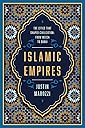
A history of the rich and diverse civilizations over fifteen centuries of Islam seen through its greatest cities. Islamic civilization was once the envy of the world. From a succession of glittering, cosmopolitan capitals, Islamic empires lorded it over the Middle East, North Africa, Central Asia and swathes of the Indian subcontinent, while Europe cowered feebly at the margins. For centuries the caliphate was both ascendant on the battlefield and triumphant in the battle of ideas, its cities unrivaled powerhouses of artistic grandeur, commercial power, spiritual sanctity, and forward-looking thinking, in which nothing was off limits. Islamic Empires is a history of this rich and diverse civilization told through its greatest cities over the fifteen centuries of Islam, from its earliest beginnings in Mecca in the seventh century to the astonishing rise of Doha in the twenty-first. Marozzi brilliantly connects the defining moments in Islamic history: from the Prophet Mohammed receiving his divine revelations in Mecca and the First Crusade of 1099 to the conquest of Constantinople in 1453 and the phenomenal creation of the merchant republic of Beirut in the nineteenth century, and how this world is continuing to change today. Review: essential reading for Islamic studies - This is one of the best books written on the history of Islamic empires, from the perspective of the cities that served as imperial capitals. Justin Marozzi is a journalist who brings a lively writing style and a deep knowledge of Islam and history to his book. Each chapter is richly embellished with both long historical sweeps and personal stories of the people who inhabited these cities. The tales involve both terrible tragedy (plague, invasion, and bad rulers) along with incredible progress in science and the arts that marked all of these cities. Marozzi brings these cities to life, adding to my own experiences of walking the streets of Damascus, Jerusalem, Cairo, Fez, Constantinople, Dubai, and Doha. I have read hundreds of books on Islam and Islamic history during my profession, but this one goes to the top of my list as essential reading. Review: Best Book I've Read in Ages - The author of this non-fiction book writes fifteen chapters, each following the fortunes of a major Islamic city over the course of a century. The first city is Mecca, and the last is Doha. The writing is fluid and easy, though there are a lot of players I have never heard before; Marozzi (the suthor) include and excellent index so that the reader can look up unfamiliar names. Each chapter is about 25 pages. Excellent book, with photos in the center of the book.
| Best Sellers Rank | #1,925,509 in Books ( See Top 100 in Books ) #17 in United Arab Emirates History #70 in Mecca in Islam #518 in History of Islam |
| Customer Reviews | 4.4 out of 5 stars 223 Reviews |
D**N
essential reading for Islamic studies
This is one of the best books written on the history of Islamic empires, from the perspective of the cities that served as imperial capitals. Justin Marozzi is a journalist who brings a lively writing style and a deep knowledge of Islam and history to his book. Each chapter is richly embellished with both long historical sweeps and personal stories of the people who inhabited these cities. The tales involve both terrible tragedy (plague, invasion, and bad rulers) along with incredible progress in science and the arts that marked all of these cities. Marozzi brings these cities to life, adding to my own experiences of walking the streets of Damascus, Jerusalem, Cairo, Fez, Constantinople, Dubai, and Doha. I have read hundreds of books on Islam and Islamic history during my profession, but this one goes to the top of my list as essential reading.
R**G
Best Book I've Read in Ages
The author of this non-fiction book writes fifteen chapters, each following the fortunes of a major Islamic city over the course of a century. The first city is Mecca, and the last is Doha. The writing is fluid and easy, though there are a lot of players I have never heard before; Marozzi (the suthor) include and excellent index so that the reader can look up unfamiliar names. Each chapter is about 25 pages. Excellent book, with photos in the center of the book.
M**H
Interesting but at times misses the mark
The general structure of this book, and most of its chapters, is pretty straightforward. Each chapter discusses a new city in a new century, starting in the 7th and working its way up to present day. In most chapters, the author discusses the historic origins of the city, focuses on its rapid development and monument building by its leaders, and the political and economic intrigue of the time. The main point is to show how grand these civilizations were! And grand they were. Then, there’s some wrap up of the main figures discussed and the future of the city. Often, this will bleed past the end of the century, which is quite nice as it makes for a better story. There’s a ton of primary sources referenced and lots of color provided about each city. However, there are really two ways this book falls short. The first is when the author steps away from this formula. After being thoroughly engrossed in the history of Córdoba, for example, he spends the chapter on Samarkand as exclusively a biography of Timur (which he has previously written a book on); the chapter on Constantinople is mostly a play-by-play account of the successful 1453 siege by the Ottomans, and other middle chapters (Cairo, Fez, Kabul) tend to become too narrow in focus. He later returns to the formula in fashion starting with Tripoli, although the Isfahan chapter is good. The problem for me was that, while individual events are interesting, it’s a strange tone switch from the other parts of the book that are more grand and sweeping in their storytelling. I felt like I missed out on a lot of key points that were provided in other chapters. This really comes into force when considering the second problem for this book: it really could’ve used some additional editing. The author has a penchant for listing out every single possible thing that was traded, every religious group in town, every 3rd concubine of the caliph’s great-grandson, etc etc. When it’s contained in a sweeping narrative, it’s a bit of a mess to work through but it’s manageable since it adds color and texture to the story. Instead, when it’s applied to the very small particulars of a battle or an overwrought storyline, it becomes a real slog to work through. I love detail, but even this was at times too much. Overall, it’s a good read. I think he approaches colonialism with a good touch and properly addresses problems with Western cultural anecdotes of the region. I learned a lot about the different empires, and some of the chapters (Cordoba, Dubai, Baghdad) are really fascinating. But, if you’re looking for a breezy read, this isn’t it.
T**Y
Islamic history
Best book that I ever read on the history of Islam
G**C
Intense and time-traveling review
This book provides a well researched and magnificently written survey of 15 great Islamic cities stretching from antiquity to modern times. Throughout this journey, you learn lesser known facets (in the Western Christian world) of life in medieval Muslim empires, and the height of Islamic civilization across large swaths of Europe, Africa, and Asia, including the origins of scientific and social customs adopted by the West which endure to this day. I highly recommend this book to any serious student of humanity who seeks a fascinating introduction to Islamic history.
N**S
Islam in all its glory and depravity
While civilization in the West was still primitive and tribal, Islam was a highly developed civilization of commerce, art and architecture, and science. Its cities were the glory of the world. And side by side with this glory there was wanton murder and depravity. This superb piece of scholarship is a reminder to keep separate in our historical imaginations Islamic civilization and Muslim religiosity. All thanks to the glories of Islamic civilization. Not so to the Muslim.
I**R
Author couldn't let go of his biases
He had a very Western-centric POV and wrote about the modern day like he was writing for a mainstream media outlet, warts and all (mostly bad instead of the good). I take it this man is, or was, a journalist? It would explain his hot takes, such as presenting the rebels and mercenaries that toppled Gaddafi as "freedom fighters" or somehow morally superior or justified to the late Gaddafi. Even when he wasn't talking about modern day politics, he seemed to present things in a very Orientalist light. And defending Tamerlane? I don't think he makes a strong case for him at all... I am currently using my phone as I type this so I cannot go into every detail here, but I'll just say that this was a good place for reference points but like much Middle-East scholarship, it reads like something that you'd find from the CIA or CNN. I hope this doesn't offend anyone but I feel that there could be better works on so-called Islamic history than what we have here. With that said, it gave me interesting leads and not much else...
P**M
Not fact checked
A book of this nature should have involved many scholars in the field proofreading it before publishing which did not happen. Lots of errors and I am an amateur in knowledge of Islamic history.
M**Y
Good account of islamic history through its cities
Well written account of the fifteen cities, that together, creates a sweeping history of islamic civilization. I like the injection of personal anecdotes by the author.
S**A
Great read, beautifully written
Great book to read for anyone interested in travel writing and the history of the Middle East. A unique approach to mixing current travel writing with history. Absolutely loved it.
M**I
Superb overview — but incomplete
This is really a wonderful book and gives a very thorough overview of 15 of the Islamic world’s greatest cities but I dock a mark because, despite the protestations of the author as to why, any purported overview of Islamic civilization cannot really be complete if it leaves out completely the Indian Subcontinent which makes up, in terms of population, about a third of the world’s entire Muslim population. If this book had included Lahore, Delhi and Lucknow then it would have been complete. Also you cannot leave out Jakarta, capital of the world’s most populous Muslim nation. I hope these minor gripes are addressed in a second edition. Overall highly recommended for its objective and well researched and beautifully written histories of these cities.
C**E
Great book
Arrived quickly and in good condition
N**E
Interesting comments about western historians.
Reading this has opened my eyes to history of rulers from other parts of the world. Sadly often based on greed & desire to outshine others at the expense of the general population. My atlas of the crusades was useful in pin pointing where the various Arab empires extended.
Trustpilot
2 weeks ago
2 months ago