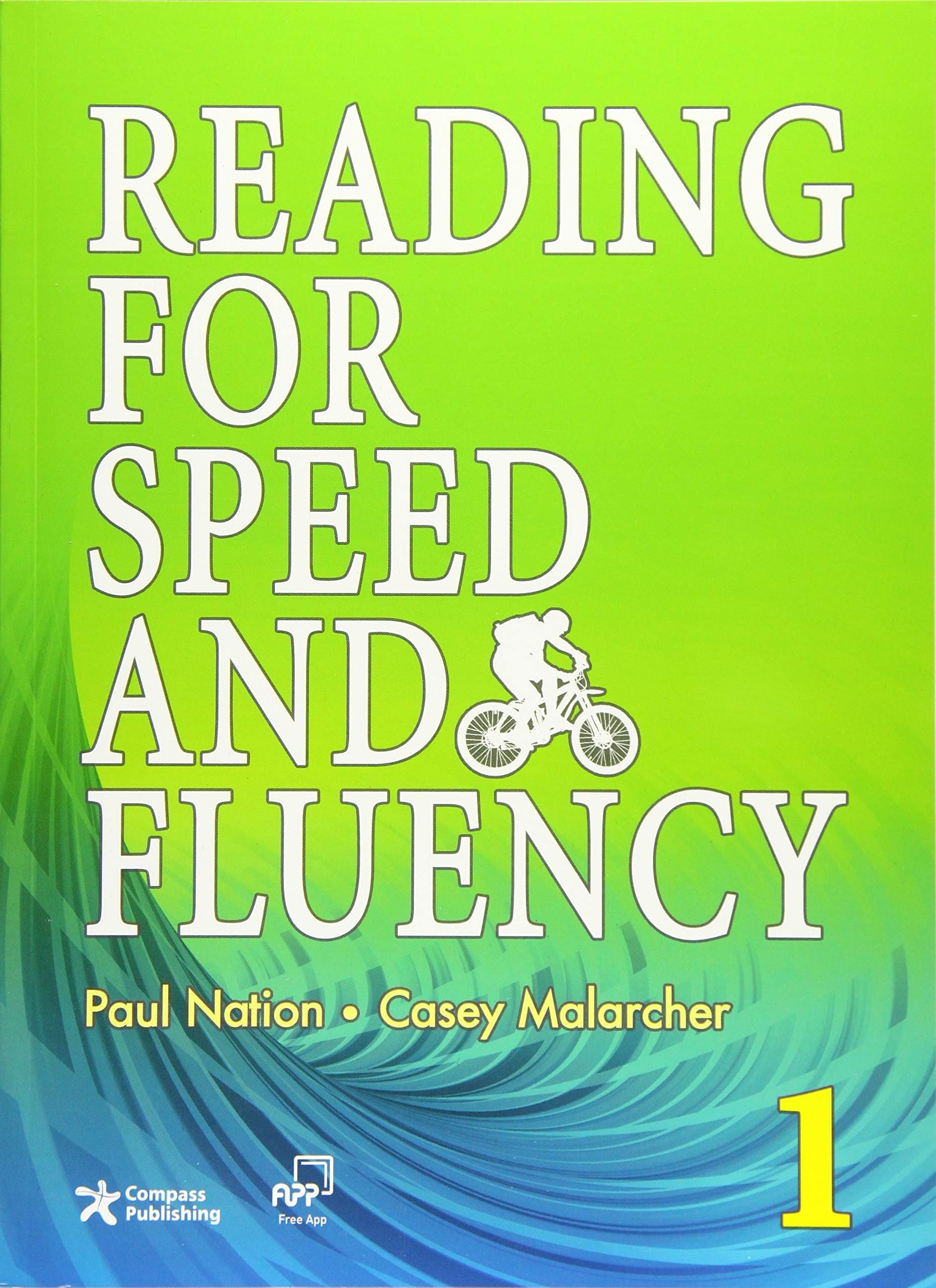
Reading for Speed and Fluency 1 (Intermediate Level; Target 250 Words per Minute; Includes Answer Key & Speed Chart)
Product ID: 15185706
Research suggests that 250 words per minute is the target reading speed for fluent second language reading. Reading for Speed and Fluency is a four-book series specifically targeted at developing reading speed and fluency. Ideal for individual or classroom use, the passages are thematically arranged to enable learners to progress through texts within a specific grouping to build on content and vocabulary. Vocabulary is strictly controlled to provide learners practice in reading at an accelerated pace without interference from unfamiliar vocabulary. Key features include: - Preview activities provide exposure to vocabulary and content - Multiple-choice questions enable students to self-monitor comprehension - Progress charts to graphically record personal reading speed development - Reading passages throughout each level are of similar length and difficulty - Photos to help students relate to the content - Free downloadable supplemental audio recordings Review: Perfect for building reading fluency - I'm using these with low intermediate ESL students and they are perfect for that purpose. The topics are general enough, and there are pictures to help the reader get the gist, so that the more complex vocab doesn't throw them into despair. Generally good comprehension questions, too. Review: Really useful - I bought all four books in this series. And I am finding them very useful with my classes of very capable year 10, 11 and 12 students in Viet Nam. I have an extremely high regard for the work of Professor ISP (Paul) Nation and have adopted his four strands theory as the framework for English language course development. I have drawn up a chart showing the aspects of each strand and given it to my students so that we can all check at the end of each session that we are covering input and output language skills, paying deliberate attention to language features and to developing fluency. I bought these books to encourage fluency, an aspect of language teaching that I think is much overlooked. Another aspect that is much overlooked is vocabulary development. Many texts suggest that students can work out meaning from context but in EFL teaching I have found this assertion not to be supported by the evidence of my own eyes. Nation also questions this assumption and in two of his texts - Learning Vocabulary in Another Language and Teaching Vocabulary - he notes how much value is to be gained by using lists of the 4,000 most frequently occurring English words. Those words are easy to identify but finding useful ways of remembering the meaning as well as being able to read, write, say and understand each spoken word is quite a challenge, not only for students but for EFL teachers. And finding materials that introduce those words in careful writing is not easy. These books are a huge help. Their vocabulary use is carefully controlled. Each title has eight chapters which each contain five readings. Vocabulary is introduced at the beginning of the chapter and each reading has five follow-up questions to test the reader's grasp of the story. The topics are slightly western biased but I can easily skip over the readings that I assess as not being particularly suitable or useful for my students in their circumstances. The five follow-up questions to each reading are a little easy for my students but it does indicate an improved understanding is accompanying fluency development. My only quibble, and the reason I gave four stars rather than five, is that the pieces are not exemplars of good writing. At the same time as I am trying to help my students improve their fluency I am using Oshima and Hogue's Introduction to Academic Writing and Writing Academic English to help improve their comparatively weak writing skills (their assessment with which I concur). I appreciate that it is a huge ask to seek both controlled vocabulary AND have scintillating writing in the same piece. And I am grateful that these are available because I certainly could not have been able to prepare so many pieces myself. Plus the students enjoy them, understand them and are increasing their speed and fluency so they do meet their stated purpose. It's just that we EFL teachers are trying to pack so much into a short time and want every piece to be all things to all people - an impossible dream, I know, but I hang on to my dreams as they keep me alert and involved.
| Customer Reviews | 4.3 out of 5 stars 13 Reviews |
J**R
Perfect for building reading fluency
I'm using these with low intermediate ESL students and they are perfect for that purpose. The topics are general enough, and there are pictures to help the reader get the gist, so that the more complex vocab doesn't throw them into despair. Generally good comprehension questions, too.
M**I
Really useful
I bought all four books in this series. And I am finding them very useful with my classes of very capable year 10, 11 and 12 students in Viet Nam. I have an extremely high regard for the work of Professor ISP (Paul) Nation and have adopted his four strands theory as the framework for English language course development. I have drawn up a chart showing the aspects of each strand and given it to my students so that we can all check at the end of each session that we are covering input and output language skills, paying deliberate attention to language features and to developing fluency. I bought these books to encourage fluency, an aspect of language teaching that I think is much overlooked. Another aspect that is much overlooked is vocabulary development. Many texts suggest that students can work out meaning from context but in EFL teaching I have found this assertion not to be supported by the evidence of my own eyes. Nation also questions this assumption and in two of his texts - Learning Vocabulary in Another Language and Teaching Vocabulary - he notes how much value is to be gained by using lists of the 4,000 most frequently occurring English words. Those words are easy to identify but finding useful ways of remembering the meaning as well as being able to read, write, say and understand each spoken word is quite a challenge, not only for students but for EFL teachers. And finding materials that introduce those words in careful writing is not easy. These books are a huge help. Their vocabulary use is carefully controlled. Each title has eight chapters which each contain five readings. Vocabulary is introduced at the beginning of the chapter and each reading has five follow-up questions to test the reader's grasp of the story. The topics are slightly western biased but I can easily skip over the readings that I assess as not being particularly suitable or useful for my students in their circumstances. The five follow-up questions to each reading are a little easy for my students but it does indicate an improved understanding is accompanying fluency development. My only quibble, and the reason I gave four stars rather than five, is that the pieces are not exemplars of good writing. At the same time as I am trying to help my students improve their fluency I am using Oshima and Hogue's Introduction to Academic Writing and Writing Academic English to help improve their comparatively weak writing skills (their assessment with which I concur). I appreciate that it is a huge ask to seek both controlled vocabulary AND have scintillating writing in the same piece. And I am grateful that these are available because I certainly could not have been able to prepare so many pieces myself. Plus the students enjoy them, understand them and are increasing their speed and fluency so they do meet their stated purpose. It's just that we EFL teachers are trying to pack so much into a short time and want every piece to be all things to all people - an impossible dream, I know, but I hang on to my dreams as they keep me alert and involved.
M**E
Five Stars
Great book, great service. Thanks!
N**G
A good speed reading program for an academic English beginner
A good speed reading program for an academic English beginner. It allows the reader to time themselves, answer questions and record their progress. Topics are slightly out of date but not too badly.
P**K
Great for learners at a certain level
This book, the whole series really, is great for learners with awareness of the first 1000 most frequent words in English.
A**ー
良い難易度です
すっと読める難易度、文法も難しい所もなく、良い感じです。 ただ、当たり前ですが、日本誤訳が無いわけで、勉強用としては、その分星を一つ減らしました(^_^A
C**E
とてもよく出来ていて使いやすい!
Paul Nation先生が関わった本だけのことはあります。 テキストの難易度も、中高生で、内容を把握しながら読みの速度を上げる練習にちょうどよいし、トピックも興味あるものを選んであります。 逆に、このテキストで難しいなら、もっと易しい本が読む必要があるということだと思います。
Trustpilot
1 month ago
5 days ago