We remain fully operational. Our teams are working around the clock to ensure your deliveries continue safely.

下载应用程序


Buy anything from 5,000+ international stores. One checkout price. No surprise fees. Join 2M+ shoppers on Desertcart.
Desertcart purchases this item on your behalf and handles shipping, customs, and support to SINGAPORE.
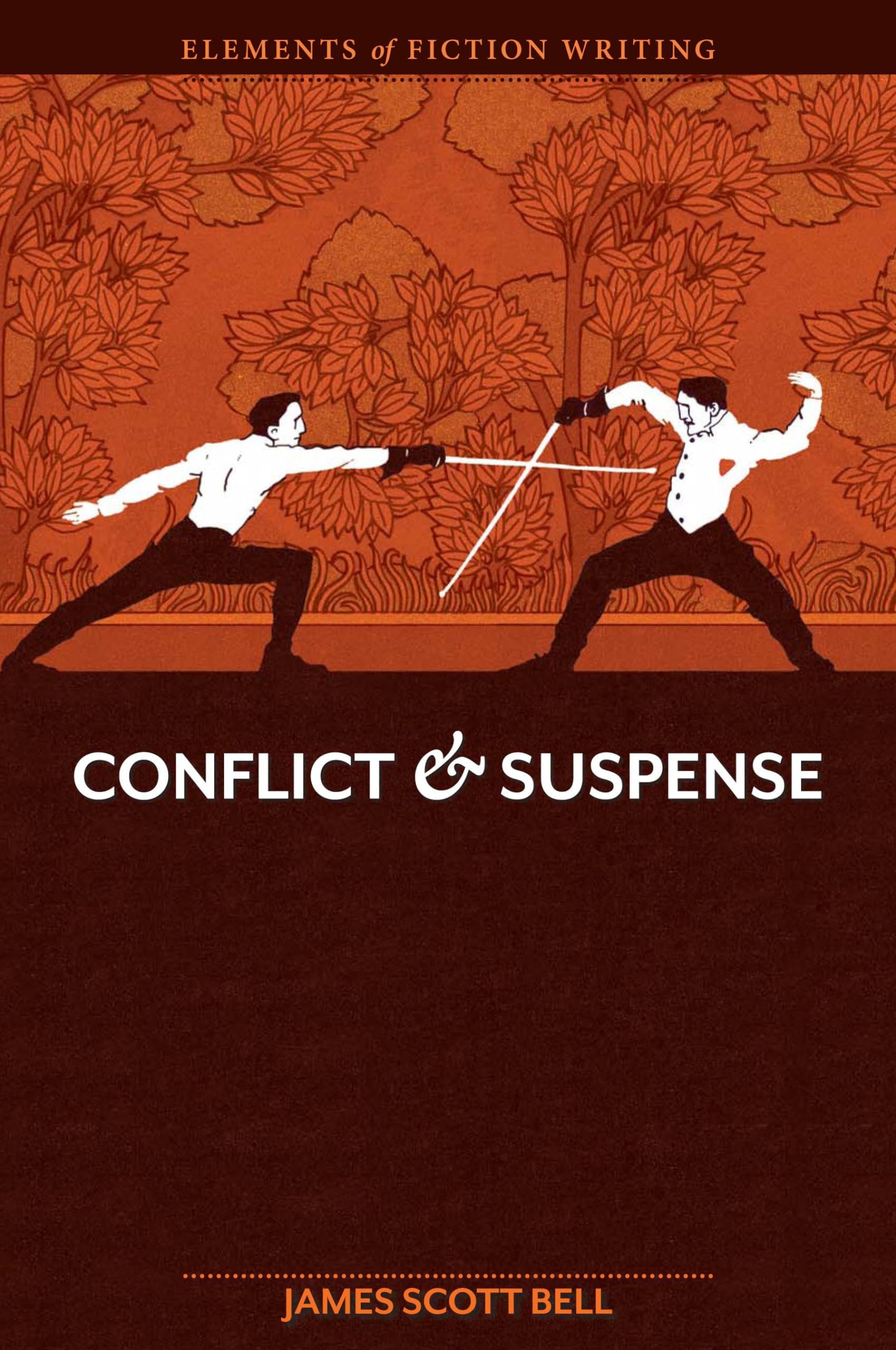
desertcart.com: Elements of Fiction Writing: Conflict and Suspense: 9781599632735: Bell, James Scott Scott: Books Review: Conflict and Suspense is a must-read for any writer - James Scott Bell is well-known among writers for his useful, practical wisdom on improving our writing and story structure. Conflict and Suspense is the fourth writing book of his I've purchased, the third one I've read, and like its predecessors, it's going to be a mainstay in my writing library. I have two bookshelves of writing books. One is the bulk of the collection, and is just high enough to make getting to them difficult. Conflict and Suspense -- if it were a paperback -- would go on the other shelf, the one to the left of my computer so I can reach it without getting up. I got the Kindle edition, which is even better because I can take it anywhere and pull it out for reference while brainstorming, writing or revising. Bell includes tips for adding and improving conflict and suspense at each of these stages. Bell organizes his material in a logical fashion, each chapter building upon the earlier ones. He varies his examples from other works, and includes enough information that even if you haven't read/seen the work, you understand the example. That's something I particularly appreciated since one of the works (it's both a book and a movie) he used a few times is in the horror/suspense field -- something I don't read a lot of because it would give me nightmares. But I didn't have to have read or seen it to grasp the lessons it contained, and that speaks to Bell's skill as a writing teacher. If you think you write a genre that doesn't require conflict and suspense help, think again. Throughout reading the book, my plot bunnies (the equivalent of King's "boys in the basement") were hopping madly, churning up ideas to deepen and improve the novel I'm revising now. That novel has elements of a thriller/suspense novel, but it also has a big literary/coming-of-age thread. So all of you scoffing at the idea of adding conflict and suspense know exactly which thread those plot bunnies were playing with, right? Wrong. It was the literary one. Sure, the sections with the guns and threats and mobsters got some benefit from Bell's wisdom. But the literary thread got the bulk of the development, and it's really making that thread stronger, putting my poor main character through all sorts of hell because every time he's going to be close to addressing his internal conflict, it's going to give the mobsters more ammunition against him. See? Conflict. Don Maass, in his keynote at the Writer's Digest Conference two weeks ago, explained his concept of a 21st Century Novel, a book that marries the best elements of genre fiction with the best approaches of literary fiction to create unforgettable stories. If you want to write that kind of book, I can't think of a better place to start than to read Conflict and Suspense and apply its lessons and exercises to your own work. Your readers will thank you. Your characters might hate you, though. Their lives are about to get much tougher. Review: An Essential for Writers Everywhere - Whether you are thinking of writing a novel or already have and need to spruce it up for submission, this book is a must. James Scott Bell, an author in his own right, is excellent at presenting ways of making anyone a successful author. His formulas are extremely easy to comprehend and carry out and lend depth and readability to your story. His book has many examples from current literature and he throws in examples "off the top of his head" so you see how easy it is to come up with ideas on your own. I found reading it easy and very enjoyable as well as informative and a great learning experience. Whether you need advice on basic outlining of your story or want help to make each scene the most exciting it can be so that the entire work will be a page turner from start to finish, this is the one book you should definitely read. I think I learned more from this single book than all the others I have read on writing. And this works for any genre! So don't hesitate to grab a copy for your own library. You will use it over and over again.
| Best Sellers Rank | #166,818 in Books ( See Top 100 in Books ) #73 in Creative Writing Composition #167 in Authorship Reference #210 in Fiction Writing Reference (Books) |
| Customer Reviews | 4.7 4.7 out of 5 stars (355) |
| Dimensions | 6.02 x 0.71 x 9.02 inches |
| ISBN-10 | 159963273X |
| ISBN-13 | 978-1599632735 |
| Item Weight | 9.2 ounces |
| Language | English |
| Part of series | Elements of Fiction Writing |
| Print length | 273 pages |
| Publication date | January 12, 2012 |
| Publisher | Penguin Publishing Group |
J**N
Conflict and Suspense is a must-read for any writer
James Scott Bell is well-known among writers for his useful, practical wisdom on improving our writing and story structure. Conflict and Suspense is the fourth writing book of his I've purchased, the third one I've read, and like its predecessors, it's going to be a mainstay in my writing library. I have two bookshelves of writing books. One is the bulk of the collection, and is just high enough to make getting to them difficult. Conflict and Suspense -- if it were a paperback -- would go on the other shelf, the one to the left of my computer so I can reach it without getting up. I got the Kindle edition, which is even better because I can take it anywhere and pull it out for reference while brainstorming, writing or revising. Bell includes tips for adding and improving conflict and suspense at each of these stages. Bell organizes his material in a logical fashion, each chapter building upon the earlier ones. He varies his examples from other works, and includes enough information that even if you haven't read/seen the work, you understand the example. That's something I particularly appreciated since one of the works (it's both a book and a movie) he used a few times is in the horror/suspense field -- something I don't read a lot of because it would give me nightmares. But I didn't have to have read or seen it to grasp the lessons it contained, and that speaks to Bell's skill as a writing teacher. If you think you write a genre that doesn't require conflict and suspense help, think again. Throughout reading the book, my plot bunnies (the equivalent of King's "boys in the basement") were hopping madly, churning up ideas to deepen and improve the novel I'm revising now. That novel has elements of a thriller/suspense novel, but it also has a big literary/coming-of-age thread. So all of you scoffing at the idea of adding conflict and suspense know exactly which thread those plot bunnies were playing with, right? Wrong. It was the literary one. Sure, the sections with the guns and threats and mobsters got some benefit from Bell's wisdom. But the literary thread got the bulk of the development, and it's really making that thread stronger, putting my poor main character through all sorts of hell because every time he's going to be close to addressing his internal conflict, it's going to give the mobsters more ammunition against him. See? Conflict. Don Maass, in his keynote at the Writer's Digest Conference two weeks ago, explained his concept of a 21st Century Novel, a book that marries the best elements of genre fiction with the best approaches of literary fiction to create unforgettable stories. If you want to write that kind of book, I can't think of a better place to start than to read Conflict and Suspense and apply its lessons and exercises to your own work. Your readers will thank you. Your characters might hate you, though. Their lives are about to get much tougher.
D**.
An Essential for Writers Everywhere
Whether you are thinking of writing a novel or already have and need to spruce it up for submission, this book is a must. James Scott Bell, an author in his own right, is excellent at presenting ways of making anyone a successful author. His formulas are extremely easy to comprehend and carry out and lend depth and readability to your story. His book has many examples from current literature and he throws in examples "off the top of his head" so you see how easy it is to come up with ideas on your own. I found reading it easy and very enjoyable as well as informative and a great learning experience. Whether you need advice on basic outlining of your story or want help to make each scene the most exciting it can be so that the entire work will be a page turner from start to finish, this is the one book you should definitely read. I think I learned more from this single book than all the others I have read on writing. And this works for any genre! So don't hesitate to grab a copy for your own library. You will use it over and over again.
B**L
Good book, but too much overlap with Bell's Plot & Structure
James Scott Bell's Plot & Structure: (Techniques And Exercises For Crafting A Plot That Grips Readers From Start To Finish) (Write Great Fiction) is one of the best how-to books on writing I've ever read. He's easy and fun to read with a good mix of motivation and creative solutions to specific or general issues. This new book, Conflict and Suspense, shares a lot of the same stuff that made Plot and Structure great--and therein lies the book's flaw. If you own both books, you will find far too much information overlap, like Bell only bothered to write half a book. The new information is definitely helpful for writing conflict and suspense, but not as essential. Bell's step-by-step how to write a novel "LOCK" system from Plot and Structure is reprinted here in its entirety. If you're only going to buy one how-to write (any type of fiction) book, even if you want to write action or suspense, I'd still go for Plot and Structure first every time. Why? Because of its broader focus. It covers a lot more situations. It''s like a toolbox, whereas this book is more of a specialized wrench set. They do complement each other and go hand-in-hand, so if you don't mind the information overlap and just want more good insights and advice from Bell, then get this book, too. Just know you're only getting maybe half a book's worth of new stuff. Again, the new stuff here is very good, some of it quite brilliant, and there are enough "aha!" gems to make it worth adding to your collection . . . just maybe not for full price. My 4-star rating reflects that.
A**N
Well worth reading several times
This book is filled with factual information that is delivered in a conversational manner. James Scott Bell is an accomplished writer who shares ways for a reader to evaluate their own writing. He also shares tips and techniques that will help an author (aspiring or accomplished) to succeed in writing fiction. Two of the points that are driven home repeated is the use of the LOCK system (Lead worth following, Objective with death overhanging. Confrontation and Knock-out ending and the use of different types of death. (Physical, professional, psychological, etc.) I read this book on a Kindle HD and on a Droid X, and highlighted many passages. I also listened to part of it text-to-speech while driving. There are hard-learned tips from his experience and quotes from writers like Koontz, Bradbury and LeCarre. There's too much to absorb in one reading. You won't use everything you learn, but if you discover three or four things that help you, it will be worth it. I feel that any writer can glean at least eight to ten insights and techniques from this book. I enjoyed this book enough to buy several of his other books.
A**Z
There are lots of examples. The book is setup so you can create a checklist to go through your writing and implement those parts that are applicable.
F**R
for beginners this book is a great help, as in J. S. Bell other books, very clear structured and great exercises
P**Z
I found this book practical and insightful. It helps me to have the information refreshed. This book is written in an optimistic style. A must read.
L**E
Gute Erklärweise mit Beispielen, aber zum Selberdenken und nicht einfach mit vorgekautem Wissen. Für alle, die ein Buch schreiben wollen oder ihre Fähigkeiten weiter verbessern wollen.
A**R
strong like swards
TrustPilot
2天前
2 周前