Some deliveries may take a little longer than usual due to regional shipping conditions.

下载应用程序


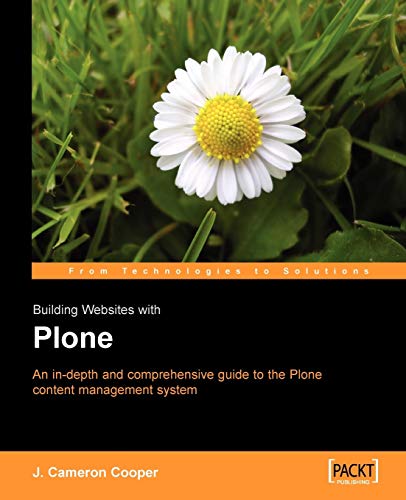


Building Websites with Plone: An in-depth and comprehensive guide to the Plone content management system. [Cooper, Cameron] on desertcart.com. *FREE* shipping on qualifying offers. Building Websites with Plone: An in-depth and comprehensive guide to the Plone content management system. Review: Meh - This book was a little helpful, but it's not the books fault. The fact that we upgraded to Plone 4 and this book is for Plone 3 and the developers changed it so much between versions that the book was nearly useless. Review: Better than Julie Meloni's book on Plone - I bought them both and find this one more complete with a more authoritative exposition.
| Best Sellers Rank | #9,511,865 in Books ( See Top 100 in Books ) #6,351 in Web Design (Books) #29,959 in Computer Software (Books) #72,922 in Computer Science (Books) |
| Customer Reviews | 3.2 3.2 out of 5 stars (7) |
| Dimensions | 7.5 x 0.94 x 9.25 inches |
| ISBN-10 | 1904811027 |
| ISBN-13 | 978-1904811022 |
| Item Weight | 1.55 pounds |
| Language | English |
| Print length | 416 pages |
| Publication date | November 25, 2004 |
| Publisher | Packt Publishing |
J**.
Meh
This book was a little helpful, but it's not the books fault. The fact that we upgraded to Plone 4 and this book is for Plone 3 and the developers changed it so much between versions that the book was nearly useless.
M**M
Better than Julie Meloni's book on Plone
I bought them both and find this one more complete with a more authoritative exposition.
K**R
Great Books
JCCooper did a splendid job on writing Building Websites with Plone. As a newbie to Plone and Zope, I need all the help I can get. JCC provides very good examples of how Plone works and why it works. Well written and very well editied unlike other Plone books it is a pleasure to read and study.
C**T
Lacks clarity, gets lost in details
I use Plone a lot in my job and I bought both this book and The Definitive Guide to Plone by Andy Mc Kay. I find this book to be confusing at best, maybe because it tries to cover too much ground. When it describes the portlets, it goes on for SIX pages describing each portlet, with a screen capture for each portlet! It talks about REST for over a page, although this architecture has really nothing to do with Plone. Etc. Etc. All in all, it seems to me that too many technical editors have worked on this book, making it overly technical and complicated. Even the font they use make the content look cluttered! It is very difficult to write something clear and simple, especially for a very piece of technical software such as Plone. In my humble opinion, this book has failed in that regard. I almost never use this book on my everyday job. Get Andy Mc Kay's book, you'll get a much better value for your money.
H**K
Not good enough
Yes, we need more books on Plone, in particular of the introductory kind. Unfortunately, this is not the one. I get the feeling that this book was written in order to write a book, and not to make Plone easier to use as a platform for developing content portals. I cannot find any logical progression here, Cooper requently delves into details without taking the necessary time to prepare the reader for those details. Still, Building Websites with Plone is not useless. I have used it as a companion to Andy McKays book (which is a lot better, and assumes a certain level of familiarity with Pone in order to be useful). When McKay stops or goes on to the next subject, there is always a chance that Cooper has more details. Finally, Building Websites with Plone has a totally useless index, bad typography and medium quality print. It looks more like an oversized Word-document copied on a worn printer than a professional book. For beginners, I recommend Plone Content Management Essentials - well organized, easy to understand and easy to follow.
S**D
Building Websites With Plone: 8Py Book Review
Building Websites With Plone by J. Cameron Cooper is a very useful book for beginners as well as experienced Plone developers. The book is based on Plone 2.0 series, so some specifics might not work with the older versions. The book assumes that you are familiar with ZOPE and python. It covers almost all aspects of Plone: * Installation of Plone * Plone web interface, control panel, ZMI controls * Users and permisions * Design and architecture * Extending and writing Plone tools,plone products * Database connectivity with Plone * Security The first 2 chapters cover the basics and installation part, the third chapter "Managing Plone" starts with the basics of ZOPE. So even if you are not so familiar with ZOPE, you can learn about it in this chapter, this chapter also covers ZMI, Plone Control Panel, Add/Remove Products,Error Log, Mail settings, Portal Settings, Skins, User and Groups administration. Some of the concepts related to ZOPE are not easy to understand if you are new to ZOPE. So I would suggest that you have a look at ZOPE before you read this chapter. Other chapters look at core Plone matters. I think chapters "Writing Plone Tools" and "Using Relational management Systems" are not explained in-depth although they are sufficient to give you an overview. Chapter 12 "Integration" includes the Apache, FTP and web services like REST, XML-RPC ,SOAP. Again these topics are very important and demands priority .Chapter 13 "Performance and Optimization" covers ZODB,Z SQL and the information on setting up Plone to use multiple machines in several tiers. I think this chapter is explained very well. chapter "Securing Plone " covers the security aspects. I liked the style of writing. It's like a tutorial. Cooper has used many examples, case studies with explanatory diagrams which can help beginners better understand Plone. This book is a pleasure to read and can help you get a sound understanding of Plone.
P**Y
Finally, a comprehensive book on Plone
I have another book on Plone which is not as well organized, in-depth, or easy to understand as Cooper's own book. Thanks for finally publishing a comprehensive, worthwhile book on Plone!!!
TrustPilot
3 周前
1天前