We remain fully operational. Our teams are working around the clock to ensure your deliveries continue safely.

下载应用程序







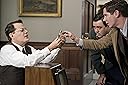
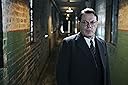
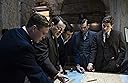

Buy anything from 5,000+ international stores. One checkout price. No surprise fees. Join 2M+ shoppers on Desertcart.
Desertcart purchases this item on your behalf and handles shipping, customs, and support to SINGAPORE.
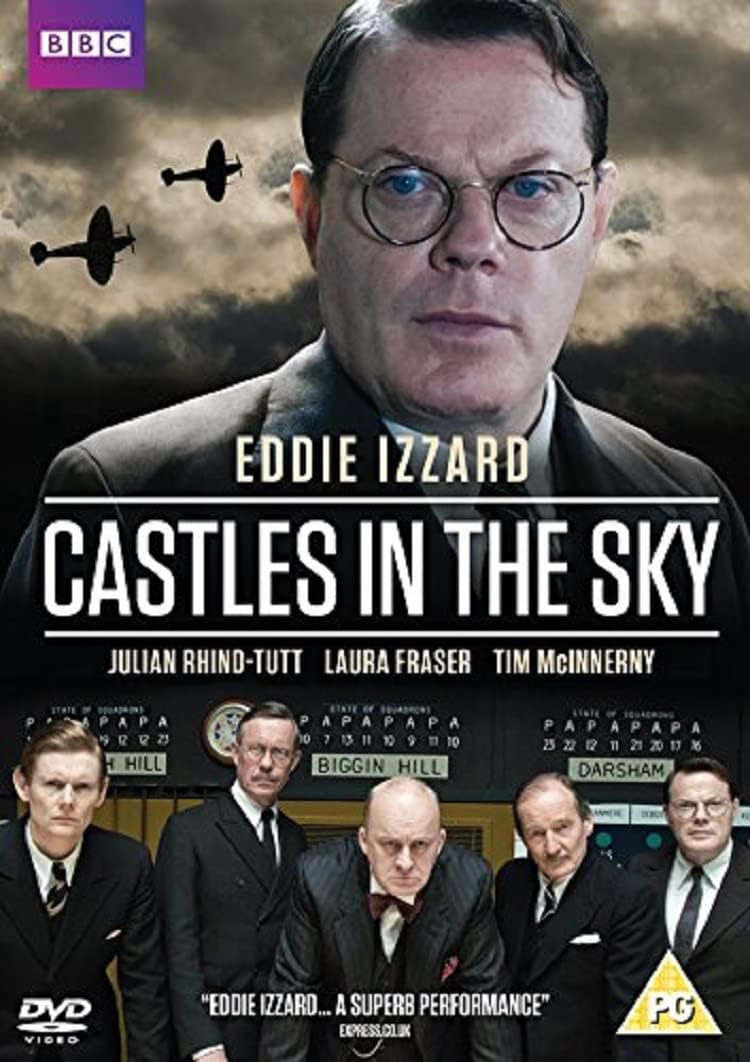
Castles In The Sky tells the previously untold remarkable story of the fight to invent RADAR by Scotsman Robert Watson Watt and a team of British scientists. It conveys the genuine human drama behind the invention which saved the nation in the Battle of Britain . Review: DVD - Arrived on time Nicely package Good quality Review: Father of radar - The theatrics of Churchill’s dogged resistance and resilience are said to be what kept Britain from collapse and invasion in 1940. This makes for good copy and is partially true. But no amount of rhetoric and theatrics would have saved Britain from the Nazi menace that year without two crucial technological breakthroughs which changed the course of history and helped create the modern world. The first is well known: development of the Turing machine at Bletchley Park, the world’s first computer that broke the German Enigma code and turned the tide of intelligence from Germany toward Britain during the war. If Enigma had not been broken the German U-boat assault on Allied vessels in the North Atlantic would have starved Britain into surrender, as it hadn’t the food to feed itself without supply ships reaching it with provisions. So Bletchley and Turing defeated the Nazis at sea. But the skies over Britain were a different proposition. How could British airspace be protected? The answer, in Churchill’s phrase, was to defend it with castles in the sky. Enter (onto history’s stage) Robert Watson-Watt, a meteorologist and amateur inventor. Watson-Watt (1892-1973) was a Scotsman from Inverness who conceived and invented radar, a technical innovation that gave the RAF a fighting chance to defend Britain from the Luftwaffe. RAF Spitfires and Hurricanes were outnumbered 3 to 1 by fighter planes and bombers in Hitler’s air force. Britain didn’t stand a chance in the air without some sort of early-warning system, one which it desperately sought as early as 1935. The grim intelligence reaching Britain from Germany that year was that Hitler was rearming the Reich at a fantastic rate. No way could Britain keep pace with such war preparations. There had to be another way to defend Britain. There was. The mind of Watson-Watt produced it. Though very dramatic, the story is told in straightforward fashion, presented without frills. We see working men at work. They fret at desks in the War Ministry, make troubled phone calls and hold urgent, emergency meetings. On the technical side we watch tinkerers in their labs and workshops. These are Watson-Watt and his engineers, only a half dozen of them. They work by his side frantically. They draw diagrams, fiddle with knobs, write formulas on blackboards, drink and play cricket to relieve the tension. We watch them wrack their brains, lose sleep, become ornery, fear the future. The weight of what they have to do is crushing them. Exactly when Hitler will strike they don’t know, but they know with certainty he will. There is in-fighting in the War Ministry. Churchill is in charge and surrounded by strike-first hawks. The best defence is offence, they argue. Knock out Hitler early before he can launch blitzkreig on the world and us. A hawkish professor called Lindemann has the ear of Churchill. He ridicules the work of Watson-Watt, considers him a kook and tinkerer. All the best technical minds are at Oxbridge, he says. Watson-Watt is a nobody, a fringe Scot with no academic credentials to rival those of Oxford or Cambridge. Lindemann’s pet project is a death ray powerful enough to take down planes by frying their pilots at the controls. If it sounds like Boy’s Own science fiction, Watson-Watt’s castles in the sky look similar. How can the signals (radio waves) be coordinated and sent far enough? The image Watson-Watt uses is of a fishing net cast wide across the sky. Synchronised tracking stations with antennae form an arc-like net stretching more than 60 miles away from the stations. That is the image and theory. But how to power signals that far? If tried, the valves and transistors will overheat. Where does genius come from? How do the great ideas appear? Einstein said they were afterthoughts, doodles, fragments of dreams. This must be true. They are random bits that appear when least expected, percolating up from the subconscious mind. Alan Turing in the film The Imitation Game (2014) has his Enigma breakthrough in a pub over a pint. When he gets it, when the crucial missing fragment of thought reaches his mind, he screams among his assembled and relaxing colleagues, “Britain has just bloody won the war!” Watson-Watt stands in a wet field. It is raining heavily. He is examining the sky, good meteorologist that he is. His mind is distracted, convulsed, heavy, weary. It aches from pondering too much, from trying to get inside the riddle and whittle it out. He looks on idly. But then he focusses intently, staring, almost thunderstruck in the rain. What is he looking at? The umbrella. Its shape, its dome-like structure. It reminds him of the curve of the earth, a similar shape. Then there in that field, alone, according to the film, comes the eureka moment. Why of course! How did I not think of it before? The earth is curved. So is its atmosphere, including the ionosphere. Though porous, it is physical. It is a material thing with enough solidity to make it react with radio waves. A signal fired toward it will not go through it. It will bounce off. That is the solution. The fishing net must not be cast parallel to the earth and its ground. It must tossed upward into the sky. So simple, which of course explains why it was difficult. The first simplicity always is. How do you think of something that’s never been thought of before? Answer: with great effort, and this film admirably shows what Watson-Watt (beautifully and understatedly played by Eddie Izzard) goes through to discover such simplicity. It works. By 1939 enough tracking stations are built along the southern coast. Britain is defended. Its castles in the sky are operational. The British are clever, the Germans ignorant. The secret is kept. The Luftwaffe will not know what it is flying into. The Battle of Britain lasted barely a month during that fateful summer of 1940. Goring was furious, Hitler incandescent. Churchill loved bombast. He loved to hog the stage. But for once he spoke the unadorned, simple truth when he called it Britain’s “finest hour”. David slew Goliath in the sky, but he only did it because of Watson-Watt’s genius and the courage of the nation’s young RAF pilots. The story is gratifying. Menace and barbarism are withstood, repelled. The island is protected. It will regroup, fight on. Churchill is rightly remembered as the spirit of those times and he comes out looking good by trusting (over his own doubts) Watson-Watt to make good, but it is Watson-Watt himself who is the hero of this story. The film ends with the Battle of Britain won and the Germans falling back to the Continent. We also see a simple memorial plaque on a small monument erected near a field at Daventry in Suffolk. It was here that the first experimental radar equipment was set up by Watson-Watt and his team for the War Ministry. The plaque reads as follows: “Birth of Radar Memorial. On 26th of February 1935, in the field opposite, Robert Watson-Watt and Arnold Wilkins [Watson-Watt’s assistant] showed for the first time in Britain that aircraft could be detected by bouncing radio waves off them. By 1939 there were 20 stations tracking aircraft at distances up to more than 100 miles. Later known as radar, it was this invention, more than any other, that saved the RAF from defeat in the 1940 Battle of Britain.” Any time you fly in an aircraft today or heat up some soup in your microwave oven in the kitchen, you are benefitting from Watson-Watt’s insight. The air traffic control tower guides you safely in and out of the airport and cold soup is transformed to hot at the touch of a button or two. Not only this, you do not work in a salt mine for no wages or live in a concentration camp in servitude to a fiendish master race. God bless Scotland and its native sons. When it eventually votes to go independent, let it.
| ASIN | B00NHVC0NY |
| Actors | Alex Jennings, Arran Tulloch, Eddie Izzard, Laura Fraser, Lesley Harcourt |
| Best Sellers Rank | 1,700 in DVD & Blu-ray ( See Top 100 in DVD & Blu-ray ) 198 in Television (DVD & Blu-ray) 613 in Drama (DVD & Blu-ray) |
| Country of origin | Australia |
| Customer reviews | 4.6 4.6 out of 5 stars (419) |
| Director | Gillies MacKinnon |
| Is discontinued by manufacturer | No |
| Language | English |
| Manufacturer reference | 5060352301267 |
| Media Format | PAL |
| Number of discs | 1 |
| Producers | Simon Wheeler |
| Product Dimensions | 1.7 x 12 x 16.1 cm; 130 g |
| Rated | Suitable for 12 years and over |
| Release date | 27 Oct. 2014 |
| Run time | 1 hour and 30 minutes |
| Studio | Spirit Entertainment Limited |
| Writers | Ian Kershaw |
W**L
DVD
Arrived on time Nicely package Good quality
J**T
Father of radar
The theatrics of Churchill’s dogged resistance and resilience are said to be what kept Britain from collapse and invasion in 1940. This makes for good copy and is partially true. But no amount of rhetoric and theatrics would have saved Britain from the Nazi menace that year without two crucial technological breakthroughs which changed the course of history and helped create the modern world. The first is well known: development of the Turing machine at Bletchley Park, the world’s first computer that broke the German Enigma code and turned the tide of intelligence from Germany toward Britain during the war. If Enigma had not been broken the German U-boat assault on Allied vessels in the North Atlantic would have starved Britain into surrender, as it hadn’t the food to feed itself without supply ships reaching it with provisions. So Bletchley and Turing defeated the Nazis at sea. But the skies over Britain were a different proposition. How could British airspace be protected? The answer, in Churchill’s phrase, was to defend it with castles in the sky. Enter (onto history’s stage) Robert Watson-Watt, a meteorologist and amateur inventor. Watson-Watt (1892-1973) was a Scotsman from Inverness who conceived and invented radar, a technical innovation that gave the RAF a fighting chance to defend Britain from the Luftwaffe. RAF Spitfires and Hurricanes were outnumbered 3 to 1 by fighter planes and bombers in Hitler’s air force. Britain didn’t stand a chance in the air without some sort of early-warning system, one which it desperately sought as early as 1935. The grim intelligence reaching Britain from Germany that year was that Hitler was rearming the Reich at a fantastic rate. No way could Britain keep pace with such war preparations. There had to be another way to defend Britain. There was. The mind of Watson-Watt produced it. Though very dramatic, the story is told in straightforward fashion, presented without frills. We see working men at work. They fret at desks in the War Ministry, make troubled phone calls and hold urgent, emergency meetings. On the technical side we watch tinkerers in their labs and workshops. These are Watson-Watt and his engineers, only a half dozen of them. They work by his side frantically. They draw diagrams, fiddle with knobs, write formulas on blackboards, drink and play cricket to relieve the tension. We watch them wrack their brains, lose sleep, become ornery, fear the future. The weight of what they have to do is crushing them. Exactly when Hitler will strike they don’t know, but they know with certainty he will. There is in-fighting in the War Ministry. Churchill is in charge and surrounded by strike-first hawks. The best defence is offence, they argue. Knock out Hitler early before he can launch blitzkreig on the world and us. A hawkish professor called Lindemann has the ear of Churchill. He ridicules the work of Watson-Watt, considers him a kook and tinkerer. All the best technical minds are at Oxbridge, he says. Watson-Watt is a nobody, a fringe Scot with no academic credentials to rival those of Oxford or Cambridge. Lindemann’s pet project is a death ray powerful enough to take down planes by frying their pilots at the controls. If it sounds like Boy’s Own science fiction, Watson-Watt’s castles in the sky look similar. How can the signals (radio waves) be coordinated and sent far enough? The image Watson-Watt uses is of a fishing net cast wide across the sky. Synchronised tracking stations with antennae form an arc-like net stretching more than 60 miles away from the stations. That is the image and theory. But how to power signals that far? If tried, the valves and transistors will overheat. Where does genius come from? How do the great ideas appear? Einstein said they were afterthoughts, doodles, fragments of dreams. This must be true. They are random bits that appear when least expected, percolating up from the subconscious mind. Alan Turing in the film The Imitation Game (2014) has his Enigma breakthrough in a pub over a pint. When he gets it, when the crucial missing fragment of thought reaches his mind, he screams among his assembled and relaxing colleagues, “Britain has just bloody won the war!” Watson-Watt stands in a wet field. It is raining heavily. He is examining the sky, good meteorologist that he is. His mind is distracted, convulsed, heavy, weary. It aches from pondering too much, from trying to get inside the riddle and whittle it out. He looks on idly. But then he focusses intently, staring, almost thunderstruck in the rain. What is he looking at? The umbrella. Its shape, its dome-like structure. It reminds him of the curve of the earth, a similar shape. Then there in that field, alone, according to the film, comes the eureka moment. Why of course! How did I not think of it before? The earth is curved. So is its atmosphere, including the ionosphere. Though porous, it is physical. It is a material thing with enough solidity to make it react with radio waves. A signal fired toward it will not go through it. It will bounce off. That is the solution. The fishing net must not be cast parallel to the earth and its ground. It must tossed upward into the sky. So simple, which of course explains why it was difficult. The first simplicity always is. How do you think of something that’s never been thought of before? Answer: with great effort, and this film admirably shows what Watson-Watt (beautifully and understatedly played by Eddie Izzard) goes through to discover such simplicity. It works. By 1939 enough tracking stations are built along the southern coast. Britain is defended. Its castles in the sky are operational. The British are clever, the Germans ignorant. The secret is kept. The Luftwaffe will not know what it is flying into. The Battle of Britain lasted barely a month during that fateful summer of 1940. Goring was furious, Hitler incandescent. Churchill loved bombast. He loved to hog the stage. But for once he spoke the unadorned, simple truth when he called it Britain’s “finest hour”. David slew Goliath in the sky, but he only did it because of Watson-Watt’s genius and the courage of the nation’s young RAF pilots. The story is gratifying. Menace and barbarism are withstood, repelled. The island is protected. It will regroup, fight on. Churchill is rightly remembered as the spirit of those times and he comes out looking good by trusting (over his own doubts) Watson-Watt to make good, but it is Watson-Watt himself who is the hero of this story. The film ends with the Battle of Britain won and the Germans falling back to the Continent. We also see a simple memorial plaque on a small monument erected near a field at Daventry in Suffolk. It was here that the first experimental radar equipment was set up by Watson-Watt and his team for the War Ministry. The plaque reads as follows: “Birth of Radar Memorial. On 26th of February 1935, in the field opposite, Robert Watson-Watt and Arnold Wilkins [Watson-Watt’s assistant] showed for the first time in Britain that aircraft could be detected by bouncing radio waves off them. By 1939 there were 20 stations tracking aircraft at distances up to more than 100 miles. Later known as radar, it was this invention, more than any other, that saved the RAF from defeat in the 1940 Battle of Britain.” Any time you fly in an aircraft today or heat up some soup in your microwave oven in the kitchen, you are benefitting from Watson-Watt’s insight. The air traffic control tower guides you safely in and out of the airport and cold soup is transformed to hot at the touch of a button or two. Not only this, you do not work in a salt mine for no wages or live in a concentration camp in servitude to a fiendish master race. God bless Scotland and its native sons. When it eventually votes to go independent, let it.
L**D
Worth watching, but a complete travesty in terms of the real story - an insult to the men
'We need more power!' 'Yes but what about range, we need more range.' 'It's chicken and egg, and we need more chickens - that's more money.' By putting such crass dialogue into the mouths of scientists and engineers the BBC once again do huge damage to the image of scientists and engineers in the public's mind, and grossly insult the memory of the men who actually developed the British 'Chain Home' air defence radar system at Bawdsey. I've given this film four stars because it's nicely filmed, and I thought Eddy Izzard played Robert Watson-Watt very well, though I wish he had stood up to the script writer and director and demanded better lines! The insult starts with the reference to Watson-Watt and his team as 'weather men'. They were no such thing. In real life Watson-Watt gained a BSc Hons in engineering at the University of Dundee and began working as a Meteorologist at the Royal Aircraft Factory, Farnborough but moved to the Radio Research Station Slough, which later amalgamated with the National Physics Laboratory (NPL). By the time he came to Orford and Bawdsey he was already an expert in radio direction finding, which he had developed into a tool for locating the distance and direction of lightining strikes worldwide, the cause of radio 'static'. Arnold 'Skip' Wilkins was a radio engineer with expertise in aerials and radio propagation, and Edward 'Taffy' Bowen had gained a doctorate under the famous Appleton at Kings College, London. Appleton had discovered the 'Ionosphere' and by bouncing pulsed radio waves off it had measured it's height. These men were no fools, they were the top brains of their time, and they knew what they were about! 'Taffy' Bowen, interestingly went on, after the war, to a career in radio-astronomy and was responsible for the building of the huge 200 foot Parkes Radio-telescope in Australia, used to relay television images back from the Apollo 11 moon landing as shown in the wonderful and humourous film 'The Dish'. Technically, the film was idiotic beyond belief. The equipment shown was totally inapropriate. A small receiver (IF transformers clearly labelled) takes the place of a supposedly 350 kilo-Watt continuous transmitter, and I would expect anyone with GCSE physics to realise that if it really was generating 350kW the room would be on fire within seconds - just think 175 fan heaters! In reality high-power transmitters were in big racks and used large water-cooled valves plumbed in, and the team never did use continuous power but worked with short pulses from the start, so the scene in which a puffed-out cricketer realises that pulses will allow more power for less heat is total nonsense. Similarly the actual receiver, built by Cossor, was the size of a wall, and I'm told they had to demolish the secret house in London that they built it in in order to get it out - now there's a real story, one of many, that we could have been given. Does it matter in this age of 'dumbing down'. Yes, it does, because with fifty percent of youngsters going to university it really isn't asking much to suppose that a good proportion of the audience are capable of understanding much much more if only it were presented skilfully in the film. Imagine a medical drama in which the resuscitation machine is a battery charger and the patient is connected up to an engine exhaust analyser and you just about have the level of the delusion - the public wouldn't stand for that would they?I'm all for a human drama at the centre of a film, but the real story of these men has plenty of drama without making up nonsense. Chain home radar was unique because it used short waves, rather than VHF or microwaves, but not because these were unknown. The Germans were developing radar at the same time as our team, using these shorter wavelengths but Watt and Wilkins chose to start with 50metre short-waves, despite the fact that this meant buiding huge aerial arrays with 360ft towers that could not be moved around.. Why, because Watson-Watt believed that he could deliver what was needed in time for the outbreak of war using known technology, whereas microwave technology needed significant developments to occur before sensitive receivers and powerful transmitters would be available - notably the development of the cavity magnetron by John Randal and Harry Boot (1940) at Birmingham University. In the end he was pretty much right, and the chain home stations achieved the all-important range of 150 miles, with bearing and height measurement, outperforming German Radars which reached under 100 miles and were built more for aircraft use. The success of Chain Home is widely recognised as being largely down to an integrated system of filter rooms and plotting rooms linked by nifty telephone operators - all women, not from any feminist aspirations but because Watson-Watt found that they were better at the job than men. There are many fascinating aspects of the real story that could have been put across instead of made up nonsense. The way in which the problem of building huge (360ft - that's not so far off the 518ft of Blackpool tower!) aerial towers was solved by making them initially from wood, using telescopic sections built by a local carpenter. Wood was retained for the receiver towers as it interfered less with direction finding than metal which gave unwanted reflections. Then there was the puzzle of how to measure bearing and height - solved in both cases by using a goniometer - an Italian invention using two coils, one rotated inside the other, to combine the outputs of two aerials and find a null point by simply turning a knob. In the case of bearing angle Watson Watt realised that he could use crossed dipoles, but for height there seemed no easy way, until Wilkins realised that two aerials, one above the other, gave outputs that were always in phase, contrary to expectation, regardless of aircraft height. This he realised was a quirk of ground reflection, enhanced at coastal sites by the conductivity of the sea, and it meant that the same goniometer could be switched to measure height. Even more ingenious was the development of the 'fruit machine'; an early form of analog computer using Strowger telephone switches and resistors, that was developed with help from the Post Office Research Station at Dollis Hill. This was programmed with numerous 'correction factors' and fed automatically with the outputs from the goniometer to produce instant corrected readings that were far more accurate than might have initially been expected. Correction factors were gathered during special calibration flights organised regularly for each site with British aircraft flying known paths. While such technicalities might seem too much for an average audience at first sight, they must have been exciting breakthroughs at the time, and I think they could easily have been put across with good dialogue to show the sort of detailed work that leads to breakthroughs that scientists and engineers really do get excited about. The BBC seem to have a new formulae: take a key technological development; pick a hero; and fit a crass, totally made-up story around him in which he wins against the odds, persuading the public that he was the sole inventor of a groundbreaking technology that 'shortened the war by 2 years'. At the same time, portray all the scientists as buffoons, because the public are really not interested in what actually happened. They did this to some acclaim with Alan Turing, supposed inventor of the computer, in 'The Imitation Game', and now they've done it with Robert Watson-Watt, who is supposed to have invented radar. The mind boggles at how long the war might have lasted, but for such men taking two years, off it if the films keep coming! Robert Watson-Watt didn't invent radar, just as Turing didn't invent the computer. The real inventor was probably the German Christian Hulsmeyer who patented his 'Telemobiloscope' in 1902, though you can argue endlessly about what exactly constitutes radar. With proper dialogue, and realistic props (original equipment is on show in the London Science museum) and more of the real story, this could have been a really great film - shame, though I still recommend it as very enjoyable. There are three 'technical advisers' listed in the credits (who arguably should be shot). Were they afraid to say anything to the director, or did they just not care, I wonder?
R**N
A true story I didn't know about
A true story I didn't know about and very well acted. It showed the closed mindedness of the top brass when it came to Oxbridge v other highly educated unvi people. A sad story of the sacrifice of the hard work versus home life. Great acting.
J**T
Very interesting
Exciting movie how Brittain has defend herself against possibly bombings by Hitlers Luftwaffe 1940. The Battle of Brittain! The radar was inventing!
A**N
Castle in the Sky
Excellent quality and a good film to watch
M**H
Excellent!
An amazing story. Another example of the stupidity and self interest of so many of our leaders and those in positions of trust and responsibility. He was a clever man and thank goodness he was such a determined man! Excellent acting too. Definitely well worth watching!
M**M
Superb production
Eddy Izz is a brilliant actor as well as a well known comedian, worth watching for his acting alone. Story over exaggerated somewhat for dramatic effect, did he loose his wife to over work? R.V.Jones said he and many other hated WWatt,” best have nothing to do with him”. Who invented RADAR in the UK (along with others in other countries)?? The movie is very good,but contrived for dramatic effect rather than historical accuracy. internal spies?, some of the settings, etc. WW Staff seem pretty dillitante, AIr Staff had a ‘solution in their pocket?”,WHAT solution, I would like to have seen that.
M**R
Another excellent BBC production.
A**R
Yes I real enjoy the movie in which I have learned a lot of history.
J**S
Great seller and product
L**S
It was O.K.
B**R
I couldn't play it. It required a B type player. Nowhere in the purchase did it say this. It would not play in my DVD player.
TrustPilot
1天前
2 周前