We remain fully operational. Our teams are working around the clock to ensure your deliveries continue safely.

下载应用程序


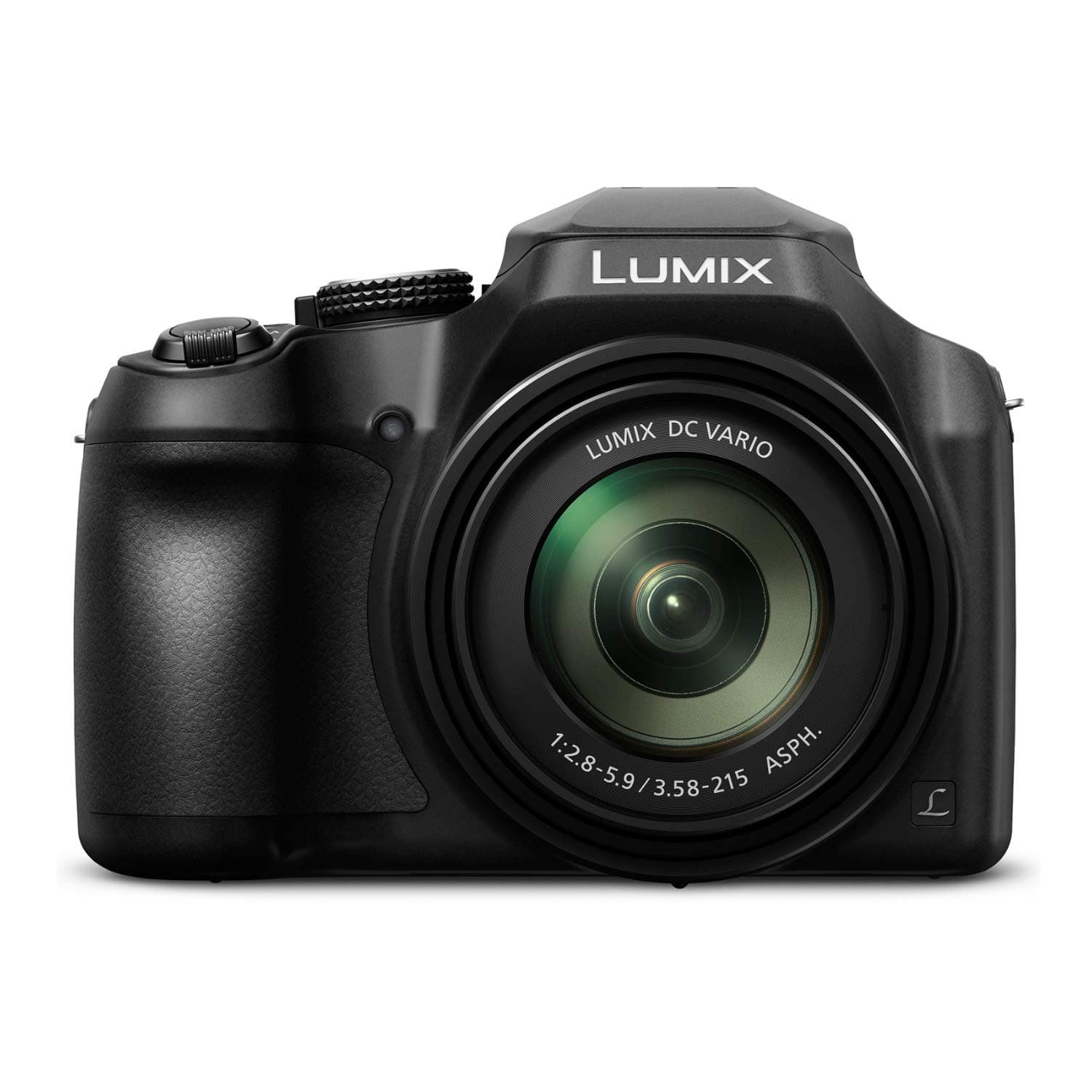

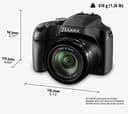
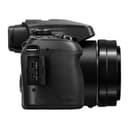

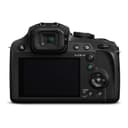
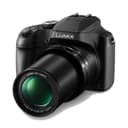
📷 Zoom into your next adventure with Panasonic Lumix FZ80 — where every shot tells a story!
The Panasonic Lumix DC-FZ80K is a versatile bridge camera featuring an 18.1MP MOS sensor, an impressive 60X (20-1200mm) optical zoom lens with Power O.I.S. stabilization, and 4K UHD video recording. Its bright F2.8-5.9 aperture range and advanced autofocus system deliver sharp images in diverse lighting conditions. The camera includes a sunlight-visible 3-inch touchscreen LCD and a high-resolution electronic viewfinder, plus travel-friendly features like USB charging and Wi-Fi connectivity for seamless sharing and power on the go.


| ASIN | B01MS16V42 |
| Age Range Description | Adult |
| Aperture modes | F2.8 |
| Are Batteries Included | Yes |
| Aspect Ratio | 16:9 |
| Auto Focus Technology | DFD (Depth From Defocus) technology |
| Autofocus | Yes |
| Autofocus Points | 193 |
| Best Sellers Rank | #11,807 in Electronics ( See Top 100 in Electronics ) #109 in Digital Point & Shoot Cameras |
| Bit Depth | 8 Bit |
| Brand | Panasonic |
| Built-In Media | AC Adaptor, Battery Pack, Shoulder Strap, USB Cable, camera |
| Camera Flash | Hotshoe |
| Camera Lens | 20-1200mm (60X) LUMIX DC VARIO lens with optical image stabilization |
| Color | Black |
| Compatible Devices | Smartphones, computers, tablets |
| Compatible Flash Memory Type | SDXC |
| Compatible Mountings | Micro Four Thirds |
| Connectivity Technology | HDMI, USB |
| Continuous Shooting | 10 FPS |
| Crop Mode | 4:3 |
| Customer Reviews | 4.4 out of 5 stars 3,602 Reviews |
| Digital Scene Transition | False |
| Digital Zoom | 4 x |
| Digital-Still | Yes |
| Display Fixture Type | Fixed |
| Display Maximum Resolution | 1040 x 320 pixels |
| Display Resolution Maximum | 1040 |
| Display Type | LCD |
| Dots Per Screen | 1040 |
| Effective Still Resolution | 18.1 |
| Expanded ISO Minimum | 100 |
| Exposure Control | manual-and-automatic |
| External-Memory Size | 64 MB |
| File Format | RAW and JPEG |
| Flash Memory Bus Interface Type | UHS-I |
| Flash Memory Speed Class | UHS-I |
| Flash Memory Type | SDXC |
| Flash Memory UHS Speed Class | UHS-I |
| Flash Memory Video Speed Class | V30 |
| Flash Modes | Manual, Slave 1, Slave 2, Multi-Flash |
| Flash Sync Speed | 1/200 |
| Focal Length Description | f = 3.58 - 215mm 60x |
| Focus Features | Contrast Detection Autofocus (DFD) |
| Focus Mode | Automatic AF (AF-A) |
| Focus Type | Depth From Defocus |
| Form Factor | Bridge |
| Generation | 1 |
| Global Trade Identification Number | 00885170310919 |
| HDMI Type | Type D Micro HDMI |
| Hardware Interface | AV Port |
| Has Color Screen | Yes |
| Image Capture Type | Stills & Video |
| Image Stabilization | Optical |
| Image stabilization | Optical |
| Item Weight | 1.4 Pounds |
| JPEG Quality Level | Fine |
| Lens Construction | 14 Elements in 12 Groups |
| Lens Type | Converter |
| Manufacturer | Panasonic |
| Manufacturer Part Number | DC-FZ80K |
| Maximum Aperture | 2.8 Millimeters |
| Maximum Focal Length | 1200 Millimeters |
| Maximum Image Size | 18.1 MP |
| Maximum Shutter Speed | 30 Seconds |
| Memory Storage Capacity | 64 MB |
| Metering Methods | Center-Weighted Average, Multi, Spot |
| Minimum Focal Length | 20 Millimeters |
| Minimum Shutter Speed | 1/16000 Seconds |
| Model Name | Panasonic Lumix FZ80 |
| Model Number | DC-FZ80K |
| Model Series | FZ80 |
| Movie Mode | Yes |
| Number of Diaphragm Blades | 1 |
| Optical Zoom | 60 x |
| Photo Filter Size | 55 Millimeters |
| Photo Filter Thread Size | 55 Millimeters |
| Photo Sensor Resolution | 18.1 MP |
| Photo Sensor Size | 1/2.3-inch |
| Photo Sensor Technology | CMOS |
| Real Angle Of View | 0.91 Degrees |
| Recording Capacity | 30 Minutes |
| Remote Included | No |
| Screen Size | 3 Inches |
| Self Timer | 10 Seconds |
| Sensor Type | CMOS |
| Series Number | 80 |
| Shooting Modes | Manual |
| Skill Level | Amateur |
| Special Feature | image-stabilization |
| Specific Uses For Product | Travel, Nightlife, Videography |
| Supported File Format | RAW and JPEG |
| Supported Image Format | JPEG, RAW |
| Total Still Resolution | 18.1 MP |
| Total USB 2.0 Ports | 1 |
| Total USB Ports | 1 |
| Total Video Out Ports | 1 |
| Touch Screen Type | Capacitive |
| UPC | 885170310919 |
| Video Output | Micro-HDMI |
| Video Resolution | 4K UHD 2160p |
| Viewfinder | Electronic |
| Viewfinder Magnification | 1.0x |
| Warranty Description | Manufacturer |
| White Balance Settings | Auto, Cloudy, Color Temperature, Daylight, Flash torch, Incandescent, Shade |
| Wireless Technology | BuiltIn; 802.11b/g/n |
| Write Speed | 10-30 MB/s |
| Zoom | Depth From Defocus |
R**Y
Does everything I need it to do and then some!
My first digital camera was a Sony Mavica that had 640x480 resolution and saved photos on floppy disks. That will give you some indication of how long I've been playing around with digital photography. For the past several years I had a Canon EOS Rebel T3 with multiple lenses. When I began to travel internationally for work, I wanted something smaller that I could take with me without having to carry both laptop and camera bags. I purchased a Panasonic Lumix DMC-ZS20 and absolutely loved it. It did everything I needed it to do in truly compact and low-stress "point and shoot." Recently, I've been debating whether to upgrade my Canon and investing in additional lenses or purchasing something new. After much research and soul-searching I opted for what many are calling a "bridge" camera. Although it felt a bit like a step down from a DSLR, I had to recognize that I simply don't shoot the same way that I used to. I no longer photograph weddings or senior portraits and really just needed a good, reliable camera that was compact enough that I would be more likely to take it with me when traveling. More often than not, I find myself using my iPhone because I didn't want to have to haul my camera bag around. There were three main reasons why I chose the FZ80 model. 1. Ease-of-use. I already knew from my previous experience with my point and shoot Lumix that this would be fairly easy to use. 2. Affordability. I couldn't justify the expense of the FZ2500, but felt the features and functions of the FZ80 would meet my needs. 3. Leica lens. Perhaps this is a hold over from my film shooting days, but Leica lenses have a reputation of being extremely high quality. If I was going to be giving up lens interchangeability, I wanted crisp, beautiful photos. I've only had this camera for a week and haven't had much of an opportunity to give it a good trial run, but so far, it's proven extremely easy to use and has resulted in some decent back yard photos. I only gave it 4 stars though due to the low F-stop range. I know it has a post-image editing tool to customize depth of field, but that seems like too much hassle right now for something that is a step above point and shoot. I haven't figured out the WiFi link, yet, but am looking forward to playing with that. I'm also looking forward to trying out the video function. The photos below show the "pink" moon on April 10th, a series of shots at different zoom lengths outside of my front door, and some flowers where I played with the various shooting modes. All-in-all, I'm very happy with this purchase. And the best part is that I was able to offset the cost a bit by selling my Canon EOS on eBay.
J**I
It beats my old Nikon by far at everything
I've only had the camera for three days. I have to admit that the selection and menu choices were overwhelming at first, even with some familiarity with cameras. Panasonic has some features unique to its brand and learning the terminology took some time. Rather than read the online manuals, I watched some of the tutorials available on You-Tube. I found 16 dedicated videos by Graham Houghton on the use of the camera. I'm about a quarter of the way through. The claims that the camera doesn't perform in various conditions just don't seem to hold any weight when one learns how to operate the camera properly, especially the claim that it performs poorly in low light. I took the camera to the hockey rink and shot in the lighting available in sports mode and was able to capture some great shots. I played around operating the camera in different modes outdoors and shot a hummingbird in flight at 1/8000 of a second, freezing the bird's wings in flight. Admittedly, the lighting was not in my favor from my vantage point but it was just a camera test, not an attempt at a prize winning photo. I took numerous photos of the same dahlias in different modes and ended up with a series of totally different interpretations of the same image. I also operated the camera at low light, using the setting recommended in the videos. The results were outstanding. I've yet to explore many of the camera's other features such as post focusing and operating the camera remotely with my android cell phone. I shot over 330 images at the hockey game and still had half battery life left according to the display. I have not tried the camera in movie mode since I seldom shoot video. From what I've experienced so far, I believe my photos will well exceed my current exposures. I've barely learned the basics of the camera's capabilities. With the huge amount of creative control, this is not a camera you can set down and then pick up a month later and remember how to operate all of its features. And even then, a quick review of the camera's manuals or the videos may be necessary if all of the camera's potential is to be used. While some camera fanatics may complain about the camera's sensor size or some indistinguishable lens aberration due to the camera's long lens, let's face it, most of us will never have our photos printed as wallpaper murals. We view our creations on our cell phones, tablets, laptops, and TVs. The images created by this camera can be as stunning as any full SLR with thousand dollar lenses and are limited only by the shooters capabilities, not by the camera's limitations. A nice feature that many bridge cameras do not have is a threaded front on the lend for filters. The shooter can add a polarizing filter or ND filters to extend shutter times to take specialty photos. If I had one negative thing to say, I would have appreciated a tilt screen since, when traveling and standing in crowds, it is sometimes helpful to hold the camera over everyone's heads and shoot down at a high angle, using the tilt screen to focus. I can live without that one feature given all of the other features of this incredible camera.
J**S
AWESOME ZOOM, poor low light action shots, no focus ring, FAST FPS, Great bargain at $300
Pros: The zoom is truly awesome in this. No SLR lens can compare. It's great for birdwatching, zooming in on a face in the crowd, wildlife shots, and even just cool stuff that's a long way away. 4k video is great. I'm a Canon SLR person and they don't have 4k in the low or mid-range for an SLR, so that's why I got this and it is great. Fast FPS. The camera can take 4k video, which is 8mp at 30fps. It claims it will do it in 4k Burst mode, which really means it takes a 4k video and will show you frame by frame and let you select ones to make photos. Horrible to do on the camera's screen, I wound up getting software that would do it on my PC and just pulling all the images out. Which you can do from any video, so this is an ineffective feature (at least for me). I wanted something that would create 30 images/second, which I could go through on a real screen and post quickly. As this feature is why I chose the Lumix over a Nikon, I'm a little annoyed at their implementation. Cons: Low light conditions for moving subjects are awful. To the point that you will have low light issues in places you didn't realize were low light, and there is no "action" choice on the selector. The F2.8 for the lens in wide isn't matched by a very sensitive sensor, or it's not automatically upping the sensitivity as needed. I have a ton of blurry shots of my kids because of this. I've played with the light levels and it is cludgey at best, completely ineffective at worst. I've hit a sweet spot a couple of times by setting it to 1/60th of a second, but it still has issues (and my kids aren't that fast). This is an AMAZING outdoor daytime camera, but for kids in a bounce house it doesn't work for me. No Focus Ring, so obstructed zoom is hit or miss. Generally, zoom and autofocus are fantastic and FAST. This means that taking a picture of wildlife that is partially obstructed by a branch means that you may get a fantastic shot of a leaf instead of the Pileated Woodpecker you were trying for. Also, since the aperture only goes to F-8, there's a limit to how much depth you can get so that crystal clear leaf may only be 6 inches closer than the woodpecker, but, oh well. Very limited options on the selection wheel. They've got the fab 5 (auto, P, A, S, M), then Expressive (for filters), Portrait, Panoramic, C? (maybe custom, but defaults to 1080p/60fps), and then Video (for adjusting settings in video mode) My last complaint is the smallest, the features (like C above) are poorly explained on screen (aperture is only "A", which isn't useful to noobs), which means that Panasonic style features are not understandable to people with more experience. I accidentally turned on the feature of take 3 shots and merge them which doesn't work for kids moving (but would be great for landscape shots). Missed 1/2 of my kids' Karate class trying to fix it instead of taking pictures. Overall, this is an AWESOME camera if you are taking zoomed pictures or videos in sunlight, or of non-moving subjects. The autofocusing on a leaf can be annoying, but survivable. The wifi, etc. is nice but not particularly useful for me. I have tested it and it'd be great to put on a monopod and use your phone to selection shots in a crowd. And for $300, no SLR can compare on value. However, once Canon comes out with the T8i, if the 4k is good, I'll likely put this on craigslist. Because of the crappy low light, I still use my Canon T4i if I'm going somewhere like the Baltimore Aquarium or Natural History Museum with my boys, and this camera should have put my T4i to bed.
L**E
If you accept it for what it is, this is THE capture the moment camera!
I have been quite pleased with the results of this camera. A main use for this cam is for parents and others who find themselves seated in the audience but wanting to photograph friends and family members while they perform on stage or a field (think kids soccer game, or marching band, orchestra, etc...). The 60x zoom is just incredible. In both sunny and overcast I get perfect pictures. I've used it for friend's child who is in a university marching band, we sit about 20 rows up on the side of the end zone and I am able to get super sharp close-ups of anyone on the field. I'm sure many parents know the feeling of when trying to take these kind of pictures with your phone and your loved one ends up a tiny ant in the picture. I would not count on this camera as much indoors and definitely not in low light. But for sunny and overcast outdoor, possibly well lit indoor arenas, it doesn't matter where you are sitting, the reach will give you great pics. I was concerned initially as some reviewers would say things like "better hope its not cloudy with a camera like that!". But I have several times gone full zoom in overcast skies and ISO doesn't budge above 80/100. The stability and being seated or using a string tripod can boost even more. Another advantage is that some venues, like college football do not allow "professional cameras" or cameras with lens over a certain length. This cam is a pretty safe to get into a stadium as is clearly for amateurs and retracted, is quite unassuming. If you accept it for what it is, it is a wonderful camera to make sure you always capture those moments and capture them up close and personal no matter you are seated.
L**R
Fantastic camera, ridiculously good zoom range, good 4k video, great image stabilization
Great camera! You get a lot of bang for your buck. I've owned this camera's bigger buddy the Panasonic GH4 for a few years and am used to the controls and the camera's firmware. Panasonic does a great job with their auto-focus implementation as well as the camera's software, particularly the touchscreen implementation. For such a tiny sensor comparatively to the GH4 (and even other mirrorless cameras my Sony A7R2), it does a good job. If you pixel peep at the images, they're definitely not going to be the same quality as a $3K camera and $1k lens combination for a pro-level mirrorless or DSLR. But, those same pro cameras cannot touch the zoom range of this camera. If there's enough light, the pictures and video from this camera as outstanding, given the camera's sensor's limitations. The stabilization is also fantastic. You can hand-hold a lot of shots and video that would never turn out with a camera+lens without stabilization. Pros: * Unbelievable zoom range * Good quality photos and video with enough light * Stabilization is fantastic * Panasonic's camera firmware, menus and touchscreen implementation are top-notch * Great battery life, cheap after-market batteries as well. I recommend these batteries and charger: Kastar Battery X2 + LCD Dual Charger for Panasonic DMW-BMB9 DMW-BMB9E DMW-BMB9PP & Lumix DMC-FZ40 DMC-FZ45 DMC-FZ47 DMC-FZ48 DMC-FZ60 DMC-FZ62 DMC-FZ70 DMC-FZ72 DMC-FZ100 DMC-FZ150 Leica V-Lux2 V-Lux3 * Fantastic remote control and live view of the camera from a smartphone or tablet. Panasonic's remote control and live view implementation is hands-down the best among all the camera vendors. Cons: * Low light or fast-action shots without a lot of light are challenging * Zoom mechanism is a little rough and not smooth (likely because the lens is so light but the zoom range is so unbelievably long) Highly recommended camera for general purpose walk-around shots.
V**R
can do better for simple point and shoot camera
I was looking for a descent bridge camera for an upcoming trip. I had high hopes for this camera as it was given descent reviews and has a long zoom. I have been using a DSLR digital camera for a long time. The typical weight for my camera bag is about 50lbs... with my super telephoto zoom weighing in at around 13 lbs. So I was really wanting to have something that would work without all the extra gear... and I really wanted an extended zoom. A few things that were below my expectations with this camera: - very small battery which equates to poor battery life - poor image stabilization ... I am used to much better - not good in low light - poor image quality (when examining images there are a lot of aberrations) - mount for quick mount plate covers battery door due to poor design - no easy manual focus.. its electronically controlled and lags - auto-focus constantly misses the targer - using the eye viewer often means your face touches the touch screen and changes the 'targets' - the UI is a bit awkward - Panasonics supported applications for this phone are lacking - the 55mm thread adapter is virtually useless for filters and adopters.. so no ND or polarizers - there is no microphone jack - panasonics web site in general is kind of poor, and for this camera is really poor - there is no built-in GPS support - there is no support for a remote trigger - using a lens shroud somehow interferes with the operation of the WB and focus - doesnt come with a battery charger (you have to use the camera to charge the battery) - a lot of features, but not a lot of available content (like on-line tutorials from Panasonic and the manual is pretty minimal for the features) Since this is being sold as a bridge camera, simple, inexpensive changes could significantly improve this camera. I love the concept of a point and shoot with a super zoom.. its a shame that the rest of the camera is missing the features that would make this camera really functional for a typical user of a DSLR camera. A few things I do appreciate: - built in flash - WIFI support - super zoom - touch screen - the ability to do post photo zoom adjustment (a kind of cool feature that really needs more CPU and a desktop app) As a DSLR user, it is not uncommon to take something between 1000 and 5000 photos a day on a trip. I am getting around 125 photos on a battery being super careful about power. That is pathetic for this level of camera. A few things that any camera company should seriously consider to get people purchasing cameras instead of using their phones: - take phenomenal photos out of the box - it should be fast... not take seconds to focus.. milliseconds should be the bar - provide deep training on each model camera with streaming video - let people download the video to take with them on trips - build in GPS in the camera. no phone app, no extra device.. this is a cheap technology these days - provide web services that auto-tag the photos using AI technology (like Googles service has) - make sure there are lens adapters for your devoted camera followers to move their investments forward - make sure it has amazing low-light or near IR photo abilities - make sure there are affordable long life/high power batteries.. 3 batteries should shoot 1000+ photos Remember, a camera is competing with cell phones... it needs to be so much better that people will make the effort to carry it on those special occasions... and it needs to perform flawlessly, exceptionally and reliably. This camera works, but it does not hit that bar.
M**.
Pretty Nice for the Price
This is a pretty nice travel camera for the price. It's about the size of a regular SLR, but lighter. Quite frankly, the 1200 mm zoom feature is what makes this camera attractive. It has its limitations to be sure--the depth of field doesn't seem to change at all with aperture or focal plane adjustments, which is not really a problem in most cases. (You can add effects in Photoshop if you need to.) You get some noise with ISO above 400. But honestly, you can shoot in RAW, you can change saturation, contrast, etc. and you can get close up without the bulk of a heave 300 mm lens with an extender. The lens glass doesn't have the same quality as a heavier "real" SLR lens, but this does a pretty nice job overall. So I'm taking this camera PLUS a small SLR camera with a an 18-55mm lens and a 55mm to 200mm lens on a trip to Europe and we'll see how this does. Since the recommendation is just to keep it in Ai+ or Program, I can hand this camera off to my traveling companions without much concern. Graham Houghton's videos on YouTube can be very helpful in understanding this the features of this camera, its limitations, and how to use it. One thing, it does seem to be a bit of a battery-drainer, so I would definitely get extra batteries!
F**Z
Wow what a camera!
Wow what a camera! I have had many, many cameras over the years from film to digital. This is for me the best I have ever owned. I love the way it takes pictures and all of the options available through its settings. I bought this camera after doing lots of research and decided to pay a bit more so I could have both a wide angle and long lens in one camera. I have a Canon with lots of lenses but truth be told I no longer want to be lugging around a heavy camera bag and tripod. With the Lumix I can point and shoot or adjust speed and aperture to my hearts content. My vacation has been greatly enhanced with this camera and the shots I have taken are vastly superior to anything I can take with my cell phone. It has a number of creative settings which function like filters for close-ups, scenery or special effects. It also does double duty as a 4k film camera for short takes. I also like the Panorama setting that allows you to get a wide landscape shot to capture more of the surrounding environment. One caution is to be very careful when ordering extra rechargeable batteries. By mistake I bought a battery that fit perfectly but would not charge. When I investigated further it turned out to be a battery for the FZ70. So be extra careful and make sure the battery is for the FZ80. Also, on that note the camera thus far has held up to a full day of photography. I have had to recharge at the end of each day so having extra batteries on hand is a good idea. This is a very nice piece of photographic equipment. No complaints thus far and I can recommend it without hesitation.
TrustPilot
1 个月前
1 个月前