We remain fully operational. Our teams are working around the clock to ensure your deliveries continue safely.

下载应用程序


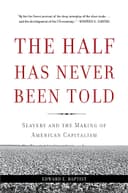
The Half Has Never Been Told: Slavery and the Making of American Capitalism [Baptist, Edward E] on desertcart.com. *FREE* shipping on qualifying offers. The Half Has Never Been Told: Slavery and the Making of American Capitalism Review: The Truth Is Needed if We Are to Be Truly Free - Anyone who had to grow up in the USA during the 1950s and 1960s was propagandized by the myths that grew out of the "noble cause" version of the racist war to save slavery fought by the Confederate States of America between 1861 and 1865. The version of history that we were taught in public and private schools during those years might have begun and ended with the showing of "Gone With The Wind" -- with maybe "Birth of a Nation" thrown in to remind us of the nobility of Nathan Bedford Forrest's band of veterans of the noble cause. Add to that the myth of Robert E. Lee and the trashing of U.S. Grant (and Reconstruction) and we had a deep hole to dig out of if we wanted to understand the true history of a country that in 1861 had four million men, women and children in bondage and an entire class of pundits, preachers, and professors devoting their well-subsidized writings to creating the racist myths of American slavery. Of course there were books and studies that pointed out the other side and debunked the silly stuff produced by Margaret Mitchell and the official racist propagandists posing as historians -- but they were as hard to find in most American schools when I went to elementary school (1952 - 1960) or high school (1960 - 1964) as union leaders who would praise the Communists who had helped bring some rights to the workers in the mass industries from electrical (near where I lived, the GE Kearny works), Auto (down the street from our home, the BOP GM plant) and of course the steel mills that had helped our parents (both my Mom and Dad were in the World War II Army) defeat the 20th Century version of the "Noble Cause" -- Nazism. And so it's wonderful that "The Half Has Never Been Told" is now available for readers to dig their way out of the evil mythologies that surrounded the century of Lynch Law, KKK rule, and "Gone With The Wind" nonsense. There were other books available even in those dismal days, of course. Had we had access to the writings of W.E.B. DuBois in Linden New Jersey we could have tried (probably unsuccessfully) to argue with those who cried about the fate of Scarlet O'Hara or pushed us into fighting Communism by traveling 8,000 miles to what had under colonialism been called "Indochina." But it was hard. As the man said in the movie (later), "Free your mind and your ass will follow." But the corollary is that if your mind is enslaved to a set of carefully orchestrated lies about U.S. history, then you have a double challenge: finding the truth and then doing something about it. "The Half Has Never Been Told" is one of the few books that takes on the challenge of rectifying the silliness of official U.S. History all the way to the mystical roots in the lies about the economics of American slavery. As Baptist demonstrates, using an enormous number of original sources, slavery in the USA was enormously profitable -- and more so every decade between the sad compromises of the Constitution and the onset of the Civil War. Contrary to the economic myths of previous generations, slavery was enormously profitable and grew in profitability throughout the six decades of the 19th Century during which it ruled the American South (and dominated much of the economy of the rest of the country). "Slavery and the Making of American Capitalism" is the apt title here. Without slavery, American capitalism couldn't have invented itself with such power by the middle of the 19th Century. And the power -- economic and political -- because the financial power to purchase the lies that passed as "history" for nearly 100 years. Baptist weaves the stories of the lives of slaves into his mega-narrative about the political economy of American racism (and capitalism) and then unfolds the narrative into the future, when the slaves had become free. The joining of the two helps make the history more profound. The history of working people has been suppressed for all of "history," so Baptist's narrative is a contribution that goes beyond just the history of the USA. Around here in Chicago, where we have been revitalizing the work of the unions that represent working people (I am a delegate, now retired, in the Chicago Teachers Union, and everyone in our family took part in the Chicago Teachers Strike of 2012), we have to constantly remind one another that the dominant ideas of any generation are the lies that the ruling class tries to make everyone believe as "fact." As I remind my friends, "They [the owners and bosses] will do anything we can't stop them from doing... They've been getting away with that since they forced us to build the pyramids and didn't even say 'Thank You'"... "The Half Has Never Been Told..." is one of several books in 2014 that helps set the latest distortions of the record straight. Along with Piketty's "Capital" and a handful of other books, it's worth the time (and sleeplessness) required to get through it in detail. But upon finishing it, you have to wonder. How could anyone as nice as our mothers (and others) believe to the point of tears the racist nonsense pushed by Hollywood (and the publishing industry) in the form of "Gone With The Wind" and the rest of that stuff? So maybe we can alert one another to the next round of lies that will be pushed on us by the preachers, pundits and professors who serve as the propagandists of the current generation of plutocrats. We'll see. Meanwhile, thanks for the research and hard work that went into "The Half Has Never Been Told..." Noting that the hardest work was done by the slaves who toiled without much ability to tell their narratives during all those years. Now that others are also digging into the facts, it's good that this part if now being told and retold. And it's also time we revised further the odious "heroes" of slavery and the lies that surrounded it, from Thomas Jefferson and Robert E. Lee to the Margaret Mitchells and Walt Disneys (you need to review "Song of the South" and "Old Yeller" if you don't realize this part) of the 20th Century. Review: A book every child regardless of race should read in high school - Book is thoroughly researched and documented. A real quality work. Tells that slavery produced cotton, the commodity all the world needed and developed the United States economy at great cost to the slaves. No innovations were involved in what the slaves did just cruel method after cruel method to increase production. Over the period of time when cotton was picked production increased 300%. A lot of information about how slaves were treated. e.g. slaves walked as fast as they could while walking day after day in many cases from slave markets in Richmond, Va to clear forests for fields in Alabama and Mississippi. Families often broken up never to see each other again. A great book. Interesting that no major publisher published the book.also interesting that Richmond did not have it in its main library. Slavery is a secret kept by white supremicists that affects black people today. Black and white people have to realize its horrors.


| Best Sellers Rank | #39,050 in Books ( See Top 100 in Books ) #77 in Discrimination & Racism #103 in U.S. State & Local History #104 in African American Demographic Studies (Books) |
| Customer Reviews | 4.8 4.8 out of 5 stars (2,406) |
| Dimensions | 6 x 1.75 x 9.3 inches |
| Edition | Reprint |
| ISBN-10 | 0465049664 |
| ISBN-13 | 978-0465049660 |
| Item Weight | 1.5 pounds |
| Language | English |
| Print length | 560 pages |
| Publication date | October 25, 2016 |
| Publisher | Basic Books |
G**T
The Truth Is Needed if We Are to Be Truly Free
Anyone who had to grow up in the USA during the 1950s and 1960s was propagandized by the myths that grew out of the "noble cause" version of the racist war to save slavery fought by the Confederate States of America between 1861 and 1865. The version of history that we were taught in public and private schools during those years might have begun and ended with the showing of "Gone With The Wind" -- with maybe "Birth of a Nation" thrown in to remind us of the nobility of Nathan Bedford Forrest's band of veterans of the noble cause. Add to that the myth of Robert E. Lee and the trashing of U.S. Grant (and Reconstruction) and we had a deep hole to dig out of if we wanted to understand the true history of a country that in 1861 had four million men, women and children in bondage and an entire class of pundits, preachers, and professors devoting their well-subsidized writings to creating the racist myths of American slavery. Of course there were books and studies that pointed out the other side and debunked the silly stuff produced by Margaret Mitchell and the official racist propagandists posing as historians -- but they were as hard to find in most American schools when I went to elementary school (1952 - 1960) or high school (1960 - 1964) as union leaders who would praise the Communists who had helped bring some rights to the workers in the mass industries from electrical (near where I lived, the GE Kearny works), Auto (down the street from our home, the BOP GM plant) and of course the steel mills that had helped our parents (both my Mom and Dad were in the World War II Army) defeat the 20th Century version of the "Noble Cause" -- Nazism. And so it's wonderful that "The Half Has Never Been Told" is now available for readers to dig their way out of the evil mythologies that surrounded the century of Lynch Law, KKK rule, and "Gone With The Wind" nonsense. There were other books available even in those dismal days, of course. Had we had access to the writings of W.E.B. DuBois in Linden New Jersey we could have tried (probably unsuccessfully) to argue with those who cried about the fate of Scarlet O'Hara or pushed us into fighting Communism by traveling 8,000 miles to what had under colonialism been called "Indochina." But it was hard. As the man said in the movie (later), "Free your mind and your ass will follow." But the corollary is that if your mind is enslaved to a set of carefully orchestrated lies about U.S. history, then you have a double challenge: finding the truth and then doing something about it. "The Half Has Never Been Told" is one of the few books that takes on the challenge of rectifying the silliness of official U.S. History all the way to the mystical roots in the lies about the economics of American slavery. As Baptist demonstrates, using an enormous number of original sources, slavery in the USA was enormously profitable -- and more so every decade between the sad compromises of the Constitution and the onset of the Civil War. Contrary to the economic myths of previous generations, slavery was enormously profitable and grew in profitability throughout the six decades of the 19th Century during which it ruled the American South (and dominated much of the economy of the rest of the country). "Slavery and the Making of American Capitalism" is the apt title here. Without slavery, American capitalism couldn't have invented itself with such power by the middle of the 19th Century. And the power -- economic and political -- because the financial power to purchase the lies that passed as "history" for nearly 100 years. Baptist weaves the stories of the lives of slaves into his mega-narrative about the political economy of American racism (and capitalism) and then unfolds the narrative into the future, when the slaves had become free. The joining of the two helps make the history more profound. The history of working people has been suppressed for all of "history," so Baptist's narrative is a contribution that goes beyond just the history of the USA. Around here in Chicago, where we have been revitalizing the work of the unions that represent working people (I am a delegate, now retired, in the Chicago Teachers Union, and everyone in our family took part in the Chicago Teachers Strike of 2012), we have to constantly remind one another that the dominant ideas of any generation are the lies that the ruling class tries to make everyone believe as "fact." As I remind my friends, "They [the owners and bosses] will do anything we can't stop them from doing... They've been getting away with that since they forced us to build the pyramids and didn't even say 'Thank You'"... "The Half Has Never Been Told..." is one of several books in 2014 that helps set the latest distortions of the record straight. Along with Piketty's "Capital" and a handful of other books, it's worth the time (and sleeplessness) required to get through it in detail. But upon finishing it, you have to wonder. How could anyone as nice as our mothers (and others) believe to the point of tears the racist nonsense pushed by Hollywood (and the publishing industry) in the form of "Gone With The Wind" and the rest of that stuff? So maybe we can alert one another to the next round of lies that will be pushed on us by the preachers, pundits and professors who serve as the propagandists of the current generation of plutocrats. We'll see. Meanwhile, thanks for the research and hard work that went into "The Half Has Never Been Told..." Noting that the hardest work was done by the slaves who toiled without much ability to tell their narratives during all those years. Now that others are also digging into the facts, it's good that this part if now being told and retold. And it's also time we revised further the odious "heroes" of slavery and the lies that surrounded it, from Thomas Jefferson and Robert E. Lee to the Margaret Mitchells and Walt Disneys (you need to review "Song of the South" and "Old Yeller" if you don't realize this part) of the 20th Century.
R**D
A book every child regardless of race should read in high school
Book is thoroughly researched and documented. A real quality work. Tells that slavery produced cotton, the commodity all the world needed and developed the United States economy at great cost to the slaves. No innovations were involved in what the slaves did just cruel method after cruel method to increase production. Over the period of time when cotton was picked production increased 300%. A lot of information about how slaves were treated. e.g. slaves walked as fast as they could while walking day after day in many cases from slave markets in Richmond, Va to clear forests for fields in Alabama and Mississippi. Families often broken up never to see each other again. A great book. Interesting that no major publisher published the book.also interesting that Richmond did not have it in its main library. Slavery is a secret kept by white supremicists that affects black people today. Black and white people have to realize its horrors.
R**S
A truly remarkable book!
As as student of history, I generally read works on Central and Eastern Europe. Every now and then, I like to harken back to my undergraduate African-American studies minor and pick up a book on African-American history. I'm glad I chose this one and it certainly did not disappoint. This is one of the best historical works I've ever had the pleasure to read and pulls into clearer focus the relationship between slavery and capitalism in the US. So many critics of this book seem to only dwell on the author's discussion of the violence that slaves suffered as if the violent mistreatment was the ONLY thing that made slavery profitable, not the fact that the institution of forced, unfree labor itself made slavery profitable and contributed to the wealth of white enslavers in the South, Northerners and Europeans alike. Baptist's book is enlightening and detailed in drawing the strings together tying slavery to American capitalism. I absolutely recommend this book to any student of history.
A**R
Just a remarkable work of history. Beautifully structured and written. Bold, heartbreaking, a genuinely moving book that captures the humanity of the enslaved while illustrating their vital importance to the development of American capitalism. Historical writing at its best.
A**2
In many ways this book does for the story of slavery what Dee Brown's "Bury my heart at Wounded Knee" attempted to do for Indians in 1970 - it recasts the whole of the story of slavery to see it through the experiences of those it affected. But where Brown's speculative approach was criticised, Baptist is forensic in his evidence. He draws the tales of ordinary men women and children from the pages of the scant records and produces a narrative of living, breathing human beings. Baptist fundamentally challenges the bastions of long held slavery orthodoxies and demonstrates how the issues which led slavery to such success not only built modern America but also drove the development of capitalism. Further he cautions, that such practices might still be seen in the world today. A powerful book and required reading for anyone interested in this topic.
C**E
Far from being a sideshow, a marginal phenomenon, slavery epitomizes American XIXth century capitalism. Enormous fortunes were built litterally on the back of black people transported against their will to the "Southwest" and made to toil eleven hours a day in the cotton fields. "Added value" was extracted with the whip. The "half" which is told here is in fact a main component of American history. Edward Baptist is a professional historian who builds his case on thousands of charts and original documents that make his main thesis absolutely convincing and a valuable contribution to the ongoing revival of studies devoted to slavery. A minor spoiler now: I wish the author had focussed on his point and refrained from telling individual stories, or more precisely, to woe the reader with the premices of individual stories that never fully materialize, probably for lack of documents.
K**R
This is a forensic debunking of previous attempts to limit the impact of slavery on the development of the American republic in the nineteenth century. The author comprehensively demonstrates that slavery was central not just to the development of Southern agrarian capitalism but also to Northern finance capitalism.
R**Y
My husband enjoyed reading this book.
TrustPilot
1 周前
2 周前