We remain fully operational. Our teams are working around the clock to ensure your deliveries continue safely.

下载应用程序


💾 Capture Every Moment, No Compromises.
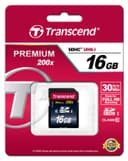
The Transcend 16GB SDHC Class 10 memory card delivers up to 30MB/s read speed and guaranteed 10MB/s write speed, ensuring smooth burst shooting and HD video recording. Compatible with all SDHC devices and compliant with SD 3.0 standards, it comes with a lifetime warranty and eco-friendly packaging—making it the smart, reliable choice for photographers and videographers who demand performance without breaking the bank.


| ASIN | B002WE4HE2 |
| Additional Features | Lightweight |
| Best Sellers Rank | #384 in SecureDigital Memory Cards |
| Brand | Transcend |
| Color | Yellow |
| Compatible Devices | Camera |
| Customer Reviews | 4.6 out of 5 stars 25,886 Reviews |
| Flash Memory Type | SDHC |
| Global Trade Identification Number | 00086000566609, 00760557817246, 00778890700484 |
| Hardware Connectivity | SDHC |
| Item Weight | 0.01 Pounds |
| Manufacturer | TRANSCEND |
| Media Speed | 10 MB/s |
| Memory Storage Capacity | 16 GB |
| Model Name | TS16GSDHC10 |
| Model Number | TS16GSDHC10 |
| Read Speed | 20 Megabytes Per Second |
| Secure Digital Association Speed Class | Class 10 |
| UPC | 854432534486 086000566609 617407587739 778890700484 033584550548 763616003178 971471412824 021112442847 809385668788 809186273891 760557817246 091428531184 132017586007 807030498292 809185817287 808111678336 804066563154 885782164795 |
| Unit Count | 1.0 Count |
| Warranty Type | Lifetime |
F**K
Fast and Reliable Performance - I get 44 Mb/s Read & 27 Mb/s Write
Between the two recent AirShows ( Wings Over Camarillo, CA and MCAS Miramar, San Deigo-CA ) and over 1200 pictures that I've taken at these events I can highly recommend you this Inexpensive and reliable SD card for your DSLR Camera Performance ------------------ - I purchased this SD card from Amazon specifically for the two Airshows mentioned above that I had been planning to visit for almost an year now and I wanted something fast , reliable and one that does not break the bank for my Nikon D5100 DSLR kit. And based on those parameters and my experience, it fits the bill perfectly - I used this SD card for several sustained 'Burst Shots' in Sports mode for capturing fast moving aircraft or taking a fast pic at the right moment when to aircraft were doing a fast head-on flyby (see pics) and this card did not let me down in any of those moments - I also did a synthetic benchmark performance test using the free software CrystalDiskMark : Claimed Performance : "Upto" 30 Mb/S Read and Write, 10 Mb/s Guaranteed Actual Performance : 44 Mb/S Read Max , 27 MB/s Write Max Overall Read Performance : 31 % Faster than max theoretical value claimed Overall Write Performance : 11% Slower than max theoretical value claimed The Good ------------- - Solid real world performance for taking Hi-Res RAW images in Burst mode without any issues - Excellent synthetic performance in benchmark tests as well - Comes with a plastic case for safe storage - Super inexpensive - 30 GB usable storage space - Good warranty policy Cons -------- - I have nothing to complain about this card at its price point - A word of warning thought , because this SD card is so popular, there are plenty of fakes out there , I would HIGHLY recommend verifying your product serial number with the Product Verification Tool on Transcend's official website Final Thoughts ---------------------- If you are looking for a good , reliable SD card that is good enough for fast, sustained burst photography that does not break the bank, you are looking at the right place. I can highly recommend this card
D**M
Amazing card for SDHC
I use this SD card for my lower end cameras, such as the Canon Rebel T2i, otherwise known as the 550D. Even though that camera supports SDXC memory cards, I didn't think I needed that much speed for this little camera, so I bought this memory card. Overall, the speed of this card is very nice. I notice that when copying files onto your computer, it can be a little slow, even with a high-end card reader, but it doesn't seem to bug me. While taking photos, This card saves it immediately. When I'm shooting RAW, I notice some lag after about three to four shots, which isn't excellent, but I don't shoot RAW all that often, so I don't mind. When shooting large JPEGs with this memory card (The camera I am using is 18 MP), I need to shoot about 30-40 pictures before it starts lagging, which is pretty nice, seeing the burst speed is only 3.7 fps on the camera I use. Also, beware that when this card starts to get full, the performance does slow down a bit, and sadly, the lag starts when this card gets to be about half full. For the videographers out there, this card works really well. This card is able to save 1080p video at 30fps with ISO all the way up at 6400 until the card is full. I find that really rare in a memory card, but it handles HD video really well. Whenever I take movies with this card, it never randomly stops recording because of lag. To sum this up, this is a nice and cheap card for the capacity and speed, and I find this card works very well. Of course, if your camera has an SD slot and you're using it for RAW photography, you will need to find a faster card, such as a Sandisk Extreme Pro SDHC card or an SDXC card, if your camera can support it. Otherwise, this is a great card for DSLRs and works great with point-and-shoot cameras as well, although for point-and-shoot cameras, this card is a bit overkill, unless you are shooting movies with it.
N**R
A solid 'class-10' card at a great price
I purchased this Transcend 16 GB SDHC Class 10 Flash Memory Card TS16GSDHC10E about 1 year ago, for use in my Canon EOS Rebel T1i . So far I have zero problems with its performance or reliability. I benchmarked the card upon its arrival, using the free Flash Memory Toolkit. Here are my findings: - For small file size of 1MB, it achieved a write speed of 9.9MB/s - For larger files of 2-5MB (typical photo application), its write speed is around 12.5MB/s - The read speed is consistently high at around 17MB/s (see my uploaded chart in 'Customer Images' section for details) I then tested this card using H2testw v1.4, which measures the sequential read/write speed of 1GB files (typical video application). It achieved even better speed of 14.6GB/s write, and 17.8GB/s read. For a card to be marketed as 'class-10', it must be able to deliver a minimum sequential write speed of 10MB/s. This Transcend card exceeds the spec by a huge margin. It is a great value especially at the present low price. [Aside] I noticed a disturbing trend recently. Many flash memory card manufacturers seem to be loosening their standard for 'class-10', in oreder to sell slower cards at premium prices. Cases in point: - The PNY 32 GB microSDHC is marketed as a 'class-10', but it is generally slower than a class-4 SanDisk microSDHC - The Kingston Digital 16 GB Class 10 SDHC Card SD10G2 performs much slower than Kingston 'class-4' card when used in a digital camera. - The SanDisk Ultra 16 GB 6 SDHC (SDSDRH-016G-A11) was called a 'class-4' one year ago. But now the same Ultra card is marketed as a 'class-6'. Although to be fair, the old Sandisk Ultra card actually performed better than most other brands of 'class-6' cards.
I**Y
Great card, but beware of fragmentation.
I own five of these cards so far, and they have not let me down. My primary camera is a Canon 60D, plus a couple of Canon P&S cameras. This review is to primarily address the issue I saw mentioned in the 'most helpful critical review'. Namely, with video recording stopping after 2 seconds. After some experimenting, I am convinced that the issue is free space fragmentation. A lot of people, when reviewing recently shot images, tend to delete the 'non-keepers'. This creates blocks of memory marked as free on the card. When you try shooting a video, if the camera starts to write into the lowest addressed free block it finds, it will need to look for another free block when this one is filled. This is where the problem seems to occur. My experiments were simple: start with a freshly formatted card. Shoot a couple hundred images, some videos. As long as card is being filled up sequentially, with no deletions, there are never any abrupt video stops. Never. Now, go through your shot images, and delete a few here and there. Try shooting a video. There is almost a 100% guarantee that you will get an abrupt recording stop. If you shoot JPEG, the stop comes within 2 seconds. If you shoot RAW, it comes in 5-6 seconds. I suspect Sandisk controller chips may utilize a different garbage collection algorithm, potentially using the main body of remaining free space in preference to re-using freed blocks. This indeed would make them more attractive to those who tend to review and delete in-camera. I, personally, never delete in-camera. I keep shooting until the card fills up. Once I have transferred from card to PC and backed up, I format the card in camera, rather than delete. Aside from the times when I did my experiments, I have never seen an abrupt video stop.
G**R
It does the job very well for my application
I've seen most all of the reviews here for this item's rating on read/write/transfer speed in cameras. That's all well and fine, but my application is a GPS, a DeLorme PN-40 to be exact. I purchased this card to keep all my TOPO9 maps so I won't have to load and unload whenever I go to different places to geocache. Note, if you have a PN-40 and want to load the entire TOPO9 series, you WILL need a 32GB card. Keep in mind now that the formatted size is 30.2GB, but yes, you will have a lot of space left over for POIs, too. Let's talk speed. I also have a Garmin GPS, and map update downloading takes about an hour or so for roughly 1GB transferred and configured mapping to internal memory. I inserted this particular card into my laptop, formatted it to FAT32, installed to my DeLorme GPS, fired up, and the card was immediately recognized. I began to install the TOPO9 maps through my laptop (lower 48 only) and watched the process. Two hours went by and only the first disc of four had been loaded. Upon looking at what had taken place, I saw that over 4GB had been written in two hours. A quick calculation told me that was about twice the speed as the Garmin download. In the end, close to 22GB had been written in about eight hours. Not bad at all in my book. There was right at 8GB of space left over for POIs and waypoints - far more than I'll use, I'm sure. As for boot up time, it now takes the GPS about another 12 seconds to boot up and begin looking for satellites, than it did with no card in the slot. Again, not bad at all. I bought mine at a very competitive price, but I see the price changes constantly. If knowledge serves me correctly, this card, as all memory, is a commodity item, so the price will fluctuate. When I bought mine, the price had changed three times in one day. I got mine in the middle of the range. Keep watching it because the price will change because it's the nature of the beast. I can't fairly compare it to the others at twice or three times the price, but I can say I am very pleased with the performance. I have not tried this card in a camera, so I cannot rate it one way or the other in that application. For the money, this card does the trick in a GPS.
S**C
Great Value for the Price
Update 3/6/2012 I own about 20 Transcend cards now. They have all worked without an issue untill today. I dread calling any company for return support because it usually is such a tortured experience...(Ever tried calling SanDisk for product support?) Withing 20 seconds of dialing I was connected to their representative Marc Crawford. He was able to quickly and clearly guide me to the support I needed. It was such a shockingly great experience that I wanted to pass it along to potential purchasers. UPDATE 9-10 I own 4 of these cards now. I have more of these than any other card I own because they are a very good value for capacity/price/and speed. My initial disappointment over the lack of super high speed is outweighed by the reality that this card is an exceptional value. If you own a compact digital camera, or SD/HD video camera, this card will exceed the capabilities of all of them. For compact cameras the card isn't usually the slowest part of the data write process, it's the camera. This card unloads very quickly with a 20MB/s read speed. You will need a SDHC card reader if you don't have one. A standard SD card reader will not read a HC (high capacity) card. These cards make great gifts. I have given several of the 8 Gig cards as gifts and have received appreciation and great comments from all the recipients. UPDATED REVIEW: I purchased this card making the assumption that all class 10 cards had the same read and write speed. This was a poor assumption on my part. In order for a card to qualify for class 10 speed the card needs to be certified to have 10MB/s write and read speed. Some manufacturers classify their cards at a slower speed even though they qualify for a higher class. SanDisk make some cards that would qualify for class 10 and rates them as class 6. The product photo on Amazon does not have the card's speed printed on it. The card that was shipped shows the front of the card printed with "20MB/s" which is the cards read speed. The cards write speed is 16MB/s. I own a SanDisk Extreme III class 10 card that has (up to) 30MB/s read and write speed. My Nikon D-90 that can take advantage of the SanDisk cards speed. The difference is the SanDisk card can capture 100 photos at fine resolution in 24 seconds. The Transcend card captures 66 photos in the same time/resolution. I reality very few people will ever have the need to drill off 100 photos in 24 seconds, but I can't stand to lose a good shot because the camera is slow while writing to the card and I can't fire the shutter. You can hear this happen at about 4.5 seconds in the video review. This does not happen with the SanDisk class 10 30MB/s card. If you own an SLR that is capable of rapid fire, high-resolution photography you may want to consider the SanDisk Extreme III 30 MB/s card. It is expensive. This card is reasonably priced for a class 10 card. Just know what you are getting, what your needs may be, and what else is available. I own other Transcend cards and they have always worked properly without any issues. The video that I attached shows this card with the same 24 seconds that I gave the SanDisk Card. To see the SanDisk Extreme III 30MB/s video demo and review on Amazon go to: Sandisk SDSDX3-008G-E31 8GB Extreme III SD Card 30MB/s (RETAIL PACKAGE)
S**H
Very fast card, great for a Nintendo 3DS, also works well for cameras.
I was starting to finally reach the space limit of the 2GB card that came with my 3DS back in October 2012, and I decided that I would get a card I stand no chance of filling up any time soon. I saw the prices on SD cards were kind of low, so I went for the 16GB class 10 card by Transcend (TS16GSDHC10E), and I am glad I did. The card gets me about 15-20 mbps write speed (35mbps read speed) according to Win8, and it worked almost out-of-box with the 3DS. I say 'almost' because I had to use the SDHC format tool before the 3DS would understand the card was there. Anyway, this is a great card for Nintendo 3DS. I highly recommend it. It makes the space a lot higher (14.7 gigs after format), and it makes booting the 3DS menu a lot quicker because of the larger space allowance and the higher read/write speeds. Be warned, though, that transferring 3DS files to a new card can be risky. Save a backup of your data in a folder on your computer for safe keeping. The card also seems to work well in both of my digital cameras, but I hardly ever use my cameras, so I cannot give a worthy opinion about long term camera use. It should work fairly well, though, and the price is very nice. It's worth a shot at only $12.72! Plus, Transcend is a good brand in my opinion. I have yet to get a product by them that was below standards. This card met all my expectations and even surprised me a little at such a low price. I am a very happy customer. :)
R**Y
High Capacity, Low Price, Good Value, Slow w/ RAW Photos
I recently purchased a Canon Rebel T2i since I didn't need the relatively minor updates made in the T3i (at least not enough to justify the higher price). I wanted to get a few SDHC cards to test for performance purposes, since the T2i strongly recommends a class 6 or higher for optimum performance. Many have reported that less than class 6 will also slow down HD video recording, but that is specific to the T2i... If you understand SDHC card speeds and rating, skip ahead, otherwise, please read on... SDHC classes are used to define minimum read and write speeds. In my opinion, the write speed is much more important than the read speed since it allows your camera/video to process what you're doing and not slow down due to buffering or waiting for the card to write. SDHC Class 10 is defined as achieving a minimum r/w of 10MB/s (according to wikipedia: [...]. There does not appear to be a higher class than 10, at least according to wiki. A class 10 card is associated with a 66x rating. So class 10 = 66x "speed". (I'm not a major techie, so please correct me if this is not accurate... I generally rely on wikipedia for this stuff). This card is rated as a class 10, 133x speed (speed is noted on the package, not the card itself). For a card integrity and performance "simulation", I used H2testw with the Sandisk MicroMate SD / SDHC Memory Card Reader (Static Pack, New, SDDR-113) connected to a USB 2.0 port. The following are my test results: Warning: Only 15378 of 15379 MByte tested. Test finished without errors. You can now delete the test files *.h2w or verify them again. Writing speed: 15.9 MByte/s Reading speed: 17.1 MByte/s H2testw v1.4 The warning message can be disregarded due to the FAT file structure and the program cannot test the portion of the SDHC card that has basic file structure data. Photo Testing: (1) Raw + Large Superfine (5184x3456): On continuous shooting mode it shot at maximum speed for about 3-5 photos and then slowed considerably, taking a photo every 0.75-1.00 seconds (again, using the T2i). (2) Raw only (5184x3456): On continuous shooting mode it shot at maximum speed for 6 shots and then slowed down as noted in (1). (3) Large Superfine (5183x3456): It does not slow down after taking 32 continuous photos, but note that if your goal is to get raw photos, this may not be your best option if you need multiple bursts. Video Testing: Used HD 1920x1080 30fps and the video recorded for 2 minutes with no issues. Conclusion: The card exceeds the minimums for a Class 10 designation. However, it does not achieve the 133x (20MB/s) speeds that it claims. For most people, this should not be an issue. Check your device and do some research on the web to determine the appropriate memory card for your use. Overall, the 15.9MB/s vs. claimed 20Mb/s is not a deal breaker by any means to me, so I plan to keep the card and use it in this camera as a backup (using a 32GB card as a primary). I'll update this review if there are any performance and/or product issues.
TrustPilot
1天前
5天前