We remain fully operational. Our teams are working around the clock to ensure your deliveries continue safely.

下载应用程序




Buy anything from 5,000+ international stores. One checkout price. No surprise fees. Join 2M+ shoppers on Desertcart.
Desertcart purchases this item on your behalf and handles shipping, customs, and support to SINGAPORE.
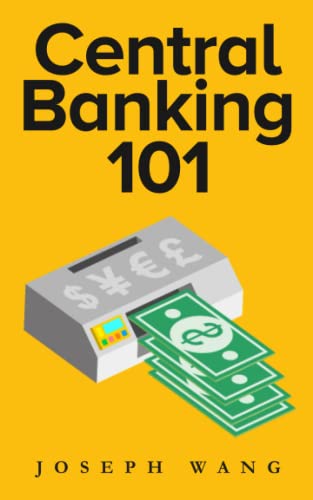
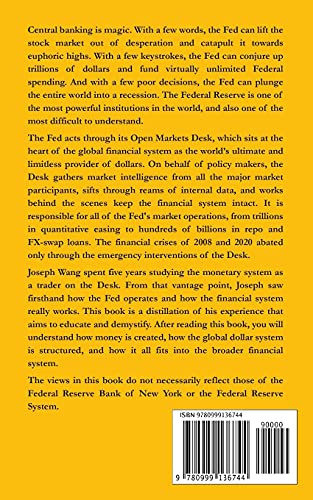
Central Banking 101 [Wang, Joseph J] on desertcart.com. *FREE* shipping on qualifying offers. Central Banking 101 Review: Surprisingly information-rich given the conciseness - I read this intermittently over a few days and found myself learning a lot about not just the US Fed and its processes but the financial market on a whole. This book offers a succinct and clear outline of how the Fed guides interest rates by directly interacting with various markets - Treasuries, Corporate Bonds, Agency MBS, Commercial Loans. It also offers a clear overview on the major players in the financial market - primary dealers, commercial banks, hedge funds, and a few others. I also appreciated the short blurbs interspersed throughout the chapters which offered a clear walkthrough of real events. One thing I will note though is that this book is very much focused on the US Fed, which is to be expected considering the author's background working on the open market desk. If you're from any other country this would mean that it doesn't offer a 1:1 picture of the specific mechanics of your central bank but I do think it helps in knowing what the right questions are to ask. In sum, I'd say this is worth the short read, especially if you're like me and aren't familiar with financial markets. 5/5 Review: A great introduction -- don't be deterred by the lack of a commercial publisher - Although its subject matter strongly interests me, I was wary of buying this book since it's self-published. But I needn't have worried. The book is really well done in every respect. After reading it -- carefully -- I feel like I finally understand the essentials of the U.S. banking system. A word of advice: I recommend taking notes as you read, especially the first two chapters. The rest of the book builds on the concepts introduced in those chapters, and your notes will make it a lot easier to follow the discussion. I originally tried reading the book without notes, but I realized about a third of the way through that I wasn't completely grasping the author's information -- not because his writing is unclear, but because the numerous concepts had become a fog in my memory. I then went back to the beginning and took notes as I went along. It was worth the effort!
| Best Sellers Rank | #38,631 in Books ( See Top 100 in Books ) #5 in Macroeconomics (Books) |
| Customer Reviews | 4.7 4.7 out of 5 stars (889) |
| Dimensions | 5 x 0.51 x 8 inches |
| ISBN-10 | 0999136747 |
| ISBN-13 | 978-0999136744 |
| Item Weight | 8 ounces |
| Language | English |
| Print length | 225 pages |
| Publication date | January 18, 2021 |
| Publisher | Joseph |
J**N
Surprisingly information-rich given the conciseness
I read this intermittently over a few days and found myself learning a lot about not just the US Fed and its processes but the financial market on a whole. This book offers a succinct and clear outline of how the Fed guides interest rates by directly interacting with various markets - Treasuries, Corporate Bonds, Agency MBS, Commercial Loans. It also offers a clear overview on the major players in the financial market - primary dealers, commercial banks, hedge funds, and a few others. I also appreciated the short blurbs interspersed throughout the chapters which offered a clear walkthrough of real events. One thing I will note though is that this book is very much focused on the US Fed, which is to be expected considering the author's background working on the open market desk. If you're from any other country this would mean that it doesn't offer a 1:1 picture of the specific mechanics of your central bank but I do think it helps in knowing what the right questions are to ask. In sum, I'd say this is worth the short read, especially if you're like me and aren't familiar with financial markets. 5/5
Z**K
A great introduction -- don't be deterred by the lack of a commercial publisher
Although its subject matter strongly interests me, I was wary of buying this book since it's self-published. But I needn't have worried. The book is really well done in every respect. After reading it -- carefully -- I feel like I finally understand the essentials of the U.S. banking system. A word of advice: I recommend taking notes as you read, especially the first two chapters. The rest of the book builds on the concepts introduced in those chapters, and your notes will make it a lot easier to follow the discussion. I originally tried reading the book without notes, but I realized about a third of the way through that I wasn't completely grasping the author's information -- not because his writing is unclear, but because the numerous concepts had become a fog in my memory. I then went back to the beginning and took notes as I went along. It was worth the effort!
T**.
wow, so much information I’m more lost than before and this is a good thing?
The more you learn, the more you realize you don’t know. That’s how I feel after reading this book. While it’s abundant in facts and information, I find myself more lost than before and searching for a way to contextualize it all. I feel as though without this context I have already forgotten or misinterpreted some of the information near the beginning of the book. But that being said, I largely appreciate the abundance of information as most financial books are among the “get rich quick with this one simple trick” category. This offers real information on how our financial system works but is up to you to digest. I think it’s incredibly important to understand our system, much like it’s important to deeply understand the rules (and implications) of all the pieces of chess before being able to play a match proficiently. This book may help you understand the rules of the economic system, but hasn’t laid out the grounds for understanding its implication I feel. Or maybe I’m just stupid, haha. Overall I would recommend the read, But you might need to get a couple books on the subcategories.
T**D
Should be required reading
No theories or personal views here. Only information and facts that are basic and easy to understand, for most readers. The book explains in excellent clarity how the US, and to a limited extend some foreign, financial systems work. As an experienced investor and someone who spent 40 years in banking, this book should be required reading for any business or economics students. In fact, for investors, it should be an essential part of a suite of required readings about the macro economic picture in the market, as opposed to just being stuck in a tunnel vision of following bits of daily trends.
D**N
The title is an apt description of what's in the book
This book was exactly what I was looking for - it is a solid, non-technical book explaining the workings of the Fed in particular and central banking in general. There is no particular political bias or anything like that. Everything is well explained. Every now and then I think it could have benefited from a little more editing, eg I think he uses the word "repo" several times before explaining what it means. But for the most part it's well laid out - the chapters have an explanation of how some particular thing works, and then a few anecdotes about specific instances of how it came into being or has evolved over time, almost always involving 2008 or 2020. If you're looking for a longer history of the Fed, this isn't it - this is more of a nowcast. I don't think he refers to anything that happens prior to 1999 at any point in the book. You do need to have some pretty general financial knowledge going in, like what a bond is, but it's pretty accessible.
D**F
Well written, practical guide to money and banking
This little book is a real gem. My professional experience and education are in finance and accounting but light on economics. This book filled in a lot of gaps I had regarding money and the banking system. It is written from the perspective of someone who spent 5 years on the Desk at the Fed and is not a theoretical or academic treatise but as an accessible, practical guide to banking. It is very well written. concise and sprinkled with real-world examples to reinforce key concepts. The book was published in 2022 and covers relevant issues through the COVID pandemic.
D**O
Engaging read
Strangely enjoyable to read considering the dry subject matter. Author does a great job explaining how the global monetary system functions, what has caused past disasters, and how central banks have stepped in to even things out.
P**O
Super interesting and unbiased. Author makes such a complex topic feel much easier to understand. I also like that, despite focusing on central banks roles and mechanisms, author also explains a lot about the banking system as a whole. Overall very rich reading.
C**N
Grâce à ce livre mes connaissances et ma compréhension du système à incroyablement augmenter. Merci beaucoup de nous avoir transmis tout ce savoir ☺️
C**N
great! A ton of value! Explain how things work in a monetary system ruled by central bank. It is very interesting
A**É
Muito importante para perceber como funciona o dinheiro.
E**A
The real mistery is why wouldn't a jewel like this be in the core curriculum of a bachelor/masters program focused on markets and finance. A must for any professional in banking. This should be your core!