We remain fully operational. Our teams are working around the clock to ensure your deliveries continue safely.

下载应用程序


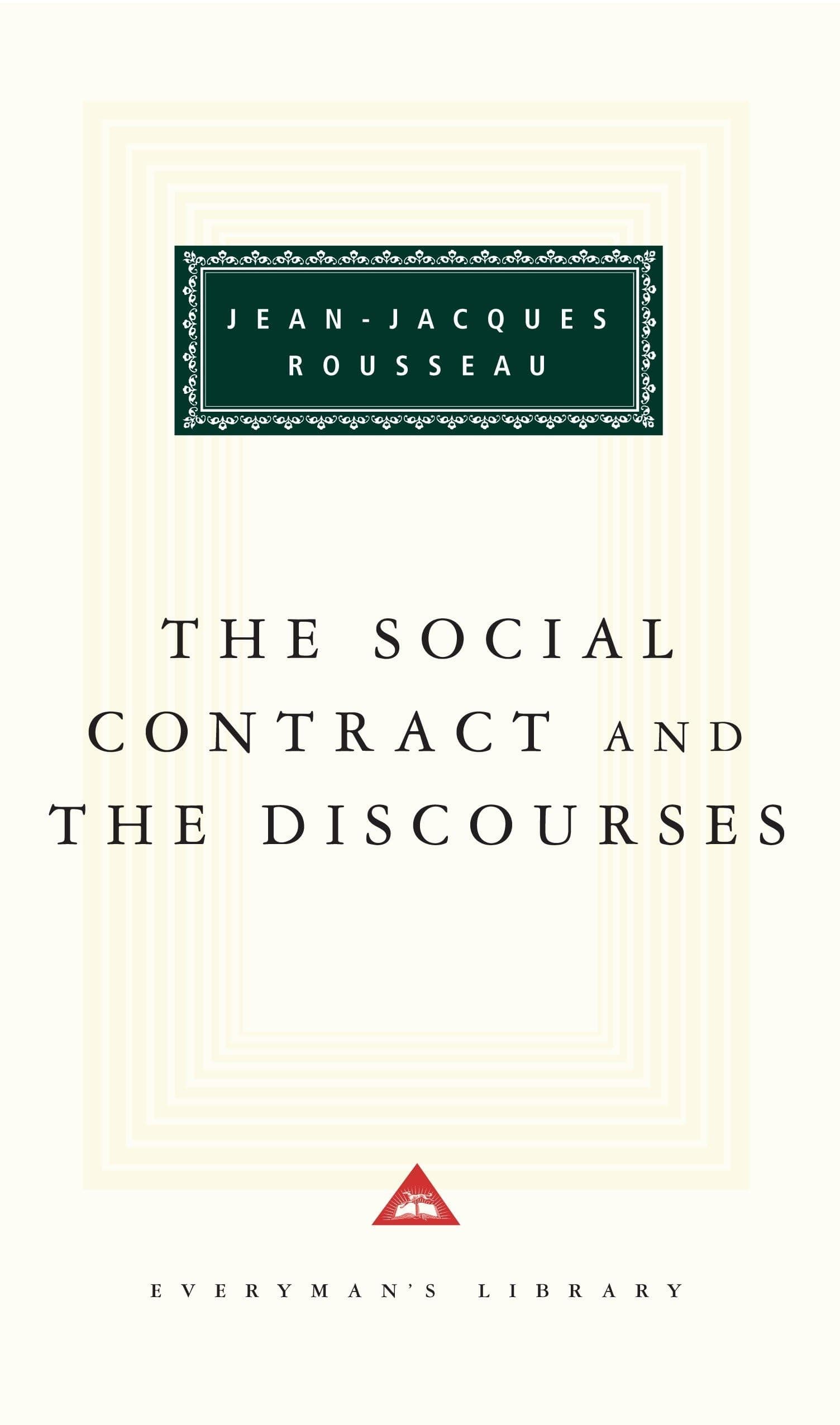
The Social Contract and The Discourses (Everyman's Library) [Rousseau, Jean-Jacques, Cole, G. D. H., Ryan, Alan] on desertcart.com. *FREE* shipping on qualifying offers. The Social Contract and The Discourses (Everyman's Library) Review: Worth the effort - Everyman's Library (cloth-bound) edition is a book worth having in your library. The G.D.H Cole translation is excellent and his preface in the appendix of the book is in itself considered a classic. The Everyman's edition, besides the Social Contract, includes his "Discourses on the Arts & Sciences", the "Origin of Inequality", "Political Economy" and the "General Society of the Human Race". I suggest a reading of the Discourses before tackling the Social Contract. It will give you a foundation in the authors' sophisticated and deeply intellectual thinking. Mr. Rousseau, among other things, was an odd fellow indeed and it would seem a difficult personality at best. One of his - for lack of a better term - "quirks," was his inability to maintain a friendship. In virtually every case he had a falling out with his friends over some issue. If ever there was a man that should have written an essay on irresponsibility it was Jean - Jacques Rousseau. He fathered 5 or six out of wedlock children and, I believe each with a different mother. As soon as each was born he immediately saw to it that the infant was delivered up to the nearest orphanage not wishing to have anything in his personal life to get in the way of his "freedom". Nonetheless Rousseau is worth the reading. His essay on inequality alone is well worth the price of admission. L.C. Robinson Review: Well-made - I'll let others review the material -- I just wanted to comment on the physical qualities of this hardcover. In a word: well-made. The copy I received was printed in Germany. Neat, tight binding. Integrated page-holder ribbon. Sturdy boards and nice cloth covering (dark green). The qualify is far beyond what you'd expect given the price.
| Best Sellers Rank | #165,505 in Books ( See Top 100 in Books ) #88 in Government Social Policy #429 in Political Philosophy (Books) |
| Customer Reviews | 4.8 out of 5 stars 32 Reviews |
L**N
Worth the effort
Everyman's Library (cloth-bound) edition is a book worth having in your library. The G.D.H Cole translation is excellent and his preface in the appendix of the book is in itself considered a classic. The Everyman's edition, besides the Social Contract, includes his "Discourses on the Arts & Sciences", the "Origin of Inequality", "Political Economy" and the "General Society of the Human Race". I suggest a reading of the Discourses before tackling the Social Contract. It will give you a foundation in the authors' sophisticated and deeply intellectual thinking. Mr. Rousseau, among other things, was an odd fellow indeed and it would seem a difficult personality at best. One of his - for lack of a better term - "quirks," was his inability to maintain a friendship. In virtually every case he had a falling out with his friends over some issue. If ever there was a man that should have written an essay on irresponsibility it was Jean - Jacques Rousseau. He fathered 5 or six out of wedlock children and, I believe each with a different mother. As soon as each was born he immediately saw to it that the infant was delivered up to the nearest orphanage not wishing to have anything in his personal life to get in the way of his "freedom". Nonetheless Rousseau is worth the reading. His essay on inequality alone is well worth the price of admission. L.C. Robinson
R**R
Well-made
I'll let others review the material -- I just wanted to comment on the physical qualities of this hardcover. In a word: well-made. The copy I received was printed in Germany. Neat, tight binding. Integrated page-holder ribbon. Sturdy boards and nice cloth covering (dark green). The qualify is far beyond what you'd expect given the price.
R**Y
amazing book
I was looking for this book for quite a while and I was not disappointed when it arrived. I recommend this book for anyone interested in history and the truth behind Thomas Jefferson's socialistic agenda.
S**Y
Five Stars
AWESOME BOOK TO READ; OPNE OF MY ABSOLUTELY BEST PHILOSOPHER!
M**.
An Excellent Volume Containing All of Rousseau's Shorter Works
This is an excellent edition that collects Rousseau's shorter works in one volume and which includes the most influential pieces, "A Discourse on the Origin of Inequality" and "The Social Contract" admirably translated by G.D.H. Cole. "A Discourse on Inequality" appears to be Rousseau's critique of the emerging bourgeoisie who he contrasts with the concept of man as he was before the development of civil society. In the state of nature man lived in "peace and innocence" which are inevitably lost in man's emergence to civil society and subsequent exchange of natural equality for moral and political inequality. The law, social and political institutions bent on the protection of private property conspire to keep political inequality in place since, as Rousseau was to write in the "Social Contract", "laws are always of use to those who possess and harmful to those who have nothing." As man enters society, he "grows weak, timid and servile, his effeminate way of life totally enervates his strength and courage." He become anxious, petty and filled with what Rousseau calls "amour-propre" or vanity. Whereas the "savage lives within himself, social man lives constantly outside himself, and only knows how to live in the opinion of others." He is a character straight of one of Moliere's plays. In "The Social Contract" Rousseau attempts to reconcile man's loss of freedom and view of social society as the engine of political inequality through his concept of the "general will" which posits that political legitimacy rests on the will of the people. At times Rousseau's use of the "general will" appear to make him the spiritual godfather of totalitarianism especially when he writes that "whoever refuses to obey the general will shall be compelled to do so by the whole body. This means nothing less than that he will be forced to be free." Other comments such as "the general will is always upright...but not always enlightened...it must be shown the good road it is in search of, secured from the seductive influences of individual wills" appear directly out of a Maoist reeducation camp. Rousseau's concept of the "general will" obviously had a tremendous impact on the subsequent development of liberal democracies although another concept in "The Social Contract" that seems no less important is the importance that Rousseau places on the commonality of cultural and behavioral norms that bind a people together and that make liberal democracies possible. As Rousseau writes, "since force creates no right we must conclude that conventions form the basis of all legitimate authority among men." Elsewhere he writes that, "the legislator therefore being unable to appeal to either force or reason, must have recourse to an authority of a different order, capable of constraining without violence and persuading without convincing." Rousseau's intuition and intimation that liberal democracies will need to mold public opinion as a form of governance is almost providential and to me anticipates de Toucqueville's concept of the "tyranny of the majority." As Rousseau writes: "Along with these three kinds of law goes a fourth, most important of all...which replaces authority by the force of habit. I am speaking of morality , of custom, above all of public opinion: a power unknown to political thinkers, on which none the less success in everything else depends...manners and morals slower to arise, form in the end its immovable keystone." My favorite excerpt from "The Social Contract" is in the final chapter where he writes that "the dogmas of civil religion ought to be few, simple and exactly worded, without explanation or commentary. The existence of a mighty, intelligent and beneficent Divinity, possessed of foresight and providence..." Who can doubt that Thomas Jefferson had these words in mind when he penned, "We hold these truths to be self-evident, that all men are created equal, that they are endowed by their Creator with certain unalienable Rights, that among these are Life, Liberty and the pursuit of Happiness."
Z**S
Five Stars
great book!
J**N
Intellectual Godfather of the French Revolution
Jean-Jacques Rousseau's "The Social Contract and the Discourses" is composed of five essays, and together they show the radical nature of Rousseau's political thought as well as place Rousseau in the intellectual history of the West. To modern Western readers there is no denying the tragic failings of Rousseau's ideas, but there is also no denying the tragic power of his words. Rousseau's words would give birth to the French Revolution, and would help shape many dangerous revolutions after that. When Edmund Burke published "Reflections on the Revolution in France" in 1790, he was responding less to the tumult in France than to the political thought of Jean-Jacques Rousseau, twelve years after his death. If Rousseau were a student at today's Oxford or Harvard and he were to turn in any of his now famous political essays here's what his political science professor would write: "You make wildly unsubstantiated claims, and commit numerous logical fallacies, the two most egregious being circumlocution and inductive reasoning. Your paper digresses to the point of distraction. Overall, you rely too much on stirring people's sentiments rather than logically, thoughtfully arguing your thesis, which is more an emotional over-reaction than a nuanced and balanced synthesis of knowledge and experience. I will grant that you write superbly and with flourish. Make haste to transfer to the poetry major." Indeed, Rousseau is a master stylist, who saves a faulty and often nonsensical argument with the beauty of his style and the power of his conviction. There is a great joy in reading Rousseau's writing, for each sentence is pithy and pregnant with meaning, each paragraph a world onto itself. But that is also the dangerous evil in Rousseau: it is so easy to take his ideas and paragraphs out of context, with the consequence that his words would make concrete and focused one's otherwise directionless anger and fury. In his beautifully written essay "A Discourse on the Origin of Inequality," Rousseau harks back to man's natural state, where he is compassionate, virtuous, and just; in Rousseau's calibration, private property is what upsets the natural world of equality and destroys man's virtue. These ideas fuel the French Revolution, anticipate Marx, and tragically help shape the fanatical flattening of totalitarian communism. In "A Discourse on the Arts and Sciences," he praises the Spartans and early Romans for their simplicity and ignorance, which makes them steadfastly loyal to their equality and virtue. The arts and sciences in a society that is already corrupted by wealth and luxury (and in fact the arts and sciences could only flourish in a corrupt wealthy society, in Rousseau's worldview) only make the body politic that much more enervated and lethargic, prone to revolution or invasion. The most dangerous of all Rousseau's ideas can be found in his most famous essay "The Social Contract" (although oddly it is the most haphazard and least convincing of all five essays): the idea of the General Will. The Sovereign is the body politic, the General Will is the collective norms and values of the citizenry, and the laws are the emanations of the General Will. In a perfect society there is a perfect harmonization of the Sovereign, the General Will, laws and legislators, the state and the individual so that equality and virtue are ever present, and laws and legislators are in fact unnecessary. What is so dangerous about the General Will is that it supersedes everything because it is meant to be the one and everything: laws and legislators, individual rights and state rights, the monarch and the citizen must all be subservient to its absolute, inalienable, indivisible rule -- and no one can have a choice or say in the matter. That's because the General Will is the source of the supreme good, the supreme good, and the supreme interpreter and arbiter of the supreme good. To use a very inexact analogy, the General Will is the framers of the American constitution, the American constitution, the Supreme Court, and the legislators which can make amendments all rolled into one neat concept. Thus, the General Will is Rousseau's ultimate circumlocution in a book of many circumlocutions. The ultimate irony in this book of many ironies (a gifted rhetorician decrying the corrupting power of the arts and knowledge is the most obvious) is that Rousseau in trying to fashion a system that is most fair and just, equal and virtuous locates all power in one concept that permits one man to be God: nothing can restrain -- neither laws nor customs nor traditions nor his fellow men and especially not himself -- a man who promises to represent the General Will. Edmund Burke was right: the French Revolution would cause the rise of Napoleon, and the legacy of the French Revolution would legitimize the rise of Hitler, Stalin, and Mao. It is intellectually invigorating to be able to discover that the wild and inexplicable, cold and calculated madness of the twentieth century can in fact be found partly in a collection of essays written by a genius more obsessed with his own internal failings (Rousseau was a paranoid at the end of his life, and most certainly a bipolar throughout most of his life) than the injustices of the world around him. Rousseau's ideas launched revolutions, and reading "The Social Contract and the Discourses" is a powerful reminder of the beauty of words to inspire or confuse and the power of ideas to create or destroy.
TrustPilot
1 个月前
2 周前