We remain fully operational. Our teams are working around the clock to ensure your deliveries continue safely.

下载应用程序


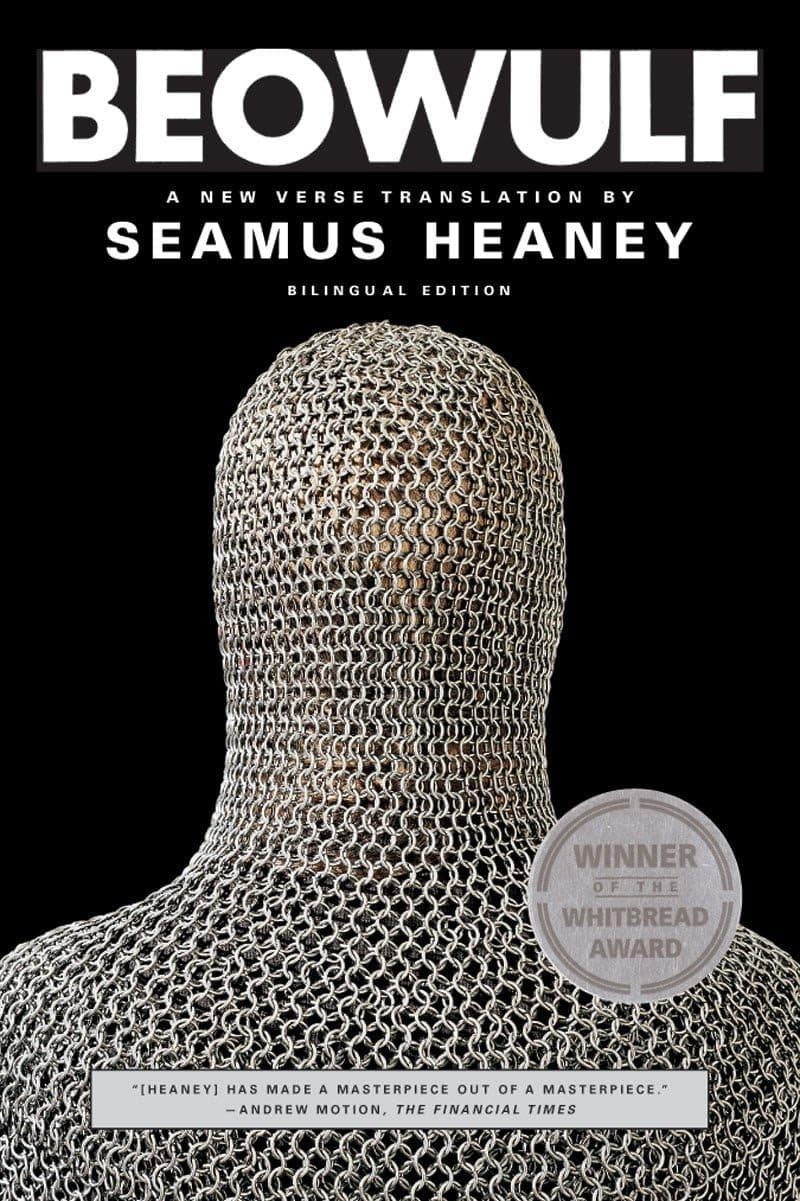

Beowulf: A New Verse Translation (Bilingual Edition) [Seamus Heaney] on desertcart.com. *FREE* shipping on qualifying offers. Beowulf: A New Verse Translation (Bilingual Edition) Review: A classic translation by a master poet - "Beowulf" is justly regarded as a cornerstone of English literature, but those of us who do not read Anglo-Saxon must approach it through a translation. Certainly there is no shortage of translations; I have at least a dozen sitting on my bookshelf. However, I would eliminate half of them as adequate vehicles for really appreciating this grand poem because they are prose versions. While they may accurately convey the literal sense of the Old English words and provide a readily understood storyline, prose can never adequately render the poetic essence of the original. Verse translation, however, is of necessity an imprecise art; poetry is too tightly bound to the language of its creator for a valid direct transposition to another tongue. Anglo-Saxon verse relied upon strong alliteration and a balance of stressed syllables rather than the use of rhyme and formally patterned meter as in later English poetry. The contemporary translator has a formidable and delicate challenge to transform "Beowulf" into a poem suited for today while remaining loyal to its ancient timbre. Although I greatly admire Ruth P.M. Lehmann's 1988 translation for its steadfast replication of the tone and cadence of the Old English original, there is truth in what another "Alliteration is a key element in Old English metrics ... but long stretches of it in Modern English will stupefy the most ardent reader". At times the beat and alliteration of Lehmann's verse threatens to overwhelm the present-day listener, becoming a deadening drumbeat. Yet, if the translator strays too far from the Anglo-Saxon structure in attempting to create something palatable for present taste, then the result inevitably lacks the bardic flavor at the heart of the poem. Achieving a fitting balance between the vibrant aural core of the original and the requirements of a contemporary reader is a matter of subtle artistry. It may be that Seamus Heaney is an ideal poet to meet that challenge in this era. He has produced here a work which, in its four-beat line and tempered alliteration, keeps faith with its source, yet avoids excessive archaisms which would alienate a Y2K ear. Still, Heaney allows the voice of the past to emerge here and there to keep us fixed in time, resulting in a blend of contemporary language seasoned with ancient echoes. Beowulf the warrior, virtually a caricature of exaggerated, implausible heroism in some translations, is rescued in this new version to stand revealed as someone credibly human. Heaney's translation is eminently readable, but does not sacrifice the poem's true soul. The Farrar, Straus and Giroux edition is a markedly handsome volume, a bilingual presentation with the Anglo-Saxon original and Heaney's translation on facing pages. The US publication was delayed a few months, and I would not be surprised to learn that release was intentionally held until after announcement of the Whitbread Award in the UK. Heaney's "Beowulf" beat the latest "Harry Potter" novel for that prestigious honor by a single vote, proving the adolescent wizard to be as formidable an opponent as a grim monster from a mere. To anybody who has been promising him- or herself to get around to reading this classic poem "one of these days" but has been deterred by vague memories of awkward verse from "Beowulf" may finally be here. Seamus Heaney's translation reads as smoothly as any prose, yet the poetry can always be heard, whispering in your ear. Review: Beowulf: A New Verse Translation by Seamus Heaney - Earlier this year a new version of Beowulf was published, translated by the Irish Nobel Prize Winner (for 1995) Seamus Heaney. Heaney has spent many years trying to get this translation just right, and I believe he hit the nail on the head in this case. This book presents a different insight into reading Beowulf, adopting a more archaic viewpoint in both language and imagery. Henry does not bother much with fancy words to make the poem seem more fantastic, but sticks to the original terms, translating them as closely as he possibly can. The book is set up so that on the left is the poem in its original Anglo-Saxon or Old English text and on the right is Heaney's translation. For this translation, Heaney had to return to his long misused Irish tongue of Gaelic. He had learned the language when he was a boy, but has since spent more time using English. His main source was his grandmother, who is still fluent in the archaic language. In talking to her, he would hear strange words and terms that simply do not exist in modern English. Heaney would then turn to the original text of Beowulf. There he would notice similarities between these strange expressions uttered by his grandmother and the poem. In one case he found an exact match with the word "Þolian" which means to suffer and his grandmother's expression, "They'll just have to learn to thole"; here the thorn symbol Þ is pronounced with a "th" sound. Heaney considered these unique insights "loopholes" through which he was able to translate this magnificent piece of literature. It remains unknown as to when Beowulf was written and by whom. Quite likely a monk wrote it, since monks were really the only people of the time who were able to write; also the poem was written by a Christian, since there are numerous points throughout the codex where the "Almighty" and "God" are thanked and respected. The poem was composed first orally some time during the middle of the seventh century, and then written down in the eleventh century. It is a tale about a great hero of the Geats know as Beowulf, who travels to Denmark, where the king, Hrothgar, is being attacked by a monster in the night known as Grendel. Beowulf fights with the beat and rips off its arm, whereupon the creature flees into the darkness from whence it came. The next night, Grendel's mother comes to avenger her son; she takes a life and flees back to her lair beneath the mere (a lake). Beowulf pursues, tracks her down and with a magic sword decapitates her. After being greatly rewarded by Hrothgar, Beowulf and his army return to their homeland in the south of Sweden. There, after years of attacks by enemies, he inherits the throne and rules for fifty years. In his fiftieth year, a dragon is disturbed from its lair, where it has been guarding a mound of ancient treasure, left by a long-dead warrior. Beowulf confronts the dragon but is gravely injured. Wiglaf, one of his soldiers, comes to his rescue and stabs the dragon in the stomach, killing its ability to make fire. Beowulf draws his dagger and stabs the dragon a lethal blow. But Beowulf has been poisoned by the dragon's bite and dies shortly after. A great funeral pyre is built and set ablaze, while his many followers watch. His cremated remains are added to a special mound that is created on a hilltop overlooking the sea, where any ship passing will see the mound and know that Beowulf lies beneath. Thus, the poem ends with the forever-lasting memory of a great hero. Heaney's new twist on this translation of Beowulf is through using the most exact word possible; the result are terms like "ring-hoard," "lake-birth," "shield-clash," and "sky-roamer." What makes this so magical is how the words fit so well, and flow like the soft voice that once spoke them. These specific terms help to create an image in the reader's mind of just what the original composer was intending: a story of gallantry, gold, fighting, Christianity, and the triumph of good over evil. As one begins reading, one can not help but be caught up in the thrashing current that pulls you along with the weight of the past, taking you step-by-step along Beowulf's paths, his wins, and his eventual loss. And at the poem's climax and conclusion one is left with a deep-set feeling of remorse for this might warrior, Beowulf, who most likely never existed, or at least has not existed for over a thousand years. For more book reviews, and other writings, go to [...]
| ASIN | 0393320979 |
| Best Sellers Rank | #10,976 in Books ( See Top 100 in Books ) #6 in British & Irish Poetry #14 in Epic Poetry (Books) #16 in Ancient & Classical Poetry |
| Customer Reviews | 4.6 4.6 out of 5 stars (4,169) |
| Dimensions | 6.1 x 0.7 x 8.3 inches |
| Edition | First Edition |
| ISBN-10 | 9780393320978 |
| ISBN-13 | 978-0393320978 |
| Item Weight | 2.31 pounds |
| Language | English |
| Print length | 256 pages |
| Publication date | February 17, 2001 |
| Publisher | W. W. Norton & Company |
B**E
A classic translation by a master poet
"Beowulf" is justly regarded as a cornerstone of English literature, but those of us who do not read Anglo-Saxon must approach it through a translation. Certainly there is no shortage of translations; I have at least a dozen sitting on my bookshelf. However, I would eliminate half of them as adequate vehicles for really appreciating this grand poem because they are prose versions. While they may accurately convey the literal sense of the Old English words and provide a readily understood storyline, prose can never adequately render the poetic essence of the original. Verse translation, however, is of necessity an imprecise art; poetry is too tightly bound to the language of its creator for a valid direct transposition to another tongue. Anglo-Saxon verse relied upon strong alliteration and a balance of stressed syllables rather than the use of rhyme and formally patterned meter as in later English poetry. The contemporary translator has a formidable and delicate challenge to transform "Beowulf" into a poem suited for today while remaining loyal to its ancient timbre. Although I greatly admire Ruth P.M. Lehmann's 1988 translation for its steadfast replication of the tone and cadence of the Old English original, there is truth in what another "Alliteration is a key element in Old English metrics ... but long stretches of it in Modern English will stupefy the most ardent reader". At times the beat and alliteration of Lehmann's verse threatens to overwhelm the present-day listener, becoming a deadening drumbeat. Yet, if the translator strays too far from the Anglo-Saxon structure in attempting to create something palatable for present taste, then the result inevitably lacks the bardic flavor at the heart of the poem. Achieving a fitting balance between the vibrant aural core of the original and the requirements of a contemporary reader is a matter of subtle artistry. It may be that Seamus Heaney is an ideal poet to meet that challenge in this era. He has produced here a work which, in its four-beat line and tempered alliteration, keeps faith with its source, yet avoids excessive archaisms which would alienate a Y2K ear. Still, Heaney allows the voice of the past to emerge here and there to keep us fixed in time, resulting in a blend of contemporary language seasoned with ancient echoes. Beowulf the warrior, virtually a caricature of exaggerated, implausible heroism in some translations, is rescued in this new version to stand revealed as someone credibly human. Heaney's translation is eminently readable, but does not sacrifice the poem's true soul. The Farrar, Straus and Giroux edition is a markedly handsome volume, a bilingual presentation with the Anglo-Saxon original and Heaney's translation on facing pages. The US publication was delayed a few months, and I would not be surprised to learn that release was intentionally held until after announcement of the Whitbread Award in the UK. Heaney's "Beowulf" beat the latest "Harry Potter" novel for that prestigious honor by a single vote, proving the adolescent wizard to be as formidable an opponent as a grim monster from a mere. To anybody who has been promising him- or herself to get around to reading this classic poem "one of these days" but has been deterred by vague memories of awkward verse from "Beowulf" may finally be here. Seamus Heaney's translation reads as smoothly as any prose, yet the poetry can always be heard, whispering in your ear.
A**M
Beowulf: A New Verse Translation by Seamus Heaney
Earlier this year a new version of Beowulf was published, translated by the Irish Nobel Prize Winner (for 1995) Seamus Heaney. Heaney has spent many years trying to get this translation just right, and I believe he hit the nail on the head in this case. This book presents a different insight into reading Beowulf, adopting a more archaic viewpoint in both language and imagery. Henry does not bother much with fancy words to make the poem seem more fantastic, but sticks to the original terms, translating them as closely as he possibly can. The book is set up so that on the left is the poem in its original Anglo-Saxon or Old English text and on the right is Heaney's translation. For this translation, Heaney had to return to his long misused Irish tongue of Gaelic. He had learned the language when he was a boy, but has since spent more time using English. His main source was his grandmother, who is still fluent in the archaic language. In talking to her, he would hear strange words and terms that simply do not exist in modern English. Heaney would then turn to the original text of Beowulf. There he would notice similarities between these strange expressions uttered by his grandmother and the poem. In one case he found an exact match with the word "Þolian" which means to suffer and his grandmother's expression, "They'll just have to learn to thole"; here the thorn symbol Þ is pronounced with a "th" sound. Heaney considered these unique insights "loopholes" through which he was able to translate this magnificent piece of literature. It remains unknown as to when Beowulf was written and by whom. Quite likely a monk wrote it, since monks were really the only people of the time who were able to write; also the poem was written by a Christian, since there are numerous points throughout the codex where the "Almighty" and "God" are thanked and respected. The poem was composed first orally some time during the middle of the seventh century, and then written down in the eleventh century. It is a tale about a great hero of the Geats know as Beowulf, who travels to Denmark, where the king, Hrothgar, is being attacked by a monster in the night known as Grendel. Beowulf fights with the beat and rips off its arm, whereupon the creature flees into the darkness from whence it came. The next night, Grendel's mother comes to avenger her son; she takes a life and flees back to her lair beneath the mere (a lake). Beowulf pursues, tracks her down and with a magic sword decapitates her. After being greatly rewarded by Hrothgar, Beowulf and his army return to their homeland in the south of Sweden. There, after years of attacks by enemies, he inherits the throne and rules for fifty years. In his fiftieth year, a dragon is disturbed from its lair, where it has been guarding a mound of ancient treasure, left by a long-dead warrior. Beowulf confronts the dragon but is gravely injured. Wiglaf, one of his soldiers, comes to his rescue and stabs the dragon in the stomach, killing its ability to make fire. Beowulf draws his dagger and stabs the dragon a lethal blow. But Beowulf has been poisoned by the dragon's bite and dies shortly after. A great funeral pyre is built and set ablaze, while his many followers watch. His cremated remains are added to a special mound that is created on a hilltop overlooking the sea, where any ship passing will see the mound and know that Beowulf lies beneath. Thus, the poem ends with the forever-lasting memory of a great hero. Heaney's new twist on this translation of Beowulf is through using the most exact word possible; the result are terms like "ring-hoard," "lake-birth," "shield-clash," and "sky-roamer." What makes this so magical is how the words fit so well, and flow like the soft voice that once spoke them. These specific terms help to create an image in the reader's mind of just what the original composer was intending: a story of gallantry, gold, fighting, Christianity, and the triumph of good over evil. As one begins reading, one can not help but be caught up in the thrashing current that pulls you along with the weight of the past, taking you step-by-step along Beowulf's paths, his wins, and his eventual loss. And at the poem's climax and conclusion one is left with a deep-set feeling of remorse for this might warrior, Beowulf, who most likely never existed, or at least has not existed for over a thousand years. For more book reviews, and other writings, go to [...]
M**A
Por estudios
R**S
Love the detail it has in the front.
A**.
Seamus Heaney's Beowulf is a wonderful rewriting of the ancient Anglo-Saxon epic that gives fresh life to one of the most critical compositions of medieval literature. The publication in 2000 pulled off the feat of Heaney's version by rendering the translation both scholar-lively and profoundly poetical, catching the crude vigor of the original without turning the text incomprehensible to modern readers. Heaney brings a peculiarly Irish sensibility to this translation, giving the Old English text a lyricism that is reminiscent of the rhythms of his own poetry. His language is muscular and vivid, perfectly suited to the heroic narrative of Beowulf's battles against monstrous adversaries. The translation strikes a remarkable balance between archaic language and contemporary readability, allowing readers to feel the epic's ancient weight while understanding its nuanced emotions. It is the translation by Seamus Heaney of the heroic narrative in three major battles: Beowulf's battle with the monster Grendel, the fight with Grendel's mother, and his last battle with a monstrous dragon. Heaney gives words to the heroism, pride, and subtlety of the text-the powerful and poignant narrative voicing courage, death, and the transience of man's work. What makes Heaney's version unique is how he manages to render the original alliterative verse authentically and immediately. He keeps the poem's original sonic qualities while making the language sing in modern English. The facing-page Old English text is an added treat for those interested in the original linguistic landscape. This translation is more than a work of scholarship; it's alive, breathing, and speaking both to the original and directly to today's reader. Heaney has created a definitive version of Beowulf that is at once a rigorous translation and a profound work of poetic art.
M**I
Beowulf is a major piece of literature in and of itself. Its place in English culture and importance as a work of early English is indisputable. Coming on to his edition, the praises only continue. Its translated by Nobel laureate Seamus Heaney. This is one of the most read versions of the epic and it is clear why. Somehow Heaney accomplishes to anchor Beowulf in contemporary English and keeps it comprehensible for the modern reader while also retaining its grandeur as an epic at the same time. Probably why he has a Nobel and I don't.
C**Y
Great book. Sensational author and his translation!