We remain fully operational. Our teams are working around the clock to ensure your deliveries continue safely.

下载应用程序


Buy anything from 5,000+ international stores. One checkout price. No surprise fees. Join 2M+ shoppers on Desertcart.
Desertcart purchases this item on your behalf and handles shipping, customs, and support to SINGAPORE.
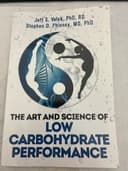
Used Book in Good Condition Review: Best book in the health/exercise category for 2012 - This is the first and possibly still only book that talks in depth about why a very low carb ketogenic diet may not just be useful for weight loss, insulin-resistance, metabolic syndrome, heart disease, epilepsy and autoimmune diseases but also to significantly improve athletic performance. The authors have many years of research experience in the field of low carb nutrition and had published another outstanding book, "The Art and Science of Low Carbohydrate Living" last year which focused on the details of doing low carb eating the right way by avoiding the many possible pitfalls. This new book is written for athletes who want to improve their performance, but also for people who want to be athletes and never could be because their body would not cooperate on a higher carb diet. The authors explain in detail how on a higher carb diet the body is dependent on glucose for most of its functions including muscle functions and brain function. Glucose can only be stored in our body in a fairly limited amount, somewhere around 2000 calories. When this supply is close to being exhausted we need to refuel with carbohydrates to keep functioning or we will "hit the wall" as endurance athletes call it, meaning our brain and muscles are running out of fuel. When eating a high carbohydrate diet our body can not quickly switch from fueling with carbohydrate to fueling with fat, even though even a slim person has 40,000 calories of energy on their body at all times from fat. This fat can only be accessed to fuel the muscles and the brain for most of their energy needs if the body is used to using it. Fat is converted to ketones which can fuel the muscles and the brain for most of their energy needs in a keto-adapted person. For keto-adaptation to happen carbohydrate intake has to be drastically reduced, usually at least down to 50 grams/day, in many people to under 20 grams/day at least initially. The reason is that higher carb levels than this will lead to more insulin production and insulin inhibits release and use of fat from our fat storage cells. The graphics in the book show that with even moderate carbohydrate intake (of any form) there is too much insulin for the body to be able to access any significant amount of fat as fuel. Once carb levels are lowered enough the body will start producing ketones from fat and from that point on it takes a few weeks for our body to make all the necessary changes to become fully keto-adapted. The whole process typically takes about 6 weeks, which is why many benefits of a low carbohydrate diet are only optimized after this period. Some improvements, like a lack of hunger and a reduction in body fat, can be seen much earlier, often after just a few days. Once the body is fully keto-adapted something amazing happens: Fat use during exercise increases tremendously with moderate exercise for both endurance exercise and resistance training. In a study of high-level cyclists who had been keto-adpated for 4 weeks the average fat oxidation per hour at about 65% VO2max was about 90 grams/hour. So far I have just summarized the first three chapters. The rest of the book talks about implementing the diet, macronutrient levels, faster recovery rates on ketogenic diets and fluid and mineral management. Just to make sure nobody who buys this book is going to be disappointed: The diet itself is not very different from what you can find in the original Atkins diet: low carb and high fat although there is some additional info here as well. The main benefit I get from this book is to understand how to optimize a low-carb diet to get far superior results from the time I spend exercising. I am planning to measure this by recording my body weight, body fat percentage vs. lean muscle mass and by recording improvements in my running and resistance training over the next 3 months. This book gives enough detail to helpful for serious athletes but is written in a way that anyone who wants to live a healthy lifestyle can understand it. Review: Mind blowing information! - Well written, highly credentialed and experienced in subject matter authors, well documented, and thorough coverage of the topic. They basically make the case that high carb diets and carbo-loading for endurance athletes is outdated. And they make the case that the exact opposite is what yields the best results: high fat, low carb. One reason that high carb might still be so prevalent is that it takes 2-3 weeks for your body to adapt to a low carb, high fat diet. Results don't come until after you are fully "keto-adapted." Most athletes are apparently not patient enough to go through this frustrating adaptation process. Ketones are the breakdown products of fats that your brain can burn for energy. But, if lots of sugar from carbs are present in the blood, then the brain will not burn ketones, only sugar. It takes two weeks of consistently maintained target blood levels of ketones in order for the brain to produce enough ketone pumps to allow enough into the brain cells for normal energy production. The main inhibiting factor for high blood ketone levels is insulin. The only way to keep insulin levels low enough to allow ketones to rise high enough is to stay away from high amounts of dietary sugars and carbs. Along with low insulin levels comes the transition allowing muscles to burn fatty acids instead of glucose. Since body stores of glucose are at best 2 hours worth of energy, and fat stores are essentially unlimited, we see that muscles trained to burn fat instead of glucose as their primary fuel is optimal for endurance sports. And, not only will your muscles never run out of fuel (even if you don't refuel during your race), but neither will your brain. In fact, the worst part about "hitting the wall" due to low glycoge/glucose stores during a race is mental confusion due to low blood glucose. In a study of several non-athletes who were keto-adapted, researchers injected insulin into the subjects until blood glucose levels fell below 30 (normal is 70-120). At this low level, not only did the subjects not fall into a coma, but they didn't have any symptoms of low blood sugar! This is because their brains were burning fat (ketones) for energy, not sugar, making the low glucose levels irrelevant to proper brain function! Obviously, there are non-athletic implications for a low carb diet: natural diabetes control, weight loss (targeting fat loss), and preventing symptoms of low blood sugar (hypoglycemia). It turns out that about 70% of people with seizures are cured by a keto-genic low carb diet. The coolest part of the book is biofeedback available with an inexpensive "ketone" testing machine similar to a diabetic blood sugar testing machine that allows you to know in black and white whether your diet and exercise routine is working or not. If you aren't getting the results you were promised, but your blood levels of ketones are too low, then you know it's because you are doing something wrong. You can test your blood after eating certain foods to get immediate feedback on that food's impact on your body as far as ketones (and thus indirectly insulin) are concerned. The nova max ketone tester is the one I use because its test strips are about half the cost of the other brand. You can find and purchase these on desertcart as well. Now that I am keto-adapted for a few weeks now, I have noticed a few differences in my running workouts. 1) My energy is much more stable throughout the workout, 2) I seem to get less dehydrated during workouts (this is likely due to the fact that burning fat uses less water than does burning sugar), 3) I don't seem to have to breath as hard (this might be due to the fact that burning fat gives off 25% less CO2 than burning sugar), and 4) The runners high is less obvious at the end of my workout (upon reflection, I think that this is because I seem to have a low level of runners high all the time now, not just after running). One downside is that I seem to be thirstier between workouts. In the book they say that when ketoadapted, the body shifts from conserving sodium and peeing out potassium, to conserving potassium and peeing out sodium. This may explain why I am thirstier since if I am peeing out my salt, I can't retain as much water, thus am more dehydrated easier. It is interesting that even though I feel more dehydrated between workouts, my mouth is much more moist during workouts. Maybe this is because I'm not breathing as hard during the workout?
| Best Sellers Rank | #99,238 in Books ( See Top 100 in Books ) #136 in Sports Training (Books) #144 in Low Carbohydrate Diets #9,916 in Health, Fitness & Dieting (Books) |
| Customer Reviews | 4.6 out of 5 stars 2,117 Reviews |
B**E
Best book in the health/exercise category for 2012
This is the first and possibly still only book that talks in depth about why a very low carb ketogenic diet may not just be useful for weight loss, insulin-resistance, metabolic syndrome, heart disease, epilepsy and autoimmune diseases but also to significantly improve athletic performance. The authors have many years of research experience in the field of low carb nutrition and had published another outstanding book, "The Art and Science of Low Carbohydrate Living" last year which focused on the details of doing low carb eating the right way by avoiding the many possible pitfalls. This new book is written for athletes who want to improve their performance, but also for people who want to be athletes and never could be because their body would not cooperate on a higher carb diet. The authors explain in detail how on a higher carb diet the body is dependent on glucose for most of its functions including muscle functions and brain function. Glucose can only be stored in our body in a fairly limited amount, somewhere around 2000 calories. When this supply is close to being exhausted we need to refuel with carbohydrates to keep functioning or we will "hit the wall" as endurance athletes call it, meaning our brain and muscles are running out of fuel. When eating a high carbohydrate diet our body can not quickly switch from fueling with carbohydrate to fueling with fat, even though even a slim person has 40,000 calories of energy on their body at all times from fat. This fat can only be accessed to fuel the muscles and the brain for most of their energy needs if the body is used to using it. Fat is converted to ketones which can fuel the muscles and the brain for most of their energy needs in a keto-adapted person. For keto-adaptation to happen carbohydrate intake has to be drastically reduced, usually at least down to 50 grams/day, in many people to under 20 grams/day at least initially. The reason is that higher carb levels than this will lead to more insulin production and insulin inhibits release and use of fat from our fat storage cells. The graphics in the book show that with even moderate carbohydrate intake (of any form) there is too much insulin for the body to be able to access any significant amount of fat as fuel. Once carb levels are lowered enough the body will start producing ketones from fat and from that point on it takes a few weeks for our body to make all the necessary changes to become fully keto-adapted. The whole process typically takes about 6 weeks, which is why many benefits of a low carbohydrate diet are only optimized after this period. Some improvements, like a lack of hunger and a reduction in body fat, can be seen much earlier, often after just a few days. Once the body is fully keto-adapted something amazing happens: Fat use during exercise increases tremendously with moderate exercise for both endurance exercise and resistance training. In a study of high-level cyclists who had been keto-adpated for 4 weeks the average fat oxidation per hour at about 65% VO2max was about 90 grams/hour. So far I have just summarized the first three chapters. The rest of the book talks about implementing the diet, macronutrient levels, faster recovery rates on ketogenic diets and fluid and mineral management. Just to make sure nobody who buys this book is going to be disappointed: The diet itself is not very different from what you can find in the original Atkins diet: low carb and high fat although there is some additional info here as well. The main benefit I get from this book is to understand how to optimize a low-carb diet to get far superior results from the time I spend exercising. I am planning to measure this by recording my body weight, body fat percentage vs. lean muscle mass and by recording improvements in my running and resistance training over the next 3 months. This book gives enough detail to helpful for serious athletes but is written in a way that anyone who wants to live a healthy lifestyle can understand it.
J**E
Mind blowing information!
Well written, highly credentialed and experienced in subject matter authors, well documented, and thorough coverage of the topic. They basically make the case that high carb diets and carbo-loading for endurance athletes is outdated. And they make the case that the exact opposite is what yields the best results: high fat, low carb. One reason that high carb might still be so prevalent is that it takes 2-3 weeks for your body to adapt to a low carb, high fat diet. Results don't come until after you are fully "keto-adapted." Most athletes are apparently not patient enough to go through this frustrating adaptation process. Ketones are the breakdown products of fats that your brain can burn for energy. But, if lots of sugar from carbs are present in the blood, then the brain will not burn ketones, only sugar. It takes two weeks of consistently maintained target blood levels of ketones in order for the brain to produce enough ketone pumps to allow enough into the brain cells for normal energy production. The main inhibiting factor for high blood ketone levels is insulin. The only way to keep insulin levels low enough to allow ketones to rise high enough is to stay away from high amounts of dietary sugars and carbs. Along with low insulin levels comes the transition allowing muscles to burn fatty acids instead of glucose. Since body stores of glucose are at best 2 hours worth of energy, and fat stores are essentially unlimited, we see that muscles trained to burn fat instead of glucose as their primary fuel is optimal for endurance sports. And, not only will your muscles never run out of fuel (even if you don't refuel during your race), but neither will your brain. In fact, the worst part about "hitting the wall" due to low glycoge/glucose stores during a race is mental confusion due to low blood glucose. In a study of several non-athletes who were keto-adapted, researchers injected insulin into the subjects until blood glucose levels fell below 30 (normal is 70-120). At this low level, not only did the subjects not fall into a coma, but they didn't have any symptoms of low blood sugar! This is because their brains were burning fat (ketones) for energy, not sugar, making the low glucose levels irrelevant to proper brain function! Obviously, there are non-athletic implications for a low carb diet: natural diabetes control, weight loss (targeting fat loss), and preventing symptoms of low blood sugar (hypoglycemia). It turns out that about 70% of people with seizures are cured by a keto-genic low carb diet. The coolest part of the book is biofeedback available with an inexpensive "ketone" testing machine similar to a diabetic blood sugar testing machine that allows you to know in black and white whether your diet and exercise routine is working or not. If you aren't getting the results you were promised, but your blood levels of ketones are too low, then you know it's because you are doing something wrong. You can test your blood after eating certain foods to get immediate feedback on that food's impact on your body as far as ketones (and thus indirectly insulin) are concerned. The nova max ketone tester is the one I use because its test strips are about half the cost of the other brand. You can find and purchase these on amazon as well. Now that I am keto-adapted for a few weeks now, I have noticed a few differences in my running workouts. 1) My energy is much more stable throughout the workout, 2) I seem to get less dehydrated during workouts (this is likely due to the fact that burning fat uses less water than does burning sugar), 3) I don't seem to have to breath as hard (this might be due to the fact that burning fat gives off 25% less CO2 than burning sugar), and 4) The runners high is less obvious at the end of my workout (upon reflection, I think that this is because I seem to have a low level of runners high all the time now, not just after running). One downside is that I seem to be thirstier between workouts. In the book they say that when ketoadapted, the body shifts from conserving sodium and peeing out potassium, to conserving potassium and peeing out sodium. This may explain why I am thirstier since if I am peeing out my salt, I can't retain as much water, thus am more dehydrated easier. It is interesting that even though I feel more dehydrated between workouts, my mouth is much more moist during workouts. Maybe this is because I'm not breathing as hard during the workout?
F**N
Compelling but technically challenging read.
A very convincing but technically challenging read. I bought into it and now I am on the keto diet t largely as a result of reading this book. I had to read it several times as it is unlike a novel or a biography and includes lots of technical terms and fine points that are hard to digest for the non-medical professional. It has lots of research behind it. The authors are research proffs in universities and not book retailers etc.There are no grandiose claims but strong, science-based arguments to look at this model of eating, exercising and losing weight. My own interest is in increasing energy and improving recovery from workouts etc. so it really fit my interests. The weight loss and control is a free bonus of the high fat, low carb, low protein diet.
T**R
I am a convert to this regimen
Extremely informative and eye opening. It makes sense rather than the dogma of whole grains and overconsumption of grains. In 2 weeks my body adapted to relying on fat for fuel rather than carbohydrate. The first 2 weeks were rough but when my body "switched over" I had nothing but energy for my workouts. To those who say they have tried it and couldn't survive their workouts due to low energy don't quit. It's an enzymatic process that the body needs to change. It takes 2-4 weeks for the body to "change." Then stand by for the energy surge. Remember for those who are critical of this nutritional method it takes time. Your body WILL adapt. Your body has the same biochem process as the inuit, eskimo, africans, native americans (who went where the buffalo rome) and aborigines who thrived on high fat and very little vegitation." What many of the high carbers fail to realize is that if they were in a situation where they had no choice but to survive mainly on animal products that they would actually thrive. Grains are not what they used to be and the overabuse to our pancreas causing it "shoot out" more insulin than it was meant to has caused so many health problems in this country. Other exceptional books that support scientifically a controlled carbohydrate consumption are "The Zone," "The art and science of low carbohydrate living," "Protein power" and "Wheat belly" diet (an exceptional eye opener on wheat and the negatives that are associated with it). Anyway, this book gets deep into the biochem aspect of this type of eating. These other books do as well. Bear in mind these books are not for the laymen. I have a medical background so it was a good read. Try this book as well as the author's first book "The art and science of low carbohydrate living." The first few weeks on this nutritional regimen I lost over 25 lbs and my strength (powerlifting) has increased dramatically with very few carbohydrate in my diet and I'm talkin' less than 30 grams daily. Workout recovery was cut in half. I'm 42 and my recocery seems to have improved as if I were ten years younger. Blood pressure is now back in check. Cholesterol dropped from 270 to 200 in 6 weeks as well as triglycerides (that were 3 times the normal) now in the normal range. HDL increased and LDL dropped. The use of coconut oil, butter, eating the skin with chicken and not worrying about the fat on beef and pork has literally changed my life. I'm currently being very militant in body fat reduction while powerlifting right now but when I attain my bodyfat level goal, I will then gradually add carbohydrate until I find my carbohydrate equilibrium where I'm neither gaining or losing. Along with the fatty meats I consume a ton of green veggies and the only white thing I eat is cauliflower and small amounts of onions. Fish oils added too this regimen takes it to a different level. I felt as though I was on caffeine without the jitters. Took from 4 -6 grams daily of ultra filtered and processed fish oil that passes european standards for fish oil purity. High does of the DHA (helps neurologial system) along with the lo carb regimen has increased cognitive ability, the need for less sleep, decreased incidence of heart beat irregularities. (I have an abnormal sinus rhythm,EPA addresses vascular, cardio and musculoskeletal systems etc). I can't recommend this more due to the positive effects I've experienced in my body. For those who don't suffer the ills of high consumption of carbs (genetics) this book is not really needed. But if you want an edge in performance and an almost unlimited energy supply without the hassle of continous replenishment of glucose that is required due to the severely low capacity of the body to store glucose then try it out.
J**N
Aimed at Athletes, but Good For Anyone
This book is about a change in the way the body fuels itself. In the past, most athletes have consumed a lot of carbohydrates, and their bodies adapt to using those for fuel. The problem with that is the body can only hold up to about 3,000 calories in carbohydrates at one time, so endurance athletes need more during their exercise. This book discusses a change to nutritional ketosis, which is using fat for energy instead of carbohyrdates. The body stores much more fat calories than carbohydrates, so an endurance athlete adapted to burning fat can go much further without refueling. Athletes have been shown to recover much faster after hard exercise if they are ketone adaptive, also. The book discusses how a change to a high fat, low carbohydrate diet can help you and how to go about it, along with the early affects of the change. It also provides very good information about vitamins that you may lose if you do not make the correct changes. And it provides sample menus and recipes to help the athlete get all the nutrients he or she needs. In the beginning of the book, the author mentions that some of the necessary research into this has still not been done. Well, I can say that since the book was written, much of that research has been done and published, confirming the conclusions of this book. This is an easy book to read and well worth it for athletes looking for a better way to maintain their body, but it would also be a good book for someone (like me) who has struggled to maintain a stable weight. I have been on the proverbial rollercoaster for many years and this has helped me get my weight under control. I have seen my body change, losing about 3 pounds per week, without any hunger at all. This was the second book I have read on the subject and supports the first (Metabolic Efficiency Training, by Bob Seebohar) very well, but adds a lot more information.
S**.
Detailed, highly informative book. This diet changed my life.
This is a really helpful book for anyone who wants to truly understand the science behind a ketogenic diet. Dr.s Volek and Phinney are very clear and explain in detail a lot of the nitty-gritty biology that many of the other books skim over. This book has really helped me feel like I can make an informed decision about my diet, rather than blindly following whatever the author says just because they say it will help me lose weight. I am not a high performance athlete, by any means, and though this book is geared toward athletes, it has a lot of valuable information that can be applied even if your idea of a "marathon" is a 20 minute jog - or just getting up in the morning! I found out as I read this book, that the same authors have another offering: "The art and science of low carbohydrate living" which might have been a better starting point. I plan to read that one next. The book does occasionally feel like it presumes a background in biology or human anatomy, which had me running to google a few times, but personally, I would much prefer a challenging read than some fluff that doesn't contain a lot of information. While the scientific detail might be a bit boring for those with less of a thirst for knowledge (AKA, non-nerds) I personally really appreciated the attention to detail and willingness to delve into the nitty gritty. I will also say, on behalf of the diet, that it has had an incredible impact on my life. I have suffered with chronic fatigue and pain since I was a teenager, I was exhausted and achy all the time and was barely able to keep up with basic day-to-day activities. After so long being sick, I had given up hope of improving, and had merely learned to accept that I'd never be able to function as well as a "normal" person. About two months ago I decided to try a low-carb diet. I didn't expect any medical miracles, I just wanted to get in shape for bikini season. The first two weeks were horrible. I could barely move and just floundered around the house all day. After that though, I suddenly had more energy than I have in years. I am able to function while only sleeping 7-8 hours a night (before I needed 10 or so!), I actually enjoy exercising because it doesn't feel like my heart is going to explode, and I can actually do things without crashing for hours after. I finally have my life back and it's completely amazing. I can't say that everyone will have the same experience, of course, maybe some of you will just lose a few pounds, or for others, it won't help at all, but it's absolutely worth a shot!
C**.
Fantastic Keto / Low Carb Book!
I purchased this book based on a recommendation from the Diet Doctor (Keto) site that I belong to. I don't often write reviews, but honestly, this is a phenomenal Keto book. I've read quite a few Keto books that get down to the metabolic level and this one blows those away. It is very well written in an easy to understand manner and describes how nutritional ketosis, ketones, fat, protein, and carbs work in the body, how much your really need to stay in ketosis, describes the best foods for ketosis, the quantities as they compare to grams for macro counting, the scientific studies supporting ketosis, and a variety of keto recipes to get you started. It is well worth the purchase!
S**Y
Missing Hard Science in Key Arguments
I've been on keto for about 6 months. It's been great (lost 40 pounds, hit my goal weight), but I've been looking to get off and add a little more carbs for long distance running. I wanted to read this book to make sure I had all the information before I did anything. This book makes a strong, research-backed argument for ketogenic efficacy and safety. For athletic performance, it also does a job in regards to mental clarity and recovery. It makes ample use of references to back up its claims and explains steps well. For actual performance, however, which is the central message of this book, its arguments lack good research and the steps from Point A to Point Z are missing a lot of points in-between. For example, it seems that the main argument for endurance is that our fat stores are much higher than carb stores. It doesn't go into details on how quickly the body converts fat versus carbs - just that there's more fat to burn. Metabolism is hard. You can't just handwave it. There's also a lot less references in a lot of its claims and sometimes, its claims are backed up by the words "Could it be..." which is an obvious flag that it's a scientific conjecture instead of anything with research-backed studies. In the book's defense, though, a lot of the research just isn't there. Personally, for me, while the book makes interesting claims and I'll pay attention to further research, it's not enough for me to believe a ketogenic diet is better for athletic performance than a traditional high carb/low fat diet.