We remain fully operational. Our teams are working around the clock to ensure your deliveries continue safely.

下载应用程序


![Kuroneko (The Criterion Collection) [Blu-ray]](https://m.media-amazon.com/images/I/31Q5pExXJEL.jpg)
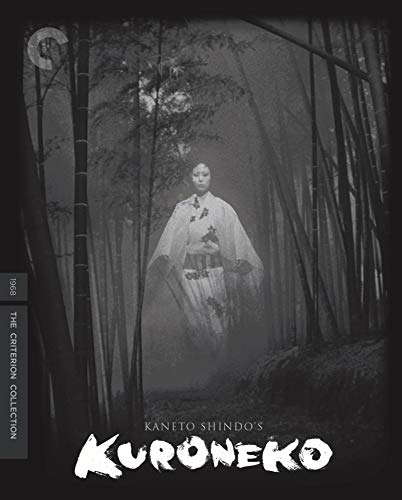
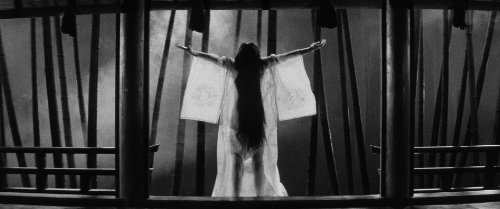
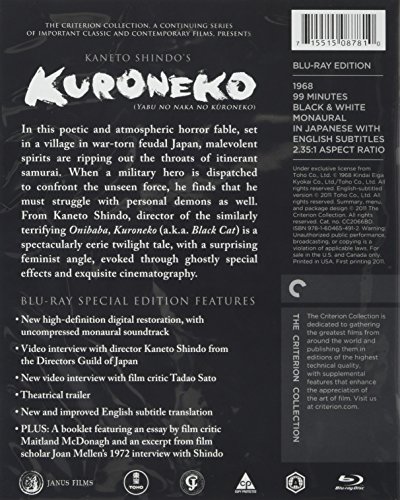


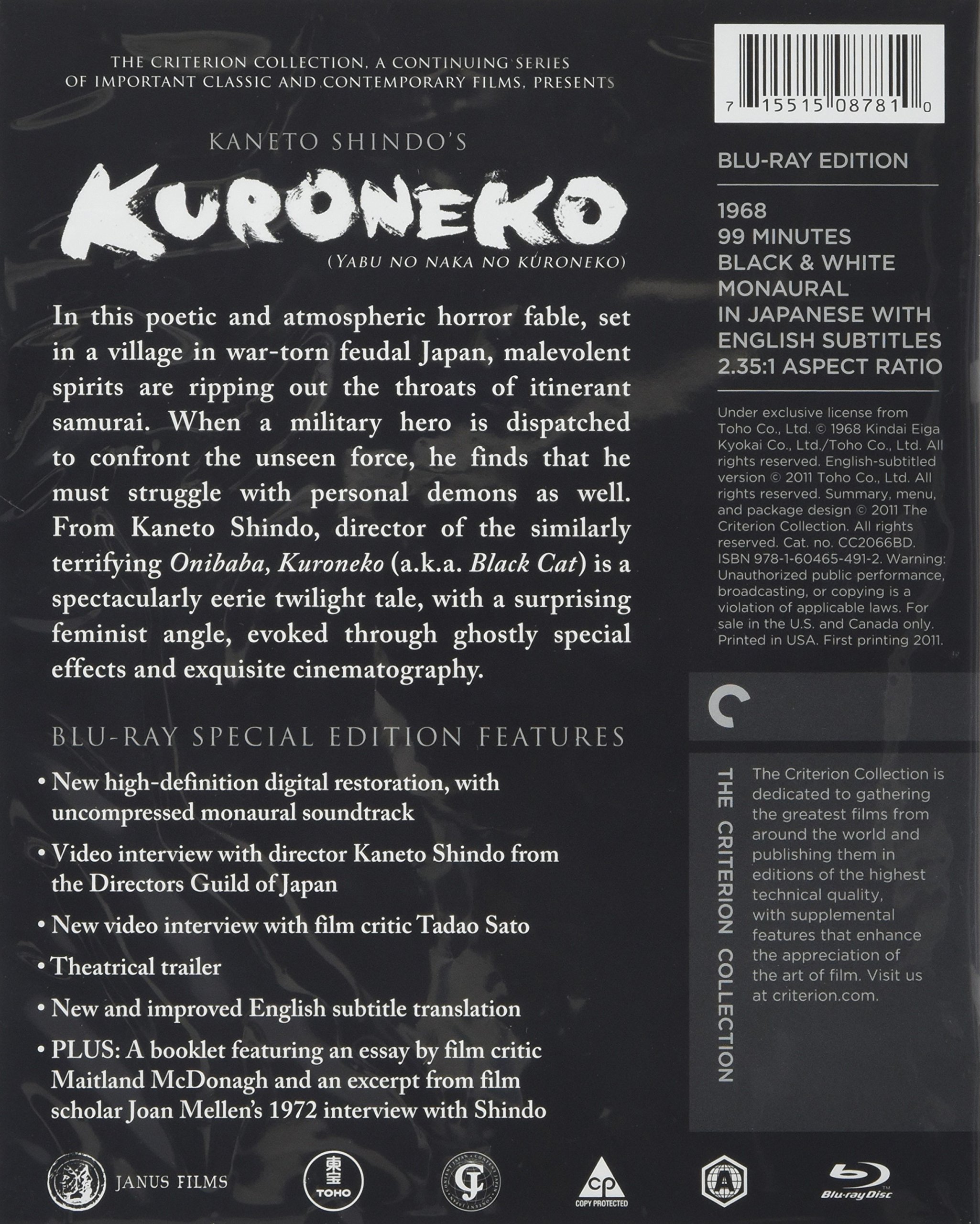

In this poetic and atmospheric horror fable, set in a village in war-torn medieval Japan, a malevolent spirit has been ripping out the throats of itinerant samurai. When a military hero is sent to dispatch the unseen force, he finds that he must struggle with his own personal demons as well. From Kaneto Shindo, director of the terror classic Onibaba, Kuroneko (Black Cat) is a spectacularly eerie twilight tale with a shocking feminist angle, evoked through ghostly special effects and exquisite cinematography. Review: Some of life's important lessons... like never trusting creepy cat ghosts - Also another important lesson: don't become a Samurai, or bloodthirsty spirits will KILL YOU! Update: I purchased the Blu-Ray version when the price dropped to $19.99. Worth every penny! But perhaps the most important lesson here is: watch this film! Enjoy it for the amazing thrill ride that it is. Kaneto Shindo directs this amazing piece of Japanese cinematic gold. He is like the Japanese Tarantino, he never had any official training, just a love for films. He actually read one of these 44 (or so) volume modern stage collections that took him over a year to finish. Amazingly, he is one of very few people to actually have completed each and every volume in such short time. But that is a testament to his style and character. He learned for years under Mizoguchi, and looked up to the old master quite a bit. Though he admits in documentaries and interviews (including one in this collection) that he and Mizoguchi disagreed about a lot of things, the old master was a major influence in Shindo's film life. To sum it up: Mizoguchi said 'a flower cannot act' but Shindo says a flower can actually act, if one takes the time to notice. The film is set in feudal Japan. Enter starving deserters. Starving deserters see a house. House has food and women. Deserters take what they want and burn the house and the women. Enter black cat. Begin creepy ghost story. Without delving too much into the film and giving anything away, the two deceased women are possessed by a vengeful cat spirit. They seem to retain some of their memories from when they were alive, but they form a pact with the evil underworld gods to kill and drink the blood of any samurai that cross the Rajomon gate. First of all, the film is gorgeous. Simply jaw dropping beautiful. It has some to do with the amazing transfer and restoration of Criterion (though most late 60s films need less restoration than those pre 1960s. But what really shines is the use of set and amazing lighting effects by Shindo and his amazingly talented crew. Every detail is raked over with a fine tooth comb. There is nothing extra or flabby about this film. Every set, every scene, every line is important. Shindo once spoke of Ozu and his respect for his films, and this kind of nitpicking directing shows. Though perhaps he was not quite as neurotic as Orson Wells! The film is a haunting ghost story, based on Noh and Kabuki theater; but at it's core it is a love story and a tale of loyalty and also of revenge. The acting is pretty amazing. Raiko's mustache could have a career all it's own as a porn star! But we really see some terrific acting once Kichiemon Nakamura (Gintoki) enters the film. It's a creepy yet not scary film that has a lot of depth and complexity. It teaches us those important life lessons: never trust vengeful spirits, never escort 'lost' young ladies home in the middle of the night, don't go into creepy and remote villas with said 'lost' girls... or just don't become a samurai and it'll be all good. But the old saying, "never cross paths with a black cat" doesn't apply here. This is one black cat that deserves a part of any film fan's collection. PS. If you actually do have a black cat as a pet (I do), please be aware that said cat might take pleasure in suddenly appearing sitting on the arm of the couch next to you and startle the #*@^ out of you. Review: Stunning & drenched with atmosphere - Previous reviewers have justly praised this film at length, and I'm glad to add my praise to theirs. Simply put, this Japanese tale puts modern attempts at horror to shame. Filmed in gorgeous black & white, utilizing the most basic of special effects, and suffused with a powerful erotic & psychological current that strikes to the heart of the viewer, it draws you in deeper & deeper until the eerily still & silent end. What makes it so memorable? First of all, it offers strong characters with powerful, contradictory emotional drives. Torn between family, honor, religious & social demands, they recognize the trap they're in, one determined by outside forces they've internalized. Yet they're unable to resolve those contradictions & save themselves. This sense of the inexorable only grows stronger as the story progresses. So our young farmer-turned-samurai is faced with the bloodthirsty ghosts of his wife & mother, who have vowed to destroy all samurai, but retain enough of their memories & humanity to want to spare him. For his part, he relishes his rise in social status, yet desperately wants to be reunited with his wife & mother, partly out of guilt for not being there to save them. Then there's the cinematography & the bold direction of Kaneto Shindo, making superb use of dense masses of shadow & sudden pools of unearthly light. There's a minimum of gore & gratuitous shock; instead, the emphasis is on atmosphere & tension, brought to a slow & almost unbearable boil. It has a dreamlike quality, one that can turn from haunted beauty to outright nightmare in an instant. In a way, I'm reminded of Cocteau's "Beauty and the Beast" -- there's the same sense of some ancient folk tale retold in strangely intimate terms -- but where Cocteau properly brings his film to a deserved fairy tale conclusion, Shindo ventures into darker & more ambiguous territory. As with his previous "Onibaba" (which is the perfect companion to "Kuroneko"), Shindo's sympathies are with the women. For all their visual beauty, his films don't glamorize the samurai, or men in general. His concern is more with those who have to suffer the consequences of living in a world shaped by masculine hungers; thus even his historical films speak eloquently to the present. Most highly recommended!
| ASIN | B005D0RDRA |
| Actors | Kei Sato, Kichiemon Nakamura, Kiwako Taichi, Nobuko Otowa, Taiji Tonoyama |
| Best Sellers Rank | #8,336 in Movies & TV ( See Top 100 in Movies & TV ) #581 in Horror (Movies & TV) #1,136 in Drama Blu-ray Discs |
| Customer Reviews | 4.7 4.7 out of 5 stars (332) |
| Director | Kaneto Shindo |
| Is Discontinued By Manufacturer | No |
| Item model number | 22819633 |
| MPAA rating | NR (Not Rated) |
| Media Format | Black & White, Blu-ray, NTSC, Subtitled, Widescreen |
| Number of discs | 1 |
| Product Dimensions | 0.7 x 7.5 x 5.4 inches; 3.84 ounces |
| Release date | October 18, 2011 |
| Run time | 1 hour and 39 minutes |
| Studio | Criterion Collection |
| Subtitles: | English |
C**T
Some of life's important lessons... like never trusting creepy cat ghosts
Also another important lesson: don't become a Samurai, or bloodthirsty spirits will KILL YOU! Update: I purchased the Blu-Ray version when the price dropped to $19.99. Worth every penny! But perhaps the most important lesson here is: watch this film! Enjoy it for the amazing thrill ride that it is. Kaneto Shindo directs this amazing piece of Japanese cinematic gold. He is like the Japanese Tarantino, he never had any official training, just a love for films. He actually read one of these 44 (or so) volume modern stage collections that took him over a year to finish. Amazingly, he is one of very few people to actually have completed each and every volume in such short time. But that is a testament to his style and character. He learned for years under Mizoguchi, and looked up to the old master quite a bit. Though he admits in documentaries and interviews (including one in this collection) that he and Mizoguchi disagreed about a lot of things, the old master was a major influence in Shindo's film life. To sum it up: Mizoguchi said 'a flower cannot act' but Shindo says a flower can actually act, if one takes the time to notice. The film is set in feudal Japan. Enter starving deserters. Starving deserters see a house. House has food and women. Deserters take what they want and burn the house and the women. Enter black cat. Begin creepy ghost story. Without delving too much into the film and giving anything away, the two deceased women are possessed by a vengeful cat spirit. They seem to retain some of their memories from when they were alive, but they form a pact with the evil underworld gods to kill and drink the blood of any samurai that cross the Rajomon gate. First of all, the film is gorgeous. Simply jaw dropping beautiful. It has some to do with the amazing transfer and restoration of Criterion (though most late 60s films need less restoration than those pre 1960s. But what really shines is the use of set and amazing lighting effects by Shindo and his amazingly talented crew. Every detail is raked over with a fine tooth comb. There is nothing extra or flabby about this film. Every set, every scene, every line is important. Shindo once spoke of Ozu and his respect for his films, and this kind of nitpicking directing shows. Though perhaps he was not quite as neurotic as Orson Wells! The film is a haunting ghost story, based on Noh and Kabuki theater; but at it's core it is a love story and a tale of loyalty and also of revenge. The acting is pretty amazing. Raiko's mustache could have a career all it's own as a porn star! But we really see some terrific acting once Kichiemon Nakamura (Gintoki) enters the film. It's a creepy yet not scary film that has a lot of depth and complexity. It teaches us those important life lessons: never trust vengeful spirits, never escort 'lost' young ladies home in the middle of the night, don't go into creepy and remote villas with said 'lost' girls... or just don't become a samurai and it'll be all good. But the old saying, "never cross paths with a black cat" doesn't apply here. This is one black cat that deserves a part of any film fan's collection. PS. If you actually do have a black cat as a pet (I do), please be aware that said cat might take pleasure in suddenly appearing sitting on the arm of the couch next to you and startle the #*@^ out of you.
T**N
Stunning & drenched with atmosphere
Previous reviewers have justly praised this film at length, and I'm glad to add my praise to theirs. Simply put, this Japanese tale puts modern attempts at horror to shame. Filmed in gorgeous black & white, utilizing the most basic of special effects, and suffused with a powerful erotic & psychological current that strikes to the heart of the viewer, it draws you in deeper & deeper until the eerily still & silent end. What makes it so memorable? First of all, it offers strong characters with powerful, contradictory emotional drives. Torn between family, honor, religious & social demands, they recognize the trap they're in, one determined by outside forces they've internalized. Yet they're unable to resolve those contradictions & save themselves. This sense of the inexorable only grows stronger as the story progresses. So our young farmer-turned-samurai is faced with the bloodthirsty ghosts of his wife & mother, who have vowed to destroy all samurai, but retain enough of their memories & humanity to want to spare him. For his part, he relishes his rise in social status, yet desperately wants to be reunited with his wife & mother, partly out of guilt for not being there to save them. Then there's the cinematography & the bold direction of Kaneto Shindo, making superb use of dense masses of shadow & sudden pools of unearthly light. There's a minimum of gore & gratuitous shock; instead, the emphasis is on atmosphere & tension, brought to a slow & almost unbearable boil. It has a dreamlike quality, one that can turn from haunted beauty to outright nightmare in an instant. In a way, I'm reminded of Cocteau's "Beauty and the Beast" -- there's the same sense of some ancient folk tale retold in strangely intimate terms -- but where Cocteau properly brings his film to a deserved fairy tale conclusion, Shindo ventures into darker & more ambiguous territory. As with his previous "Onibaba" (which is the perfect companion to "Kuroneko"), Shindo's sympathies are with the women. For all their visual beauty, his films don't glamorize the samurai, or men in general. His concern is more with those who have to suffer the consequences of living in a world shaped by masculine hungers; thus even his historical films speak eloquently to the present. Most highly recommended!
L**E
A MASTERPIECE
This classic ghost story is a must for every true fan of cinema. I first got a chance to see it at the Fantasia film festival in Montreal and it stayed with me long after I left the theatre. Beautifully shot in black and white,the creative use of lighting, surprisingly effective special effects and haunting sound effects give the tragic love story a poetic presentation that litterally takes your breath away. As with most Criterion releases, the quality of the transfer is outstanding and the bonus features about the director are very interesting. Legends about Cat spirits haunting the world of the living are quite common in Japan, (The Grudge immediatly comes to mind), and I believe this is one of the earlier of this type put to film. If you like your fantastic cinema to be thoughtful and emotional this film is for you. Be warned however, this is not an action film. It is slow paced and reflective.
M**Y
Well worth watching.
A fine Japanese ghost movie.
F**A
Junto con "Onibaba", (Otra maravilla!), este film permanece como una obra maestra de imagen, atmósfera, imaginación, etc., etc., etc., (Mínima pega: V.O. japonés, solo subtitulada en inglés.)
C**K
Endlich konnte ich mein altes VHS Band mit einer adäquaten DVD Veröffentlichung ersetzen und das für einen super Preis bedenkt man das es sich um Cretirion Collection handelt. Bild und Ton der DVD sind super, die Ausstattung hervorragend - wie üblich bei CC. Criterion Collection ist eins der besten DVD Label der Welt. Klingt übertrieben ist aber einfach so!
C**Y
Finalmente questo grande classico giapponese è uscito integrale in DVD. Le proporzioni sono corrette (2.35:1) . La qualità audio/video è tutto molto buono. Attenzione: lingue: giapponese con sottotitoli in italiano. Un emozionante classico dell'orrore girato magnificamente in bianco e nero. Grazie per questo eccellente DVD di EMC (A&R Productions)!
C**O
Tale of love, loss and longing, Set against feudal Edo Japan. Film centers around a Mother and Daughter who are savagely raped and murdered by a group of marauding Samurai,however come back as avenging ghosts. Masterful story telling and beautifully directed.
T**A
Il film è un classico dell'horror giapponese con un atmosfera onirica e una fotografia semplicemente magnifica.
TrustPilot
1天前
2 个月前