We remain fully operational. Our teams are working around the clock to ensure your deliveries continue safely.

下载应用程序





Buy anything from 5,000+ international stores. One checkout price. No surprise fees. Join 2M+ shoppers on Desertcart.
Desertcart purchases this item on your behalf and handles shipping, customs, and support to SINGAPORE.
🎼 Unlock your inner pianist—start playing real music today!
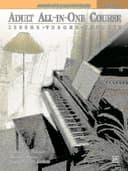
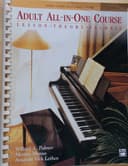
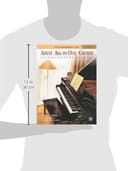
The Adult All-In-One Course: Lesson-Theory-Technic Level 1 is a highly rated, comprehensive piano instruction book designed for adult beginners. It integrates lessons, music theory, and technical exercises in a clear, progressive format that builds confidence quickly. Featuring beginner-friendly visuals and familiar songs, it enables learners to transition from basic note recognition to playing two-hand harmonies in a short time. This best-selling book is praised for its user-friendly approach and effectiveness in making piano learning accessible and enjoyable.
| ASIN | 0882848186 |
| Best Sellers Rank | #11,287 in Books ( See Top 100 in Books ) #12 in Piano Songbooks #16 in Piano & Keyboards #41 in Music Instruction & Study (Books) |
| Customer Reviews | 4.7 4.7 out of 5 stars (10,992) |
| Dimensions | 11.77 x 9.28 x 0.51 inches |
| Edition | 1st |
| ISBN-10 | 9780882848181 |
| ISBN-13 | 978-0882848181 |
| Item Weight | 2.31 pounds |
| Language | English |
| Print length | 160 pages |
| Publication date | July 1, 1994 |
| Publisher | Alfred Music |
S**A
User friendly design and concept
I recently purchased the “Adult All-in-One Course: Lesson, Theory, Technic, Level 1” and have been very pleased with my experience so far. The lessons are clear and progress at a comfortable pace, making it easy to build confidence with each new concept. I appreciate how the book combines lesson material, music theory, and technical exercises all in one place. This integrated approach helps reinforce what I’m learning and keeps practice sessions interesting. The explanations are straightforward, and the exercises are varied enough to keep things engaging. I also like that the book includes familiar songs, which makes practicing more enjoyable and motivating. Overall, I would highly recommend this course to adult beginners or anyone looking to refresh their piano skills. It’s a comprehensive, user-friendly resource that makes learning piano both accessible and fun.
C**S
Great Self Teaching Book
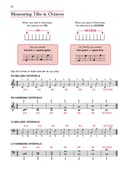
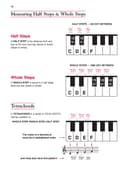
A little background before I get into the real review: My 14 y/o trumpet player daughter has been wanting to learn the piano for years. Because she has C.P. we had been putting it off thinking that trying to coordinate both hands at once and read music would be too frustrating for her. Her trumpet teacher disagreed and recommended she start with the Suzuki method as she has and incredibly good ear and quite a bit of natural musical talent. From my understanding of Suzuki, there is quite a bit of parent involvement required. This is a problem for me given I have limited experience playing an instrument (flute. I really should have listened when my mom said I'd regret giving it up) and absolutely none with the piano. I bought this book to help rectify that, knowing that I'll be sitting in on her weekly lessons and absorbing a lot of information there. Having only had the book a couple of days, I love it already. The book assumes you are coming to the piano with no prior musical experience and starts from the very beginning. It introduces the musical alphabet and shows where each note falls on the keyboard. When reading from the staff is introduced, the note names are printed right in the note so your eyes are traveling along the staff instead of looking elsewhere. With each lesson on theory you are given exercises and practice tunes that reinforce the lesson. There are also written exercises to really help make those connections solid. You move along fairly quickly, playing simple melodies with each hand separately to playing with both hands. Once harmonic intervals are introduced (pg.26) and you start playing the melody with one hand and harmonics with the other, you really feel like you're making music! It's pretty exciting to go from not knowing where middle C is located to playing Jingle Bells with a bit of harmony in 2 days! I can't wait to continue to grow with this book. I do plan on adding scales and such to my practice sessions, as these are truly the things that will help you progress and give you a more fundamental understanding of how music is put together. Playing scales and arpeggios are just as important to a musician as stretching is to a runner. They may not be the most fun, but they are essential, which my daughter hates to hear. Some have said that the song selection leaves a bit to be desired. While I don't disagree that songs like "Tisket, A Tasket", "Lightly Row", and "Aunt Rhody" are juvenile, (these are the songs all young musicians start with. The Good Lord knows I've sat through many a squeaky beginning band performance of them!) they are the type of song that build that foundation for the great things to come. By the time you finish this book you should be able to play songs like "Over the Rainbow" and "Singin' in the Rain". You can also find loads of simple piano music online for free and there's always the option of purchasing books of beginner music if you find that you're board by the selections provided. Also be aware that this book does not come with the c.d. Not really a problem as there are loads of nice folks who have uploaded videos to youtube of all the songs. Just search for Alfred's Basic Adult Piano and you'll have your pick. All in all, I really am enjoying learning with this book. I feel like I'm able to grasp the concepts that are introduced and will be able to help my daughter along once her lessons start in a couple of weeks. I'm looking forward to finishing this book, which I hope will come sooner rather than later, and starting on the next one.
L**K
4.5 -- Self-Study Review
I really enjoy this book and feel that I've learned a lot so far, although I'm only halfway through. It would be ideal for beginner students or those needing a brush up, especially if they are working with a professional on the side. I'm in my mid-30s, doing it through self-study and find it relatively easy to do. I'm hoping to get a proper acoustic piano eventually and would love to know how to play well first. I've never had musical training, but have played off and on by ear--meaning, I didn't know most chords, notes, or proper hand positions, and I certainly couldn't read music. That's certainly changing! Right now, I'm just seeing how far I can get with it and may take lessons later when I can afford it. I'm currently using a 61-key keyboard at the moment, but plan on getting one that's 88-key with properly weighted keys for advanced lessons to tie me over for a couple more years until I can get an acoustic. While it's certainly possible to learn on your own (this far, anyway!), I definitely recommend looking up instructional videos to help with hand positions and posture. I found several on YouTube, such as one called "The 5 Basic Elements of a Correct Posture," by an English-speaking Russian instructor. I also suggest getting the CD combo package to help with tempo (hint: if it's under $10, you are likely not buying the combo). I mistakenly bought the one without the CD and you will definitely want it, and the combination package is less expensive than buying separately. If you wind up getting the book without the CD, you can find demos on Youtube as well; it's just a little more tedious. So far, I've located all but one (at the beginning of the book) and I'm just a little beyond page 50. This will come in handy for songs that are unfamiliar to you or are a little more difficult to play. Once you get to p. 50 or so, things kind of take an abrupt leap in advancement (position change) and the book kind of loses its clarity at that point to some degree, but it's not impossible and demos definitely help. Just make sure to do those little assignments and practice loads. Because I play by ear and tend to memorize things well, I always go back to songs, even if I've previously played them before. That way, I make sure I'm reading the notes rather than sounding them out. All in all, I really enjoy it and I'm pretty amazed that I'm actually reading music, even if it's with difficulty at times as I progress in the book. Because I tend to be my biggest nag, I will likely get the adult self-study version, too, but it was recommended by reviewers to start with this one. I also plan to get the eMedia Piano and Keyboard Method software program. I hadn't seen it until after I purchased this book, but I feel that it will help me more with tempo and what not. I'm also visual, so that may help as well.
R**N
I just got it today and burned through first 4 chapters. For full disclosure - I played a piano for like 6 months when I was a kid and I have basics in music reading, but even if I didn't have these essentials, this book literally delivers new concepts with such ease, that my only regret is not discovering it sooner! I am trying to find the access to the videos which go along the book, as CD nowadays is unfortunately useless - I have no CD player, nor the laptop, nor the desctop has one. There is one review comment here which downmarks this book and learning system because the terminology in American English. I am sorry but that's ridiculous, especially in this day and age with all the tech around. I was 25 when I came to the UK nearly 22 years ago, and I could barely string a sentence in English, and without curent tech I had to rely on huge paper dictionaries. If I, a foreigner, for whom English is a 3rd language managing to understand the US terninology, with the help of Google, then I am struggling to understand how a native English speaker cannot survive without Alfred's text books 'translated' from English language to English language - all you have to do, if it is confusing to you, is to pencil in the meaning in UK terminology in the book, or make flashcard dictionary to later refer to. For example when learning about time signatures a word 'measure' came up. So taking into consideration that the author spoke about the total number of beat in 1 measure I deduced that the measure is a bar in UK's terms, and Googled confirmed this. Despite trying many different techniques over the years I was unable to move from the Do-Re-Mi system to C-D-E no matter how much I tried (I do-re-mi'ed from the age of 6 for 10 years of 3 rehearsals per week 2.5 hours per rehearsal. So Do-Re-Mi is like my native mother tongue which is inbeded at the deepest level. What I do to deal with it, is by translating the notes. So if there are people who are not happy about crocthet being called a quarter, which what it actually is, please remember that there are some who have to translate not just notes, but also chords, various scales etc. Actually I have to translate most of this book, because the language in the book is subject specific, and I welcome the challenge - the very reason I decided to play was to challenge myself, and it would be equally challenging had I had the UK English version of this same book!
I**A
Muy útil y práctico para las clases de piano, llega en buenas condiciones. El contenido bastante completo. Obviamente viene todo en Inglés.
L**Y
This course book has been the perfect way to start learning as an adult. My tutor guided me through it, it is very well laid out and easy to follow. Makes learning as an adult more accessible!
L**A
Ho provato diversi libri per lo studio del pianoforte, tra cui lo Stark, Pianorama e James Bastien, ma questo è assolutamente il migliore. La musica è come una lingua straniera, va ascoltata oltre che suonata e per quasi ogni brano c'è un CD (o youtube, un sacco di pianisti hanno riproposto i brani) che riproduce gli spartiti. Lo consiglio
C**E
J'utilise cette méthode en parallèle de mes cours en école de musique. Elle m'est très utile car elle me permets de travailler progressivement : exercices des doigts, apprentissage des accords, enchaînement des accords. Tout cela avec des morceaux simples et progressifs en parallèle des exercices.