Some deliveries may take a little longer than usual due to regional shipping conditions.

下载应用程序


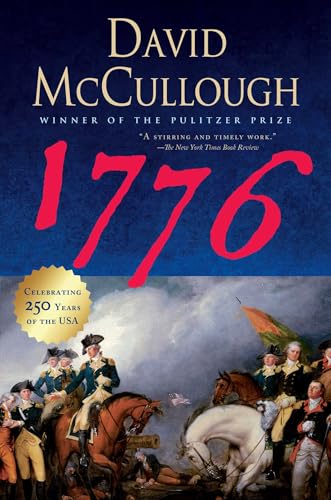

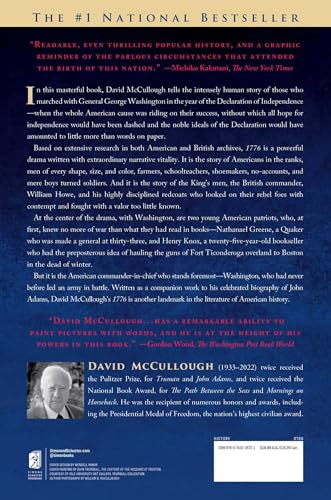
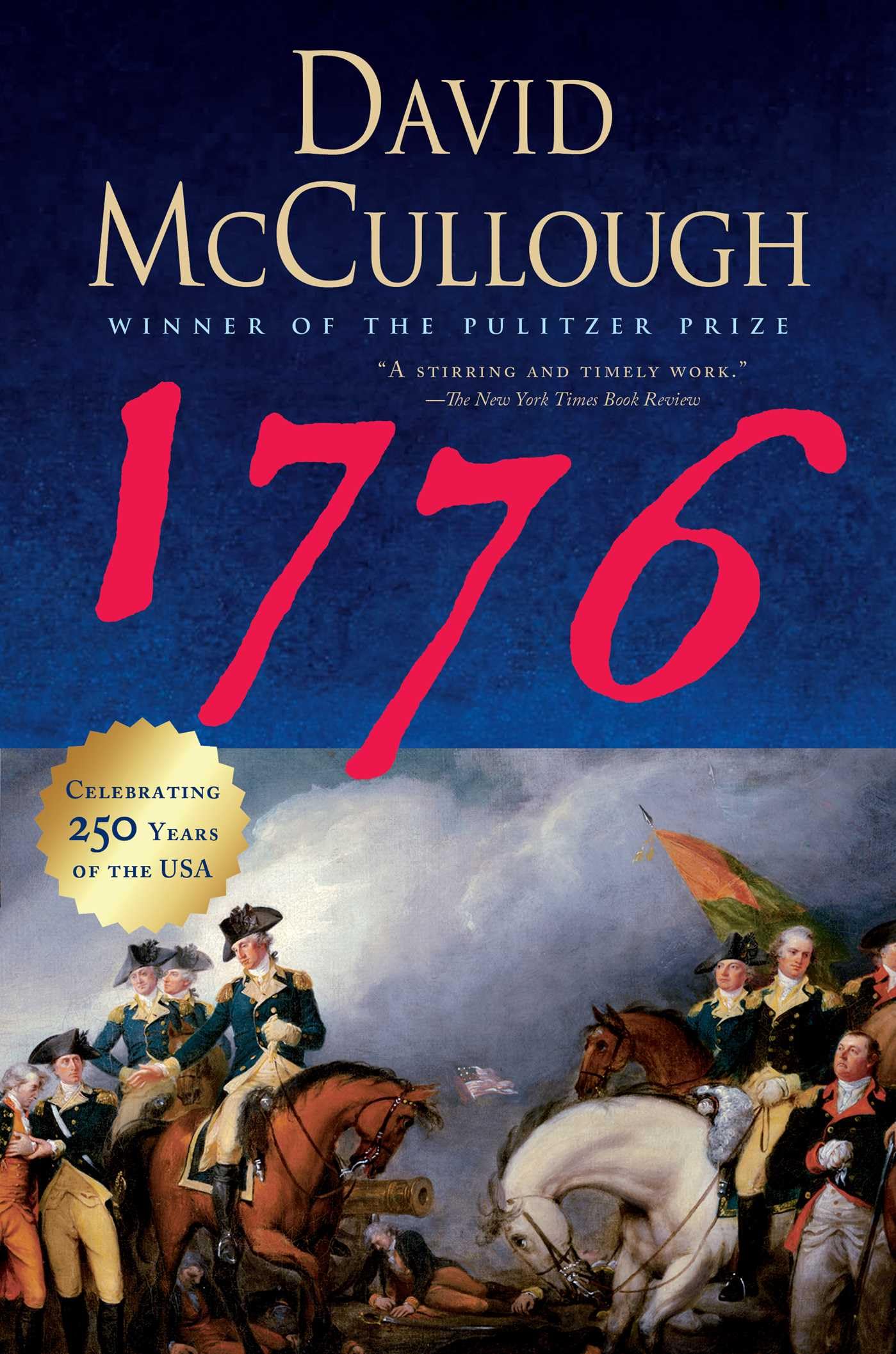
desertcart.com: 1776: 9780743226721: David McCullough: Books Review: Tremendous learning tool. Great read. - Includes photocopies of original historic documents directly related to each section being listed in the book. Copies of letters from founding fathers to each other and to their wives give a much better sense of their state of mind during the difficult times of the founding of our country. I very highly recommend this book. Review: "These are the times that try men's souls...." - With these haunting words of Thomas Paine, the author begins a chapter on the darkest moments of the Revolution, the freezing and shattered Continental Army falling back toward Philadelphia, the obvious next step in the British re conquest of its errant colonies. The reader is drawn in by the masterful story telling, almost suspending memory about the ultimate outcome to fully plumb the gravity of the impending failure. It is particularly startling when that rarest of authors has you hanging on every turn of the page while reading about events whose outcome you already know. Mr McCullough is indeed one if these one-in-a-generation historians. In the US, we all read about George Washington, more a caricature than a flesh and bones man. What you don't get (and what McCullough so eloquently conveys), is that he and his rebels, far from being desperate men and women living deprived lives and driven to revolution out of few options, were instead people who were for the most part living very comfortable existences but nonetheless risked absolutely everything in this mad, quixotic venture. The acute awareness of this greater Cause pervaded the thoughts and writings of its leaders, and they thus fought a battle for the posterity of all humanity, not just themselves. It is refreshing in our jaded, post-religious age of the West to see people thoroughly convinced of their Providential role in improving Mankind's lot. It is also stunning to read how the entire venture might have turned on small events such as freak weather (fog in August shrouding all of Brooklyn as the bulk of the Continental Army retreated across the East River back to Manhattan in daylight but out of sight of the British--living in NY City, I've experienced this perhaps twice in half a century) or the inspiration for an unheard of winter attack across a frozen river against war-hardened professional Hessian mercenaries at Trenton, conceived of as the army was on the brink of collapse but an action which abruptly halted the perpetual retreat against overwhelmingly superior forces. You get a complex picture of Washington who, while expressing terrible misgivings to family back home, never, ever let on about such doubts to those around him. In spite of the back-stabbing amongst his subordinates (always at the worst possible moments), the utter absence of experienced soldiery and perpetual shortages of everything, Washington's cool, undaunting persistence drives others around him. His boldest moves were often conceived of at the darkest hours. He also comes across as a commander who actually learned from errors, sought advice regularly and deferred to it when the compelling argument was made. He seems indifferent to personal dangers; on horseback in the thick of battles, personally reconnoitering the front or with the rear of the column as the enemy is in hot pursuit). Not surprising then is the hagiography arising after his death and despite being possessed of a remote persona (? by design). I recommend it to anyone who needs reminding what exceptional people founded the US on the enduring principles of individual liberty, freedom of conscience, the redeeming virtue of personal merit and inviolability of constitutional rule of Law. And despite its founding flaws, America thus inspired much of humanity across three centuries.
| Best Sellers Rank | #2,894 in Books ( See Top 100 in Books ) #1 in American Revolution Biographies (Books) #4 in U.S. Revolution & Founding History #14 in American Military History |
| Customer Reviews | 4.6 4.6 out of 5 stars (9,613) |
| Dimensions | 6.13 x 1 x 9.25 inches |
| Edition | First Edition |
| ISBN-10 | 0743226720 |
| ISBN-13 | 978-0743226721 |
| Item Weight | 1.2 pounds |
| Language | English |
| Print length | 386 pages |
| Publication date | June 27, 2006 |
| Publisher | Simon & Schuster |
| Reading age | 14 - 18 years |
A**S
Tremendous learning tool. Great read.
Includes photocopies of original historic documents directly related to each section being listed in the book. Copies of letters from founding fathers to each other and to their wives give a much better sense of their state of mind during the difficult times of the founding of our country. I very highly recommend this book.
M**H
"These are the times that try men's souls...."
With these haunting words of Thomas Paine, the author begins a chapter on the darkest moments of the Revolution, the freezing and shattered Continental Army falling back toward Philadelphia, the obvious next step in the British re conquest of its errant colonies. The reader is drawn in by the masterful story telling, almost suspending memory about the ultimate outcome to fully plumb the gravity of the impending failure. It is particularly startling when that rarest of authors has you hanging on every turn of the page while reading about events whose outcome you already know. Mr McCullough is indeed one if these one-in-a-generation historians. In the US, we all read about George Washington, more a caricature than a flesh and bones man. What you don't get (and what McCullough so eloquently conveys), is that he and his rebels, far from being desperate men and women living deprived lives and driven to revolution out of few options, were instead people who were for the most part living very comfortable existences but nonetheless risked absolutely everything in this mad, quixotic venture. The acute awareness of this greater Cause pervaded the thoughts and writings of its leaders, and they thus fought a battle for the posterity of all humanity, not just themselves. It is refreshing in our jaded, post-religious age of the West to see people thoroughly convinced of their Providential role in improving Mankind's lot. It is also stunning to read how the entire venture might have turned on small events such as freak weather (fog in August shrouding all of Brooklyn as the bulk of the Continental Army retreated across the East River back to Manhattan in daylight but out of sight of the British--living in NY City, I've experienced this perhaps twice in half a century) or the inspiration for an unheard of winter attack across a frozen river against war-hardened professional Hessian mercenaries at Trenton, conceived of as the army was on the brink of collapse but an action which abruptly halted the perpetual retreat against overwhelmingly superior forces. You get a complex picture of Washington who, while expressing terrible misgivings to family back home, never, ever let on about such doubts to those around him. In spite of the back-stabbing amongst his subordinates (always at the worst possible moments), the utter absence of experienced soldiery and perpetual shortages of everything, Washington's cool, undaunting persistence drives others around him. His boldest moves were often conceived of at the darkest hours. He also comes across as a commander who actually learned from errors, sought advice regularly and deferred to it when the compelling argument was made. He seems indifferent to personal dangers; on horseback in the thick of battles, personally reconnoitering the front or with the rear of the column as the enemy is in hot pursuit). Not surprising then is the hagiography arising after his death and despite being possessed of a remote persona (? by design). I recommend it to anyone who needs reminding what exceptional people founded the US on the enduring principles of individual liberty, freedom of conscience, the redeeming virtue of personal merit and inviolability of constitutional rule of Law. And despite its founding flaws, America thus inspired much of humanity across three centuries.
M**L
Short review on 1776
great historical read without getting bogged down into useless trivia; significant battles and strategies described along with supportive historical documents instilled. Great read - takes into perspective on just how miraculous our revolution turned out!
S**I
verbal nuncupative will deathbed wishes shared in fear on the Revolutionary battlefield
1790 letter the Hebrew Congregation in Newport: All possess alike liberty of conscience and immunities of citizenship. It is now no more that toleration is spoken of, as if it was by the indulgence of one class of people, that another enjoyed the exercise of their inherent natural rights. George Washington equal rights vs "tolerance". JohnAdams (PaulGiamatti) LauraLinney as AbigailAdams covers the time period from the BostonMassacre to the 50year anniversary of the DeclarationOfIndependence July 4, 1826 miniseries 8h21m with optional FactsAreStubbornThings pop ups each scene footnotes referencing the facts supporting what is viewed during a scene. JohnAdams 2001 book by DavidMcCullough won 2002PulitzerPrize. The 2008 TVminiseries covers a longer historical period than this book 1776, which relates only the first year of the American Revolution. 1776 by David McCullough 2005 captures the raw power of first person accounts from participants living history, creating a new free country. George Washington reveals his character through letters, memos, dispatches, speeches, orders, council of war minutes: as Commander In Chief I am a servant of Congress. Others on and off the field share thoughts opinions, fears, doubts, neglect, ignorance, self-indulgence, vile behavior: John Hancock, Thomas Paine, soldiers British, paid mercenary German Hessians and American rebels, Tories and Whigs in Parliament, King George III proclamations (the King's speech took 20min before a joint meeting of Parliament to announce the war against the Americas). General Howe offered multiple opportunities to George Washington to surrender. The minutes of those meetings, and diary notes subsequently show how little each participant understood the other. 1776 has two sections of maps (1776 Boston and New York), oil portaits, sketches of war scenes. Diaries and letters encapsulate the terror and day to day suffering of war in snow ice windstorm Nor'easter winters, without horses, guns, cannons, a Navy, ammunition, tents, coats, blankets, shoes, clothes, food, or pay. Heart rending letters to and from home, torn loyalties to family and to country, choices, some rewarded, others leading to guilt and shame, diary thoughts: each offers word pictures of the moment to moment events, unforseen accidents, sufferings of those who lived that year 1776. Media reactions were delayed sometimes by months for news to arrive across land or the ocean. I watched the John Adams 2008 miniseries first, which visually offered form to the events which unfold on the pages of the book 1776 published 2005. Each compliments the other. 1776 has extensive footnotes at the back, lists sources books newspapers, pamphlets, diaries, biographies, National Park Service museums (Mt Vernon, Boston, Trenton, New York), which allow one to deep dive into a particular area of interest. Tar and feathering was a common manner of expressing displeasure. Negro soldiers' loyalty and sacrifice as part of Washington's rebel army convinced him of the immorality of slavery and he freed his slaves in his will. Smallpox raged throughout the Revolutionary war; Abigail Adams had herself and her children variolated against smallpox to protect them from death. Dysentery ravaged the Continental Army unaccustomed to the discipline of public health, while British and Hessian soldiers remained healthy, adhering to public health principles of hand washing, toileting hygiene, separating latrine downstream outflows from drinking water inflow sources. Loneliness, homesickness, lack of preparation education or training for war among young men, some too young to shave (ages 10 serving as fifes), armed only with sticks and no discipline make the winning of the Revolutionary War seem an accidental miracle. 1776 is a tribute of editing the observations of ordinary people in extraordinary moments. The author weaves together the bits and pieces of thought, emotion, secret fears and allows us to trudge in the mud of war, and see who does what. And the vagaries of weather and wind. With no wind the ships could not sail. When the tides are in mud flats are difficult to traverse. Who plunders homes, ravishes the women, who devotes time and attention to the elderly the sick, the pregnant women, the children, the prisoners and their well-being? It is not sufficient to kill, bodies must be identified and buried, wounded must be treated, families notified. General Washington takes the time to attend to the myriad tasks of leadership, and allows his personal whims and impulses to be reined in by the will of Congress, the wisdom of other Generals in councils of war, allowing for more fruitful outcomes. 1776 is a year in the life of the history of the United States. Read alongside the John Adams miniseries it is gripping. 4th grade reading level. The interweaving of quotes from letters and diaries engages a sense of being present and witnessing the wartime suffering. Like any book on the Revolutionary War you already know the ending, but the journey of blended voices from letters and diaries is fascinating. 5* 1776 David McCullough
J**C
Quelle aventure : une armée qui n’en est pas une victorieuse à deux reprises d’un adversaire puissant et bien organisé. Et un chef qui, malgré quelques indécisions, remporte les victoires décisives. Dommage que le livre s’arrête avant la bataille de Yorktown.
P**N
Es historia pero se lee como una novela. El autor consigue mantener un ritmo narrativo que no desfallece a lo largo de la exposición de los sucesos históricos del año crucial de la Revolución Americana.
"**I
Gran libro relacionado con la Historia de EUA. Llegó rápido y en excelente estado. gracias
M**S
Lots of interesting facts about first year of American Revolution. Very readable.
A**R
This book doesn't take us from start to finish of the revolution but selects a pivotal year, one which encapsulates all the issues faced in the struggle for independence. This is a fascinating look at the characters involved and the issues and hardships faced, in a very real and human way. I found it an easy read but also a very eye-opening and enlightening one at the same time.
TrustPilot
2 周前
2 个月前