We remain fully operational. Our teams are working around the clock to ensure your deliveries continue safely.

下载应用程序


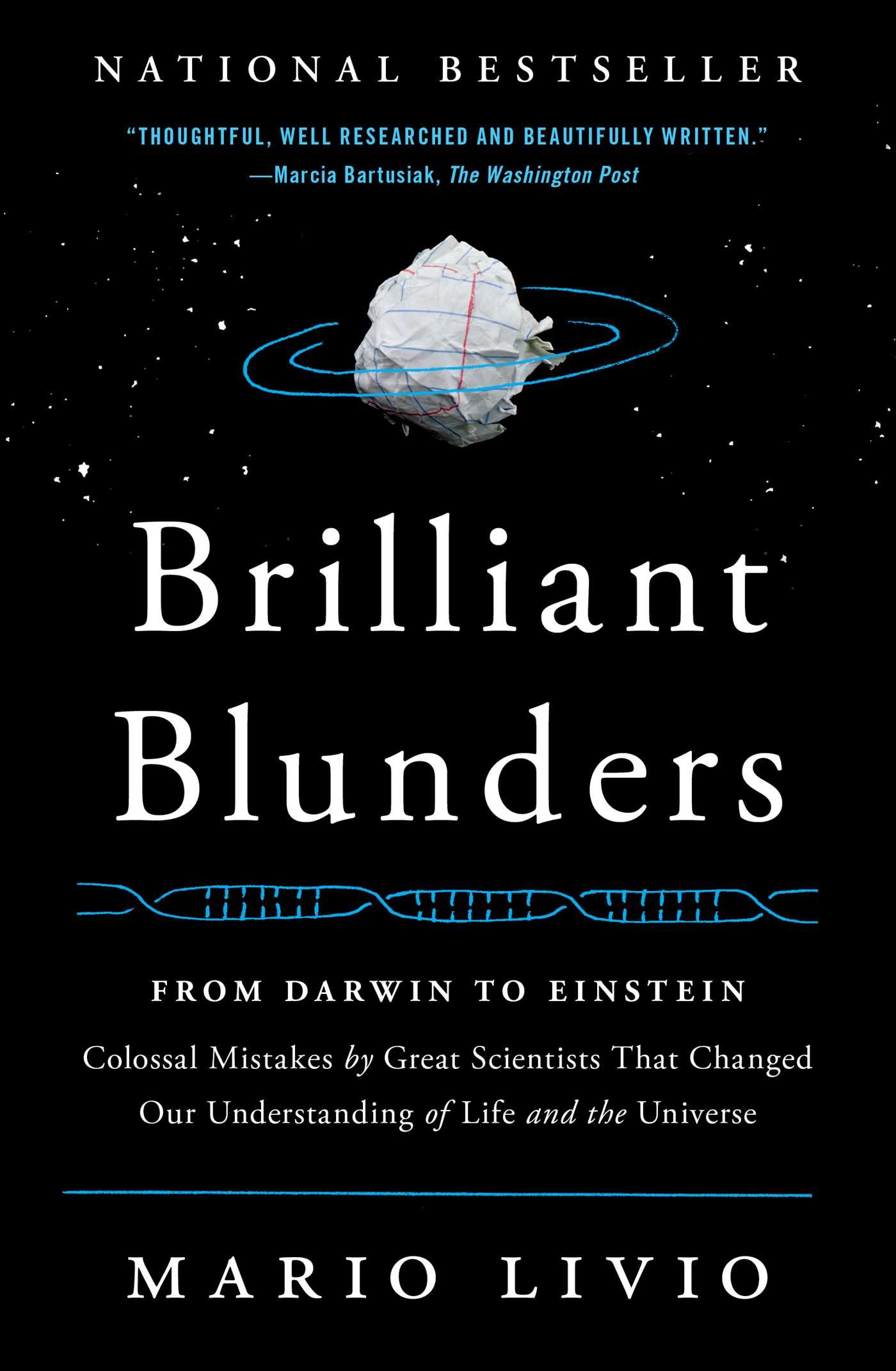
Brilliant Blunders: From Darwin to Einstein - Colossal Mistakes by Great Scientists That Changed Our Understanding of Life and the Universe [Livio, Mario] on desertcart.com. *FREE* shipping on qualifying offers. Brilliant Blunders: From Darwin to Einstein - Colossal Mistakes by Great Scientists That Changed Our Understanding of Life and the Universe Review: Worth Knowing: Even Great Minds Make Mistakes - Mr. Livio has written very readable books on math and science in the past; however, this book on "colossal mistakes by great scientists that changed our understanding of the universe" may be the best of what he's written so far. There is a joy and verve in his writing here that is beyond what he's done before. This makes for a book that is not only interesting but also a pleasure to read. Granted, he's chosen a particularly good topic: mistakes made by huge names in science--Darwin, Kelvin, Pauling, Hoyle, and Einstein. He handles it in an atypical way, however. Instead of using their well-known "blunders" to find a backdoor into criticism of these men as others have done in the past, Mr. Livio shows how the mistakes of great scientists often make perfect sense. In addition, he shows how these mistakes often open the door for others to make important breakthroughs. Consider Kelvin, often the poster child in scientific circles for someone who achieves much in his youth but then becomes hardened into his positions in old age even in the face of overwhelming evidence. Kelvin believed that the age of the earth could be no more than a few million years despite the fact that geological and evolutionary data during his lifetime indicated that the earth had to be much, much older. But what people often fail to understand about Kelvin is that he based his belief on thermodynamic calculations, calculations on which he was the acknowledged expert. More subtly, those people who threw the evidence of geology and biology and newly discovered radioactivity in his face often did not understand that even if their evidence spoke about the age of the earth, no known mechanism could account for the age of the sun which Kelvin had also calculated to be only a few millions years. In fact, it would be many decades before nuclear fusion would be understood well enough to determine that the age of the sun could also be billions of years and synch up with the assumed age of the earth. Kelvin based his mistake on calculable physics and, mistake though it may have been and intransigent as he certainly was, it encouraged other scientists to do significant work to refute him. Livio makes similar work of Darwin's understanding of inheritable traits, Pauling's work on the structure of DNA, Hoyle's refutation of the Big Bang, and Einstein's cosmological constant. He structures his book well, delivering a chapter on outlining the mistake (what it was and how a great mind could make such a mistake) and then following with a chapter that examines the impact of the mistake on the development of science. Livio also deserves credit for looking into primary sources to examine aspects of controversy about these so-called mistakes. In particular, he has a great section on the primacy debate on what is now known as Hubble's Law between Edwin Hubble and Georges Lemaitre. In addition, he quite convincingly argues that Einstein never called the cosmological constant his "greatest blunder". In fact, that is a story most of us know third-hand through a not-quite-reliable source. Because of its triumphs, many people look upon science as some kind of edifice of truth. Those involved in science, however, know that the power of science comes from its ability to advance by correcting mistakes and refining understanding. Because of that, the history of science is riddled with blind alleys and big blunders. Those things happen to be just as important to the development of science as what is currently accepted as accurate. Mr. Livio has done an excellent job of demonstrating this by pointing out the mistakes made by some of the greats. This is a book anyone interested in the history of science should read. Review: You (everyone) should read this book - Science is part of our culture, and the history of science may be even more so, more important than the history of kings, presidents, and wars. This is a very enjoyable book, filled with entertaining and enlightening stories relating how some of our greatest scientists blundered along their way. Great ideas were created, sometimes in spite of, sometimes aided by, amazing blunders by their creators. Livio provides intriguing quotations, and produces an abundance of quotable phrases on his own. Livio traces the blunders made by notable brilliant scientists, to the point of correcting errors in the stories that have crept in over time. He clearly dissects the reasons for the blunders, exposing why true reality could not be seen. He is very careful and diligent in digging beneath the surface, deeper than prior writers. This gives a remarkable ring of truth to his stories. Livio's "brilliant blunders" are a natural part of the working of science, the intellectual noise of the process, and they were eventually pushed out of the way, often after providing an impetus to a field that might have otherwise been stalled. Sometimes, learning what is wrong is essential to learning what is right. I learned things I had not known before. And yet, and of course, he is unable to identify the hidden blunders that continue to shape and guide (and plague) our sciences, mistakes made because the scientists did not know what was still to be discovered in the future. How could it be otherwise? (On reading about Einstein's development of General Relativity, no math required, and the push it gave to cosmology and an expanding Universe, the careful reader may wonder how that would have developed had he known about antimatter, discovered 17 years too late.) To learn of some of these hidden blunders that continue to haunt and misguide us, I offer my recently published book, "The Fourth Source - Effects of Natural Nuclear Reactors" The Fourth Source: Effects of Natural Nuclear Reactors . I am sure that you will learn some things that you had not known before. That's what books are for.
| Best Sellers Rank | #161,610 in Books ( See Top 100 in Books ) #37 in Scientific Research #305 in Scientist Biographies #423 in History & Philosophy of Science (Books) |
| Customer Reviews | 4.2 4.2 out of 5 stars (565) |
| Dimensions | 5.5 x 0.9 x 8.38 inches |
| Edition | Reprint |
| ISBN-10 | 1439192375 |
| ISBN-13 | 978-1439192375 |
| Item Weight | 10.4 ounces |
| Language | English |
| Print length | 352 pages |
| Publication date | May 27, 2014 |
| Publisher | Simon & Schuster |
T**H
Worth Knowing: Even Great Minds Make Mistakes
Mr. Livio has written very readable books on math and science in the past; however, this book on "colossal mistakes by great scientists that changed our understanding of the universe" may be the best of what he's written so far. There is a joy and verve in his writing here that is beyond what he's done before. This makes for a book that is not only interesting but also a pleasure to read. Granted, he's chosen a particularly good topic: mistakes made by huge names in science--Darwin, Kelvin, Pauling, Hoyle, and Einstein. He handles it in an atypical way, however. Instead of using their well-known "blunders" to find a backdoor into criticism of these men as others have done in the past, Mr. Livio shows how the mistakes of great scientists often make perfect sense. In addition, he shows how these mistakes often open the door for others to make important breakthroughs. Consider Kelvin, often the poster child in scientific circles for someone who achieves much in his youth but then becomes hardened into his positions in old age even in the face of overwhelming evidence. Kelvin believed that the age of the earth could be no more than a few million years despite the fact that geological and evolutionary data during his lifetime indicated that the earth had to be much, much older. But what people often fail to understand about Kelvin is that he based his belief on thermodynamic calculations, calculations on which he was the acknowledged expert. More subtly, those people who threw the evidence of geology and biology and newly discovered radioactivity in his face often did not understand that even if their evidence spoke about the age of the earth, no known mechanism could account for the age of the sun which Kelvin had also calculated to be only a few millions years. In fact, it would be many decades before nuclear fusion would be understood well enough to determine that the age of the sun could also be billions of years and synch up with the assumed age of the earth. Kelvin based his mistake on calculable physics and, mistake though it may have been and intransigent as he certainly was, it encouraged other scientists to do significant work to refute him. Livio makes similar work of Darwin's understanding of inheritable traits, Pauling's work on the structure of DNA, Hoyle's refutation of the Big Bang, and Einstein's cosmological constant. He structures his book well, delivering a chapter on outlining the mistake (what it was and how a great mind could make such a mistake) and then following with a chapter that examines the impact of the mistake on the development of science. Livio also deserves credit for looking into primary sources to examine aspects of controversy about these so-called mistakes. In particular, he has a great section on the primacy debate on what is now known as Hubble's Law between Edwin Hubble and Georges Lemaitre. In addition, he quite convincingly argues that Einstein never called the cosmological constant his "greatest blunder". In fact, that is a story most of us know third-hand through a not-quite-reliable source. Because of its triumphs, many people look upon science as some kind of edifice of truth. Those involved in science, however, know that the power of science comes from its ability to advance by correcting mistakes and refining understanding. Because of that, the history of science is riddled with blind alleys and big blunders. Those things happen to be just as important to the development of science as what is currently accepted as accurate. Mr. Livio has done an excellent job of demonstrating this by pointing out the mistakes made by some of the greats. This is a book anyone interested in the history of science should read.
A**R
You (everyone) should read this book
Science is part of our culture, and the history of science may be even more so, more important than the history of kings, presidents, and wars. This is a very enjoyable book, filled with entertaining and enlightening stories relating how some of our greatest scientists blundered along their way. Great ideas were created, sometimes in spite of, sometimes aided by, amazing blunders by their creators. Livio provides intriguing quotations, and produces an abundance of quotable phrases on his own. Livio traces the blunders made by notable brilliant scientists, to the point of correcting errors in the stories that have crept in over time. He clearly dissects the reasons for the blunders, exposing why true reality could not be seen. He is very careful and diligent in digging beneath the surface, deeper than prior writers. This gives a remarkable ring of truth to his stories. Livio's "brilliant blunders" are a natural part of the working of science, the intellectual noise of the process, and they were eventually pushed out of the way, often after providing an impetus to a field that might have otherwise been stalled. Sometimes, learning what is wrong is essential to learning what is right. I learned things I had not known before. And yet, and of course, he is unable to identify the hidden blunders that continue to shape and guide (and plague) our sciences, mistakes made because the scientists did not know what was still to be discovered in the future. How could it be otherwise? (On reading about Einstein's development of General Relativity, no math required, and the push it gave to cosmology and an expanding Universe, the careful reader may wonder how that would have developed had he known about antimatter, discovered 17 years too late.) To learn of some of these hidden blunders that continue to haunt and misguide us, I offer my recently published book, "The Fourth Source - Effects of Natural Nuclear Reactors" The Fourth Source: Effects of Natural Nuclear Reactors . I am sure that you will learn some things that you had not known before. That's what books are for.
E**Z
Very valuable to the curious but science-challanged reader
One of the reviewers wrote that you don't have to be a scientist to be fascinated by the book. I am not a scientist and so am typically skeptical about such proclamations because in the past I found a few such 'popular science' books to be totally inaccessible to me. But I never give up trying because I am curious about the world and about discoveries and processes that yield advances in Human thought and state of being. I am always hopeful that the next book will be better and Brilliant Blunders is truly a valuable addition to my library, one of those I like to reference in my own work, which involves a lot of blunders: This is an inspiring book to anyone who deals with constant change and the process of designing, developing or implementing new things. The mistakes are integral part not only of the scientific process but to the Human process of advancement. You can NOT be afraid of making a mistake. The issue is - how do you deal with mistakes. I first purchased the unabridged audio version of the book to listen when I run and on my commute. Soon I found myself totally engaged and doing what I do with other non-fiction audio books when I enjoy them a lot and find them valuable: repeating whole parts in order to make sure that I really understand the sequence of events (If you use audio books a lot, like me, you know how easy it is to miss good parts when your attention drifts for a few moments). I have a lot of gaps in my knowledge of the history of science and my understanding of many scientific discoveries and processes is superficial (and I am kind to myself here). Mr. Livio's book is accessible, enjoyable and valuable. I just purchased the hardcover version so that it is easier for me to find parts I could reference in presentations and meetings.
V**E
Let me first say that I am a scientist, better a physicist. Thus, the topics were known to me as to the physical foundations. However, this book sheds some light on a few hidden corners of the scientific discoveries of Darwin, Newton, Kelvin, Pauling, Hoyle and Einstein that were basically unknown to me. It is not a book on the history of science, it is rather a book on the process of unveiling the secrets of the universe and the errors that the scientist, after all a human being, makes and sometimes is not ready to admit. In this sense, it is a brilliant book, written by someone who understands science and has compassion for the scientists as humans. A second thing that made me happy about this book is its unified view of physics and biology: they are related sciences, we know, but the author tells us why. I had never thought that without the universe the way it is we would never be talking about some fundamental problems the way we do. It sounds trivial, but, believe me, it is not. Read this book and you will find out what I mean!
A**R
The content of this book is extremely intriguing and also somewhat technical. The style of authors writing and linking the content is impressive .A must read book which explains the genesis of scientific theories and facts by well known scientist and how they are completely constrasting; which actually changed our understanding of world we live in.
B**N
Brilliant blunders? How can blunders be brilliant? Well they sometimes can if they are made by scientists of the calibre of Charles Darwin and Albert Einstein, or even lesser geniuses such as Linus Pauling and Lord Kelvin. The blunder itself can act as a catalyst and open up entirely new ways of looking at nature. In this book, the astrophysicist Mario Livio illustrates this by examining the cases of five iconic scientists from different disciplines - Darwin, Kelvin, Pauling, Einstein and Hoyle - whose work has transcended science and extended out to general culture. The nature of their blunders is different in each case and illustrates some universal human traits. They demonstrate that the road to discovery and innovation can be constructed even via the unlikely path of blunders. Darwin's blunder was not to realise that his theory of evolution was incompatible with the blending theory of heredity that was accepted at the time. This implied that any variation with new characteristics that arose by chance would quickly be lost. His attempts to overcome this problem were misguided and he fell victim to what modern psychologists call the `illusion of confidence', i.e. overestimating ones abilities. Nevertheless, the blunder paved the way for the mathematical theory of population genetics and the vindication of Mendel's theory of inheritance. Kelvin calculated the age of the Earth to be far smaller than the evidence from geology suggested, not because he knew nothing about radioactivity (which actually makes rather little difference to the result), but because he refused to accept that there could be convection currents from the Earth's core. His stubbornness stemmed from his knowledge that his mathematical abilities were undeniable and so he had total faith in his calculations. Pauling's attempt to solve the structure of DNA resulted in a model that violated some basic principle of chemistry that even a first year undergraduate would have known. How could this possibly have happened? Well, Pauling consider himself in a race with teams in Cambridge and London and it is likely that in his haste to rush something into print he totally lost focus, relying instead on his previous success with models of proteins. His blunder spurred on the efforts of the other teams, particularly that of Crick and Watson. Hoyle was one of the originators of the `steady-state' theory of the universe, in contrast to the Big Bang model. He was still defending this theory long after observational evidence had destroyed its credence. One reason for this may have been his isolation; he only worked with and had discussions with a close circle of friends. Einstein's blunder was to introduce a new term - the cosmological constant - into the equations of general relativity to counteract gravity and so produce a static universe, only to remove it when the universe was found not to be static, but actually expanding. This blunder has led to exhaustive studies of the equations of general relativity and cosmological models, and the reinstatement of the cosmological constant in another context. This is a hugely entertaining and informative book constructed on rigorous research For example, by examining the Minute books of the Royal Astronomical Society, Livio definitively lays to rest the suggestion sometimes made that the discoverer of the expansion of the universe was Lemaitre and not Hubble. Another example is the famous, much quoted remark allegedly made by Einstein that the introduction of the cosmological constant was his `biggest blunder'. By examining all the relevant documents, the author shows that there is no evidence for this assertion, but considerable circumstantial evidence that it was made up by George Gamow, a physicist renowned for his sense of humour. The writing is informal but very clear, and difficult concepts are precisely explained without `dumbing down'. The text is backed up by numerous references and a bibliography for those readers who wish to explore further.
F**Z
Encuentro que es un libro interesante, pero que incluye demasiadas cosas sobradamente conocidas por quienes somos amantes de las ciencias, especialmente las más avanzadas. Hecho en falta detalles más personales de los científicos que forman parte del libro y definiciones más claras y contundentes de los "blunders" cometidos por los diversos personajes.
K**E
good book and quick shipping